 Blaine Siding
 Grandview's Roofs Work Harder Than Most
Grandview sits close enough to the water that salt-laden air is a daily fact of life, not an occasional nuisance. Add Whatcom County's long wet season, driving rain that comes in sideways off the Strait, and months of shade and moisture that never quite dry out, and you have a roofing environment that punishes shortcuts. An asphalt shingle roof installed the way it's meant to be installed will handle all of this for decades. One installed with gaps in the details — thin underlayment, skipped ice-and-water barrier, poor ventilation — will show problems in years, not decades.
We work on homes in this area regularly, and the failures we get called out to inspect follow a pattern: granule loss and premature aging from salt exposure, soft or stained sheathing from water that found its way past a poorly lapped underlayment, and moss colonies that took hold in shaded valleys and north-facing slopes and were never addressed until they'd lifted shingle edges. None of that is exotic. It's the predictable result of a roof built for a drier, calmer climate than the one Grandview actually has.
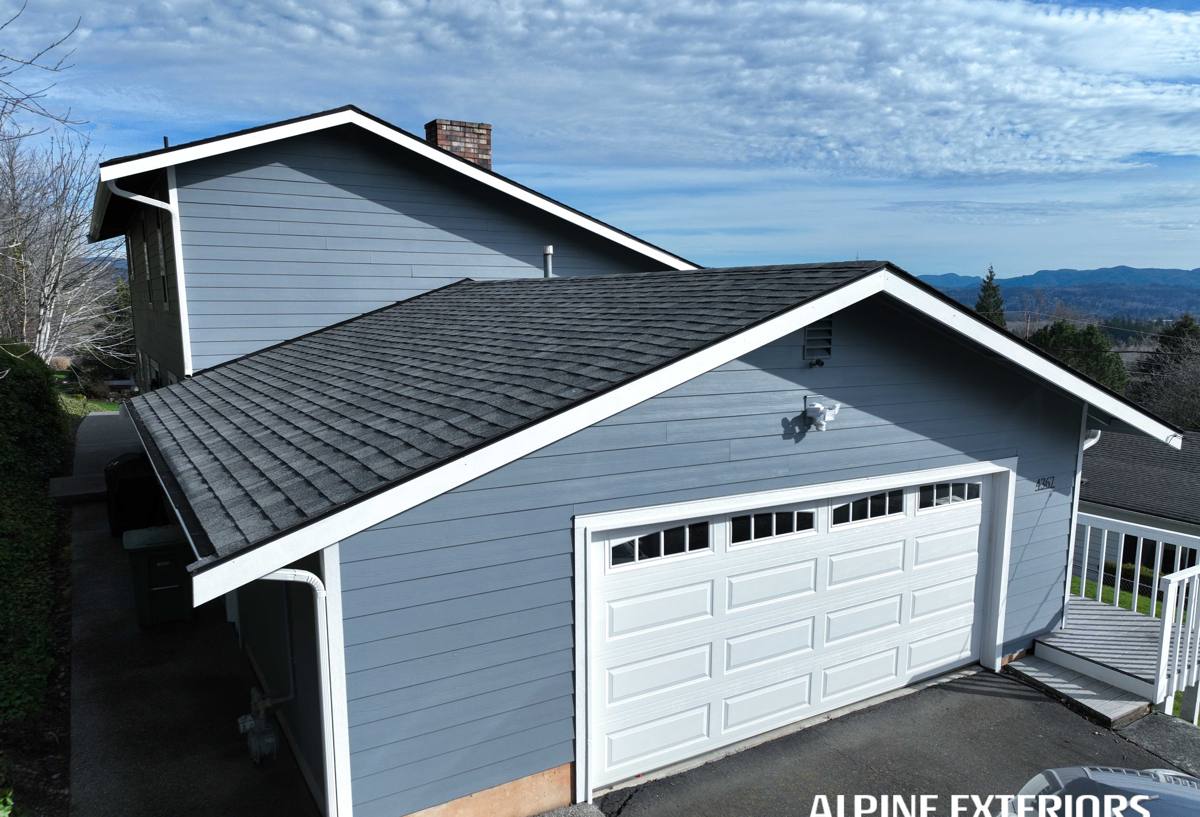
What a Correct Asphalt Shingle Installation Involves
Asphalt shingles are a proven, cost-effective roofing material, but "asphalt shingle roof" covers a wide range of actual build quality. The shingle itself is only one layer of a system. For a Whatcom County home exposed to salt air and heavy rain, every layer underneath the shingles matters as much as the shingles themselves.
The layers that actually keep water out
- Deck inspection and repair — any soft, delaminated, or water-stained sheathing gets replaced before anything else goes down. Roofing over a bad deck just hides the problem.
- Ice-and-water shield at eaves, valleys, and roof-to-wall transitions — the spots where wind-driven rain is most likely to work its way backward under standard underlayment.
- Synthetic underlayment across the full deck, properly lapped and fastened, as the secondary water barrier beneath the shingles.
- Corrosion-resistant flashing at chimneys, skylights, sidewalls, and valleys — in a salt-air environment, the flashing material and fastener choice matters more than it would inland.
- Balanced intake and exhaust ventilation so the attic can actually dry out between rain events instead of trapping moisture against the underside of the deck.
- Correct nailing pattern and shingle exposure, per the manufacturer's wind and warranty specifications — not just "close enough."
Skip or shortcut any one of these and the shingles on top can still look fine from the ground while the roof underneath them is failing. This is why a roof inspection before a bid should always include a look at the deck condition, the current ventilation setup, and the flashing details — not just a shingle count.
Choosing a Shingle for Salt Air and Moss Exposure
Not every asphalt shingle line performs the same way in a coastal, moss-prone climate. The table below covers the general categories homeowners in Grandview should weigh, based on honest trade-offs rather than brand marketing.
| Shingle Type | Typical Lifespan | Coastal/Moss Suitability | Trade-Offs |
|---|---|---|---|
| 3-tab (economy) | 15–20 years | Fair | Lowest upfront cost, but thinner profile shows granule loss and wind damage sooner in exposed coastal conditions. |
| Architectural / dimensional | 25–30 years | Good to very good | Heavier mat and thicker laminate hold up well to wind and rain; the standard choice for this area. |
| Algae-resistant (copper-infused granules) | 25–30 years | Very good for moss/algae | Slightly higher cost, but directly addresses the moss and algae staining common on shaded, north-facing slopes here. |
| Impact/wind-rated premium lines | 30+ years | Excellent | Highest cost, strongest warranty terms, best suited for fully exposed or high-wind sites. |
For most Grandview homes, an architectural shingle with algae-resistant granules is the practical middle ground — it holds up to the salt exposure and slows the moss and algae growth that shaded, damp roof sections here are prone to. We'll walk through the actual options and warranty terms for your specific roof rather than defaulting to one line for every job.
Fastener and Flashing Material
In a salt-air environment, standard galvanized fasteners and flashing can corrode faster than they would further inland. We spec corrosion-resistant fasteners and flashing metals as a standard practice on Grandview roofs, not as an upsell — it's a maintenance-burden decision, since replacing corroded flashing later means tearing back shingles that don't need replacing yet.
Our Process, Start to Finish
- On-site inspection — we get on the roof (weather permitting) and check deck condition, ventilation, flashing, and moss/algae growth before quoting anything.
- Written estimate — a clear breakdown of materials, scope, and what's included, so there are no surprise add-ons mid-job.
- Tear-off and deck repair — old roofing removed, deck inspected board by board, and any damaged sheathing replaced.
- Underlayment and flashing — ice-and-water shield at vulnerable areas, full synthetic underlayment, and new corrosion-resistant flashing throughout.
- Shingle installation — installed to manufacturer spec for nailing pattern, exposure, and starter/ridge detail to keep the warranty intact.
- Ventilation check — intake and exhaust balanced so the attic can dry properly between wet spells.
- Cleanup and magnetic sweep — job site and yard cleared of debris and stray nails.
- Final walk-through — we review the finished roof with you before calling the job done.
Moss, Algae, and Ongoing Maintenance
Long moss season is one of the defining maintenance challenges for roofs in and around Blaine. Moss doesn't just look bad — as it establishes itself, it holds moisture against the shingle surface and can work its way under shingle edges, lifting them enough for wind-driven rain to get underneath. North-facing slopes and sections shaded by trees are the usual first spots to show growth.
A correctly installed roof with algae-resistant shingles and good ventilation slows this process significantly, but it doesn't eliminate the need for periodic attention. We recommend:
- A visual check each fall before the wet season sets in, and again in spring.
- Gentle removal of moss and debris from valleys and gutters — never pressure-washing shingles, which strips granules and shortens their life.
- Keeping overhanging branches trimmed back where practical, to reduce shade and debris buildup on the roof.
- Addressing any lifted or missing shingles promptly, since a small gap in wind-driven rain conditions becomes a bigger repair fast.
What Affects the Cost of a Grandview Roof Replacement
| Factor | Why It Matters Here |
|---|---|
| Roof size and pitch | Steeper or more complex rooflines take longer to work safely and use more material. |
| Deck condition | Water damage found during tear-off (common on older coastal roofs) adds sheathing repair cost. |
| Shingle grade chosen | Standard architectural vs. algae-resistant vs. premium impact-rated lines carry different material costs and warranty lengths. |
| Flashing and fastener spec | Corrosion-resistant materials cost more upfront but reduce future flashing failures in salt air. |
| Ventilation upgrades | Adding or correcting intake/exhaust venting during a re-roof is far cheaper than doing it as a separate project later. |
| Access and site conditions | Steep driveways, tree cover, or tight lot access can affect staging and labor time. |
We'd rather walk your roof and give you real numbers than quote a ballpark that doesn't hold up once we're actually up there.
Signs Your Grandview Roof Needs a Look
Because salt air and moss growth work slowly, roof problems here often go unnoticed until they've become water intrusion. Watch for:
- Granule buildup in gutters or at the base of downspouts
- Curling, cracked, or missing shingles, especially on the side of the house facing prevailing wind and rain
- Visible moss or dark algae streaking, particularly on shaded or north-facing slopes
- Daylight visible through the attic roof boards, or damp insulation
- Stains on interior ceilings or upper walls after heavy rain
- Shingles that feel soft or spongy underfoot when walked (a sign of deck damage)
- A roof approaching or past 20–25 years old that hasn't had a professional inspection
Any one of these on its own may not mean an emergency, but it's worth having a professional look before the next wet season adds to the problem.
Why Local Experience Matters for This Job
A roofing crew that already works in Grandview and the surrounding Blaine area knows what this climate actually does to a roof over time — not in general terms, but in the specific ways salt exposure, driving rain, and moss growth show up on homes here. That means we spec flashing and fasteners differently than we would for an inland job, we know which slopes on a typical local roofline need the most attention for moss, and we don't guess at wind exposure ratings — we account for what actually blows through this part of Whatcom County. It also means we're not learning on your roof; the details that matter here are already part of how we bid and build every job.
If your roof is showing its age, or you're just not sure what condition it's really in, we're happy to take a look. We offer free, no-pressure estimates — use the form below to get one scheduled for your Grandview home.