 Blaine Siding
 Siding in California Creek: A Climate That Doesn't Forgive Cheap Materials
California Creek sits in the rural stretch of Whatcom County just outside Blaine, where wooded lots, creek-fed drainage, and proximity to Drayton Harbor and the Strait of Georgia combine into one of the more punishing exterior environments in this corner of Washington. Homes here deal with a mix of salt-laden air, near-constant winter rain, and long stretches of shade that keep siding damp far longer than it should be. None of that is unusual for this part of Whatcom County — but it does mean the siding decisions homeowners make matter more here than they would somewhere drier or further from the water.
We've built our business around one material for a reason: James Hardie fiber cement siding. Not because it's the only siding that exists, but because after years of servicing homes along this stretch of the Salish Sea coastline, it's the only product we're willing to stand behind for the long haul. This page walks through what California Creek homes actually face, and how our siding, roofing, window, and deck work is put together to handle it.
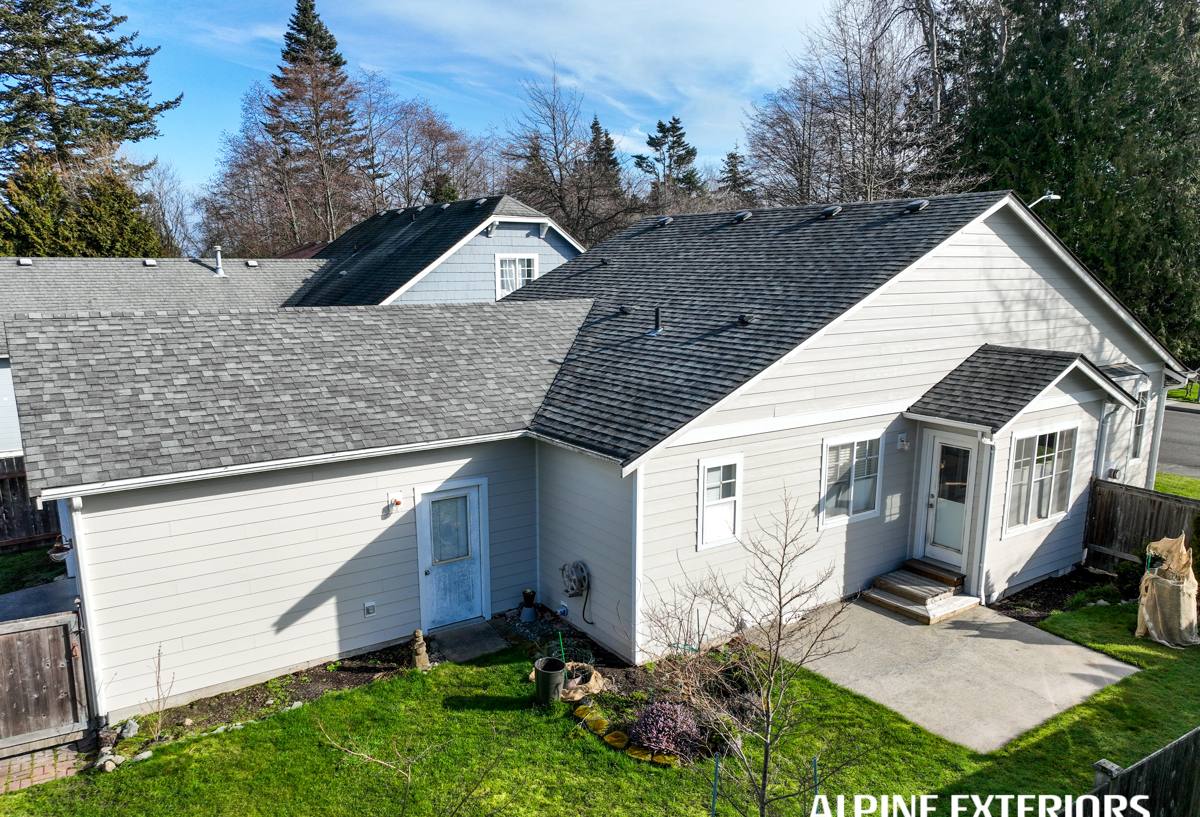
What California Creek Homes Are Up Against
Salt Air and Corrosion
California Creek's proximity to Drayton Harbor and the Strait of Georgia means airborne salt is a real factor, even for homes set back from the water. Salt air accelerates corrosion on fasteners, flashing, and trim, and it breaks down cheaper coatings faster than inland products are typically rated for. Any siding material that relies on a thin factory paint layer or field-applied finish is going to show wear here sooner than the manufacturer's marketing suggests.
Driving Rain and Wind-Driven Moisture
Storms coming off the water don't just drop rain straight down — wind pushes it sideways into wall assemblies, gable ends, and anywhere flashing or caulking is even slightly off. Whatcom County's wet season runs long, and a siding system that's sensitive to water intrusion at the seams or fastener points is working against the climate from day one.
Moss, Mildew, and Extended Shade
Between the tree cover common on California Creek lots and the region's long moss season, north-facing walls and shaded siding runs stay damp for extended stretches. Materials that absorb moisture or swell when wet are far more prone to hosting moss, algae, and mildew growth — and once that growth takes hold, it accelerates whatever underlying degradation is already happening.
Why We Only Install James Hardie Fiber Cement
We don't install LP SmartSide, vinyl siding, Cemplank, Allura, primed spruce, or cedar. That's not a marketing position — it's a standard we set because of what we've seen these materials do (or fail to do) in exactly this kind of coastal, wet, shaded environment. James Hardie is the one product we've found consistently holds up to salt air, driving rain, and moss pressure without turning into a five- or ten-year maintenance project.
Non-Combustible Core
Hardie siding is fiber cement — not wood, not wood-based, not vinyl. It doesn't burn, warp, or provide fuel the way wood-derived products can, which matters for insurance considerations and long-term peace of mind, not just wildfire-prone regions.
ColorPlus Factory Finish
Rather than relying on field-applied paint that starts breaking down the moment it's exposed to salt air and UV, Hardie's ColorPlus finish is baked on in a controlled factory process. It holds color and resists fading and moisture intrusion far longer than a job-site paint job, which is one less maintenance cycle a California Creek homeowner has to think about.
HZ5 Product Engineering
Hardie manufactures its siding in climate-specific formulations, and the HZ5 line is engineered for regions with freeze-thaw cycles and high moisture exposure — a good match for Whatcom County's winters. It's built to resist moisture absorption and swelling in ways that matter directly for a lot near a creek and tidal water.
Warranty Backing
Hardie backs its siding with a long, transferable non-prorated product warranty and a separate warranty on the ColorPlus finish. That transferability matters for resale — a documented, brand-name warranty is worth more to a buyer than "the siding looks fine."
What We Don't Install, and the Honest Trade-Offs
Every siding product on the market gets something right, and we're not going to pretend otherwise. The table below reflects our honest read on why we've standardized on fiber cement for this climate specifically.
| Material | What It Gets Right | Why It's a Harder Sell Here |
|---|---|---|
| Vinyl | Low upfront cost, minimal maintenance in mild climates | Can warp or crack in temperature swings; seams are a moisture entry point in driving rain |
| LP SmartSide | Engineered wood strength, easier install for some crews | Wood-strand core is more moisture-sensitive; edge swelling risk in a high-rain, high-shade area |
| Cedar | Natural look, long tradition in the Pacific Northwest | High maintenance burden — refinishing, sealing, and rot risk in constant damp/shade conditions |
| Primed Spruce/Pine | Lower material cost | Primer is a starting point, not a finish; repainting cycles are frequent near salt air |
| James Hardie Fiber Cement | Factory-cured finish, non-combustible, climate-engineered HZ5 line | Higher material and install cost; requires correct fastening and flashing to perform as designed |
The trade-off with Hardie isn't performance — it's that it demands correct installation. Improper fastener spacing, missing flashing details, or gapping errors will undercut any siding material's warranty and weather resistance, and Hardie's manufacturer specs are strict about it. That's exactly why installation quality matters as much as material choice.
How We Install Siding for This Climate
Moisture Management First
Before any siding goes up, proper water-resistive barrier and flashing details around windows, doors, and roof-to-wall intersections are non-negotiable. In a driving-rain environment like California Creek, the siding is the last line of defense — the flashing and barrier work behind it is what actually keeps water out of the wall assembly.
Fastening and Gapping to Spec
James Hardie has specific requirements for fastener type, spacing, and butt-joint gapping depending on the product line and local climate zone. We follow those specs exactly, because shortcuts here are what cause premature failures that get blamed on the material instead of the installation.
Corrosion-Resistant Hardware
Given the salt air exposure this close to Drayton Harbor and the Strait of Georgia, we use fasteners and flashing rated for coastal corrosion resistance rather than standard-grade hardware that's fine further inland.
Beyond Siding: Roofing, Windows, and Decks
Siding doesn't work in isolation — it's one piece of a home's exterior envelope, and the same climate pressures that affect siding hit roofing, windows, and decks just as hard.
- Roofing: Moss growth and wind-driven rain are the two biggest issues for California Creek roofs; proper ventilation and moss-resistant materials matter as much as the shingle brand.
- Windows: Old or poorly flashed windows are a common source of water intrusion behind siding — window replacement and re-flashing often go hand in hand with a siding project out here.
- Decks: Shaded, damp decks are prone to the same moss and rot issues as north-facing siding; material choice and drainage design matter more than they would on a sunnier lot.
Because we handle all four trades, we can address the whole exterior envelope as one system instead of patching siding around a leaking window or a roof that's dumping water where it shouldn't.
Why a Local Crew Matters in Whatcom County
A crew that only shows up occasionally in Whatcom County doesn't have the same working knowledge of how California Creek's microclimate — the salt exposure, the shade, the extended wet season — actually behaves on a wall over ten or fifteen years. We're local, which means we're the ones a homeowner can call back if a question comes up two years after the install, not a name that vanishes once the invoice is paid.
Maintenance Checklist for California Creek Homeowners
- Rinse siding annually to clear salt residue and organic buildup, especially on shaded or north-facing walls
- Inspect caulking around windows, doors, and trim each fall before the wet season sets in
- Trim back tree limbs and vegetation that keep siding sections in constant shade
- Check gutters and downspouts are directing water away from siding, not sheeting down the wall
- Watch for moss or algae patches and address them early rather than letting them spread
- Have flashing and seams checked periodically, particularly after major windstorms
Getting Started
If you're weighing siding options for a California Creek home — or dealing with moss, moisture, or an aging exterior that's finally caught up with the climate — we're happy to take a look and talk through what's actually going on with your home, no pressure and no obligation. Reach out for a free estimate using the form below.