 Blaine Siding
 Ferndale's Exterior Climate Reality
Ferndale sits in Whatcom County, close enough to the Strait of Georgia and the Salish Sea that salt-tinged air is a regular visitor, especially on breezy days that push moisture inland off the water. Add in the Pacific Northwest's long, wet winters and the Nooksack lowlands' tendency to hold fog and dampness well into the morning, and you get a climate that is quietly hard on the outside of a house. It's rarely dramatic weather. It's persistent weather. That's what wears down siding, roofing, windows, and decks over time.
Homeowners who move to Ferndale from drier climates are often surprised by how much attention the exterior of a house needs here. It's not that anything is wrong with the area — it's simply that wood-based products, older paint systems, and anything with seams or fasteners that aren't sealed correctly will show problems faster in this environment than they would in Spokane or Boise.
What Salt Air, Rain, and Moss Actually Do
Siding
Airborne salt is mildly corrosive to exposed metal fasteners and trim, and it also holds moisture against surfaces longer than plain rainwater does. Combine that with near-constant damp conditions for much of the year, and any siding material that isn't dimensionally stable or properly sealed at the edges will start absorbing water. Once moisture gets behind or into a panel, you're looking at swelling, delamination, or rot depending on the material — plus the paint or finish failing well ahead of schedule.
Roofing
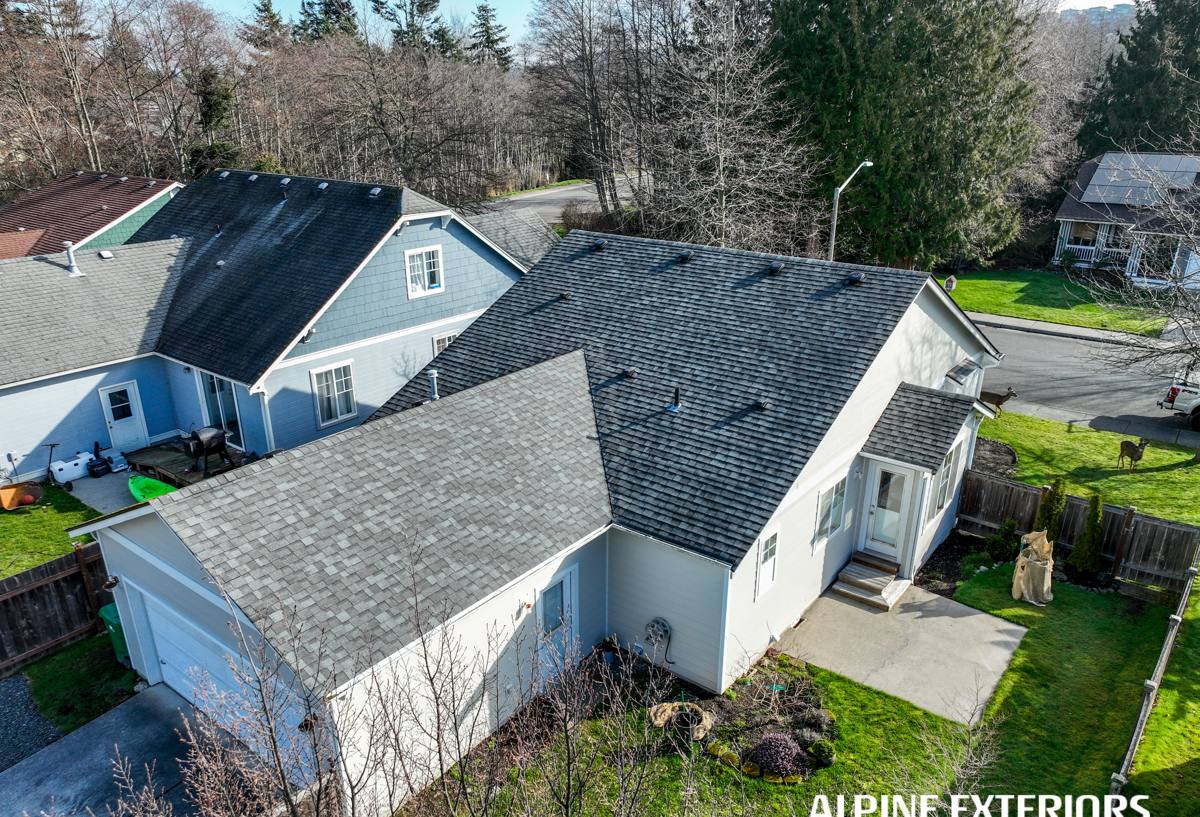
Moss doesn't just grow on roofs here — it thrives. Shaded, north-facing slopes and anything under tree cover can hold moisture almost year-round, and moss roots work their way under shingle edges, lifting them and creating entry points for water. Gutters clogged with needles and moss debris back up during heavy rain events, which sends water where it shouldn't go: under flashing, behind fascia, and into soffits.
Windows
Driving rain in this region often comes in sideways during winter storms, which puts real pressure on window flashing and seals that were installed to a lower standard. Older single-pane or poorly flashed windows fog, leak, and let cold air infiltrate, and condensation between panes is a common complaint we hear from Ferndale homeowners with aging window systems.
Decks
Decks take the climate's punishment directly. Standing moisture, moss growth on boards, and freeze-thaw cycles during the occasional cold snap all accelerate wear on untreated or poorly maintained decking, especially at ledger boards and post bases where water tends to collect.
Why We Install Only James Hardie Fiber Cement Siding
We made a deliberate decision as a company to install James Hardie fiber cement exclusively — not vinyl, not LP SmartSide, not cedar, not other fiber cement brands. That's a narrower lineup than a lot of contractors offer, and we think that's the right trade-off for homes in a climate like Ferndale's.
Built for Moisture, Not Just Tolerant of It
Fiber cement is a mix of cement, sand, and cellulose fiber, which means it doesn't absorb and swell with water the way wood-based products can, and it doesn't degrade under UV and moisture cycling the way some polymer-based products do over decades of exposure. Hardie's HZ5 product line is specifically engineered for regions with cold, wet winters — which fits the Pacific Northwest better than a generic all-climate product.
ColorPlus Factory Finish
Instead of field-painted siding, Hardie's ColorPlus finish is baked on in a controlled factory environment, which gives it more consistent adhesion and UV resistance than site-applied paint. In a climate where damp conditions can interfere with paint curing and adhesion, that factory finish matters more than it might in a drier region.
Non-Combustible
Fiber cement doesn't burn. That's not the primary reason we recommend it for coastal Whatcom County, but it's a meaningful, permanent advantage over wood and some engineered wood products, and it's part of why insurers increasingly look favorably on it.
A Warranty Backed by the Manufacturer
Hardie's transferable limited warranty is a real asset if you sell the home down the road, and it reflects the manufacturer's confidence in the product's long-term performance when installed to spec — which is the other half of the equation. Fiber cement installed with the wrong fasteners, insufficient clearance, or poor flashing details will still cause problems, so installation discipline matters as much as the product choice.
How Siding Materials Compare for This Climate
| Material | Moisture Behavior | Maintenance | Typical Lifespan Here |
|---|---|---|---|
| James Hardie fiber cement | Dimensionally stable, doesn't swell or rot | Occasional wash, repaint only when desired | 30-50 years with correct install |
| Vinyl | Doesn't rot but can warp/crack in temperature swings, seams allow moisture behind panels | Low, but limited repair options if damaged | 20-30 years, fades over time |
| Cedar / wood | Absorbs moisture readily, prone to rot in persistent damp conditions | Frequent refinishing, sealing, and repair | 15-25 years depending on upkeep |
| LP SmartSide / engineered wood | Resists moisture better than solid wood but edge-sealing is critical | Moderate; edges and cuts need ongoing attention | 20-30 years if maintained closely |
These are general ranges, not guarantees — actual lifespan always depends on exposure, installation quality, and upkeep. But the pattern holds across the industry: materials that don't absorb water in the first place have an easier time in a climate like this one.
Our Process for Ferndale Homes
We treat every Ferndale project as a coastal-adjacent, high-moisture job from the start, not as a standard install with extra caulk.
Assessment First
Before we talk products, we look at the specific exposure of your home — which walls take the brunt of prevailing weather, where moss and algae are already established, where gutters and downspouts are managing water poorly, and whether existing sheathing or framing has taken on hidden moisture damage.
Flashing and Water Management
Most siding failures we see aren't failures of the siding material itself — they're failures of flashing, house wrap, and water management details around windows, doors, and roof lines. We install to those details deliberately, because in this climate a shortcut at a window head flashing shows up as a stain or soft spot years later.
Local Crew Knowledge
A crew that works Whatcom County exteriors regularly knows which details fail first in this climate and builds in extra care there as a matter of habit, not as an afterthought when something's already gone wrong.
Roofing, Windows, and Decks — Handled by the Same Standard
We don't only do siding. Roofing, windows, and decks all face the same salt air, driving rain, and moss pressure, and we apply the same climate-first mindset to each.
- Roofing: proper ventilation and moss-resistant materials where appropriate, along with attention to valleys, flashing, and gutter capacity for heavy rain events.
- Windows: correctly flashed installations that account for wind-driven rain, plus glazing options suited to the region's temperature range.
- Decks: ledger and post-base details built to shed water, with material choices that hold up to persistent dampness and moss growth.
Handling all four trades under one roof means fewer handoffs between contractors and a consistent standard for how water is managed around your entire home, not just one component of it.
A Maintenance Checklist for Homes in This Climate
- Clean gutters and downspouts at least twice a year, more often if you're under conifer cover
- Inspect roof slopes for moss growth each spring and address it before it spreads under shingle edges
- Rinse siding periodically to remove salt residue and organic growth before it takes hold
- Check window seals and caulking annually, especially on walls facing prevailing storms
- Sweep and inspect decks for moss and standing water, particularly around ledger boards and post bases
- Watch for soft spots, discoloration, or peeling near ground level and around penetrations — early signs of moisture intrusion
Choosing a Local Contractor
Whatcom County has no shortage of contractors willing to quote a siding, roofing, window, or deck job. Fewer of them work this specific coastal-influenced climate day in and day out, and that experience shows up in the details — where they add extra flashing, which fastener spacing they use, how they handle a wall that's clearly taken on moisture over the years.
When vetting a contractor for exterior work in this area, ask direct questions: are they licensed and insured in Washington, do they carry manufacturer certifications for the products they install, will they show you their flashing and water-management approach before work starts, and can they explain why they recommend one material over another for your specific exposure. A contractor who can answer those clearly, without hedging, is worth the extra conversation.
If you're weighing a siding, roofing, window, or deck project for a Ferndale home, we're happy to take a look and talk through what your home's specific exposure calls for. Reach out for a free, no-pressure estimate using the form below.