 Blaine Siding
 Sandy Point's Exterior Climate Challenge
Homes along Sandy Point sit close enough to the water that salt air is a daily fact of life, not an occasional nuisance. Combine that with the driving, wind-blown rain that rolls in off the Strait of Georgia and the long, damp moss season that Whatcom County is known for, and you get an exterior environment that punishes weak materials and sloppy installation faster than almost anywhere else in the region. Paint fails early. Caulk lines open up. Wood softens where water sits. It's not that Sandy Point is unusual for the Pacific Northwest coast — it's that the coastal exposure here concentrates all of the region's typical stressors into one property.
That combination is exactly why we treat service-area work in Sandy Point differently than a typical inland Blaine or Whatcom County job. Salt-laden air accelerates corrosion on fasteners and trim, driving rain finds every gap in flashing and siding laps, and moss doesn't just grow on roofs — it takes hold on shaded siding, deck boards, and anywhere moisture sits without enough sun or airflow to dry it out.
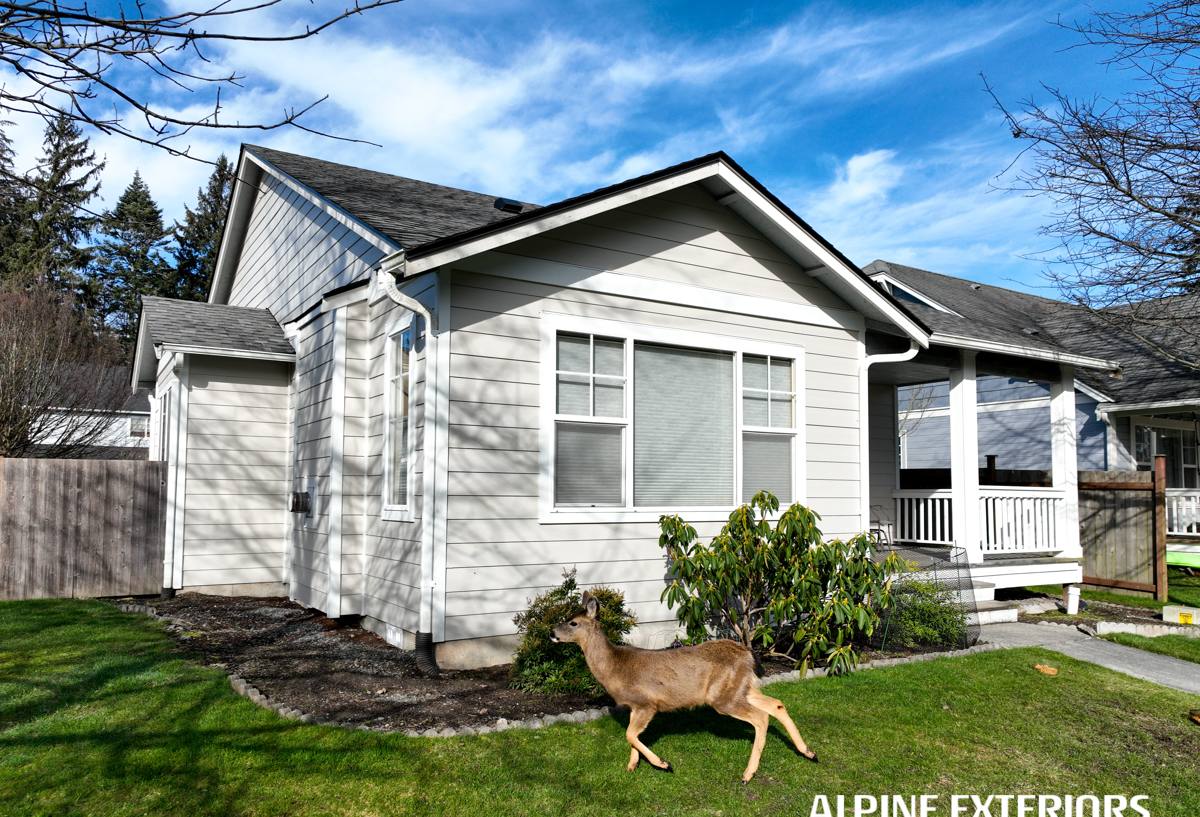
Why Siding Material Choice Matters More Here
Every siding material handles moisture and salt exposure differently, and the gap between a good choice and a poor one shows up faster on a waterfront or near-waterfront lot than it does further inland. This is the core of why we standardized on one product line rather than offering a menu of options.
Vinyl Siding
Vinyl is inexpensive and low-maintenance in mild conditions, but it's a thin, flexible plastic product that expands and contracts with temperature swings and can warp or become brittle over time — especially with prolonged sun and salt exposure. Seams and butt joints are also natural points where wind-driven rain can work its way behind the panels.
Cedar and Other Wood Siding
Cedar has real appeal and a long track record, but it's a maintenance-intensive product wherever moisture is constant. In a salt-air, high-rainfall environment like Sandy Point, wood siding needs disciplined refinishing on a tight cycle to keep water out of the grain. Skip a cycle or two and you're looking at cupping, checking, and rot in vulnerable spots — particularly on north- and west-facing walls that stay damp longest.
LP SmartSide and Other Engineered Wood Products
Engineered wood siding products have improved over the years, but they're still wood-based composites with an engineered resin coating, and their long-term performance depends heavily on unbroken edge sealing and correct installation. In a climate where every seam is exposed to salt and rain, we've made the professional call not to install these products. It's not that they can't work — it's that the margin for error is thinner than we're willing to accept on homes we put our name behind.
Fiber Cement
Fiber cement is a cement-and-cellulose composite that doesn't absorb water the way wood does, doesn't expand and contract the way vinyl does, and doesn't burn. It's heavier and more labor-intensive to install correctly, but the material itself is built for exactly the conditions Sandy Point deals with: salt, moisture, and temperature swings.
| Material | Salt Air Resistance | Moisture Behavior | Maintenance Cycle |
|---|---|---|---|
| Vinyl | Moderate — can fade, warp over time | Doesn't absorb water, but seams leak | Low, but limited repair options |
| Cedar | Weak without diligent upkeep | Absorbs water, prone to rot if unsealed | High — refinish every few years |
| LP SmartSide / engineered wood | Depends on edge sealing quality | Vulnerable at cut edges and seams | Moderate — inspect seals regularly |
| James Hardie fiber cement | Strong — non-organic, salt-resistant material | Doesn't swell, rot, or absorb like wood | Low — periodic cleaning and inspection |
James Hardie: What We Actually Install
We install James Hardie fiber cement siding exclusively. It's a decision we made because it's the product that consistently holds up in coastal Pacific Northwest conditions when installed correctly, and it's the one we're willing to stand behind on every job.
Climate-Engineered Product Lines
James Hardie makes region-specific formulations, engineered for different climate zones rather than a single one-size-fits-all mix. For a location like Sandy Point, with sustained coastal moisture, that climate-specific engineering matters — it's built to perform in wet, humid conditions rather than a dry-climate spec that would perform differently here.
ColorPlus Factory Finish
Most of what we install uses Hardie's ColorPlus finish — a factory-applied, baked-on coating that's far more consistent and durable than field-applied paint. In a salt-air environment, factory finish matters because it resists fading and chalking better than paint applied on-site, and it holds its color line at seams and cut edges when installed with the proper touch-up process.
Non-Combustible Material
Fiber cement doesn't burn. That's not a Sandy Point-specific climate benefit, but it's part of why we standardized on Hardie across every site we serve — it's one less variable to worry about, and it holds up structurally in ways combustible siding materials simply can't.
Warranty Backing
James Hardie's product warranties are transferable and are backed by a large, established manufacturer — not a niche or regional supplier. That matters for homeowners planning to sell in the coming years, since a documented, transferable warranty is something buyers and their inspectors notice.
Beyond Siding: Roofing, Windows, and Decks in This Microclimate
Siding is only one piece of a home's exterior envelope, and in a place like Sandy Point, the systems around it face the same salt air and driving rain. We handle roofing, windows, and decks as well, because those systems interact directly with siding performance — bad flashing at a roofline or a leaking window can undermine even correctly installed siding.
Roofing
Roofs here deal with the same moss pressure as siding, plus wind-driven rain that tests every flashing detail. Proper underlayment, ventilation, and flashing at valleys and penetrations matter more here than in drier inland areas, where a marginal detail might go unnoticed for years.
Windows
Window flashing and sealant details are one of the most common sources of hidden water intrusion on coastal homes. When we replace windows, we pay close attention to how the new unit integrates with the surrounding siding and weather barrier — a mismatch there is a leak waiting to happen, regardless of how good the window itself is.
Decks
Decks in Sandy Point face near-constant dampness for much of the year, plus salt exposure if they're anywhere near open water. Fastener corrosion, board spacing for drainage, and ledger flashing are the details that determine whether a deck lasts or starts showing problems within a few seasons.
Why a Local Crew Matters Here
Sandy Point's exposure isn't uniform — a home tucked behind a tree line handles moss and moisture differently than one with an open, wind-exposed elevation facing the water. A crew that works this specific stretch of Whatcom County regularly recognizes those differences on sight: which walls need extra attention to flashing, which sides will need more frequent cleaning, and where standard details need to be tightened up for the added exposure.
Local also means accountability. We're not a crew passing through the area for one job — we're back in Blaine and the surrounding communities on a regular basis, which means warranty callbacks, follow-up questions, and maintenance advice come from people who actually know the property and the conditions it sits in.
What Homeowners Can Expect for Maintenance
Fiber cement is a low-maintenance product, not a no-maintenance one. In a salt-air environment, a little routine attention goes a long way toward protecting the investment.
- Rinse siding periodically to clear off salt residue, especially on walls facing open water
- Keep gutters clear so water doesn't overflow onto siding or trim
- Trim back vegetation and tree cover that keeps shaded wall sections damp and encourages moss
- Inspect caulking at trim, window, and door edges annually and touch up as needed
- Walk the exterior after major windstorms to check for loose trim, damaged flashing, or debris buildup
- Address any small paint or finish touch-ups promptly rather than letting them expand
Our Process for Sandy Point Homes
We start with an on-site assessment of the specific exposure your home faces — orientation to prevailing wind and rain, proximity to the water, shade patterns, and the condition of the existing siding, trim, and flashing. From there we put together a plan that addresses not just the siding itself but the water management details around it: flashing, house wrap, and trim work that determine whether the new siding performs the way it's designed to.
We also walk homeowners through the realistic cost factors up front, since every property's exposure and existing condition changes the scope.
| Cost Factor | Why It Matters in Sandy Point |
|---|---|
| Existing wall condition | Rot or water damage from prior siding must be repaired before new siding goes on |
| Trim and flashing detail | Coastal exposure demands more careful, and sometimes more extensive, flashing work |
| Home orientation and exposure | Water- and wind-facing elevations may need additional prep or product thickness |
| Access and site conditions | Waterfront lots can have tighter access, affecting labor and staging |
If your Sandy Point home is showing signs of wear from salt air, rain, or moss — or you're planning ahead before problems start — we're happy to take a look and walk you through what we see. Reach out for a free, no-pressure estimate using the form below.