 Blaine Siding
 Siding Built for Dakota Creek's Weather
Dakota Creek sits close enough to the water that homes here live with a version of the Pacific Northwest climate that's a notch more demanding than what you'll find further inland in Whatcom County. Salt-laden air off the coast, long stretches of driving rain, and a moss season that can run most of the year put real, ongoing stress on a home's exterior. If you own a home in this area, you've probably already noticed it — paint that fades or chalks faster than it should, trim that stays damp longer after a storm, or a north-facing wall that grows moss no matter how often you clean it.
We work on homes throughout this part of Blaine, and Dakota Creek's exterior challenges are consistent enough that we plan for them from the first estimate, not as an afterthought. That means thinking about drainage, ventilation, material choice, and finish quality together, not just picking a siding product and hoping it holds up.
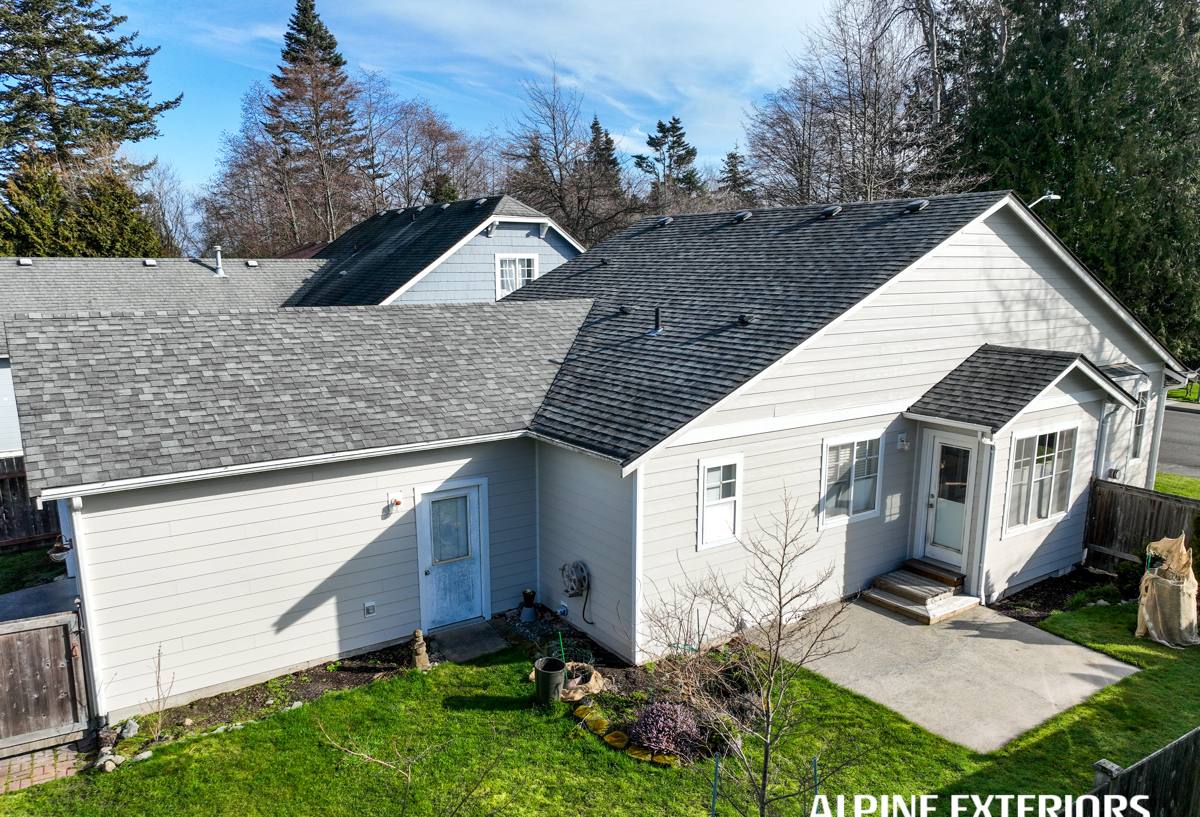
What Salt Air and Driving Rain Actually Do to a House
Salt Air
Airborne salt is corrosive to exposed metal — fasteners, flashing, gutter hardware, and anything with a raw or thin-coated edge. Over years, that corrosion can show up as rust streaking down siding, staining on fascia boards, or fasteners that back out or fail earlier than they should. It also accelerates the breakdown of lower-grade paints and coatings, which is part of why homes closer to the water tend to need repainting more often than the same house would inland.
Driving Rain
Whatcom County's rain doesn't just fall straight down — wind off the water routinely pushes it sideways into walls, especially on west- and south-facing exposures. That kind of wind-driven rain finds every weak point in a building envelope: gaps around trim, poorly lapped siding, unsealed penetrations for vents and fixtures, and aging caulk joints. Water that gets behind siding and doesn't have a way to dry out is the single biggest cause of rot and hidden structural damage we see in this area.
Moss and Algae
Shade, moisture, and moderate temperatures are exactly what moss and algae need to thrive, and Dakota Creek has all three for a good part of the year. Moss on siding isn't just cosmetic — it holds moisture against the surface, and on wood or wood-composite products it can contribute to rot over time. Algae staining (the greenish-black streaking you often see on north walls and under eaves) is mostly a coating and cleaning issue, but it's a visible sign of a surface that's staying wet longer than it should.
Why We Standardized on James Hardie Fiber Cement
We install James Hardie fiber cement siding exclusively. We don't install vinyl, LP SmartSide, Cemplank, Allura, or unfinished wood siding like primed spruce or cedar. That's a deliberate standard, not a limitation on what we're capable of installing — and it matters even more in a climate like Dakota Creek's.
Fiber cement is not organic, so it doesn't feed rot the way wood-based products can if moisture gets in. It's dimensionally stable in wet-dry cycling, which matters when a wall is getting soaked by driving rain one day and drying out the next. And Hardie's ColorPlus factory finish is baked on under controlled conditions, which holds up to sun and salt exposure noticeably better than field-applied paint — the finish most other siding products rely on. That's a real advantage on a coastal property where recoating every few years isn't something most homeowners want to sign up for.
None of this means other products are without merit — vinyl is inexpensive and low-maintenance in mild climates, and cedar has genuine visual appeal. But when we weigh moisture behavior, maintenance burden, and long-term performance against what Dakota Creek's weather actually does to a house, Hardie is what we're comfortable standing behind and putting our name on.
Hardie's HZ5 Engineering
James Hardie engineers its products by climate zone, and the Pacific Northwest falls into their HZ5 category — formulated specifically for regions with high moisture exposure. That's not marketing language; it reflects real differences in the product's moisture resistance and freeze-thaw performance compared to siding engineered for drier regions. For a property near Dakota Creek, installing the version of the product actually built for this weather, rather than a generic formulation, is part of doing the job right.
Comparing Siding Options for a Coastal Whatcom County Home
| Material | Moisture & Salt Air Behavior | Maintenance | Typical Lifespan Here |
|---|---|---|---|
| James Hardie Fiber Cement | Non-combustible, dimensionally stable, factory-baked finish resists fading and salt exposure | Low — occasional wash, no repainting for many years | Decades with correct installation |
| Vinyl | Won't rot, but can warp or crack in temperature swings and fades unevenly over time | Low, but color fade is permanent (can't be repainted easily) | Moderate |
| Cedar / Primed Wood | Organic material; vulnerable to moisture intrusion, rot, and moss retention without diligent upkeep | High — regular sealing, painting, and moss treatment | Shorter without consistent maintenance |
| LP SmartSide / Engineered Wood | Better moisture resistance than raw wood, but edge and seam sealing is critical in high-rain areas | Moderate — needs field-applied finish upkeep | Moderate, installation-sensitive |
More Than Siding: The Full Exterior Envelope
Siding doesn't work in isolation — it's one part of a home's exterior system, and in a wet, salty climate all the parts need to work together. We also handle roofing, windows, and decks, and we think about how each of those connects to the siding around it.
Roofing
A roof that's shedding water properly, with flashing and moss control in good shape, protects the siding below it. Poor roof drainage is a common, avoidable cause of siding damage — water dumping off a roof edge onto a wall below will wear out that section of siding years before the rest of the house.
Windows
Window flashing and trim details are one of the most common failure points for water intrusion. When we install or replace siding around existing windows, we check that flashing is integrated correctly rather than just cutting siding to fit around a potential leak point.
Decks
Decks in this climate take the same driving rain and moss exposure as siding, plus standing water and foot traffic. Ledger board connections where a deck meets the house are a frequent source of hidden rot if they aren't flashed properly — something worth checking even if the deck itself looks fine.
Our Process for Dakota Creek Homes
- On-site assessment: We walk the exterior, checking exposure direction, existing moisture damage, moss patterns, and the condition of trim, flashing, and fasteners.
- Moisture and structural check: Before new siding goes up, we look at what's underneath — sheathing condition, existing water damage, and whether prior work was flashed correctly.
- Weather-resistive barrier and flashing: Proper house wrap, flashing at every penetration, and correct lapping are what actually keep driving rain out — the siding is the last layer, not the only one.
- Hardie installation to manufacturer spec: Fastener spacing, gaps, caulking, and clearances all affect long-term performance and warranty coverage, so we follow Hardie's installation requirements closely.
- Final walkthrough: We review the finished work with the homeowner and explain any maintenance basics specific to their home's exposure.
Signs Your Current Siding Needs Attention
- Persistent moss or algae staining that returns quickly after cleaning
- Soft or spongy spots when you press on siding, especially near the bottom edges or around windows
- Visible gaps, warping, or buckling at seams and corners
- Paint that's peeling, bubbling, or chalking heavily on one side of the house
- Rust streaking near fasteners, vents, or metal trim
- Interior signs like musty smells or discoloration on walls that share an exterior wall
Any one of these on its own might be minor. Several together, especially on the sides of the house that take the most weather, are worth having looked at before they turn into a bigger repair.
Why a Local Crew Makes a Difference
A crew that works regularly in Blaine and the surrounding Whatcom County coastline knows which exposures need extra attention, how moss behaves on different parts of a roofline through the year, and what correct flashing looks like for this specific weather pattern — not a generic checklist written for a drier region. That local familiarity shows up in the details: where we pay closer attention during install, what we flag during an inspection, and how we set expectations for maintenance afterward.
It also means we're accountable locally. If something needs a follow-up look after a hard winter storm, we're not far away.
Get an Estimate for Your Dakota Creek Home
If you're dealing with aging siding, moisture concerns, or just want an honest read on where your home's exterior stands, we're happy to take a look. Estimates are free and there's no pressure — just a straightforward assessment and clear options, including where James Hardie fits and why. Use the form below to get started.