 Blaine Siding
 Siding in Lynden: Built for Whatcom County's Weather, Not Just Its Looks
Lynden sits a little inland from the coast, in the heart of Whatcom County's Nooksack River valley, but that distance doesn't buy a house much protection from the region's weather. The same weather systems that soak Blaine and Bellingham move straight through Lynden on their way to the foothills, and the valley's flat, open farmland does little to slow them down. Homes here deal with long stretches of driving rain, high ambient humidity from the surrounding fields and river bottom, and a moss and algae season that can run nine months out of the year on a shaded roof or a north-facing wall.
Lynden doesn't get the same direct salt-air exposure that homes right on Semiahmoo Bay or Drayton Harbor get, so corrosion of fasteners and hardware is a smaller factor here than it is closer to the water. But the moisture load is just as real. Combine that with the freeze-thaw swings Whatcom County sees in winter, and you get a set of exterior conditions that punishes any siding product with a weak point at the seams, the fasteners, or the paint film.
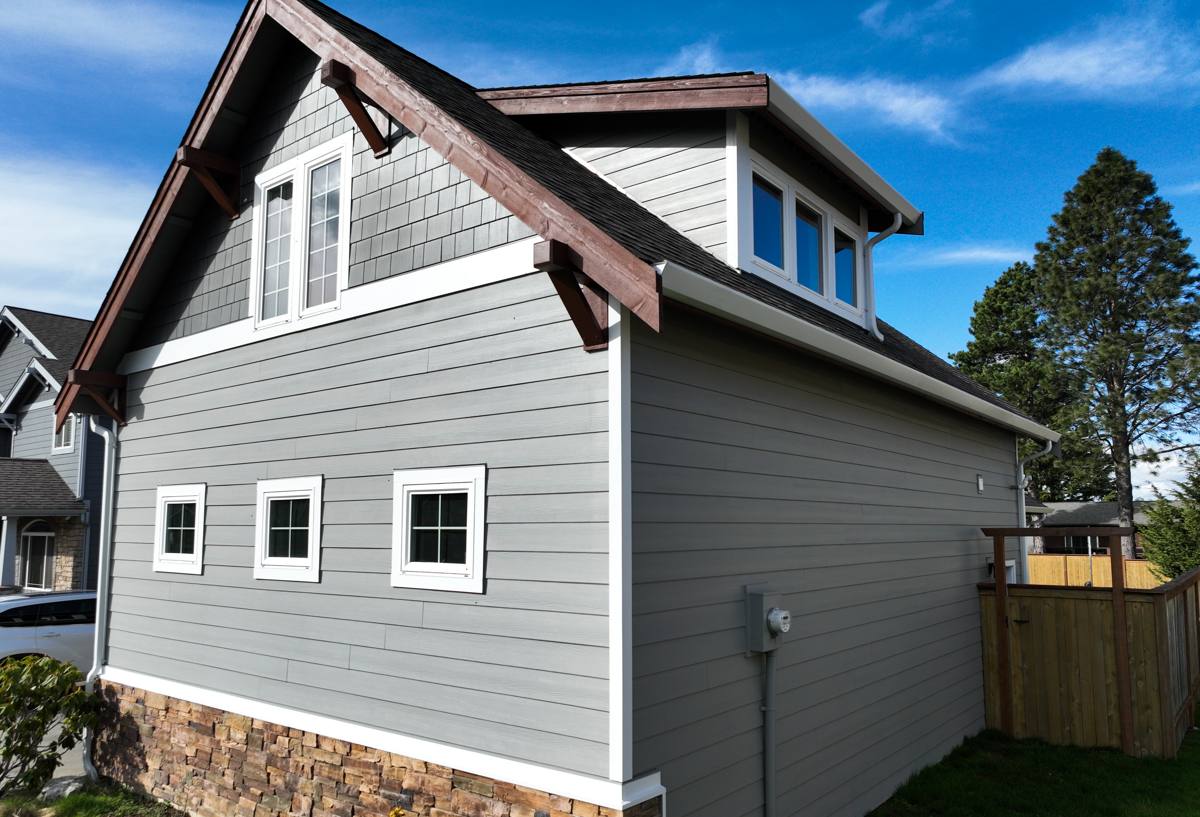
What Lynden's Climate Actually Does to a House
Driving Rain and Wind-Driven Moisture
Storms moving up from the Pacific tend to arrive with sustained wind, which pushes rain sideways into wall assemblies rather than letting it simply run off a vertical surface. That matters more than most homeowners realize — it's not the total rainfall that causes problems, it's how much of it gets forced behind trim, around window openings, and into seams that weren't sealed or flashed correctly the first time.
Humidity and the Long Moss Season
The Nooksack valley holds moisture close to the ground longer than more exposed coastal areas do, especially on shaded lots or homes backed up against trees or hedgerows common on Lynden properties. That humidity feeds moss, algae, and mildew growth on siding, trim, and roofing — and once organic growth gets a foothold on a porous or absorbent surface, it holds even more moisture against the wall, accelerating whatever damage is already underway.
Freeze-Thaw Cycling
Winters in Lynden aren't brutal, but they're consistent — repeated cycles of near-freezing nights and wet, thawing days. Any siding material that absorbs water will expand and contract through those cycles. Over years, that's what causes swelling, cracking, and paint failure in products that aren't engineered to resist moisture absorption in the first place.
Why We Install Only James Hardie Fiber Cement Siding
We made a decision as a company to install James Hardie fiber cement siding exclusively — not vinyl, not LP SmartSide, not Cemplank, not Allura, not primed spruce or cedar. That's not a marketing position, it's a practical one, built around exactly the kind of weather Lynden sees every year.
Fiber cement is non-combustible and dimensionally stable, meaning it doesn't expand and contract with moisture and temperature the way wood-based or engineered-wood products do. James Hardie's HZ5 product line, in particular, is engineered for the Pacific Northwest's freeze-thaw and high-moisture climate. The factory-applied ColorPlus finish is baked on under controlled conditions, which gives it better fade and moisture resistance than field-applied paint — and that matters a lot in a valley where a fresh paint job can be tested by rain within days of being applied.
Why We Don't Install the Alternatives
Engineered wood siding products like LP SmartSide use a wood-strand substrate that, while treated, still relies on an intact factory coating and careful field sealing at every cut edge to keep moisture out. In a climate with Lynden's rain volume and humidity, any lapse in that seal — a missed caulk joint, a cut edge left unsealed — becomes a long-term liability. Vinyl siding is low-maintenance in the sense that it doesn't need painting, but it's a thin material that can warp, crack in cold snaps, and fade unevenly, and it doesn't offer the fire resistance or resale value that fiber cement does. Primed spruce and cedar are attractive but demand a repainting and caulking schedule that most homeowners underestimate — and in a nine-month moss season, that maintenance window gets shorter every year. We'd rather install one product correctly than offer five options and let the climate sort out which ones fail first.
Roofing, Windows, and Decks: The Same Climate Logic Applies
Siding doesn't work in isolation — it's one part of a building envelope that either sheds Lynden's weather or lets it in. We handle all four major exterior systems for exactly that reason.
Roofing
Roofs take the brunt of the moss and algae growth in this valley, especially on north-facing slopes and anywhere overhanging trees keep a section shaded most of the day. Proper underlayment, flashing, and ventilation matter as much as the roofing material itself — a roof that traps moisture underneath will fail from the inside long before the shingles wear out.
Windows
Window flashing and integration with the siding plane is one of the most common failure points we find on older Lynden homes. Wind-driven rain finds gaps around window openings faster than almost anywhere else on the house, so when we replace siding, we treat window flashing and trim integration as part of the same job, not an afterthought.
Decks
Decks in this area deal with standing moisture, freeze-thaw movement in ledger connections, and the same moss growth that affects roofs and siding. Ledger board flashing where a deck meets the house is a frequent trouble spot we watch closely, since a poorly flashed ledger can quietly rot the wall structure behind it.
Comparing Siding Options for a Lynden Home
| Material | Moisture Behavior | Maintenance | Fire Resistance | Typical Lifespan |
|---|---|---|---|---|
| James Hardie Fiber Cement | Dimensionally stable, engineered for wet climates (HZ5) | Low — factory finish, occasional washing | Non-combustible | 30+ years with proper install |
| Vinyl | Doesn't absorb water, but can warp/crack in temperature swings | Low, but limited repair options if damaged | Combustible, can melt/deform | 20-30 years |
| LP SmartSide / Engineered Wood | Requires intact coating; vulnerable at cut edges and seams | Moderate — coating and caulk inspection needed | Combustible | 20-30 years if maintained |
| Cedar / Primed Spruce | Absorbs moisture readily; needs consistent sealing | High — repainting/staining on a regular cycle | Combustible | 15-25 years, install and maintenance dependent |
What Drives the Cost of a Siding Project in Lynden
Every home is different, so we don't quote broad averages until we've actually walked a property, but a few factors consistently move the price up or down:
| Factor | Why It Matters |
|---|---|
| Existing siding removal | Tear-off and disposal of old material adds labor and dump costs |
| Wall complexity | Dormers, gables, and multiple stories increase cutting, staging, and install time |
| Underlying sheathing condition | Rot or water damage found once old siding comes off requires repair before new siding goes on |
| Trim and detail work | Window trim, corner boards, and fascia detailing add material and labor |
| Product line and color | Hardie's HZ5 panels and ColorPlus finish options vary by style and color selection |
A Homeowner's Checklist Before Hiring a Siding Contractor
- Ask specifically which siding brand and product line will be installed — get it in writing, not just "fiber cement" or "James Hardie-style"
- Confirm the crew is trained and, where applicable, factory-certified for the specific installation method that product requires
- Ask how window and door flashing will be integrated with the new siding, not just how the siding itself will be hung
- Get clarity on what happens if rot or damage is found on the sheathing once old siding is removed
- Check that fastener spacing, clearances, and caulking follow the manufacturer's written installation instructions — this is what keeps a warranty valid
- Ask about the warranty structure: what's covered by the manufacturer versus what's covered by the installer's workmanship warranty
Why a Local Whatcom County Crew Matters
A crew that works this county regularly knows how Lynden's weather actually behaves through the seasons — not from a spec sheet, but from having installed and revisited siding on homes here through multiple wet winters. That matters when it comes to sequencing a project around the weather, understanding which details on a given home need extra attention because of its orientation or tree cover, and being reachable afterward if a question comes up. We're not working out of a regional office two counties away; Whatcom County, including Lynden, is where we actually work.
Local knowledge also means we're familiar with the permitting expectations and inspection process for exterior work in this part of the county, so a project moves forward without unnecessary delays.
Our Process for a Lynden Siding Project
We start with an on-site inspection and honest assessment of your current siding, trim, and any visible moisture damage. From there we walk through product options — though for siding, that conversation centers on which James Hardie profile and color fit the home, since it's the only siding system we install. We handle removal, any necessary sheathing repair, flashing integration at windows and doors, and installation to Hardie's written specifications, which is what keeps the manufacturer's warranty intact.
If your project involves more than siding — a roof nearing the end of its service life, aging windows, or a deck that needs attention — we can scope those as part of the same visit, since addressing the building envelope together often makes more sense than treating each system separately.
If you're weighing a siding, roofing, window, or deck project for your Lynden home, we're happy to take a look and give you a straightforward, no-pressure estimate. Use the form below to get started.