 Blaine Siding
 Why Board & Batten Keeps Coming Up in Blaine
Board and batten is one of the most requested siding looks in Whatcom County right now — on new farmhouse-style builds, on waterfront remodels near Semiahmoo and Drayton Harbor, and on older homes getting a full exterior refresh. The vertical lines read as clean and modern, but the pattern itself is centuries old, originally used to cover gaps between wide barn boards. That history matters, because the same gap-and-cover logic that worked on a barn does not automatically work on a modern, insulated, moisture-managed house wall. Done wrong, board and batten is one of the more failure-prone siding styles in our climate. Done right, with the correct product and the correct water management behind it, it is genuinely durable.
We install board and batten exclusively in James Hardie fiber cement, and this page walks through why the material and the detailing matter more than the look itself.
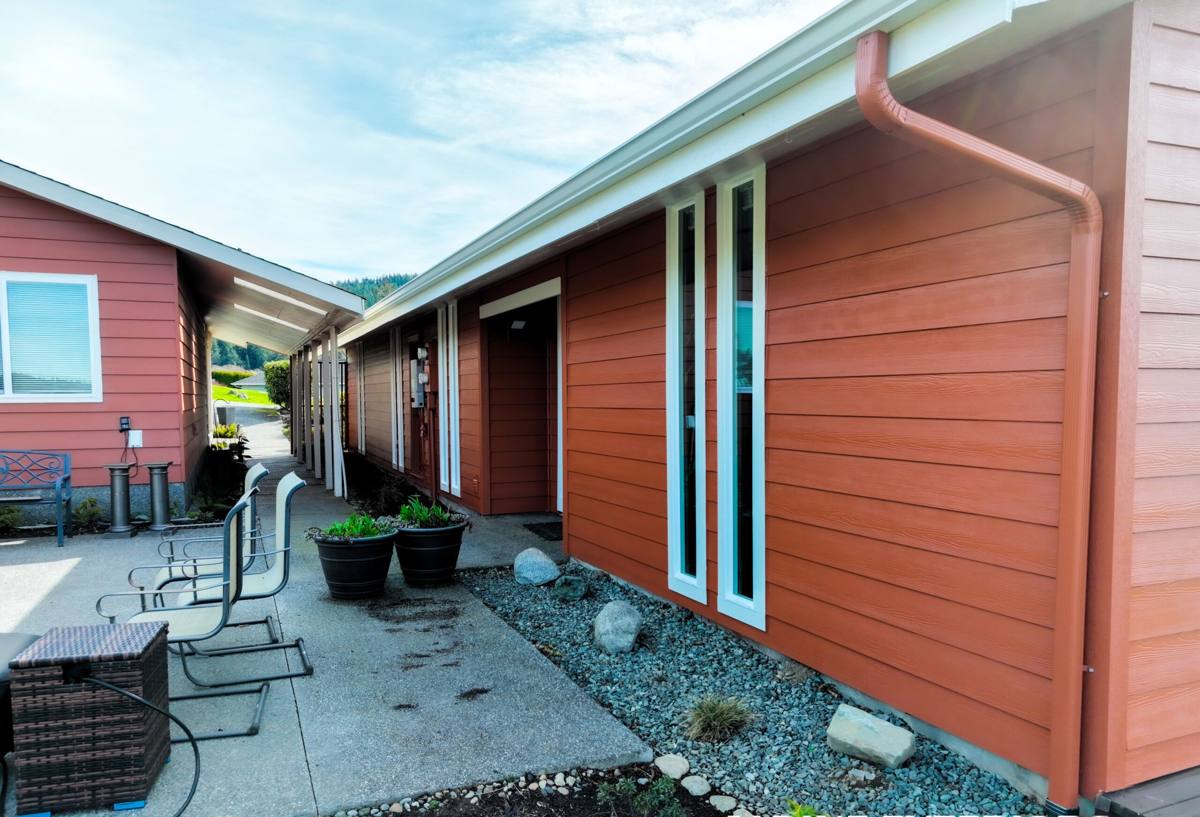
What Blaine's Climate Actually Does to a Wall
Blaine sits right on Semiahmoo Bay, at the northwest corner of Whatcom County, which means homes here deal with a combination most inland siding never sees:
- Salt-laden air off the Strait of Georgia and Boundary Bay that accelerates corrosion on fasteners, flashing, and any metal trim
- Driving, wind-blown rain that hits siding at an angle rather than falling straight down, pushing water sideways into laps and joints
- A long moss and algae season — Blaine's mild, wet winters and shaded lots mean organic growth has months to establish on any surface that stays damp
- Wide temperature and moisture swings between our dry summer stretch and the wet season, which stresses any material that isn't dimensionally stable
Board and batten's vertical battens create dozens of extra seams and shadow lines per wall compared to lap siding. Every one of those seams is a place water can collect, or a place moss can get a foothold, if the material and the install don't account for it.
The Two Ways Board & Batten Gets Built
True Board & Batten (Vertical Panels + Battens)
Wide vertical panels are installed first, then narrower battens are fastened over the seams between panels. This is the traditional method and, with fiber cement, it holds up well because the panel itself is a true water-shedding surface, not just a decorative face.
Batten-Over-Panel Systems
Some manufacturers offer a single engineered panel with the batten look pre-formed or pre-attached, which reduces the number of field seams. James Hardie's vertical siding options fall into this category in some configurations, cutting down on the joints that would otherwise need field flashing and caulking.
The distinction matters for maintenance: fewer field-cut seams means fewer places for a caulk joint to eventually fail, which in a wet climate like ours is where most siding problems start.
Why the Substrate Underneath Matters as Much as the Face Material
A huge share of board and batten failures we get called out to inspect aren't actually a siding problem — they're a water management problem. Vertical siding patterns rely on:
- A properly lapped weather-resistant barrier behind the siding
- Correct flashing at every horizontal transition — window heads, belly bands, roof-to-wall intersections
- A drainage plane or furring strategy so water that does get behind the battens has somewhere to go besides sitting against the sheathing
- Fastener patterns that don't over-penetrate or under-penetrate the framing
Fiber cement is dimensionally stable and won't warp or cup the way some wood-based products can when trapped moisture cycles through wet and dry seasons, but it still needs to be installed over a wall assembly that's actually managing water correctly. No siding material fixes a bad water management plan behind it.
James Hardie's Board & Batten Options
HardiePanel Vertical Siding
HardiePanel is the workhorse product for true board and batten, available in smooth or stucco-like textures, installed with Hardie's trim battens over the seams. It's engineered as part of Hardie's HZ5 climate line, formulated for regions with significant moisture exposure — a good match for a coastal Whatcom County property.
HardieTrim Battens
The battens themselves are fiber cement, not wood, which matters more than it sounds. Wood battens on a board and batten job are notorious for being the first thing to rot, because they sit proud of the wall and catch the most direct rain and standing moisture. Fiber cement battens don't absorb water the way wood does and don't need the same paint maintenance cycle.
ColorPlus Factory Finish
Where available for the panel and batten profiles, ColorPlus finish is baked on at the factory under controlled conditions, rather than field-painted after installation. That matters for board and batten specifically, because factory-applied finish covers cut edges and batten faces more evenly than a field paint job can, and it comes with its own finish warranty separate from the product warranty.
Board & Batten Product Comparison
| Material | How It Handles Driving Rain | Moss/Algae Resistance | Long-Term Maintenance |
|---|---|---|---|
| James Hardie fiber cement | Dimensionally stable, factory-finished face sheds water; correct flashing details manage the rest | Non-organic material; growth is surface-level and washes off, doesn't feed on the substrate | Occasional wash; repaint cycle only if not ColorPlus finished |
| Primed wood panel & batten | Absorbs moisture at cut edges and fastener holes; prone to swelling | Wood is an organic substrate — moss and algae can anchor into surface texture | Regular repainting, caulk maintenance, edge sealing |
| Vinyl board & batten | Sheds bulk water but battens can trap moisture behind if not vented correctly | Better than wood but can still hold grime in shadow lines | Low, but limited repair options if a panel cracks in freeze-thaw or impact |
| Engineered wood panel | Vulnerable at any exposed cut edge or seam failure | Wood-based core is organic; edge swelling creates growth-friendly texture | Depends heavily on manufacturer warranty terms and correct field sealing |
What Correct Installation Looks Like
- Weather-resistant barrier installed with proper shingle-lap sequencing, no reverse laps that funnel water inward
- Flashing integrated at every window, door, and horizontal trim transition before panels go up
- Furring or a rainscreen gap where the design calls for it, so the wall assembly can dry if any moisture does get behind the panel
- Fasteners driven per Hardie's published fastening schedule — not overdriven, not underdriven, and into framing, not just sheathing
- Batten spacing and fastening that avoids trapping standing water at the base of each batten
- Caulking limited to where Hardie's install instructions actually call for it — over-caulking seams that are designed to be open can trap moisture instead of shedding it
Every one of these steps is a manufacturer-published detail, not a matter of contractor opinion, and skipping any of them is what turns a good-looking board and batten wall into a callback two or three winters later.
A Homeowner's Checklist Before Signing a Board & Batten Contract
- Ask specifically what product line is being installed — HardiePanel HZ5 versus a generic fiber cement panel are not interchangeable
- Confirm whether battens are fiber cement or wood, and ask why
- Ask to see the flashing detail at window heads and roof-to-wall intersections, not just the finished panel look
- Ask whether a rainscreen or furring gap is part of the plan, and why or why not for your specific wall
- Get the warranty in writing — both the Hardie product warranty and the installer's workmanship warranty, which cover different things
- Ask how ColorPlus or field-painted finish options differ in warranty coverage on this specific job
Why We Standardized on James Hardie for This Application
Board and batten is unforgiving of shortcuts because it has more seams, more shadow lines, and more places for water to collect than lap siding. We install James Hardie because the HZ5 product line is engineered for exactly the moisture exposure Blaine deals with, the fiber cement battens don't carry the rot risk of wood battens, and the ColorPlus finish option removes one of the biggest long-term maintenance items — repainting — from a style of siding that already has more surface area to maintain than a flat wall. We don't install wood, LP SmartSide, vinyl, or other fiber cement brands for this application, because the trade-offs on a moisture-sensitive pattern like board and batten aren't ones we're willing to install and then walk away from.
If you're considering board and batten for a home in Blaine or anywhere in Whatcom County, we're happy to walk your specific walls, talk through what the water management plan should look like for your exposure, and put together a free, no-pressure estimate.