 Blaine Siding
 Siding Built for Peace Arch, Not Just Sold There
Peace Arch sits about as close to salt water and the Canadian border as a Whatcom County neighborhood can get, and that location shapes everything about how a house ages here. Homes in this part of Blaine take on marine air off Semiahmoo Bay and Boundary Bay, long stretches of driving winter rain, and a moss season that can run from October well into spring. We're a local crew that works this exact stretch of coastline, and we install one siding system for a reason: it's the one we trust to hold up to what this specific climate does to a house.
This page isn't a sales pitch dressed up as an article. It's an honest look at what Peace Arch's climate does to exterior materials, how we approach siding, roofing, windows, and decks as one connected system, and why we standardized on James Hardie fiber cement instead of the alternatives most contractors still install.
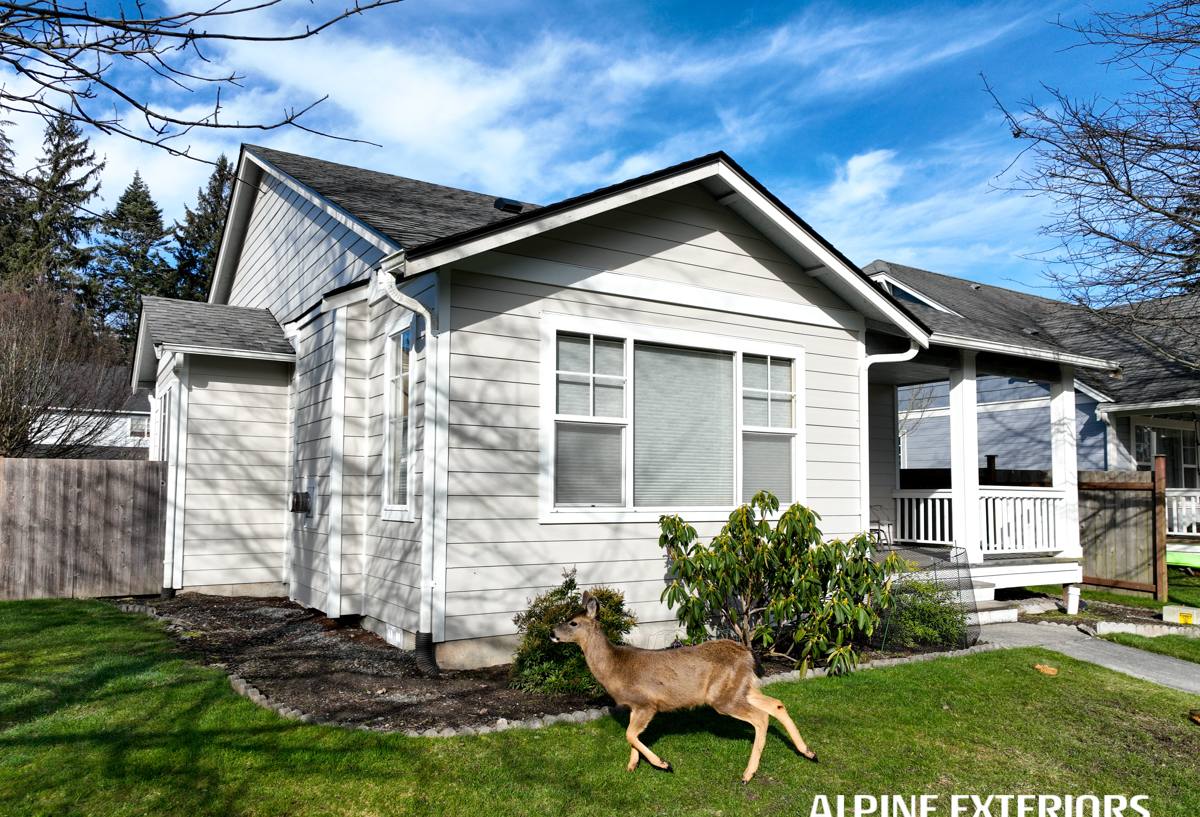
What Blaine's Coastal Climate Actually Does to a House
Salt Air and Metal, Wood, and Fasteners
Being close to the water means airborne salt is a real, ongoing factor here, not an occasional nuisance. Salt-laden moisture accelerates corrosion on fasteners, flashing, and hardware, and it speeds up the breakdown of finishes that aren't engineered to resist it. Cheaper coatings chalk and fade faster near the coast than they do even twenty or thirty miles inland.
Driving Rain and Wind-Driven Moisture
Blaine's storms often come in sideways off the Strait of Georgia and Boundary Bay, which means rain doesn't just fall on a wall, it gets pushed into every seam, joint, and fastener penetration. Siding systems that depend on paint film alone to keep water out, rather than a water-resistant substrate, are working at a disadvantage here from day one. Water that gets behind siding and can't dry out is the root cause of most of the rot and delamination we see on older Peace Arch homes.
Moss, Mildew, and a Long Wet Season
Whatcom County's wet season is long, and Peace Arch's tree cover and coastal humidity keep surfaces damp for extended stretches. Moss and algae don't just look bad, they hold moisture against a surface far longer than open air would, which matters most for materials that swell, absorb water, or support fungal growth when they stay wet.
Why Some Common Siding Choices Struggle Here
None of the materials below are "bad" products in a general sense — they work fine in a lot of climates. Our concern is specific to what a Peace Arch home faces every winter.
- Vinyl siding can warp or become brittle with UV and temperature swings over time, and its seams and panel movement give wind-driven rain more opportunities to find a way behind the cladding.
- LP SmartSide and other engineered wood products are wood-based at the core, which means any breach in the factory coating or field-cut edge creates a path for moisture absorption and swelling in a climate that stays wet as long as ours does.
- Cemplank and Allura are also fiber cement, and fiber cement as a category is the right instinct for this climate. Our decision to install Hardie exclusively comes down to manufacturing consistency, finish warranty structure, and product engineering specific to Pacific Northwest moisture cycles, which we'll get into below.
- Primed spruce or cedar can look beautiful, but bare or primed wood requires a maintenance commitment — regular repainting, caulk inspection, and prompt repair of any moisture intrusion — that most homeowners underestimate until the first signs of rot show up at trim joints and butt seams.
Why We Install James Hardie Fiber Cement Exclusively
James Hardie's fiber cement is engineered from cement, sand, and cellulose fiber. It doesn't absorb water the way wood-based products do, it won't warp or crack from UV and temperature cycling the way vinyl can, and it's non-combustible, which matters more each year as wildfire smoke and dry summer stretches become part of the broader Pacific Northwest picture even in a wet coastal town like Blaine.
The HZ5 Engineering Detail That Matters Here
James Hardie engineers its siding by climate zone, and the HZ5 product line is built for regions with damp, moisture-heavy weather patterns — which describes Peace Arch and the rest of coastal Whatcom County precisely. That's not marketing language; it reflects real differences in moisture management engineered into the product for exactly the conditions this neighborhood sees every winter.
ColorPlus Factory Finish
Rather than relying on job-site paint applied in variable weather, Hardie's ColorPlus finish is baked on in a factory-controlled process, which produces a more consistent, more UV- and salt-air-resistant finish than field-applied paint typically achieves. That matters directly for a coastal property where finish degradation from salt exposure is a real, measurable factor.
The Warranty Backing It Up
Hardie backs its siding with a strong, transferable limited warranty on the substrate and a separate finish warranty on ColorPlus color retention. A transferable warranty also protects resale value — a buyer inspecting a Peace Arch home isn't just looking at the siding, they're looking at what's backing it.
| Factor | Vinyl | Engineered Wood (LP) | Cedar / Primed Wood | James Hardie Fiber Cement |
|---|---|---|---|---|
| Moisture absorption | Low, but seams leak | Moderate to high at cut edges | High if finish fails | Very low, engineered for wet climates |
| Salt air resistance | Fades, chalks over time | Coating degrades, exposes wood | Requires frequent repainting | Factory finish holds color |
| Fire rating | Combustible | Combustible | Combustible | Non-combustible |
| Typical maintenance | Occasional wash | Coating inspection, caulking | Repainting every few years | Wash, periodic caulk check |
| Warranty structure | Varies, often prorated | Manufacturer-specific | None beyond installer | Long transferable substrate + finish warranty |
How We Approach an Install in Peace Arch
Correct installation matters as much as the product choice, especially in a wind-driven-rain climate. A Hardie install that skips proper flashing, gapping, and fastener placement can still let water in, no matter how good the underlying material is. Our process on a Peace Arch project typically includes:
- Assessing existing sheathing and house wrap condition before any new siding goes up, since covering a moisture problem doesn't fix it
- Installing or verifying a weather-resistant barrier and proper flashing at every window, door, and penetration
- Following Hardie's fastening and clearance specifications exactly, including gapping at trim and grade clearance to keep splash-back moisture away from the bottom edge
- Coordinating siding work with any roofing, window, or trim replacement happening at the same time so the whole envelope is addressed together, not patched piecemeal
Siding Doesn't Work Alone: Roofing, Windows, and Decks
A house is a system. New siding installed over an aging roofline with failing flashing, or around windows that are already letting moisture into the wall cavity, only masks the problem for a while. Because we handle roofing, windows, and decks in addition to siding, we can look at a Peace Arch home's whole exterior envelope at once rather than treating each component in isolation.
Roofing
Roof-wall intersections are one of the most common failure points we see, especially where step flashing meets siding. Addressing roofing and siding together avoids the gap where two different contractors each assume the other handled the transition.
Windows
Window flashing integration is one of the most common places water actually gets behind a wall. When we're replacing siding around existing windows, we check that flashing ties into the water-resistant barrier correctly rather than just cutting siding tight to the frame.
Decks
Decks attached to the house share ledger board connections and flashing details with the wall assembly behind them, so deck work and siding work need to be planned together, not treated as unrelated projects.
A Homeowner's Maintenance Checklist for Coastal Siding
Whatever siding is currently on a Peace Arch home, these habits help catch problems before they become expensive ones:
- Rinse siding periodically to clear salt residue and organic buildup, especially on north- and shade-facing walls where moss takes hold first
- Walk the exterior each fall and spring looking for caulk cracking, gaps at trim, or discoloration that could indicate moisture behind the surface
- Check that gutters and downspouts are directing water away from siding and foundation, since concentrated runoff accelerates wear at specific wall sections
- Keep vegetation and mulch beds pulled back from direct contact with siding to reduce trapped moisture and pest access
- Have any soft spots, bubbling paint, or visible rot inspected promptly rather than waiting for a full renovation cycle
Why a Local Crew Matters for This Neighborhood
Peace Arch's exposure to Boundary Bay and the Strait, combined with Blaine's border-town microclimate, isn't identical to conditions ten miles inland in Whatcom County. A crew that works this specific area regularly develops a feel for where moss builds up fastest, which wall orientations take the worst of the driving rain, and how the salt air here behaves differently season to season. That local pattern recognition shapes decisions on flashing details, product selection, and maintenance advice in ways a crew unfamiliar with this stretch of coastline wouldn't necessarily catch.
Get a Straight Answer for Your Home
If you're weighing a siding, roofing, window, or deck project in Peace Arch, we're happy to take a look and give you an honest read on what your home's exterior actually needs — no pressure, no inflated scope. Reach out for a free estimate and we'll walk the property with you.