 Blaine Siding
 Grandview's Exterior Climate Reality
Grandview sits close enough to the water and to the open fields north of town that homes here take a different kind of weather beating than houses further inland in Whatcom County. Salt-laden air off the Strait moves through on a regular basis, driving rain comes in sideways during fall and winter storms, and the long, damp shoulder seasons keep exterior surfaces wet for days at a stretch. None of that is exotic weather. It's just Blaine weather, and it's relentless in a way that shows up on siding, trim, roofs, and decks years before homeowners expect it to.
Salt air is corrosive to exposed metal fasteners and flashing, and it accelerates the breakdown of paint films and wood fibers on anything not built to resist it. Driving rain finds every gap in a house's water management system — not just the siding itself, but the flashing, caulking, and overlap details behind it. And the moss season that runs from late fall into spring keeps north-facing walls, rooflines, and shaded deck boards damp long after the rain has stopped, which is exactly the environment moss, mold, and rot organisms need to get established.
Why Local Knowledge Changes the Outcome
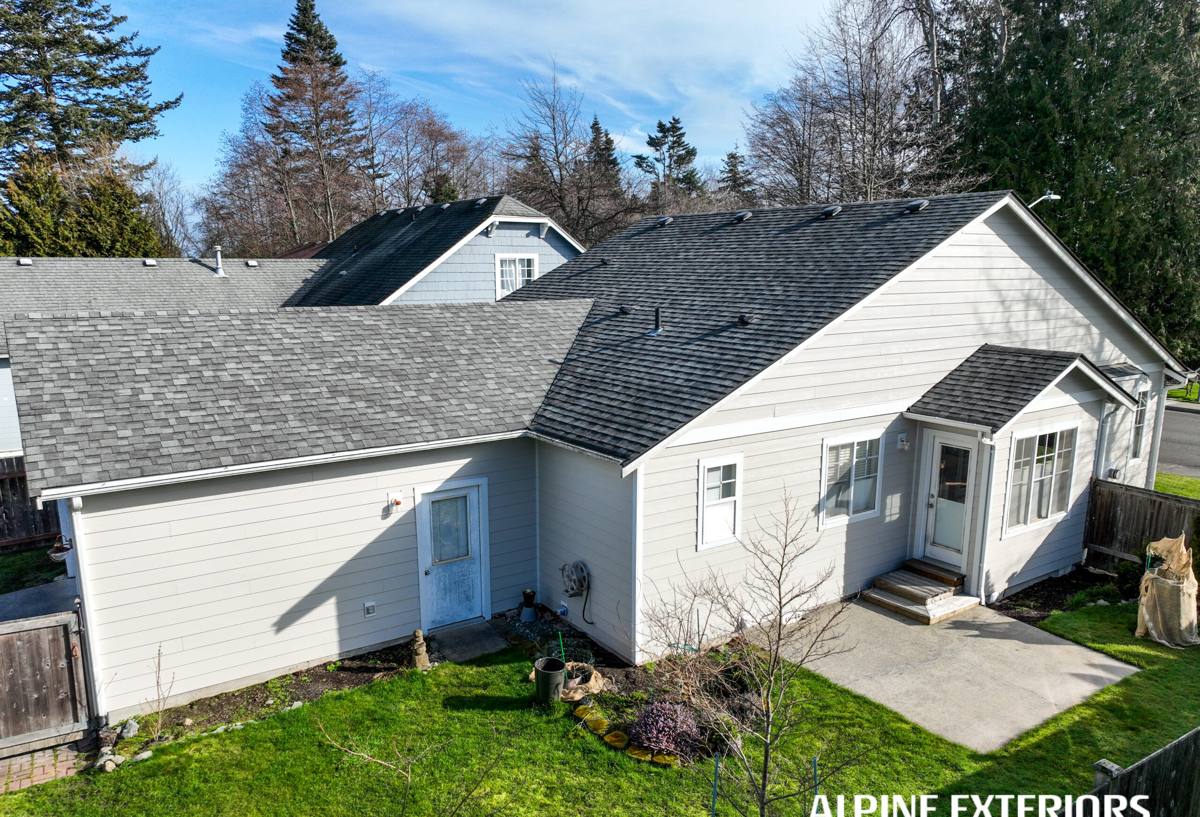
A crew that works Blaine and greater Whatcom County regularly knows which walls on a Grandview home take the worst of the weather, which roof valleys collect debris and hold moisture, and which deck framing details tend to trap water against wood in this climate. That's not something you get from a general regional playbook — it's pattern recognition built from doing this work on homes with the same exposure, the same rainfall totals, and the same moss pressure, year after year.
It also matters for something less visible: permitting and code compliance. Whatcom County and the City of Blaine have their own inspection expectations for weather barriers, flashing details, and ventilation. A crew that pulls permits and passes inspections in this jurisdiction regularly moves through that process without surprises. A crew unfamiliar with local requirements can turn a straightforward siding or roofing job into a delayed one.
What This Looks Like on a Grandview Home
- Extra attention to flashing and kick-out details above walkways and entries, where driving rain concentrates
- Ventilation gaps behind siding on north- and west-facing walls to let moisture escape instead of collecting
- Fastener and hardware choices suited to salt-air exposure rather than generic interior-grade hardware
- Roof valley and gutter attention aimed at keeping moss-prone debris from holding water against roofing material
- Deck framing and ledger details that account for the extended damp season rather than a drier regional average
Siding: Our One-Product Standard
We install James Hardie fiber cement siding exclusively. We don't offer vinyl, LP SmartSide, Cemplank, Allura, primed spruce, or cedar as alternatives, and that's a deliberate professional standard, not a sales limitation. Each of those products has real strengths, but each also comes with a trade-off that we think matters more in a climate like this one than it might elsewhere.
Vinyl siding is inexpensive and low-maintenance in a general sense, but it expands and contracts significantly with temperature swings, and its seams and J-channels give driving rain more opportunities to find a way behind the cladding over time. Wood-based composite products like LP SmartSide use engineered wood strand technology that resists some of the failure modes of solid wood, but they still rely on an intact factory coating and careful field sealing of cut edges to keep moisture out — a coating that has to hold up against salt air and a long wet season for decades. Primed spruce and cedar are natural materials with real appeal, but both require an ongoing maintenance commitment — recoating, caulking, and moisture monitoring — that most homeowners underestimate until the first signs of cupping, checking, or rot appear, usually on the walls that face the weather worst.
Fiber cement itself isn't new, and other manufacturers make it too. We chose James Hardie specifically because of how the company engineers for regional climate and backs the product with a strong transferable warranty, not just because it's fiber cement in general.
What James Hardie Gets Right for This Climate
James Hardie's HZ5 product line is engineered for climates with significant moisture exposure and freeze-thaw cycling, which describes Whatcom County's weather well. The material is non-combustible, doesn't support moss or mold growth the way wood substrates can, and holds its factory-applied ColorPlus finish for years longer than field-applied paint typically lasts on other siding types — which matters directly for a home dealing with salt air and long damp stretches, since repainting a full exterior is disruptive and expensive to do more often than necessary.
The ColorPlus finish process bakes color into the product at the factory under controlled conditions, rather than relying on a painter's timing and weather window on site. That finish is backed by its own warranty separate from the substrate warranty, and it's designed to resist fading and chalking in coastal-adjacent, high-UV, high-moisture conditions better than most site-applied paint systems.
Roofing: The System Behind the Shingles
Roofing failures in this area rarely start with the shingles themselves. They start with underlayment gaps, valley flashing that wasn't lapped correctly, or ventilation that lets moisture condense inside the attic instead of escaping. In a moss-prone climate, roof surface treatment and gutter maintenance also play a bigger role in roof longevity than most homeowners realize — moss holds moisture against shingles and granules, shortening the life of an otherwise sound roof.
When we replace or repair a roof in Grandview, we're looking at the whole assembly: decking condition, underlayment type and coverage, flashing at every penetration and valley, and ventilation balance between intake and exhaust. Getting that system right the first time is what keeps a roof performing through its expected service life instead of needing early intervention.
Windows: Sealing Out Driving Rain
Window failures in this climate are almost always a flashing and sealant problem before they're a glass or frame problem. Driving rain pushes water sideways against window openings, and if the flashing isn't integrated correctly with the weather-resistive barrier behind the siding, water finds its way into the wall cavity — often silently, for years, before it shows up as a soft spot, a stain, or a musty smell inside.
When we install or replace windows, the flashing integration with the surrounding wall assembly gets as much attention as the window unit itself. That's especially true on walls that take the brunt of storms coming off the water, where a poorly flashed window can undo the benefit of even a high-quality replacement unit.
Decks: Built for a Long Wet Season
Decks in Grandview deal with a longer wet season than a lot of homeowners plan for when they choose materials and framing details. Ledger board attachment, joist protection, and drainage beneath the deck surface all matter more here than they would in a drier climate, because wood components stay damp longer between rain events. Composite and properly treated decking materials, combined with correct flashing at the ledger and adequate drainage and airflow underneath, are what keep a deck structurally sound and moss-free for its expected lifespan rather than becoming a maintenance headache within a few years.
Comparing Siding Options for a Grandview Home
| Factor | Vinyl | Wood-Based Composite | Cedar / Primed Wood | James Hardie Fiber Cement |
|---|---|---|---|---|
| Moisture resistance | Moderate; seams allow water intrusion | Good if coating and edges stay sealed | Requires ongoing sealing/maintenance | Strong; engineered for moisture exposure |
| Salt air durability | Fair; can become brittle over time | Fair; coating breakdown accelerates near salt air | Requires frequent recoating | Strong; factory finish holds up well |
| Moss/mold resistance | Doesn't support growth but traps moisture behind it | Wood substrate can be vulnerable if compromised | Vulnerable if maintenance lapses | Doesn't support moss/mold growth |
| Maintenance burden | Low, but limited repair options | Moderate; coating upkeep | High; regular recoating/caulking | Low; factory finish lasts years |
| Fire resistance | Combustible | Combustible | Combustible | Non-combustible |
What to Ask Any Contractor Before You Hire
Whatever exterior work you're planning in Grandview, a few questions separate a contractor who'll get the details right from one who won't.
- Are you licensed and insured to work in Washington, and can you provide proof?
- Do you pull permits and handle inspections directly, or does that fall to the homeowner?
- Who installs the flashing and weather barrier details, and what's their experience with coastal exposure?
- What warranty applies to materials, and separately, what warranty applies to labor?
- Can you explain, in plain terms, how your approach accounts for this area's rain and moss season?
A contractor who can answer all five clearly and specifically, without vague reassurances, is one worth trusting with your home's exterior.
Maintenance That Actually Matters Here
Regardless of which materials are on a home, a few maintenance habits make a real difference in this climate: keeping gutters clear so water doesn't back up under roofing or siding, keeping vegetation trimmed back from north-facing walls so they can dry out between rain events, and having roofs and siding inspected periodically for early signs of moss growth or moisture intrusion before they become bigger repairs. None of this is glamorous work, but it's what extends the service life of whatever exterior system is on the house.
A Local Crew for Grandview
We work siding, roofing, window, and deck projects throughout Blaine and Whatcom County, and Grandview homes get the same attention to local climate detail as anywhere else we work — because the weather doesn't change much a few streets over. If you're weighing a siding replacement, a roof nearing the end of its service life, window upgrades, or deck work, we're happy to take a look and talk through what your home actually needs, with no pressure to decide on the spot. Reach out for a free estimate using the form below.