 Blaine Siding
 Exterior Work Built for Birch Point's Waterfront Exposure
Birch Point sits right up against the water on the edge of Blaine, and that location shapes everything about how a house ages here. Homes on this stretch of Whatcom County shoreline take a different kind of beating than houses even a mile or two inland. Salt-laden air moves in off the water most days of the year, wind-driven rain hits siding at an angle instead of falling straight down, and the long, wet Pacific Northwest fall-through-spring stretch gives moss and algae months to get established on anything that stays damp. None of that is unusual for this part of Washington. It's just more concentrated the closer you get to the shoreline, and Birch Point is about as close as it gets.
We work on homes throughout Blaine and Whatcom County, and the properties near the water consistently show more wear at the same age as inland homes. That's not a knock on any particular builder or product — it's physics. Understanding why it happens is the first step to building or re-siding a home that actually holds up out here.
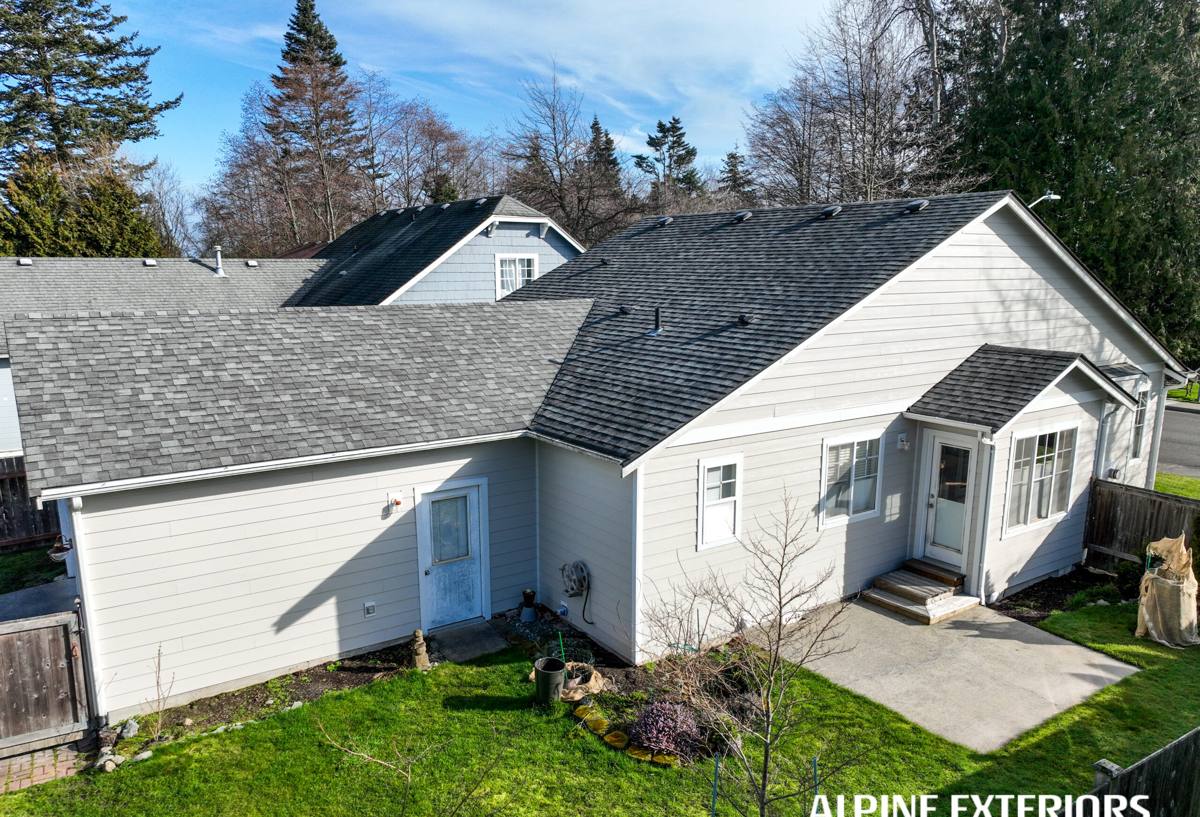
What Salt Air, Driving Rain, and Moss Actually Do to a House
Salt Air and Metal Fasteners
Airborne salt accelerates corrosion on anything metal — nail heads, flashing, fastener systems, even some trim accessories. On a waterfront lot, that corrosion clock runs faster than the manufacturer's general climate assumptions might suggest. Over years, corroded fasteners can loosen siding, stain the surface with rust streaks, or fail at flashing points where water intrusion does the most damage.
Wind-Driven Rain
Rain that falls straight down is relatively easy for any siding system to shed. Rain that's pushed sideways by wind coming off open water behaves differently — it gets forced up under laps, into seams, and behind poorly sealed trim. Point lots like Birch Point are exposed on multiple sides rather than sheltered by neighboring terrain, so wind-driven rain is a regular event here, not an occasional storm exception.
Moss, Algae, and the Long Wet Season
Whatcom County's wet season runs long, and shaded or north-facing walls near the water can stay damp for days after a storm passes. That moisture retention is exactly what moss and algae need to take hold. On some siding materials, that means ongoing staining and, if left unaddressed, slow degradation of the material underneath the growth.
Why All of This Compounds on a Point
Individually, salt exposure, wind-driven rain, and moss are manageable. Combined — and combined with the wind funneling effect you get on an exposed point of land — they shorten the realistic service life of siding, trim, and fasteners that weren't specified with this exposure in mind. That's the core issue we're solving for on every Birch Point job, not just siding replacement in general.
Why We Install Only James Hardie Fiber Cement
We made a decision as a company to install James Hardie fiber cement siding exclusively. We don't install vinyl, LP SmartSide, Cemplank, Allura, or primed wood species like spruce or cedar. That's a narrower lineup than a lot of contractors offer, and we're upfront about why.
- Non-combustible material — fiber cement doesn't contribute fuel to a fire the way wood-based products can.
- Factory-applied ColorPlus finish — baked-on color that resists the fading and chalking that field-applied paint struggles with in coastal UV and salt exposure.
- Climate-engineered HZ5 product line — Hardie's HZ5 formulation is engineered for the freeze-thaw and moisture cycling common to the Pacific Northwest, which is the relevant standard for a Blaine waterfront lot.
- Moisture and rot resistance — fiber cement doesn't absorb water and swell the way wood-based siding can, which matters directly for wind-driven rain exposure.
- Strong transferable warranty — backed by a manufacturer with decades of track record, not a newer entrant to the category.
We're not going to tell you every other product on the market is junk — that's not honest, and it's not our call to make about someone else's material. What we will say is that after years of doing exterior work in exactly this kind of coastal exposure, we stopped installing products that ask homeowners to accept more maintenance, more moisture risk, or more UV fading than we think is reasonable for a Whatcom County waterfront home. James Hardie is what we're willing to put our name behind here.
How a Birch Point Siding Project Actually Goes
Assessment First
Before we talk product colors or install dates, we look at the specific exposure of your lot — which direction it faces, how much wind and rain it takes directly, whether there's existing moisture or moss damage on the current siding, and what condition the sheathing and flashing details are in underneath.
Correct Installation Is the Real Warranty
Fiber cement performs the way it's supposed to only when it's installed to manufacturer spec — proper clearances off grade and roof lines, correct fastener placement, and flashing details that actually shed wind-driven rain rather than trap it. A lot of the long-term problems people associate with siding failures generally trace back to installation shortcuts, not the material itself. That's a big part of why we control installation in-house rather than subcontracting it out piecemeal.
Trim, Flashing, and Fastener Choices
Given the salt exposure here, we pay particular attention to fastener corrosion resistance and flashing at every penetration and transition point. These are the details that separate a house that looks good for two years from one that looks good for twenty.
Roofing, Windows, and Decks: The Rest of the Envelope
Siding is only one piece of how a Birch Point home handles its climate. We also work on roofing, windows, and decks, because a house's exterior performs as a system, not as isolated parts.
Roofing
A roof edge, valley, and flashing system that isn't sealed correctly will feed water down into wall assemblies regardless of how good the siding is. On waterfront lots, roof-to-wall transitions deserve extra attention.
Windows
Window flashing and sealant are common points of water intrusion, especially on walls that take direct wind-driven rain. Failing seals around older windows are one of the most common sources of hidden moisture damage we find when we open up a wall during a siding tear-off.
Decks
Outdoor living structures near the water deal with the same salt and moisture exposure as the siding above them, just at ground level with added foot traffic and structural load considerations.
Because we handle all four trades, we can flag issues in one area — a leaking window, a failing roof valley — while we're already on-site for another project, instead of a homeowner having to coordinate separate contractors and hope they communicate with each other.
Comparing Siding Options for This Climate
Homeowners considering a re-side often ask us to compare materials directly. Here's an honest look at how the main options stack up against Birch Point's specific conditions — salt air, wind-driven rain, and a long moss season.
| Factor | James Hardie Fiber Cement | Vinyl | Wood / LP-Type Products |
|---|---|---|---|
| Moisture absorption | Very low | Low, but seams and panels can flex and gap over time | Higher; wood-based cores are more vulnerable to swelling |
| Salt air / corrosion resistance | Material itself doesn't corrode; fastener choice still matters | Material resists corrosion but can become brittle in cold, salt-heavy air over time | Depends heavily on coating maintenance |
| Color/finish longevity | Factory ColorPlus finish, long fade resistance | Color is through-body but can fade and chalk over decades | Field-applied paint/primer requires more frequent recoating |
| Fire performance | Non-combustible | Combustible | Combustible |
| Typical maintenance | Periodic washing, occasional caulk/paint touch-up | Low, but impact damage means panel replacement, not repair | Regular repainting/resealing, more moisture vigilance |
Every product on that list has real advantages depending on a homeowner's priorities and budget. We simply concluded that, for this specific climate and for the standard we want to hold our installs to, James Hardie is the material that lines up best with what a Birch Point home actually needs to withstand.
Maintenance That Actually Matters Out Here
Whatever siding a home has, a little seasonal attention goes a long way in this environment. For Birch Point homes specifically, we recommend homeowners keep an eye on:
- Rinsing salt residue off siding surfaces periodically, especially on walls facing open water
- Checking caulking and sealant at trim joints and window/door flashing once a year
- Watching shaded or north-facing walls for early moss or algae growth before it spreads
- Inspecting fastener heads and flashing for early corrosion staining
- Clearing gutters and downspouts before the wet season so water isn't sheeting down wall surfaces
- Having roof-to-wall transitions and window perimeters checked if you notice any interior staining or soft spots
Why a Local Crew Is the Right Call for This Kind of Exposure
A contractor who mostly works inland doesn't run into salt-air corrosion, wind-funnel exposure, or extended moss seasons often enough to build real judgment around them. We're based in this region, we work Blaine and the rest of Whatcom County regularly, and we've seen firsthand how differently a waterfront point lot ages compared to a sheltered inland property. That shows up in small decisions — fastener selection, flashing detail, how tight we run clearances — that don't seem like much individually but add years to how a home's exterior holds up.
Get a Straightforward Estimate
If you're planning ahead for a re-side, dealing with an aging roof, or noticing drafts and moisture around older windows on your Birch Point property, we're happy to take a look and give you an honest read on condition and options. There's no pressure and no obligation — just a straight assessment from a crew that knows this stretch of coastline. Use the form below to request a free estimate.