 Blaine Siding
 Building New in Sandy Point Means Building for the Water
Sandy Point sits right up against the marine air of Whatcom County's coastline, and that changes what a window needs to do here compared to a house a few miles inland. New-construction window installation is the one chance to get the water management, the frame material, and the flashing details right before siding, trim, and interior finishes close everything up. Get it right at rough-in and the windows perform for decades. Get it wrong, and the mistakes hide behind drywall and paint until they show up as stains, soft trim, or a musty smell in a wall cavity nobody wants to open up.
We install new-construction windows on new builds throughout Blaine and Whatcom County, and Sandy Point jobs get treated differently from the start because of where the lot sits. This page walks through what that actually means in practice, not just marketing language about "coastal-rated" products.
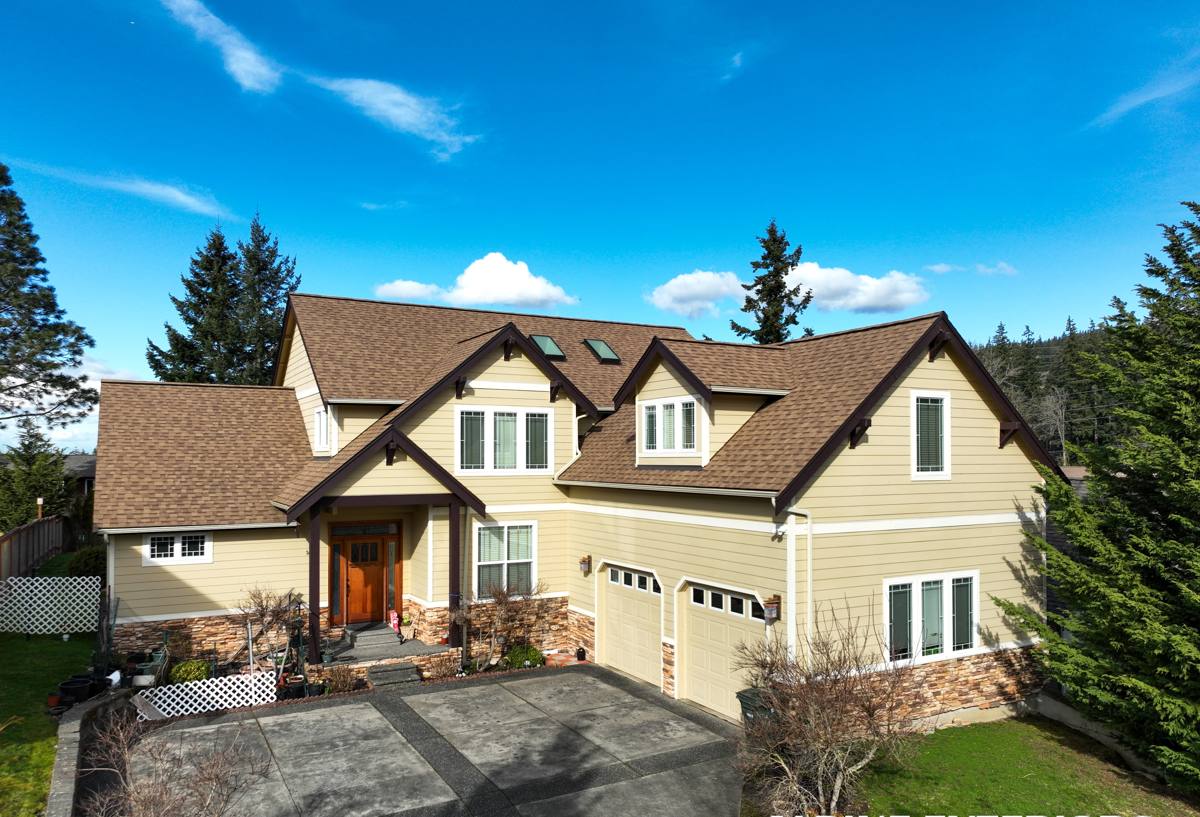
The Climate Factors Driving Every Decision
Salt Air
Homes near the water pick up airborne salt that settles on every exterior surface, including window frames, hardware, and fasteners. Over years, salt exposure accelerates corrosion on lower-grade metal components — hinges, cranks, screws, and cladding fasteners. This is why fastener and hardware selection matters as much as the window unit itself on a Sandy Point build.
Driving Rain
Wind-driven rain off the water doesn't fall straight down — it gets pushed sideways into wall assemblies, which means water finds its way to spots a standard flashing detail might miss on a more sheltered inland lot. New-construction installation gives us the opportunity to build a water-shedding path (not just a water-resistant one) into the rough opening before the window ever goes in.
Moss and Sustained Moisture
Whatcom County's long wet season keeps humidity and surface moisture around windows and trim for months at a time. Moss and algae growth on sills, trim boards, and low-slope surfaces near windows is common on shaded or north-facing elevations. Left unaddressed, sustained moisture and organic growth degrade wood trim and can work moisture past caulk lines that were never meant to be the primary defense.
What "Correct" Actually Means on a New-Construction Opening
A new-construction window install isn't just setting a unit in a hole and running a bead of caulk around the outside. Done correctly, it's a layered water management system:
- Sill pan flashing at the rough opening, sloped to shed water outward, not just a flat strip
- Weather-resistive barrier integrated with the flashing in the correct shingle-lap order (upper layers over lower layers)
- Window flange sealed with a compatible flashing tape rated for the temperature range and UV exposure it will see during construction
- Head flashing that directs water past the window rather than letting it pool at the top
- Backer rod and sealant at the interior and exterior trim lines, sized correctly rather than overfilled
- Fasteners and hardware rated for corrosion resistance in a marine air environment
Skip or shortcut any one of these layers and the window itself can be a premium product and still leak. This is the detail work that separates a correct install from one that merely looks finished on install day.
Choosing Frame Material and Glass for a Sandy Point Site
Every frame material has trade-offs, and we'd rather walk a homeowner through them honestly than push whatever moves the most units. On an exposed waterfront lot, the trade-offs weigh a little differently than they would on a sheltered inland property.
| Frame Material | Salt Air Behavior | Maintenance | Notes for Sandy Point |
|---|---|---|---|
| Vinyl | Resistant to corrosion; UV-stable formulations hold color well | Low — occasional rinse | Common, cost-effective choice for exposed sites; verify weld quality at corners |
| Fiberglass | Excellent — dimensionally stable, doesn't corrode | Low | Strong option for exposed elevations facing prevailing wind and rain |
| Wood (clad exterior) | Good on the clad face; exposed wood interior needs protection from interior humidity | Moderate | Works well when interior humidity is controlled; less forgiving of installation gaps |
| Aluminum | Conducts cold and can corrode faster without marine-grade coatings | Moderate to high | We use it selectively and only with coatings rated for coastal exposure |
On glass, a dual-pane unit with a low-E coating and an appropriate gas fill is standard for new construction in this climate — it manages condensation risk on cold, damp mornings and keeps heating costs down through Whatcom County's long wet winters. We size glass packages to the elevation: a window facing the prevailing wind and rain gets the same attention to sealant and flashing as one on a sheltered wall, because water doesn't care which side of the house it's on.
Our Process on a Sandy Point New-Construction Job
- Rough opening review — we check that openings are square, correctly sized, and structurally sound before any flashing goes in.
- Sill pan and flashing install — sloped sill pans and shingle-lapped flashing tape, integrated with the weather-resistive barrier per the assembly's design.
- Window set and shim — units are set plumb, level, and square, then shimmed at load points to prevent frame distortion over time.
- Fastening — corrosion-resistant fasteners driven per manufacturer spacing, not just "enough to hold it."
- Head flashing and drainage check — confirming water has a path out, not just a barrier to sit behind.
- Interior and exterior sealant — backer rod set to proper depth, sealant tooled rather than smeared.
- Final inspection — every opening checked before siding or trim closes it in, since this is the last point where a mistake is cheap to fix.
Mistakes We See on Other Coastal Builds
We don't say this to knock other crews — new-construction flashing is genuinely easy to get subtly wrong, and the errors don't show up until a wet season or two later. The recurring issues we run into on exposed Whatcom County lots:
- Flat sill flashing instead of a sloped, dammed sill pan, which lets water sit against the frame instead of draining
- Weather-resistive barrier lapped in the wrong order at the window opening, sending water behind the barrier instead of over it
- Standard fasteners used where corrosion-resistant hardware was called for, leading to premature rust staining
- Caulk used as the primary water barrier instead of as a secondary seal over correct flashing
- Trim installed tight to grade or to a roofline with no drainage gap, trapping moisture and encouraging moss growth
A Practical Checklist for Homeowners Building in Sandy Point
- Confirm your window supplier's warranty covers coastal/marine air exposure, not just standard climate conditions
- Ask your builder or window crew to walk you through the sill pan and flashing detail before openings are closed in
- Choose hardware and fasteners rated for corrosion resistance, especially on wind-exposed elevations
- Plan trim and siding details with drainage gaps to discourage moss and sustained moisture contact
- Keep a copy of your flashing and installation photos or notes for future maintenance or resale
Why Hiring a Crew That Already Works This Area Matters
Anyone can install a window on a calm, dry day in a controlled environment. What separates a good coastal install from a problem waiting to happen is knowing how Blaine's weather actually behaves on an exposed lot through a full year — where the wind-driven rain hits hardest, which elevations stay damp longest, and where salt air does the most damage to hardware over time. A crew that regularly works Sandy Point and similar waterfront sites in Whatcom County brings that judgment to the flashing and sequencing decisions that a written spec sheet can't fully capture. It also means we're a known, findable local business if a warranty question comes up five or ten years down the road, not a crew that was in the area for one job and gone.
Maintenance After Installation
A correctly installed new-construction window in a marine climate still benefits from basic upkeep. Rinse accumulated salt film off frames and glass periodically, especially after storms. Keep weep holes and drainage tracks clear of debris and moss. Inspect exterior sealant lines annually for cracking or separation, since sealant is a secondary defense and wears faster in constant UV and salt exposure than it would inland. None of this is heavy maintenance — it's the kind of thing that takes an afternoon and adds years to how a window performs.
If you're building new in Sandy Point and want windows installed with the flashing, hardware, and sequencing this climate actually demands, we're happy to walk your plans and come out for a free, no-pressure estimate. Use the form below to get started.