 Blaine Siding
 Roofing in Bellingham Isn't the Same Job as Roofing Inland
Bellingham sits close enough to the water and far enough north that its roofs deal with a combination most inland Washington towns never see: salt-laden air blowing off the bay, long stretches of driving rain that comes in sideways as often as straight down, and a moss season that can run eight months or more under the tree cover common in Whatcom County neighborhoods. Any one of those on its own is manageable. Together, they shorten the life of a roof that wasn't built with this climate in mind.
An asphalt shingle roof installed the same way you'd install one in a dry, sunny climate will underperform here. The materials, the underlayment choices, the ventilation, and the small flashing details all need to account for near-constant moisture exposure and organic growth pressure. That's the difference between a roof that needs attention at year eight and one that's still solid at year twenty-five.
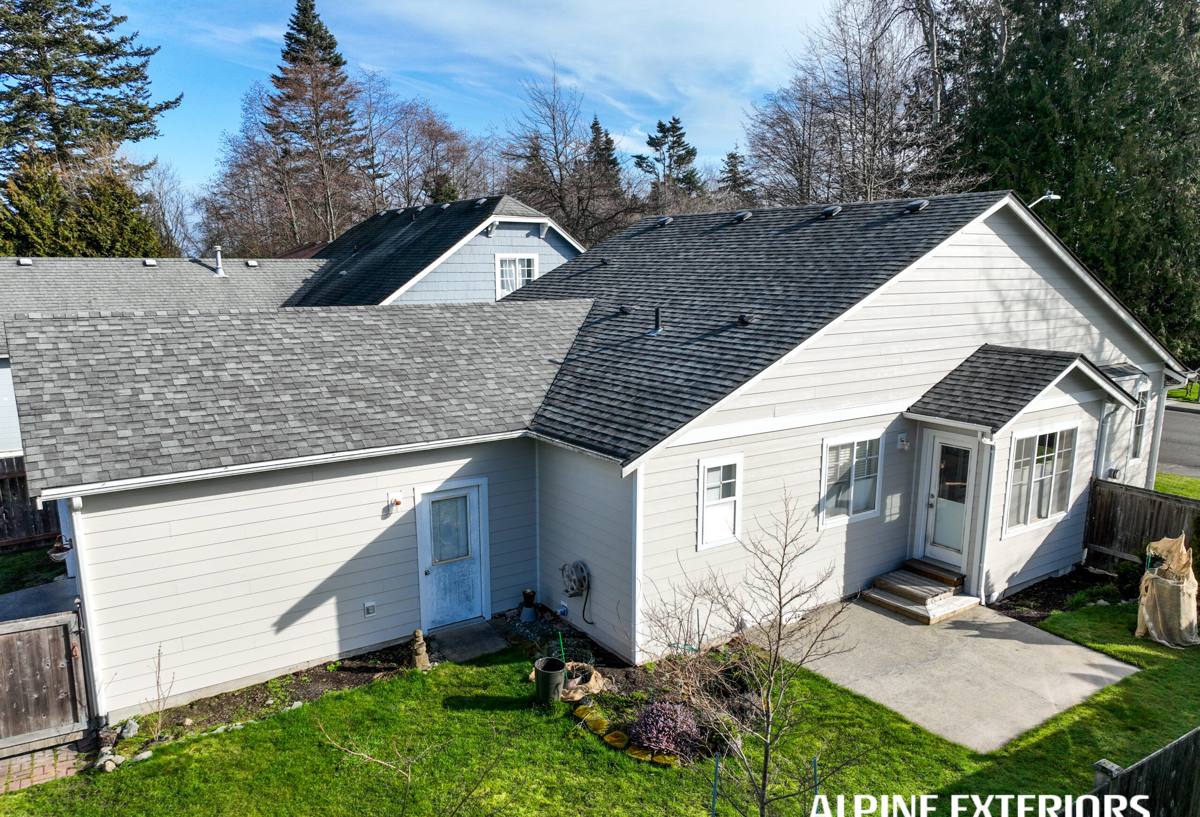
What Bellingham's Climate Actually Does to a Roof
Moisture That Doesn't Let Up
Whatcom County gets a lot of rain, but it's the duration and wind-driven angle of it that causes problems. Water pushed sideways under wind pressure will find any gap in flashing, any short underlayment lap, or any nail that missed the strike zone. Over time, that's how you get soft decking, stained ceilings, and mold in the attic long before the shingles themselves look worn out.
Salt Air and Metal Components
Being close to Bellingham Bay and the Strait of Georgia means airborne salt is part of daily life for local roofs. It's not just the shingles that feel it — it's the flashing, the nails, the vents, and any exposed metal fasteners. Standard fasteners corrode faster here than they would fifty miles inland, and corroded fasteners are one of the most common causes of early flashing failure.
Moss, Algae, and Shade
The tree cover and moisture that make this region beautiful also make it ideal for moss and algae growth on north-facing slopes and shaded roof sections. Moss isn't just cosmetic — it holds moisture against the shingle surface, works into the granule layer, and can lift shingle edges as it grows, giving wind and rain a place to get underneath.
What a Correctly Installed Roof Needs in This Climate
A roof built for Bellingham conditions isn't a different product line — it's the same asphalt shingle system installed with the right underlying details. The parts that matter most here are usually the parts you can't see once the job is done:
- Ice-and-water shield at eaves and valleys — a self-adhering membrane that seals around nail penetrations, critical where wind-driven rain and occasional freeze events meet
- Synthetic underlayment across the full deck — more tear-resistant and more water-resistant than old-style felt, and it holds up better during the inevitable delay between tear-off and shingle-in when weather doesn't cooperate
- Corrosion-resistant flashing and fasteners — especially around chimneys, skylights, and sidewalls, where salt air accelerates rust on lower-grade metal
- Balanced attic ventilation — intake at the eaves and exhaust at the ridge, sized to the attic volume, so trapped moisture doesn't condense on the underside of the deck
- Algae-resistant shingle granules — most manufacturers now offer a treated granule option designed to slow algae and moss growth, worth using on any roof with shaded or north-facing sections
- Correct nailing pattern and placement — six nails per shingle in high-wind zones, driven flush (not overdriven), since improperly set nails are a leading cause of shingle blow-off in coastal wind events
Signs a Bellingham Roof Needs a Closer Look
Because this climate hides damage well — a roof can look fine from the ground while trapping moisture underneath — it's worth knowing the early signs rather than waiting for an obvious leak:
- Moss growth thicker than a light green tint, especially on north-facing slopes or under trees
- Granules collecting in gutters or at downspout outlets after rain
- Shingle edges that look lifted, curled, or cupped rather than lying flat
- Dark streaking that doesn't wash off, which is usually algae rather than dirt
- Soft spots underfoot near valleys or chimneys if you're on the roof for another reason
- Rusty streaks below metal flashing or vent pipes
- Daylight visible through the attic roof deck, or musty smell in the attic
Any one of these on its own may just mean routine maintenance. Several together, especially combined with a roof that's already past the 15-year mark, usually means it's worth a professional look before the next wet season.
Our Asphalt Shingle Roofing Process
Inspection and Honest Assessment
We start on the roof, not just with a drone photo or a quick look from the driveway. That means checking the decking condition, the current flashing, the attic ventilation, and how the existing roof has held up against Bellingham's specific weather pattern. We'll tell you plainly whether you need a full replacement, a repair, or nothing at all.
Tear-Off and Deck Prep
We remove existing layers down to the deck rather than layering new shingles over old — layering traps moisture and hides deck damage, which defeats the purpose of a new roof in a climate this wet. Any soft or rotted decking gets replaced before anything new goes down.
Underlayment, Flashing, and Ventilation First
Before a single shingle goes on, we handle the parts that actually keep water out over the long run: ice-and-water membrane at vulnerable points, full synthetic underlayment, new corrosion-resistant flashing where needed, and a ventilation check so the attic can actually dry out between storms.
Shingle Installation
Shingles go down to manufacturer specification for nail count and placement, with attention to exposure lines and valley detailing. We size the job around your specific roof geometry rather than treating every roof the same.
Cleanup and Final Walkthrough
We magnet-sweep for stray nails, clear debris, and walk the finished roof with you so you know what was done and what to expect going forward, including how to spot early moss regrowth before it becomes a problem.
Choosing a Shingle for Whatcom County Weather
Not every asphalt shingle tier is a good fit for a climate with this much moisture and organic growth pressure. Here's how the common options compare for a Bellingham roof specifically:
| Shingle Type | Typical Lifespan Here | Moss/Algae Resistance | Best Fit |
|---|---|---|---|
| 3-Tab (economy) | 15-18 years | Low unless treated | Budget-driven projects, short-term ownership |
| Architectural/Laminate | 25-30 years | Good with algae-resistant granules | Most Bellingham homes — best balance of cost and durability |
| Impact-Rated Laminate | 25-30 years | Good with algae-resistant granules | Homes wanting extra durability against wind-driven debris |
| Premium/Designer Laminate | 30+ years | Very good, usually treated standard | Homeowners prioritizing appearance and longest warranty |
For most Bellingham homes, a mid-tier architectural shingle with algae-resistant granules hits the right balance — meaningfully better moss and streak resistance than economy shingles, without paying premium prices for features a typical roofline doesn't need.
What Actually Drives the Cost of a Roof Replacement
Every roof is different, so we won't quote a number without seeing yours, but these are the factors that move the price up or down on most Bellingham projects:
| Factor | Why It Matters |
|---|---|
| Roof size and number of planes | More area and more valleys/hips mean more material and labor time |
| Pitch and access | Steep roofs or roofs with difficult access require more safety setup and slower work |
| Number of existing layers | Removing two layers of old shingles takes longer than one, and we won't install over more than one existing layer |
| Decking condition | Rotted or soft plywood found during tear-off needs replacement before shingles go down |
| Shingle tier chosen | Material cost scales with warranty length, wind rating, and algae-resistant treatment |
| Ventilation upgrades | Adding intake or exhaust ventilation where the current attic is under-vented adds material and labor |
Living With a Roof in a Marine Climate
Even a well-installed roof benefits from a little seasonal attention in this part of Washington. We recommend keeping gutters clear so water isn't backing up under the shingle edge, trimming back overhanging branches that keep a section of roof shaded and damp, and having moss physically removed rather than pressure-washed, which can strip granules and shorten shingle life. A rinse with a low-pressure, roof-safe treatment once moss appears is far gentler than waiting until it's thick enough to need scraping.
Why It Matters That We Already Work in Bellingham
A crew that only occasionally works this part of Whatcom County can install a roof correctly by the book and still miss the local realities — which slopes catch the worst wind-driven rain, which neighborhoods see heavier moss growth under mature tree canopy, or which fastener grade actually holds up against the salt air coming off the bay. Working here regularly means we've already seen how different roof types and shingle grades perform through a full Bellingham winter and the long wet stretch that follows, and we build that into every estimate and every install.
If you'd like an honest look at your roof's condition or a straightforward estimate on a replacement, we're happy to come take a look — no pressure, no obligation. The form below is the easiest way to get started.