 Blaine Siding
 Why Birch Bay Homes Wear Out Siding Faster Than Most
Birch Bay sits right where Whatcom County's weather gets tested against Puget Sound and the Strait of Georgia. Homes here take a different kind of beating than houses even a few miles inland: constant salt-laden air off the water, driving rain that comes in sideways during winter storms, and a moss season that seems to run nine months out of twelve on north-facing walls and shaded lots. None of that is exotic weather. It's just relentless, and siding either handles it year after year or it starts failing in ways homeowners don't notice until the damage is already behind the wall.
Salt air is the quiet one. It doesn't announce itself the way a wind event does, but it accelerates corrosion on fasteners and trim, and it breaks down cheap paint films faster than inland exposure ever would. Add in wind-driven rain that gets forced under laps and around poorly flashed penetrations, and you've got a recipe for moisture intrusion that shows up as soft spots, bubbling paint, or a musty smell in a wall cavity long before anyone sees visible rot. Then there's moss — Whatcom County's tree cover and marine humidity mean algae and moss growth on siding surfaces is a near-constant maintenance issue, especially on the shaded sides of a house or under overhangs that never fully dry out.
Replacing siding in Birch Bay isn't just a cosmetic decision. It's a chance to fix the moisture path, upgrade the water-resistive barrier, and put a product on the house that's actually built for this specific combination of salt, rain, and shade.
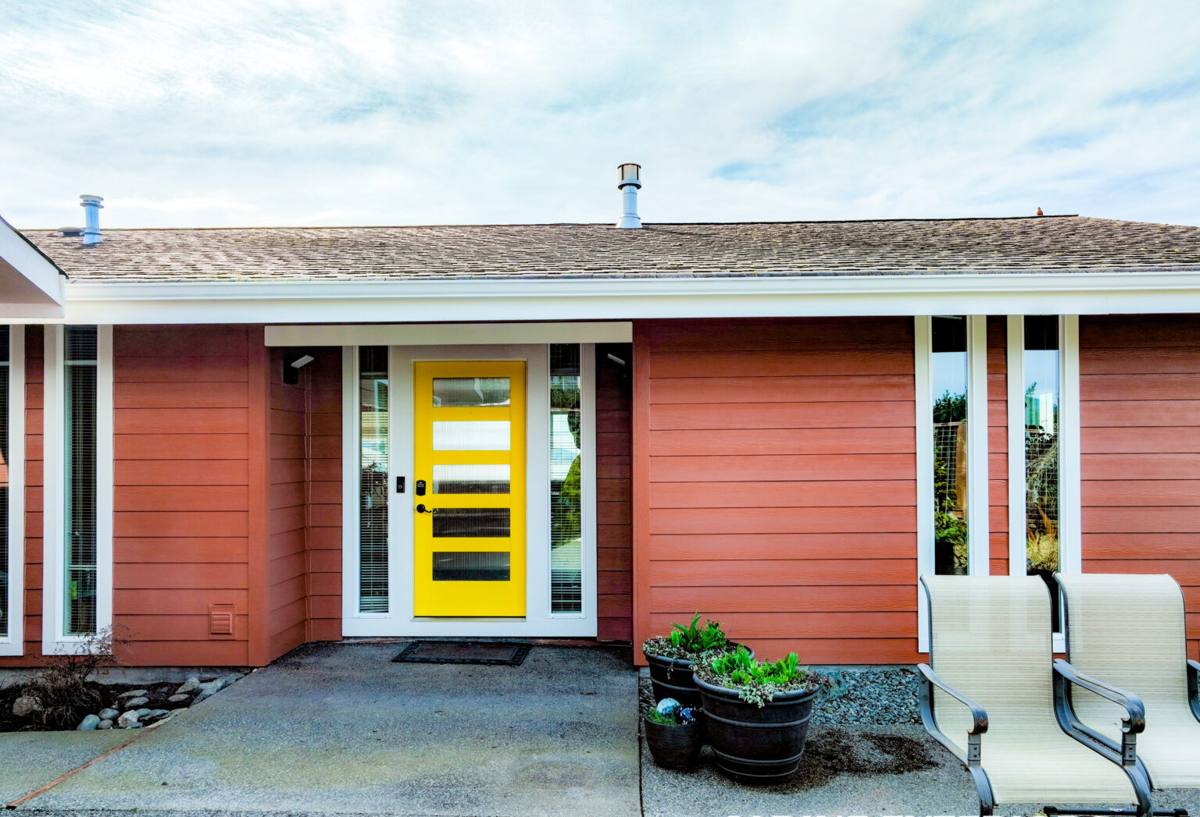
What "Correct" Siding Replacement Actually Involves
A siding replacement job is only as good as what happens underneath it. Homeowners rarely see this part, which is exactly why it gets rushed or skipped by crews trying to move fast. Here's what a proper tear-off and reinstall covers:
- Full tear-off, not overlay. Installing new siding over old siding traps moisture and hides existing damage — we remove down to the sheathing so nothing gets sealed in.
- Sheathing inspection. Every wall gets checked for soft spots, delamination, or rot, especially around window and door openings where leaks concentrate.
- Water-resistive barrier replacement. The house wrap or building paper behind the siding is the real waterproofing layer — it gets replaced, not patched, with proper lapping and sealed seams.
- Flashing at every penetration. Windows, doors, hose bibs, light fixtures, and vents all need correctly integrated flashing so water sheds outward instead of tracking behind the cladding.
- Proper fastener schedule and clearances. Manufacturer-specified nailing patterns and ground clearance aren't optional details — they're what keeps the new siding performing for decades instead of years.
- Trim and caulking done last, and done right. Gaps at trim boards and corners are common failure points if they're rushed.
Skip any one of these steps and you can end up with siding that looks great for a photo and fails within five to seven years — which is a common outcome we see when we're called out to inspect a home with a siding job that was done on the cheap.
Why We Standardized on James Hardie Fiber Cement
We install James Hardie fiber cement siding exclusively. We don't install vinyl, LP SmartSide, or other engineered wood or cement-board alternatives, and that's a deliberate professional standard, not a sales pitch. In a marine environment like Birch Bay, the material has to resist moisture absorption, hold paint without chalking or fading, and stand up to freeze-thaw cycling without cracking. Fiber cement does all three better than the alternatives we've chosen not to carry:
- It's non-combustible, which matters given Whatcom County's dry summer wildfire risk in recent years.
- James Hardie's ColorPlus factory finish is baked on under controlled conditions, so it resists the fading and peeling that field-applied paint struggles with in coastal humidity.
- Hardie's HZ5 product line is specifically engineered for climates with the freeze-thaw and moisture exposure the Pacific Northwest sees.
- It doesn't swell, delaminate, or attract moisture-driven rot the way wood-based composite sidings can when a seal fails.
We're honest that fiber cement costs more upfront and is heavier to install correctly than vinyl or engineered wood — that's precisely why installation quality matters so much, and why we only put our name on installs we control from tear-off to final caulk line.
Salt Air, Rain, and Moss: What Each One Requires From the Job
| Climate Factor | What It Does to Siding | What the Install Must Address |
|---|---|---|
| Salt air off the Sound/Strait | Corrodes exposed fasteners, degrades weak paint films over time | Corrosion-resistant fastener specs, factory-finished ColorPlus panels instead of field paint |
| Wind-driven rain | Forces water under laps and around penetrations if flashing is weak | Full flashing integration at every window, door, and fixture; correct lap and overlap dimensions |
| Extended moss/algae season | Growth on shaded and north-facing walls holds moisture against the surface | Proper ground and roofline clearances, factory finish that resists organic growth better than field-applied paint |
| Freeze-thaw cycling | Stresses materials prone to swelling or cracking | HZ5-rated fiber cement engineered for this exposure category |
Our Process for a Birch Bay Siding Replacement
1. On-Site Assessment
We walk the exterior with you, note problem areas — shaded walls with moss buildup, sides taking the brunt of prevailing wind and rain, trim showing early wear — and talk through what a full replacement will involve for your specific house.
2. Tear-Off and Sheathing Check
Old siding comes off completely. We inspect sheathing for hidden moisture damage before anything new goes up — this is often where surprises show up, and we'd rather find them now than have you find them in five years.
3. Water Management Layer
New house wrap, properly lapped and taped, goes on before a single piece of new siding. This layer does more long-term work than the siding itself.
4. Flashing and Penetration Detailing
Every window, door, and exterior fixture gets flashed to shed water outward, not just caulked over.
5. James Hardie Installation to Spec
Fastener schedule, clearances, and lap dimensions follow James Hardie's published installation requirements — this is also what keeps the manufacturer's warranty intact.
6. Trim, Caulk, and Final Walkthrough
We finish trim details and walk the house with you before calling the job done.
Why a Local Blaine Crew Matters Here
Siding installation isn't uniform across regions, and a crew that mostly works drier inland climates can miss details that matter on the coast. A Blaine-based crew that regularly works Birch Bay, Semiahmoo, and the surrounding waterfront neighborhoods already knows which walls take the worst of the weather, how much clearance local moss and moisture conditions call for, and how wind patterns off the water tend to drive rain into specific corners of a house. That local pattern recognition doesn't replace following the manufacturer's install spec — it adds to it, because a crew that's seen how siding actually fails in this specific microclimate knows where to pay extra attention before problems start.
There's also a practical service side to hiring local: warranty claims, follow-up questions, and future maintenance are all easier with a contractor who's a short drive away and plans to keep working in this community, not a crew that showed up from out of the area for one job.
Signs Your Birch Bay Home May Need Siding Replacement Soon
- Paint that's chalking, peeling, or fading unevenly, especially on walls facing prevailing wind and rain
- Soft or spongy spots when you press on siding near the bottom courses or around window trim
- Persistent moss or algae staining that returns quickly after cleaning
- Visible gaps, warping, or cupping in existing boards or panels
- A musty smell near exterior walls, which can indicate moisture behind the cladding
- Rusting or corroded fasteners visible on the siding surface
Any one of these on its own might just mean a maintenance fix. Several together, especially on a home that hasn't had its siding replaced in fifteen-plus years, usually means it's time for a real evaluation of what's happening behind the surface.
What Replacement Costs Depend On
We won't quote a number without seeing the house, but the honest cost drivers for a Birch Bay siding replacement are the same ones that matter anywhere on this coastline:
| Cost Factor | Why It Matters |
|---|---|
| Home size and wall complexity | More corners, dormers, and trim detail mean more labor and material cuts |
| Sheathing condition | Hidden rot or moisture damage found during tear-off adds repair scope before new siding goes on |
| Siding profile and color | Lap width, texture, and ColorPlus finish selection affect material cost |
| Access and site conditions | Waterfront lots, slopes, and tight setbacks can affect equipment and scaffolding needs |
| Trim and detail work | Window trim, corner boards, and fascia work add scope beyond flat wall square footage |
If you'd like to see what a Birch Bay siding replacement looks like for your specific home, we're glad to walk the property and give you a straightforward, no-pressure estimate — no hard sell, just an honest look at what your house needs.