 Blaine Siding
 Asphalt Shingle Roofing Built for Blaine Harbor's Conditions
Blaine Harbor sits right where Semiahmoo Bay meets the rest of Whatcom County's marine climate, and that location shapes everything about how a roof ages here. Homes close to the water take on salt-laden air, near-constant humidity, and wind-driven rain that finds its way into gaps a roof further inland would never notice. Add in the long stretch of overcast, wet months typical of this part of Washington, and you get a roofing environment that punishes shortcuts. An asphalt shingle roof done right in Blaine Harbor isn't just about nailing shingles to a deck — it's about managing moisture, airflow, and organic growth over years of exposure, not just the first dry season after installation.
This page covers what that actually means for a Blaine Harbor home: the conditions your roof is up against, what a correctly built asphalt shingle system needs to hold up, how we approach the work, and what to expect in terms of upkeep and cost.
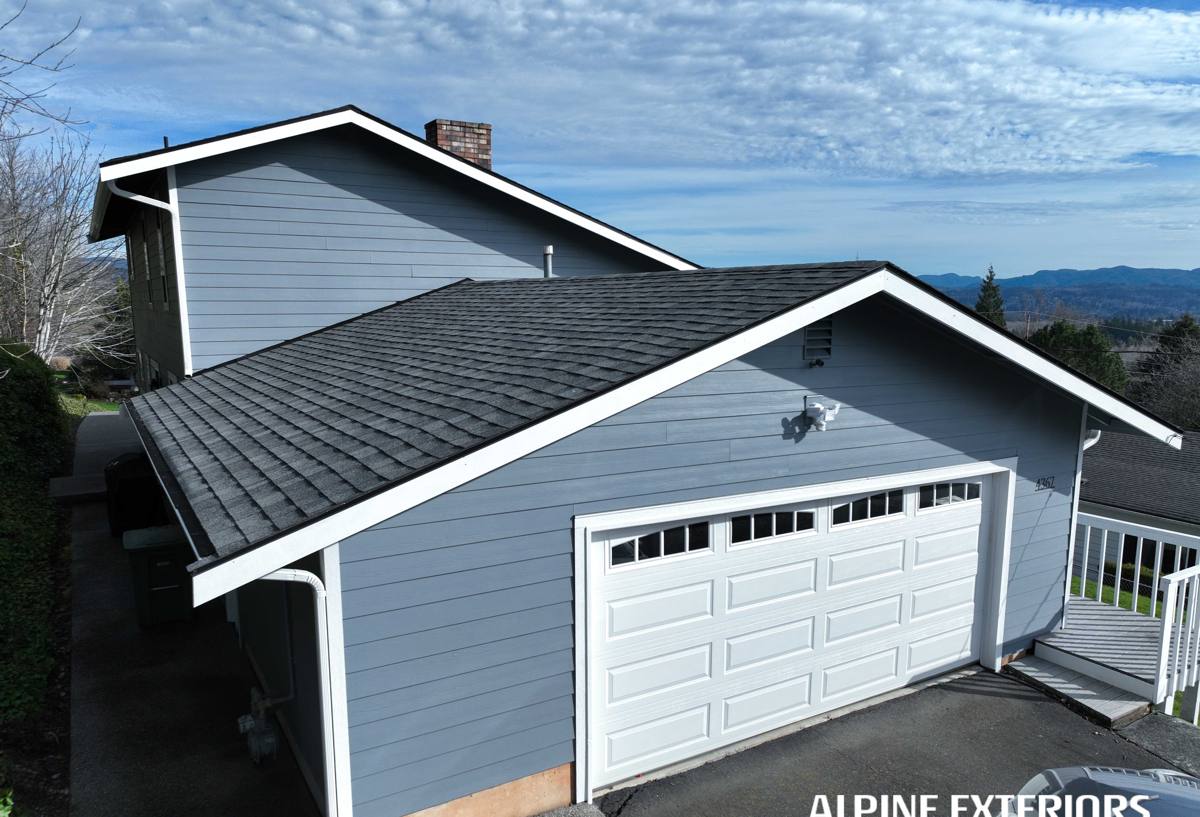
Why the Local Climate Is Hard on Shingle Roofs
Three things drive most of the asphalt shingle problems we see on homes near the harbor:
Salt Air
Airborne salt from the bay accelerates corrosion on exposed metal — nail heads, flashing, vent stacks, and drip edge. When that metal is undersized, poorly coated, or installed without enough protection, it fails years before the shingles themselves would. A shingle roof is only as good as the metal components tying it together, and in a harbor-adjacent setting, those components need to be treated as the first line of defense, not an afterthought.
Driving Rain
Storms coming off the water don't just drop rain straight down — they push it sideways, up under shingle tabs, and into any seam that isn't properly lapped or sealed. Roofs designed for calmer inland conditions can get away with minimal underlayment overlap and lighter flashing details. Here, that same approach leaves openings for wind-driven water to work its way behind the shingle field.
A Long Moss Season
Persistent moisture, shade from mature trees common in this area, and cool temperatures for much of the year add up to a moss and algae season that runs far longer than it does in drier parts of the state. Moss doesn't just look bad — it holds water against the shingle surface, lifts tabs as it grows, and works its way under the roofing system over time, shortening the life of an otherwise sound roof.
What a Correct Asphalt Shingle Installation Includes
A shingle roof that's going to perform in Blaine Harbor's conditions needs more attention at every layer, not just a heavier shingle on top.
Deck Inspection and Prep
Before anything goes down, the roof deck gets inspected for soft spots, delamination, or moisture damage from a prior leak. Any compromised sheathing gets replaced — covering over a weak deck with new shingles just hides a problem that will resurface.
Underlayment
We use synthetic underlayment across the full roof, with self-adhered ice-and-water shield style membrane at the eaves, valleys, and around every penetration. In a driving-rain climate, this layer is what protects the deck if wind ever pushes water past the shingle surface — it's cheap insurance relative to the cost of a full tear-off later.
Flashing
Step flashing at walls and chimneys, properly lapped valley flashing, and corrosion-resistant drip edge along all eaves and rakes. Given the salt exposure near the harbor, we favor heavier-gauge, well-coated metal over the thin, bargain-grade flashing that can start pitting within a few years.
Ventilation
Balanced intake and exhaust ventilation keeps the attic space dry and temperature-regulated. Poor ventilation traps moisture under the deck, which accelerates rot from the inside — a problem that's often invisible until a leak or sag makes it obvious. This matters more in a humid coastal climate than almost any other single detail.
Fastening
Shingles are nailed according to the manufacturer's high-wind or coastal specification, not the minimum standard pattern. That means more nails per shingle, placed correctly in the nailing zone, so the roof holds together under the gusty conditions that come with storms off the water.
Signs Your Blaine Harbor Roof Needs Attention
Because so much shingle damage here starts subtly, it helps to know what to look for before a small issue becomes a leak.
- Moss or algae streaking, especially on shaded slopes or north-facing sections
- Granules collecting in gutters or downspouts, which signals shingle wear
- Curling, cupping, or lifted shingle tabs, particularly along edges exposed to wind
- Rusting or discolored flashing around chimneys, vents, or skylights
- Dark stains or sagging on interior ceilings near exterior walls
- Visible daylight or gaps in the attic where roof meets wall
- Shingles missing entirely after a storm, or exposed nail heads
Any one of these on its own may not be urgent, but combinations — especially moss plus granule loss — usually mean the roof is past the point where cleaning alone will fix it.
Our Process for Asphalt Shingle Roofing Projects
We approach every Blaine Harbor roofing job the same structured way, whether it's a full replacement or a section repair:
- On-site assessment. We walk the roof, check the attic from the inside when accessible, and document existing damage, ventilation, and flashing conditions before quoting anything.
- Written scope and estimate. You get a clear breakdown of what's being replaced, what materials are used, and what the work covers — no vague line items.
- Tear-off and deck inspection. Old roofing comes off down to the deck so we can actually see what's underneath, rather than covering unknown conditions.
- Underlayment and flashing installation. This is where most of the long-term weatherproofing happens, well before a single shingle is visible.
- Shingle installation. Installed to manufacturer spec with attention to nailing pattern, exposure, and alignment.
- Ventilation check and correction. We confirm intake and exhaust venting is balanced for the attic size, adding or adjusting vents as needed.
- Cleanup and final walkthrough. Job site and gutters are cleared of debris, and we walk the finished roof with you.
Shingle Options for Coastal Whatcom County Homes
Not every shingle product is a good fit for a harbor-adjacent home. Here's how the common tiers compare for this specific climate:
| Shingle Type | Typical Lifespan Here | Wind/Moisture Performance | Best For |
|---|---|---|---|
| 3-Tab (economy) | 15-20 years | Lower wind rating, less resistant to lifting in gusty coastal conditions | Budget-driven projects, secondary structures |
| Architectural / Laminate | 25-30 years | Heavier, better wind resistance, more resistant to lifting | Most Blaine Harbor homes |
| Impact-Resistant / Premium | 30+ years | Best durability, often better algae-resistant granule options | Homes wanting maximum longevity or extended warranty coverage |
For most homes near the harbor, we recommend architectural shingles with algae-resistant granules as the practical baseline — the added durability and moss resistance are worth the modest cost difference over 3-tab, especially given how long the moss season runs here.
What Drives Cost on a Blaine Harbor Roofing Project
| Factor | Why It Matters Here |
|---|---|
| Roof size and pitch | Steeper roofs near the water often need additional fall protection and take longer to work safely |
| Number of layers to remove | Multiple existing layers add tear-off time and disposal cost |
| Deck condition | Rot or soft sheathing found during tear-off adds replacement material and labor |
| Flashing complexity | Chimneys, skylights, and multiple valleys all add detail work that protects against wind-driven rain |
| Shingle tier selected | Architectural and premium products cost more upfront but reduce moss and wind-related callbacks |
| Access and site conditions | Tight lots, mature landscaping, or limited driveway access can add setup time |
We don't quote off a phone call — every estimate comes from an actual look at your roof, so the number reflects your home rather than a generic average.
Managing Moss and Algae After Installation
Even a well-built roof in Blaine Harbor will face moss pressure over time, particularly on shaded slopes. A few habits go a long way toward protecting the investment:
- Keep overhanging branches trimmed back to reduce shade and debris buildup on the roof surface
- Clear gutters and valleys of needles and leaf litter each fall, before the wet season sets in
- Have moss physically removed rather than left to spread — scraping or gentle treatment, not pressure washing, which can strip granules
- Consider zinc or copper strips near the ridge on shaded slopes, which help suppress regrowth over time
- Schedule a roof check every couple of years, especially after a particularly wet winter
None of this is complicated, but it does need to actually happen — a roof that's ignored for a decade in this climate will show it.
Why Local Experience in Blaine Harbor Matters
A roofing crew that works inland Whatcom County towns regularly but rarely handles harbor-adjacent homes can miss details that matter here — under-spec'd flashing metal, standard rather than coastal nailing patterns, or underlayment choices that assume less wind-driven rain than this area actually gets. Working in Blaine Harbor specifically means seeing how salt air affects metal fasteners over years, knowing which slopes tend to hold moss longest given the tree cover and orientation common in the neighborhood, and understanding how storms coming off the bay actually load a roof. That familiarity shows up in the details of the job, not just the finished appearance.
Get a Straightforward Estimate
If your Blaine Harbor roof is showing moss, granule loss, or you're simply due for a professional look, we're happy to come take a look and give you an honest read on where things stand. There's no pressure and no charge for the estimate — just a clear picture of your options and what they'd cost. Use the form below to get started.