 Blaine Siding
 Living With Blaine Harbor's Weather
Blaine Harbor sits about as close to the water and the Canadian border as a Washington neighborhood can get, and that location shapes everything about how siding ages here. Homes get a steady diet of salt-laden air off the harbor, wind-driven rain that doesn't just fall straight down but gets pushed sideways into wall assemblies, and long stretches of the year where surfaces stay damp enough for moss and algae to take hold and never really dry out. None of that is unusual for Whatcom County as a whole, but Blaine Harbor's proximity to open water makes the salt exposure and wind-driven rain more constant than what you'd see even a few miles inland.
Siding in this environment isn't decorative — it's the first line of defense between that weather and your framing, sheathing, and insulation. When it's installed correctly with the right material, it holds up quietly for decades. When it's installed poorly, or when the wrong material is used, the problems don't show up in year one. They show up in year five or seven, after moisture has already worked its way behind the cladding.
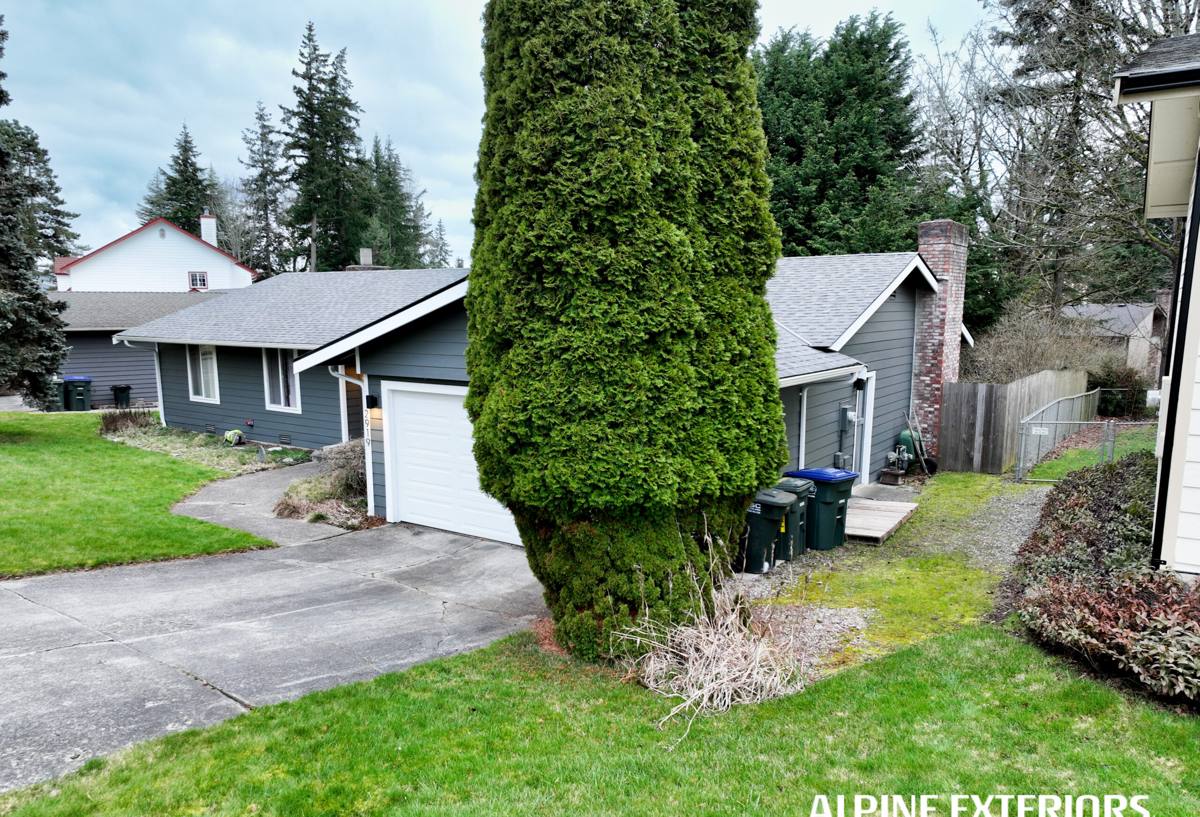
What Salt Air, Rain, and Moss Do to Your Siding Over Time
Three things do most of the damage to Blaine Harbor exteriors, and they compound each other:
Salt Air
Airborne salt is corrosive to exposed metal fasteners, trim connectors, and flashing, and it accelerates the breakdown of finishes that aren't built to resist it. Paint film on wood or engineered wood siding tends to chalk and fail faster near the water than it would inland, which means more frequent repainting just to keep moisture out.
Driving Rain
Wind off the water pushes rain sideways and upward, past overhangs and into joints, seams, and butt ends that would stay dry in a calmer climate. Any siding system with weak lap joints, poor flashing detail, or gaps at trim is going to take on water here faster than the same system would in a more sheltered inland yard.
Moss and Algae
Shaded north- and west-facing walls, mature tree cover, and long damp stretches between dry spells give moss and algae months at a time to establish themselves. On porous or absorbent siding materials, that growth holds moisture directly against the surface, which is exactly the condition that causes rot, delamination, and coating failure.
None of these three problems is exotic. They're the same weather patterns that shape building codes and siding recommendations across the Pacific Northwest coast. But Blaine Harbor gets a more concentrated version of all three at once, which is why the siding choice and the installation quality both matter more here than they would in a milder microclimate a few miles inland.
Why We Install Only James Hardie Fiber Cement
We don't install vinyl siding, LP SmartSide, cedar, primed spruce, or other fiber cement brands like Cemplank or Allura. We install James Hardie fiber cement exclusively, and that's a deliberate standard, not a brand preference we picked at random.
James Hardie's fiber cement is a mix of cement, sand, and cellulose fiber, cured into a dense, stable board. It doesn't absorb water the way wood-based products do, it isn't affected by moss and algae growth the way porous or organic materials are, and it's non-combustible — a real consideration for coastal homes exposed to wind. Hardie also engineers specific product lines for different climates: their HZ5 line is built for the wetter, more moderate marine conditions typical of the Pacific Northwest, with different moisture and freeze-thaw performance targets than their products made for hot, dry regions. That climate-specific engineering is part of why we don't treat "fiber cement" as a single interchangeable category — the substrate matters, but so does which version of it is on your wall.
The factory-applied ColorPlus finish is the other piece. It's baked on under controlled conditions before the boards ever reach the jobsite, which gives more consistent, more fade-resistant color than field-applied paint — a real advantage in an environment where salt air and UV exposure are already working against any coating. Hardie backs the product with a transferable limited warranty, which matters to homeowners who may sell before they've lived in the house for decades.
What Correct Fiber Cement Installation Involves
Fiber cement is only as good as the installation behind it. A correctly installed Hardie system and a poorly installed one can look identical from the street and perform completely differently after five years of Blaine Harbor weather.
Flashing and Moisture Management
Every window, door, and penetration needs proper flashing and a drainage plane behind the siding so any water that does get past the surface has somewhere to go besides your sheathing. In a driving-rain environment like this one, that drainage gap and correctly lapped weather-resistive barrier are not optional details — they're the difference between water shedding away from the wall and water sitting against it.
Fastening and Clearances
Hardie specifies fastener type, spacing, and placement, along with minimum clearances from the ground, roofline, and adjacent surfaces. Getting those clearances wrong is one of the most common ways fiber cement siding takes on moisture damage — not because the material failed, but because it was installed too close to grade, a deck, or a roof plane where it stays wet longer than it should.
Joints, Caulking, and Butt Seams
Butt joints and seams are where wind-driven rain finds its way in first. Correct sealant selection, proper joint treatment, and attention to which seams should be caulked versus which should be left to drain are all judgment calls that come from experience with this specific climate, not just a general contracting background.
Field Touch-Up
Cut edges exposed during installation need to be sealed and touched up with Hardie-approved products to maintain the factory finish's protection. Skipping this step leaves raw edges exposed to exactly the salt air and moisture that ColorPlus is designed to resist.
Comparing Siding Materials for a Marine Climate
Homeowners in Blaine Harbor often ask how the material options actually stack up once you account for salt air, driving rain, and a long moss season rather than just upfront cost. Here's an honest comparison:
| Material | Moisture Behavior | Moss/Algae Susceptibility | Maintenance Burden |
|---|---|---|---|
| Vinyl | Doesn't absorb water itself, but seams and panels can flex, warp, or gap over time, letting water behind the surface | Growth sits on top of the surface and needs regular washing | Low material upkeep, but panels can crack or fade and are hard to color-match if damaged |
| Cedar / Primed Wood | Absorbs moisture directly; prone to swelling, cupping, and rot without diligent upkeep | High — organic surface holds moisture, feeding growth | Highest — regular refinishing, caulking, and moisture monitoring required |
| Engineered Wood (e.g. LP SmartSide) | Resin-treated to resist moisture better than raw wood, but still wood-based and sensitive to sustained wet exposure at cut edges and seams | Moderate — better than raw wood, still an organic substrate | Moderate — edge sealing and coating maintenance matter more here than in drier climates |
| James Hardie Fiber Cement | Cement-based; does not swell, rot, or absorb water the way wood-based products do | Low — dense, non-organic surface resists sustained growth better than porous materials | Low — periodic cleaning and caulk inspection; factory finish reduces repainting cycles |
This isn't a claim that every other option is unusable — plenty of homes around the region are sided in vinyl or engineered wood and hold up fine with regular upkeep. It's why, for the climate Blaine Harbor sits in specifically, we've standardized on one material and one installation method rather than offering several and hoping each one gets maintained perfectly.
Our Process, Start to Finish
Assessment and Measurement
We start by walking the exterior with you, noting which walls take the most direct rain and wind exposure, where existing moss or algae has established itself, and where prior flashing or trim work may already be letting water in. That assessment shapes the flashing and drainage plan before a single board is ordered.
Prep and Removal
Existing siding comes off, and we inspect the sheathing and framing underneath for any moisture damage that needs to be addressed before new siding goes up. Installing new fiber cement over hidden rot just traps the problem — it doesn't fix it.
Installation
Weather-resistive barrier, flashing, and drainage components go in first, followed by the Hardie panels or planks, fastened and spaced to manufacturer specification for this climate zone. Trim, corners, and joints are treated as we go, not left for a final pass.
Final Walkthrough
We walk the finished job with you, checking seams, touch-up work, and clearances, and answer questions about care before we consider the project done.
Keeping Your Siding Right Once It's Up
Fiber cement is low-maintenance compared to wood or engineered wood siding, but "low-maintenance" doesn't mean "no maintenance," especially this close to the water. A simple seasonal routine goes a long way:
- Rinse siding once or twice a year with a garden hose to remove salt residue, dust, and early moss growth before it takes hold
- Inspect caulking at window and door trim annually, especially after winter storms, and re-caulk any joints that have opened up
- Trim back vegetation and branches that shade siding and slow drying — airflow is one of the best defenses against moss
- Check gutters and downspouts before the wet season to make sure water is directed away from siding rather than overflowing onto it
- Look at ground-level clearance periodically to confirm mulch, soil, or landscaping hasn't crept up against the bottom edge of the siding
- Address any moss or algae growth promptly with a gentle wash rather than pressure-washing, which can force water behind panels and damage the finish
Why Hiring a Crew That Already Works Blaine Harbor Matters
General siding experience and Blaine Harbor experience aren't the same thing. A crew that mostly works drier, more sheltered inland neighborhoods may not think twice about flashing details, seam sealing, or clearance requirements that matter enormously a few hundred yards from open water. Wind-driven rain finds every shortcut, and moss doesn't wait to reveal a bad installation decision — it starts working immediately in the conditions this area provides year-round.
Crews with real experience in this specific stretch of Whatcom County know which walls typically take the worst weather, how local moss and algae patterns behave through the wet season, and where past installations in this area have failed. That local pattern recognition doesn't replace manufacturer specifications, but it does mean fewer surprises and a job that's built for the conditions your home actually faces rather than a generic set of assumptions.
If you're weighing a siding replacement for a Blaine Harbor home, we're glad to walk the exterior with you, talk through what your specific walls and exposure are dealing with, and put together a straightforward, no-pressure estimate for a correctly installed James Hardie fiber cement system. Use the form below to get started.