 Blaine Siding
 Roofing in Cherry Point: A Different Set of Conditions
Cherry Point sits right up against the water in Whatcom County, and that location shapes everything about how a roof ages here. Homes in this area deal with a near-constant mix of salt-laden air off the Strait of Georgia, wind-driven rain that doesn't fall straight down, and a wet season that runs long enough for moss to get a real foothold before summer ever dries things out. None of that is unique to any one house — it's the baseline every roof on this stretch of coastline has to handle, year after year.
A roof that would hold up fine in a drier inland part of Whatcom County can wear out faster here if it wasn't built with these conditions in mind. That's not a knock on any particular product — it's just physics. Salt air accelerates corrosion on exposed metal fasteners and flashing. Wind-driven rain finds gaps that a straight-down rainstorm never would. And moss doesn't just sit on the surface; given enough time, it works into shingle laps and granule surfaces and holds moisture against the roof deck longer than it should be there.
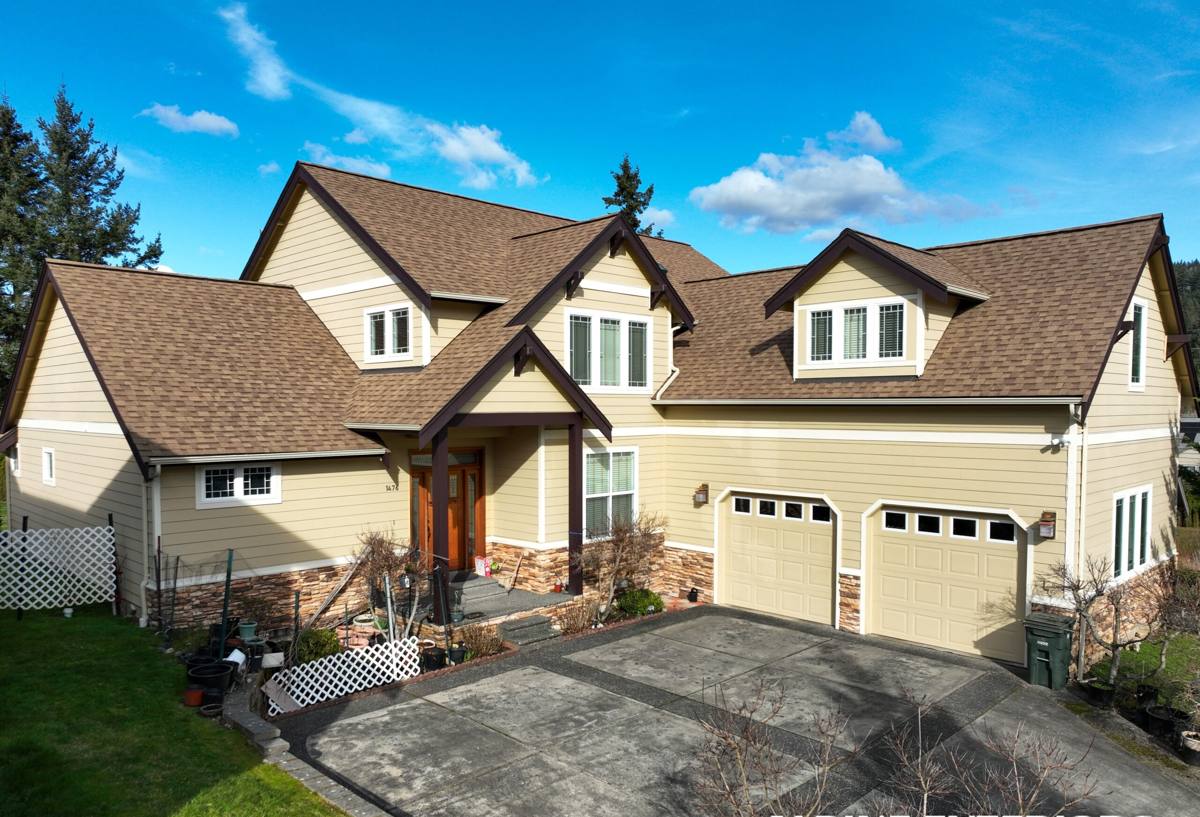
What "Correct" Looks Like for a Cherry Point Roof
When we talk about a proper roof installation in this area, we're not talking about a fundamentally different roofing system than what's used elsewhere in the Pacific Northwest. We're talking about the details being handled with this specific climate in mind — because on a coastal roof, the details are where failures actually start.
Underlayment and Water Management
A synthetic or high-quality underlayment across the full deck matters more here than in drier climates, because it's the backup layer that has to perform when wind pushes rain sideways under the shingle or panel line. We treat this as a non-negotiable layer, not an upgrade option.
Flashing at Every Penetration
Chimneys, vent pipes, skylights, and roof-to-wall transitions are where the vast majority of leaks originate — not in the open field of the roof. Properly formed and sealed flashing at these points is where driving rain either gets turned away or finds its way in.
Fastener and Metal Corrosion Resistance
Given the salt content in the air near the water, we pay close attention to fastener quality and exposed metal components. Standard fasteners can corrode faster in a marine-influenced environment than they would a few miles inland, and a corroding fastener eventually means a loose shingle or panel.
Ventilation That Actually Balances
Intake at the eaves and exhaust at the ridge need to work together, not just exist independently. Poor ventilation traps moisture in the attic, which speeds up deck rot from the underside — a problem that shows up long after the shingles themselves would otherwise still have useful life left.
The Moss Problem, Specifically
Whatcom County's long wet season gives moss and algae plenty of time to establish themselves, especially on roof faces that stay shaded or don't get much direct sun. Left alone, moss holds moisture against the roofing material, and over years that shortens the life of shingles by keeping them damp far more than they were designed to be.
During a new roof installation, this is the point to get ahead of the problem rather than deal with it later:
- We can install zinc or copper strips near the ridge on shingle roofs, which release trace metal ions with rainfall that inhibit moss and algae growth over time.
- Shingle products with algae-resistant granules are worth discussing if your roof has shaded or north-facing sections prone to staining and moss buildup.
- Proper attic ventilation reduces the underside moisture that can make moss problems worse from the inside out, not just the outside in.
- Keeping nearby tree limbs trimmed back after installation reduces shade and debris buildup, which are two of moss's favorite conditions.
None of this makes a roof moss-proof forever — nothing does in this climate. But it meaningfully extends the time before moss becomes a maintenance issue, and it's far cheaper to plan for during installation than to retrofit later.
Choosing Materials for a Coastal, Wet-Winter Climate
There's no single "best" roofing material for Cherry Point — the right choice depends on your home's roof pitch, your budget, and how much long-term maintenance you want to take on. What we can do is lay out the honest trade-offs for the options homeowners in this area typically consider.
| Material | How It Handles This Climate | Maintenance Considerations |
|---|---|---|
| Architectural asphalt shingle | Solid performance when installed with proper underlayment and flashing; widely used and well understood locally | Benefits from algae-resistant granules and periodic moss checks |
| Metal roofing (standing seam) | Sheds wind-driven rain very effectively; less hospitable surface for moss to grip | Requires corrosion-resistant fastener and coating specification near salt air |
| Cedar shake | Traditional look, but wet-season moisture exposure raises long-term maintenance demands | Needs more frequent inspection and treatment in a persistently damp environment |
| Synthetic/composite shingle | Designed to resist moisture absorption better than natural wood products | Product-specific; installation sensitivity varies by manufacturer |
We'll walk through these options against your specific roof during an estimate rather than push one product across the board — what's right for a steep-pitch shake-style roof isn't necessarily right for a low-pitch ranch home near the water.
Signs a Cherry Point Roof May Be Due for Replacement
Roofs rarely fail all at once — they show warning signs first, and in this climate those signs can show up a bit differently than they would in a drier region.
- Granules collecting in gutters, which signals asphalt shingles are wearing down faster than expected
- Dark streaking or visible moss growth, especially on north-facing or shaded roof planes
- Soft spots or sagging in the roof deck, often a sign moisture has been getting into the sheathing
- Curling, cracking, or lifted shingle edges, which give wind-driven rain an easier path underneath
- Rust staining or visible corrosion around flashing, vents, or exposed fasteners
- Daylight visible through the attic or persistent musty smell, both signs of an underlying leak
If you're seeing more than one of these, it's worth having the roof looked at before the next major storm season rather than after.
How Our Installation Process Works
1. On-Site Assessment
We start by getting on the roof and into the attic where possible. We're looking at deck condition, existing ventilation, flashing points, and how the roof's orientation and pitch interact with prevailing wind and rain direction on your specific property.
2. Material and Scope Discussion
We walk through material options honestly, including what each choice means for upfront cost versus long-term maintenance in this climate. There's no pressure to upsell — our goal is a roof that's right-sized for your home and budget.
3. Tear-Off and Deck Inspection
Once the old roofing is off, we inspect the deck itself. Any soft, rotted, or water-damaged sheathing gets addressed before new material goes down — installing a new roof over a compromised deck just guarantees problems later.
4. Underlayment, Flashing, and Ventilation Installation
This is where the climate-specific details we covered above get built in — full underlayment coverage, properly formed flashing at every penetration, and balanced intake/exhaust ventilation.
5. Roofing Material Installation
Installed to manufacturer specification, with attention to fastener pattern and exposure given the corrosion pressure from salt air near the water.
6. Final Walkthrough
We review the completed work with you, including where moss-inhibiting strips or treatments were placed and what routine maintenance we'd recommend going forward.
Why Local Experience on This Coastline Matters
A roofing crew that's worked in and around Cherry Point and the greater Blaine area has already seen how homes here age under these specific conditions — which roof orientations tend to hold moss longest, which flashing details actually get tested by the wind patterns off the water, and which fastener choices hold up over years rather than just passing an initial inspection. That's the kind of judgment that doesn't come from a spec sheet; it comes from working this stretch of Whatcom County directly.
It also means we're not guessing about permitting, local building requirements, or the general condition of housing stock in the area. We show up already knowing what this climate does to a roof, which lets us spend the estimate conversation on your home specifically rather than general education.
A Realistic Look at Cost Factors
Exact pricing depends on your roof's size, pitch, material choice, and current condition, but a few factors consistently move the number up or down:
| Factor | Why It Matters |
|---|---|
| Roof pitch and complexity | Steeper or more cut-up roofs take longer to install safely and generate more waste material |
| Deck condition underneath | Rotted sheathing found during tear-off adds repair cost before new material can go down |
| Material selection | Metal and premium shingle products cost more upfront but can reduce long-term maintenance |
| Number of penetrations | Chimneys, skylights, and multiple vents each require additional flashing work |
| Access and site conditions | Tight lots, tall trees, or difficult staging areas can affect labor time |
We'll give you a clear, itemized estimate after seeing the roof in person — not a ballpark number over the phone that doesn't reflect your actual home.
Ready for a Straight Answer on Your Roof?
If your Cherry Point home's roof is showing wear, moss buildup, or you're just planning ahead, we're happy to take a look and give you an honest assessment — no pressure, no hard sell. Use the form below to request a free estimate, and we'll walk the roof with you and talk through what actually makes sense for your home in this climate.