 Blaine Siding
 Windows Built for What Custer Weather Actually Does
Custer sits inland from Blaine and Birch Bay, but it's still close enough to Puget Sound and the Strait of Georgia that homes here deal with the same salt-laden marine air, wind-driven rain, and long moss season as more coastal parts of Whatcom County. That combination is genuinely hard on windows. Salt air accelerates corrosion on hardware and fasteners. Driving rain finds any weak point in flashing or sealant and pushes water in behind it. A wet, shaded fall-through-spring stretch keeps sills and sashes damp longer than drier climates ever would, which is exactly the environment moss and mildew like best.
A window that's a fine choice in a dry inland climate can underperform here within a few years if it isn't installed with this specific weather pattern in mind. This page covers what Custer homes actually need from a window installation, what a correct job looks like, and how our process is built around the realities of this part of Whatcom County rather than a generic national standard.
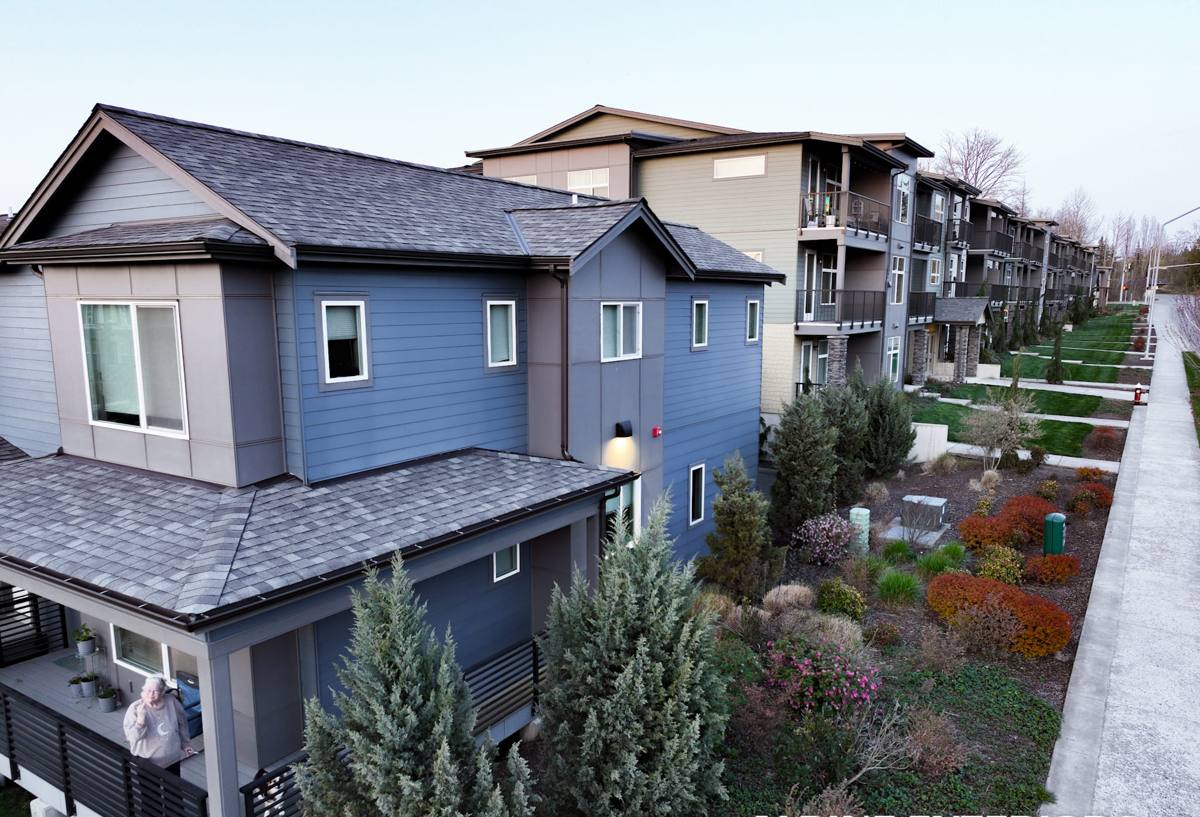
What Whatcom County Weather Does to a Window Over Time
Salt Air and Hardware Fatigue
Even a few miles inland, airborne salt settles on exterior surfaces and works into any exposed metal — hinges, cranks, locks, and the fasteners holding a window frame to the structure. Left unaddressed, that exposure corrodes hardware faster than it would in a drier or landlocked region, which is why hardware quality and finish matter more here than in a lot of the country.
Wind-Driven Rain and Hidden Leaks
Storms coming off the water don't just fall straight down — they push rain sideways into siding and window openings. A window can look perfectly sealed from the outside and still be taking on water at the flashing, the nailing fin, or the rough opening if those details weren't handled correctly during installation. That kind of leak often goes unnoticed for months or years, quietly rotting framing behind the wall before it ever shows up as a stain on drywall.
Moss, Shade, and Chronic Dampness
Whatcom County's wet season runs long, and shaded north- and west-facing walls stay damp for weeks at a stretch. That's the exact condition moss, algae, and mildew need to establish themselves on sills, trim, and the caulk lines around a window. Once moss gets a foothold in a joint, it holds moisture against wood and finish year-round, which shortens the life of both the window and the surrounding trim.
Signs Your Custer Home's Windows Are Due for Replacement
Most window failures don't happen all at once — they show up as small, easy-to-ignore symptoms first. Worth checking for before they turn into a bigger repair:
- Fogging or a permanent haze between panes, which means the seal on a double-pane unit has failed
- Visible gaps, soft or discolored wood, or paint that keeps bubbling at the frame or sill
- Windows that are noticeably harder to open, close, or lock than they used to be
- Drafts you can feel near the frame even when the window is fully latched
- Moss or dark staining building up in the corners or along the bottom of the frame
- A noticeable jump in heating costs without any other explanation
- Condensation forming on the inside of the glass regularly during colder months
One or two of these on a single window is often a targeted repair. Several of them across multiple windows, especially on the sides of the house that catch the most wind and rain, usually points to replacement being the more cost-effective long-term call.
What a Correct Window Installation Actually Involves
The window unit itself is only part of the job. In this climate, the installation details around it matter just as much — arguably more, since a good window installed poorly will still leak.
Flashing and Weatherproofing
Proper flashing directs any water that gets past the exterior finish back out and away from the framing, using a layered, shingled approach so water always moves downward and outward, never behind the next layer. This is the single most common place corners get cut, and it's the detail that determines whether a window stays dry through a real Whatcom County storm season or starts leaking within a couple of winters.
Air Sealing and Insulation
The gap between the window frame and the rough opening needs to be sealed and insulated correctly — not overpacked with expanding foam, which can bow the frame, and not left with gaps that let drafts and moisture through. Done right, this step is a major part of why a new window actually feels different in the room.
Fit, Shims, and Structural Prep
A window needs to be shimmed level, plumb, and square before it's ever fastened down. If the opening itself has settled, rotted, or shifted — common on older homes — that needs to be addressed before the new window goes in, not covered up around it. Skipping this step is how a brand-new window ends up operating poorly or leaking within the first year.
Choosing a Frame Material for Custer's Conditions
There's no single "best" window material for every home — it depends on budget, the home's style, and how much upkeep an owner wants to take on. In a climate with regular salt air and long wet stretches, though, some materials simply hold up with less maintenance than others.
| Frame Material | Moisture & Salt-Air Resistance | Maintenance | Typical Lifespan |
|---|---|---|---|
| Vinyl | Good — won't rot or corrode, though hardware quality still matters | Low | 20–30+ years |
| Fiberglass | Very good — dimensionally stable, resists warping in wet-dry cycles | Low | 30–40+ years |
| Wood (clad exterior) | Fair — the interior wood needs the exterior cladding to stay intact | Moderate to high | 20–30 years with upkeep |
| Aluminum | Fair — conducts cold and is prone to corrosion in salt air over time | Moderate | 15–25 years |
We don't push one brand or material on every job. What we do is walk through these trade-offs honestly for your specific home — its exposure, its style, and what you're willing to maintain — rather than defaulting to whatever has the best margin.
Our Window Installation Process
- On-site assessment. We look at each opening individually — framing condition, current flashing, sun and wind exposure — since even windows on the same house can need different approaches.
- Straightforward proposal. You get a clear scope and pricing before any work starts, with the reasoning behind material and installation recommendations explained plainly.
- Removal and opening prep. Old units come out, and any rot, settling, or damaged framing gets repaired before the new window goes in — never covered over.
- Installation, flashing, and sealing. The window is set level and square, flashed in proper shingled order, and sealed with materials rated for this climate.
- Interior and exterior finish work. Trim, sealant lines, and insulation are completed and cleaned up so the result looks finished inside and out.
- Final walkthrough. We check operation, seal quality, and answer any questions before calling the job done.
Why Hire a Crew That Already Works in Custer
A contractor who works this part of Whatcom County regularly already knows which details matter most here — how much salt exposure to plan for, which wall orientations take the worst of the driving rain, and where moss tends to build up fastest. That local familiarity shows up in fewer surprises during the job and fewer callbacks after it, because the flashing and sealing details are handled with this specific climate in mind from the start, not adapted after the fact from a warmer or drier region's playbook.
It also means straightforward logistics — a crew that's already local to Blaine and the surrounding area, familiar with typical permitting expectations for the county, and available for a follow-up visit without a long drive if a question comes up after the install.
What Affects the Cost of a Window Installation
Every home is different, but the main factors that move a window installation quote up or down are consistent: the number of windows, their size and style (a fixed picture window costs less to install than an operable bay or custom shape), the frame material chosen, and how much repair the existing opening needs once the old window comes out. Whole-house replacements typically come with a lower per-window cost than a single window done on its own, simply due to setup efficiency. We'll always walk through these factors on-site so you understand exactly what's driving your number, rather than handing you a flat estimate with no explanation behind it.
If your Custer home has windows that are fogging, drafting, sticking, or just past their prime, we're happy to take a look and give you a straightforward, no-pressure estimate — no obligation, just an honest read on what your windows need. Use the form below to get started.