 Blaine Siding
 Why Nooksack Roofs Take a Different Kind of Beating
Homes in the Nooksack area near Blaine sit under a mix of conditions that most roofing material was never designed for. You've got salt-laden air coming off the water, long stretches of driving rain that hits roofs sideways as much as straight down, and a moss season that can run most of the year in the shaded, damp corners of a property. None of these problems are dramatic on their own. What they do is compound, quietly, until a roof that looked fine two years ago starts showing streaking, soft spots, or corrosion at the fasteners.
Metal roofing handles this combination better than most materials when it's specified and installed correctly for the area. When it's installed the way it might be in a drier, inland climate, it doesn't. The difference between those two outcomes is almost entirely in the details — the fasteners used, the underlayment beneath the panels, the flashing at every transition, and how the roof is ventilated underneath.
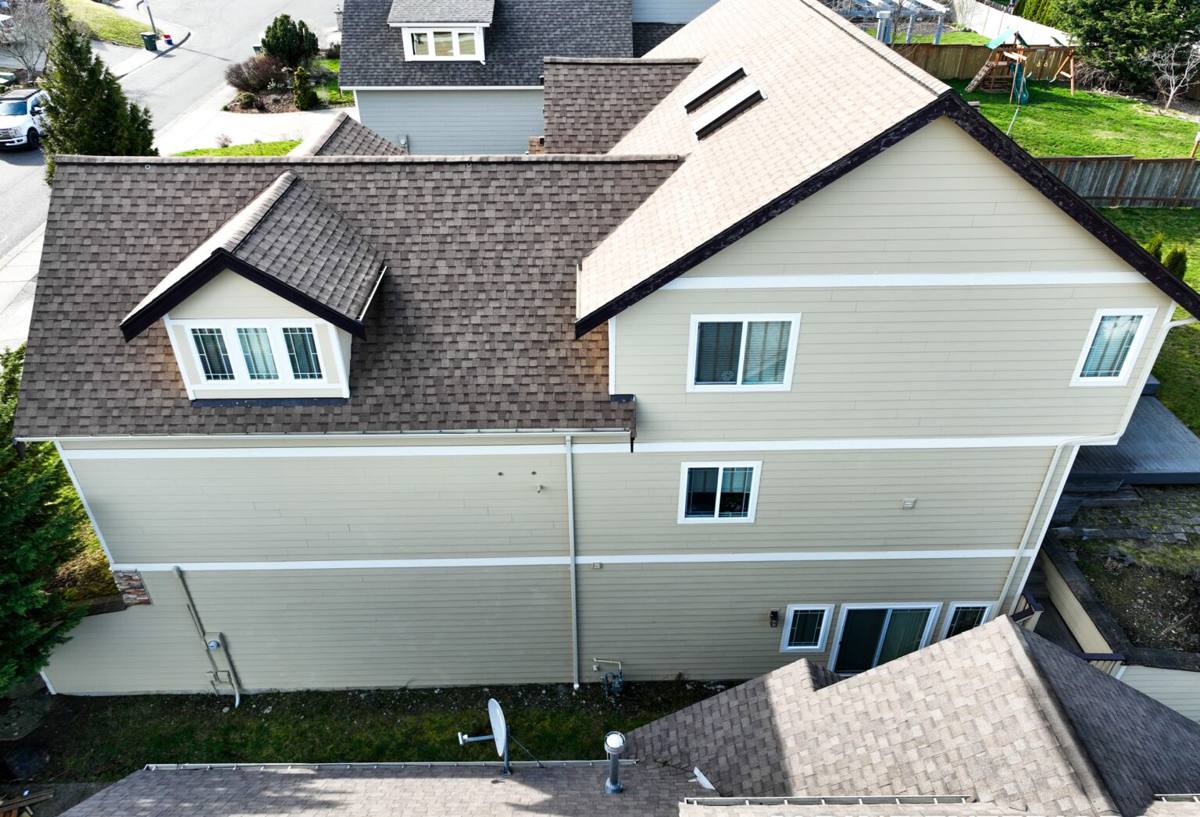
What Actually Fails First on a Coastal Whatcom County Roof
Before talking about what a correct installation looks like, it helps to know what typically goes wrong on roofs around here that weren't built for these conditions:
- Fasteners and flashing that corrode faster than the panels around them, because the hardware wasn't rated for salt-air exposure
- Wind-driven rain that gets pushed under panel laps or around penetrations instead of running off the surface
- Moss and organic debris holding moisture against the roof in shaded valleys, north-facing slopes, and areas near trees
- Underlayment that was adequate for a dry climate but breaks down under near-constant dampness
- Poor attic or roof-deck ventilation trapping humidity, which speeds up condensation and corrosion from underneath
Every one of these is preventable. None of them are inherent flaws in metal roofing as a material — they're installation and specification issues, and they're exactly what a crew familiar with this specific stretch of Whatcom County should be catching before the first panel goes down.
What a Correct Metal Roofing Job Involves Here
Underlayment and Moisture Protection
On a roof that's going to see this much rain, the underlayment underneath the metal matters as much as the metal itself. We use synthetic or self-adhered underlayment rated for extended moisture exposure, with extra protection at eaves, valleys, and any low-slope sections where water sits longer before draining. This layer is what protects the roof deck if wind ever drives water past a seam or lap — it's the backup system, not an afterthought.
Fasteners and Flashing
Salt air is hard on standard hardware. We spec fasteners, screws, and flashing metal rated for coastal or marine-grade corrosion resistance rather than the standard-grade hardware that's fine further inland. Flashing at every roof-to-wall transition, chimney, vent, and valley gets custom-formed and properly lapped — this is where most metal roof leaks actually start, not in the field of the panels themselves.
Ventilation
A metal roof that traps humid air underneath it will corrode from the inside before it shows any problem on the surface. Proper intake and exhaust ventilation keeps air moving through the attic or roof assembly, which controls condensation and also helps the roof shed the kind of persistent dampness that feeds moss growth.
Standing Seam vs. Exposed-Fastener Panels for This Area
Both systems are legitimate metal roofing options, and the right choice depends on the home, the budget, and how the roof is shaped. Here's how they generally compare for a coastal Whatcom County property:
| Factor | Standing Seam | Exposed-Fastener |
|---|---|---|
| Fastener exposure | Concealed clips, no exposed screws | Screws penetrate the panel face |
| Long-term maintenance in salt air | Lower — no exposed hardware to re-seat or corrode | Higher — gaskets and screws need periodic checking |
| Upfront cost | Higher | Lower |
| Best fit | Primary residences, longer ownership horizon | Outbuildings, budget-driven projects, shorter horizon |
| Wind and rain performance | Excellent — fewer penetration points | Good, if installed and maintained correctly |
For a home someone plans to own for decades in a salt-air, high-rain environment, standing seam is usually the better long-term investment because there are no exposed fasteners for corrosion or wind to work on over time. Exposed-fastener panels are a sound, honest option too — they just come with a maintenance commitment that standing seam doesn't.
Our Installation Process
- On-site assessment — we look at the existing roof, deck condition, ventilation, and any moss or moisture problem areas before quoting anything
- Panel and system selection — we walk through standing seam versus exposed-fastener options based on the home, the roof shape, and the budget
- Deck prep — any soft, rotted, or moisture-damaged decking gets replaced before underlayment goes down, not covered up
- Underlayment and flashing — self-adhered or synthetic underlayment rated for this climate, with custom flashing at every penetration and transition
- Panel installation — corrosion-rated fasteners and hardware, proper overlap and seaming for wind-driven rain
- Ventilation check — intake and exhaust confirmed or upgraded so the assembly can actually breathe
- Final walkthrough — we go over the completed roof and what maintenance, if any, it'll need going forward
Moss and Maintenance: What Nooksack-Area Homeowners Should Watch For
Metal roofing sheds moss far better than shingles or wood, but it isn't immune, especially in shaded or north-facing sections where debris and moisture collect. A little attention a couple of times a year keeps a metal roof performing the way it's supposed to for its full lifespan.
- Clear leaves, needles, and debris out of valleys and around penetrations before they trap moisture
- Keep gutters and downspouts flowing freely — backed-up water at the eaves is one of the more common causes of edge damage
- Watch for streaking or dark growth in shaded areas and address it early rather than letting it establish
- Trim back overhanging branches where practical to reduce shade and debris buildup
- Have flashing and fastener condition checked periodically, especially on exposed-fastener systems
What Drives Cost on a Metal Roofing Project Here
Every roof is different, but the same handful of factors tend to move the price up or down on jobs in this area:
| Factor | How It Affects Cost |
|---|---|
| Panel system | Standing seam costs more upfront than exposed-fastener |
| Roof complexity | Valleys, dormers, and multiple roof planes add flashing and labor time |
| Deck condition | Rot or moisture damage found during tear-off adds repair costs |
| Ventilation upgrades | Adding or correcting intake/exhaust adds modest cost but pays off long-term |
| Access and pitch | Steeper or harder-to-access roofs take more time and equipment |
We give honest, itemized numbers before work starts, and we'll tell you plainly if a lower-cost option is actually the right call for your situation rather than upselling a system you don't need.
Why a Crew That Already Works Nooksack Matters
Metal roofing done wrong doesn't usually fail in year one — it fails in year eight or ten, quietly, in exactly the ways that are hardest to catch during a quick inspection. A crew that already works this part of Whatcom County has seen how salt air, driving rain, and long moss seasons actually play out on real roofs nearby, not just in a spec sheet. That shows up in small decisions: which fastener grade to spec, how much underlayment coverage a given roof shape needs, where the moss problems tend to start, and how to detail flashing so wind-driven rain doesn't find a way in.
It also means we're familiar with local permitting expectations and typical construction in the area, so there are fewer surprises once work begins.
Questions Worth Asking Before You Hire
- Does your fastener and flashing hardware carry a coastal or marine corrosion rating, or is it standard grade?
- What underlayment are you using, and is it rated for continuous moisture exposure?
- Will you address roof-deck ventilation as part of the job, not just the panels?
- Can you walk me through how you'll flash the valleys, chimney, and vent penetrations specifically?
- Do you have experience with metal roofing on homes in this area specifically, not just metal roofing in general?
If a contractor can't answer these clearly, that's worth noticing before you sign anything.
Get a Straight Answer About Your Roof
If you're weighing metal roofing for a home in the Nooksack area near Blaine, we're happy to take a look and give you an honest read on what your roof actually needs — no pressure, no inflated scope. Fill out the form below for a free estimate and we'll walk you through your options in plain terms.