 Blaine Siding
 Storm Damage Roof Repair Built for Point Roberts
Point Roberts sits out on its own point of land, exposed to weather off the Strait of Georgia and Boundary Bay on three sides. That exposure means storms arrive with more wind, more driving rain, and more salt in the air than roofs just a few miles inland ever have to deal with. When a storm passes through, the damage it leaves behind on a Point Roberts roof is often more extensive, and easier to miss, than homeowners expect.
This page covers what storm damage roof repair actually involves for a Point Roberts home, what separates a correct repair from a patch job that fails again in the next storm, and how our process works from the first call to the final walkthrough.
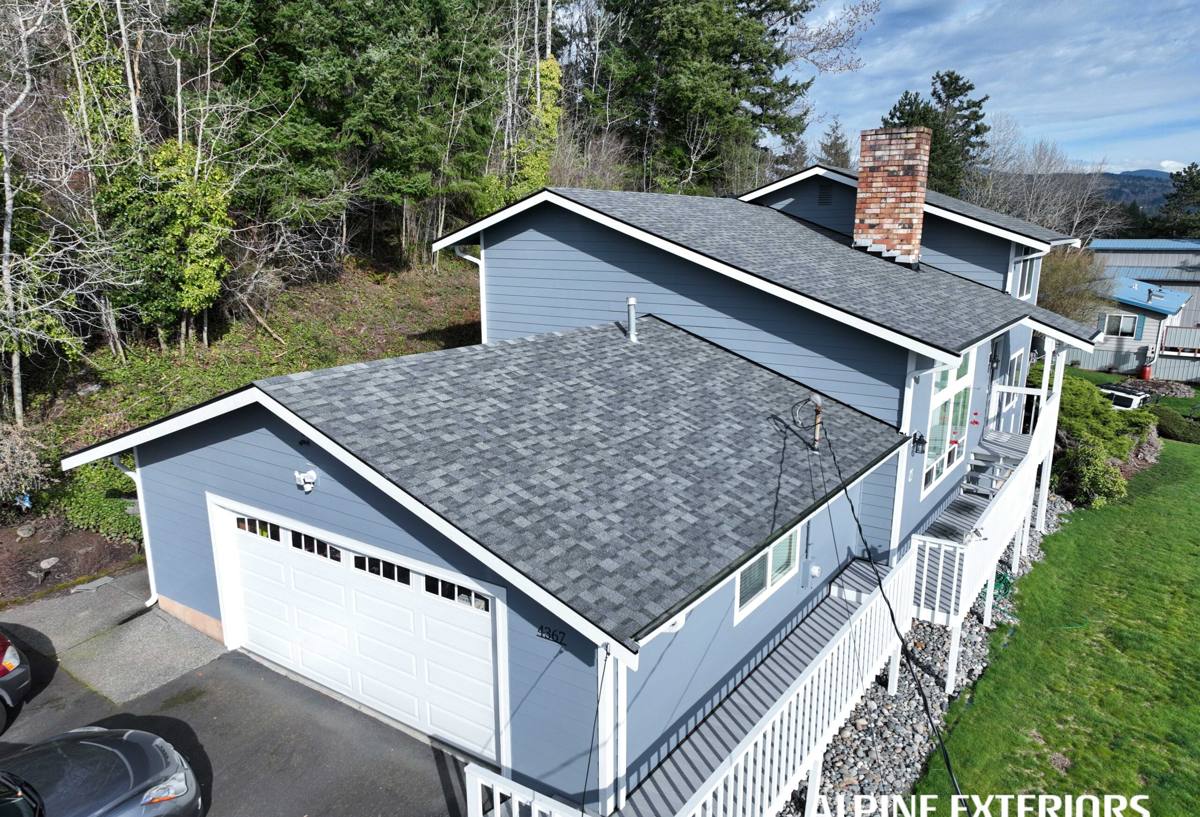
Why Point Roberts Roofs Take a Harder Hit
A roof in a sheltered inland location and a roof on an exposed peninsula can look identical and still perform completely differently in the same storm. Point Roberts' geography puts homes directly in the path of wind coming off open water, with little in the way of natural windbreaks on the exposed sides of the community. That wind doesn't just blow rain sideways, it drives it upward under shingle edges and flashing laps where a roof built for calmer conditions was never designed to shed water.
The Specific Stresses at Work
- Salt air: Corrodes exposed fasteners, flashing metal, and gutter hardware faster than it does further inland, weakening the details that keep water out.
- Driving rain: Wind-driven rain gets forced under shingle tabs and into flashing laps instead of running off, which is where most storm-related leaks actually start.
- Long moss season: Extended damp, shaded conditions let moss and organic buildup take hold on north-facing slopes, and a moss mat holding moisture against shingles makes them more vulnerable to wind lift and granule loss during a storm.
- Sustained wind exposure: Homes on the more exposed edges of the peninsula see higher and more frequent wind loads than a typical inland Whatcom County property.
None of this means a Point Roberts roof is doomed to fail. It means the repair work has to account for these stresses directly rather than treating storm damage as a one-size-fits-all patch.
Recognizing Storm Damage Before It Becomes a Bigger Problem
Some storm damage is obvious the morning after a bad blow. A lot of it isn't, and the damage that's hardest to see is often the kind that causes the most trouble months later.
- Shingles that are missing, cracked, or lifted at the edges, especially on wind-exposed slopes
- Granules collecting in gutters or at downspout outlets after a storm, a sign of accelerated shingle wear
- Bent, loosened, or missing flashing at valleys, chimneys, and roof-to-wall transitions
- Damaged or clogged gutters that can no longer move storm water off the roof properly
- Water stains on ceilings or in the attic that appear or worsen shortly after a storm
- Debris impact marks or punctures from wind-blown branches or other material
If you notice any of these signs, it's worth having the roof inspected before the next storm rather than waiting to see if a small problem gets bigger on its own.
What a Correct Storm Damage Repair Involves
A storm damage repair that actually holds up isn't just about replacing what's visibly missing. It addresses the roof as a system and accounts for the conditions that caused the damage in the first place.
Emergency Mitigation First
When a storm has left a roof actively leaking or exposed, the first priority is stopping further water intrusion, typically with proper tarping or temporary sealing at the damaged area. This buys time for a full assessment without letting more water get into the deck, insulation, or interior of the home.
A Full Roof Assessment, Not Just the Obvious Spot
Storm damage rarely stays confined to one visible area. A proper assessment checks the whole roof, not just the section where a leak showed up inside, since wind and rain don't damage a roof in a single tidy spot.
Flashing and Underlayment Repair
Because wind-driven rain in this location gets forced under shingle edges and flashing laps, a correct repair re-establishes proper flashing integration and underlayment protection at valleys, penetrations, and wall intersections, not just at the specific shingles that were torn loose.
Matching Materials and Proper Fastening
Repairs use shingles and flashing that match the existing roof as closely as possible in profile and color, fastened to manufacturer specification rather than a shortcut pattern, so the repaired section performs and weathers consistently with the rest of the roof.
Documentation for Insurance
If a claim is being filed, thorough photo documentation of the damage before and after repair, along with a clear written scope of work, makes the claims process considerably smoother and gives you a record to reference if questions come up later.
Matching the Repair to the Damage
| Damage Level | Typical Signs | Repair Scope |
|---|---|---|
| Minor | A few lifted or cracked shingles, minor granule loss | Targeted shingle replacement and fastening repair |
| Moderate | Missing shingles in a section, damaged flashing, active small leak | Section tear-off and reinstall, flashing repair, underlayment patch |
| Significant | Wide wind lift, multiple leak points, visible deck staining | Larger section replacement with deck inspection and repair as needed |
| Severe | Widespread shingle loss, structural or deck damage, long-standing water intrusion | Full or near-full roof replacement, often warranting a detailed insurance evaluation |
An honest contractor will tell you when a repair is the right call and when it isn't, rather than defaulting to the more expensive option. Just as important, they'll tell you when a patch is genuinely sufficient rather than pushing a full replacement that isn't needed yet.
The Point Roberts Access Factor
Point Roberts is a U.S. exclave, connected to the rest of Whatcom County only by water or by driving through Canada. That geography is worth understanding when you're dealing with storm damage, because it affects how repair work actually gets scheduled and supplied. Materials, equipment, and crews all have to cross the border to reach the community, and a contractor unfamiliar with that logistics reality can end up quoting timelines that don't hold up once the actual trip is factored in.
A crew that already works Point Roberts on a regular basis plans around this rather than getting surprised by it. That means staging materials in advance for common repair scenarios, building realistic travel and crossing time into scheduling, and not treating a Point Roberts job the same way they'd treat a job five minutes from the shop. After a storm, when timing matters most for a leaking roof, that difference is not a minor convenience.
Repair vs. Full Replacement After Storm Damage
Not every storm-damaged roof needs to be replaced, and not every roof can be safely patched back together. The right call depends on a handful of practical factors.
| Factor | What It Affects |
|---|---|
| Age of existing roof | An older roof nearing the end of its service life may not justify repair costs if replacement is close behind anyway |
| Extent of damage | Isolated damage favors repair; widespread or repeated damage across multiple areas favors replacement |
| Availability of matching materials | Discontinued or hard-to-match shingle lines can make a clean repair difficult, pushing toward a larger reroof |
| Deck condition underneath | Rot or moisture damage found at the deck level changes the scope regardless of how the shingles look |
| Insurance coverage | Claim terms and depreciation schedules can shift which option makes more financial sense |
A trustworthy contractor will walk you through these factors specific to your roof rather than handing you a one-line recommendation without explanation.
How Our Process Works
- Prompt response after a storm: We prioritize storm-related calls and get out to inspect the roof as quickly as scheduling and crossing logistics reasonably allow.
- Emergency mitigation if needed: If the roof is actively leaking or exposed, we address that first to limit further water intrusion.
- Full roof inspection: We check the entire roof, not just the obvious damage, including flashing, valleys, and attic signs of moisture.
- Written estimate: You get a clear, itemized scope of work covering exactly what needs repair and why, with photo documentation useful for insurance if applicable.
- Repair or replacement work: We complete the agreed scope using matched materials and proper fastening and flashing detail, not shortcuts.
- Final walkthrough: We review the completed work with you and confirm the repair addresses the actual cause of the damage, not just its symptoms.
Why Hiring a Crew That Already Works Point Roberts Matters
A contractor with regular experience on this specific stretch of coastline has already seen how salt air corrodes underspecified flashing, how wind off the water finds gaps in a roof that would hold up fine elsewhere, and how a long moss season sets up conditions for storm damage before a storm ever arrives. That's practical knowledge that shows up in the small decisions made during a repair, decisions a crew without local experience might not think to make at all.
It also matters for accountability afterward. A workmanship warranty only means something if the company behind it can actually be reached, and a contractor with an established, ongoing presence serving this community is the one you can call again if a question comes up down the road.
A Practical Checklist for Vetting a Storm Repair Contractor
- Do they inspect the whole roof, not just the spot where the leak showed up?
- Does the estimate specify materials and flashing scope, not just "storm repair"?
- Will they provide photo documentation useful for an insurance claim?
- Do they carry current WA contractor licensing, liability insurance, and workers' compensation?
- Can they speak specifically to working in Point Roberts, including realistic scheduling?
- Are they upfront about when a repair is sufficient versus when replacement makes more sense?
If a recent storm has left your Point Roberts roof damaged, missing shingles, or showing signs of a leak, we're glad to come take an honest look and provide a free, no-pressure estimate. Use the form below to get started.