 Blaine Siding
 Roof Repair Built for Everson's Weather
Homes in the Everson area deal with a specific combination of conditions that most roofing guides never address directly: salt-laden air moving in off the water, long stretches of driving rain through the fall and winter, and a moss season that can run eight months or longer in shaded, north-facing sections of a roof. None of these factors are dramatic on their own. Together, over several years, they're what turns a small, fixable problem into a full re-roof.
We work on roofs throughout the Blaine and greater Whatcom County area, and the repair calls we get from Everson homeowners tend to follow a pattern. It's rarely one catastrophic failure. It's usually a granule loss here, a soft spot in the decking there, a chimney flashing that's been quietly letting water in behind the brick for two winters. Roof repair done right in this climate means catching those things early and fixing them in a way that actually holds up to the next wet season, not just patching the visible symptom.
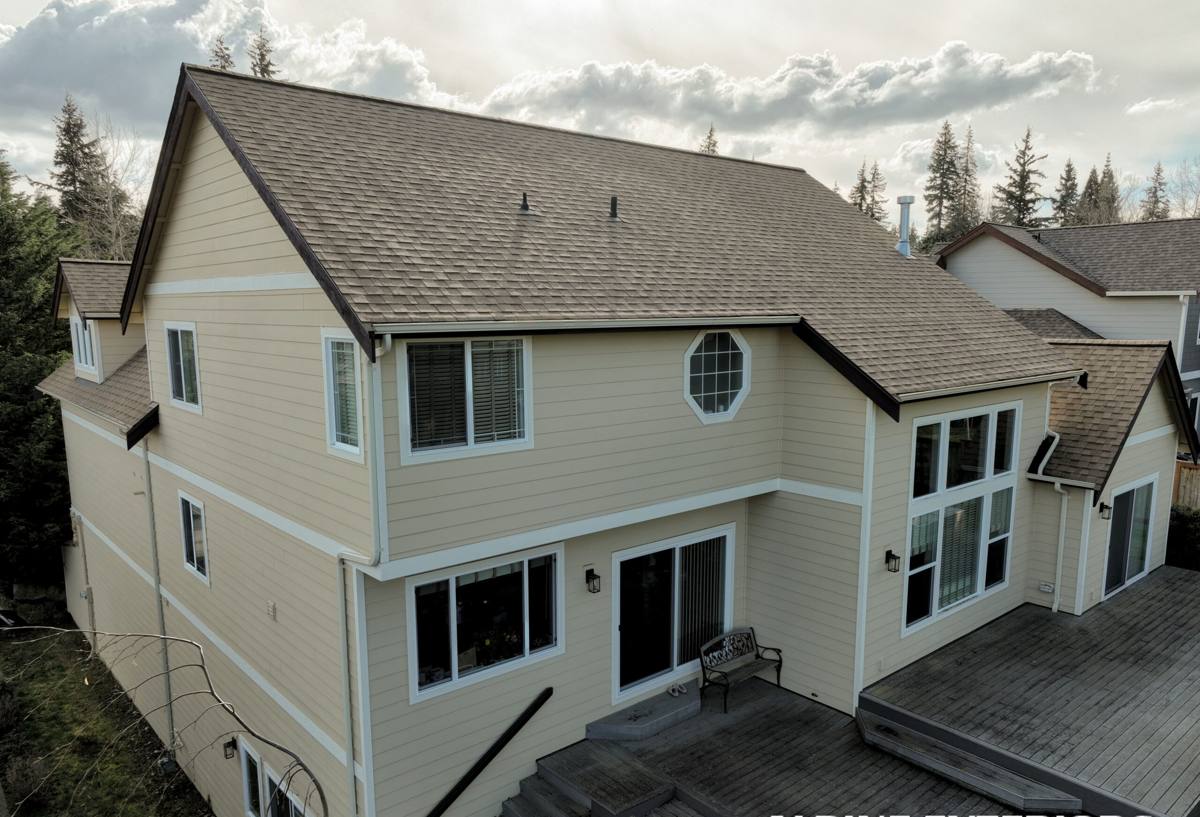
What Whatcom County Weather Actually Does to a Roof
Moss and Organic Growth
Moss doesn't just look bad. It holds moisture directly against roofing material, and on shingle roofs it works its root structure under the edges of shingles, lifting them and breaking the seal that keeps water out. On roofs with any shade from trees or a north-facing slope, moss can establish itself within a single wet season and keep growing nearly year-round in this climate. Once it's established, it accelerates every other problem on this list.
Driving Rain and Wind-Driven Water
Straight-down rain is rarely the issue. It's rain pushed sideways by wind that finds the gaps — under shingle tabs, around vent boots, along step flashing at wall intersections. A roof that would shed water fine in a calm rain can leak in a wind-driven storm if flashing details are even slightly off. This is one of the most common root causes we find behind interior water stains that homeowners assumed were "just the roof getting old."
Salt Air and Metal Corrosion
Proximity to the water means airborne salt settles on roofing metal — flashing, fasteners, vent caps, gutter hardware — and accelerates corrosion compared to inland areas. Galvanized fasteners and lower-grade flashing metals show pitting and rust well before they would in a drier, inland part of the state. This matters most at penetration points: pipe boots, skylight flashing, and chimney counterflashing, where a corroded fastener or a rusted-through flashing edge is often the actual point of failure, even when the shingles around it look fine.
Temperature Swings and Material Fatigue
Whatcom County doesn't get extreme heat, but the repeated cycle of damp, cool nights and daytime warming causes roofing materials to expand and contract steadily over the year. Over time this works fasteners loose and opens hairline gaps at seams and laps that weren't a problem when the roof was new.
Signs an Everson Home Needs Roof Repair Now
- Granules collecting in gutters or at the base of downspouts — a sign shingles are wearing faster than normal
- Dark streaking or visible moss patches, especially on shaded or north-facing roof sections
- Curling, cracking, or lifted shingle edges, particularly near roof valleys and edges
- Water stains on interior ceilings or in the attic, even faint ones that come and go with weather
- Rusted or visibly deteriorated flashing around chimneys, skylights, or pipe vents
- Sagging or soft-feeling spots when walking the roof (decking issues, usually from long-term moisture intrusion)
- Loose, missing, or damaged shingles after a windstorm
- Daylight visible through the roof deck from inside an unfinished attic
Any one of these on its own might not be urgent. Two or more together, especially combined with an attic that smells damp or musty, is worth a proper inspection before the next heavy rain season.
What a Correct Roof Repair Actually Involves
A lot of roof repair problems we see in this area weren't caused by bad materials — they were caused by a repair that treated the symptom instead of the cause. Sealing over a leaking flashing joint with roofing cement might stop a drip for a season, but it doesn't address why water was getting behind the flashing in the first place, and it makes a future proper repair harder because the old sealant has to be removed first.
Our approach starts with finding the actual entry point, which is not always directly above the interior stain — water travels along decking and framing before it shows up inside. From there:
- Inspection first. We look at the whole roof system, not just the spot that's leaking — flashing, vents, valleys, decking condition, and moss coverage all get checked, since one issue is often a symptom of a broader maintenance gap.
- Remove and clean, don't just cover. Damaged shingles, deteriorated flashing, or moss growth get physically removed rather than sealed over. Covering a problem instead of removing it just traps moisture underneath.
- Replace flashing with corrosion-appropriate materials. Given the salt air exposure in this area, we don't cut corners on flashing grade at penetration points — this is one of the most common places a "repaired" roof leaks again within a year or two.
- Check decking condition before closing up. If there's been moisture intrusion for any length of time, the decking underneath needs to be checked for soft spots before new shingles go back on. Shingling over compromised decking just hides the problem.
- Match materials and reseal properly. Shingles, underlayment, and sealant get matched to the existing roof system where possible, with attention to how the repaired section will shed water in wind-driven rain, not just calm conditions.
Comparing Repair Approaches
| Approach | What It Addresses | Typical Lifespan of the Fix | Best For |
|---|---|---|---|
| Surface sealant / patch only | Visible symptom only | Months to 1-2 years | Emergency stopgap before a proper repair can be scheduled |
| Targeted flashing & shingle replacement | Root cause at the failure point | Matches remaining roof life (often 10+ years) | Most localized leaks and storm damage |
| Moss treatment & removal | Ongoing moisture retention and shingle lifting | Multi-year, with periodic maintenance | Shaded roofs, north-facing slopes, tree-covered lots |
| Section re-roof | Widespread wear or decking damage in one area | Matches new roofing material lifespan | Older roofs with damage concentrated in one section (e.g., a dormer or addition) |
Most Everson repair calls fall into the second or third category. A full re-roof is sometimes the honest recommendation, but we won't push one when a properly done targeted repair will genuinely hold — that call gets made based on what we find during inspection, not a sales script.
Moss Removal and Prevention
Because moss is such a persistent issue for shaded roofs in this part of Whatcom County, it deserves its own step rather than being lumped into general repair. Removal has to be done carefully — scraping or pressure-washing moss off a shingle roof incorrectly can strip granules and do more damage than the moss itself. We remove moss by hand where shingles are involved, using methods that don't abrade the shingle surface, then address the conditions that let it establish in the first place: overhanging branches, poor sun exposure, and gutters that hold standing water or debris. Zinc or copper control strips near the roof ridge can help slow regrowth on roofs with chronic moss pressure, and we'll discuss whether that's worth adding based on your roof's specific shade and slope situation.
Our Process for Everson Roof Repair Calls
1. Inspection and Honest Assessment
We start with a full roof and attic inspection where accessible, looking for both the immediate problem and any secondary issues that could turn into the next call. You get a straight answer on what actually needs fixing now versus what to keep an eye on.
2. Clear Scope Before Work Starts
You'll know what's being repaired, roughly what materials are involved, and why, before anyone gets on the roof. No surprise scope creep once work is underway.
3. Repair Done to Hold, Not Just to Pass
We fix the cause, not just the visible symptom, using flashing and materials suited to this area's salt air and rain exposure — not the cheapest option that technically closes the gap.
4. Cleanup and Walkthrough
Debris, old material, and moss removal waste get cleared from the property and gutters. We'll walk you through what was done and what to watch for going forward.
Why Hire a Crew That Already Works This Area
Roof repair advice that works for a dry inland climate doesn't always hold up in Blaine and the surrounding Whatcom County communities. A crew unfamiliar with how much moss pressure, salt exposure, and wind-driven rain this area sees can under-spec a flashing repair or misjudge how urgent a moss problem actually is. We work on roofs in this region regularly, which means we're not guessing at how local conditions affect a repair's long-term performance — we're accounting for it from the first inspection.
It also means we're not a stranger if something needs a follow-up look after the next big storm. Roof repair isn't always a one-and-done transaction, especially with an older roof, and having a local crew who already knows your roof's history makes that easier for everyone.
Maintaining a Roof Between Repairs
- Clear gutters and downspouts at least twice a year, more often near overhanging trees
- Trim back branches that shade the roof or drop debris onto it
- Do a visual check from the ground after major windstorms for missing or lifted shingles
- Address small moss patches early, before they spread across a full slope
- Have flashing around chimneys, skylights, and vents checked every few years given local salt air exposure
- Watch for granule buildup in gutters as an early wear indicator
A roof that gets this kind of basic attention between professional inspections tends to need far less emergency repair work over its lifespan — and when repair is needed, it's usually smaller and less expensive than it would have been if the problem sat unaddressed through another wet season.
If you're seeing any of the warning signs above, or it's just been a while since your roof was actually looked at rather than glanced at from the driveway, we're happy to come take a look. We offer free, no-pressure estimates for roof repair work in Everson and throughout the Blaine area — no obligation, just an honest read on what your roof actually needs.