 Blaine Siding
 Sandy Point Sits Right at the Edge of What a Roof Has to Handle
Sandy Point is one of the more exposed residential pockets in the Blaine area — close enough to the water that salt air, wind-driven rain, and shade-heavy tree cover all show up on the same roof at the same time. That's a tougher combination than most inland Whatcom County neighborhoods deal with. A roof that holds up fine a few miles east can start showing problems here years earlier, simply because of what's blowing in off the water and what's growing in the shade.
We're not guessing at what that exposure does — we've worked on roofs in this pocket of Blaine long enough to see the pattern repeat: fastener corrosion in places builders didn't expect, moss establishing itself faster than the manufacturer's literature assumes, and moisture finding its way into transitions that were fine on paper but not built for this much sustained wet weather.
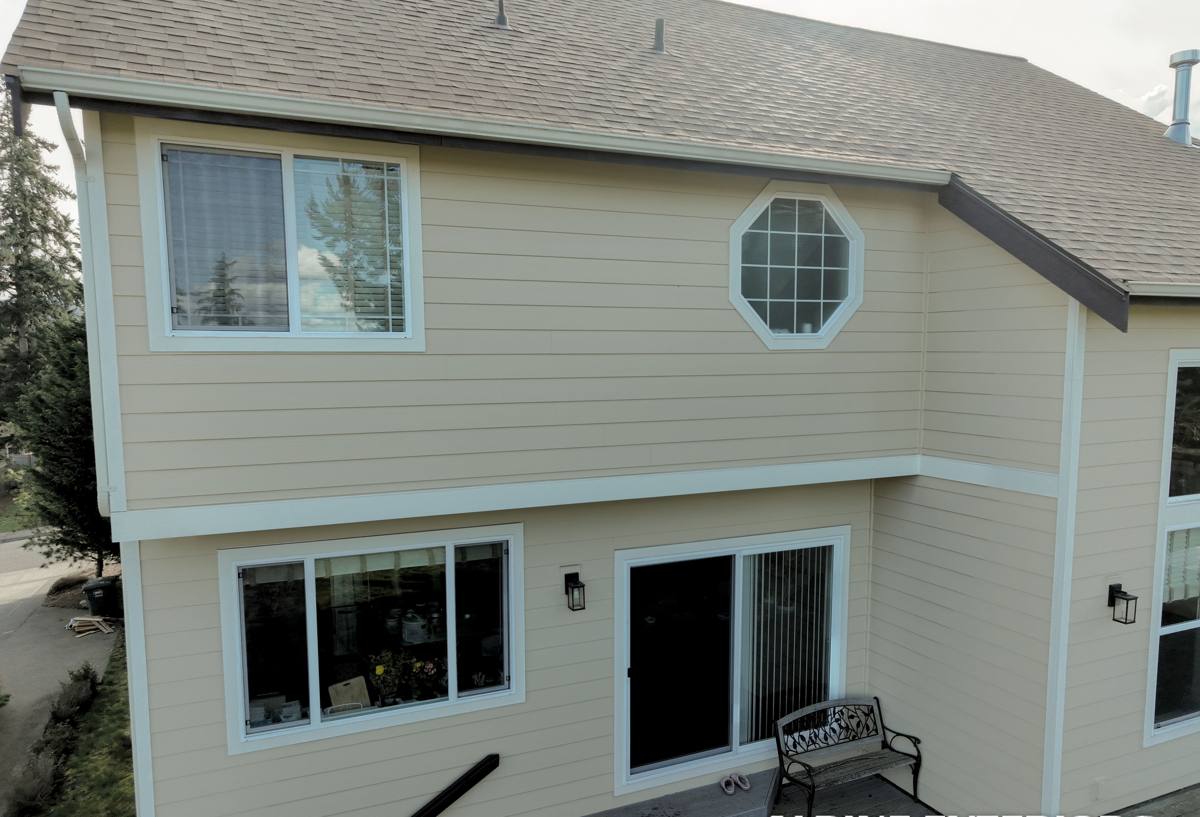
What Salt Air, Driving Rain, and Moss Season Actually Do
Salt Air and Metal Fatigue
Airborne salt accelerates corrosion on any exposed metal — fasteners, flashing edges, exposed cut ends of panels — faster than it does further from the shoreline. It's not dramatic; it's slow and cumulative, which is exactly why it gets missed until a fastener head is visibly rusting or a flashing seam starts leaching stains down a wall.
Driving Rain and Wind-Driven Water
Rain here doesn't always fall straight down. Wind off the water pushes it sideways, up under laps, and into any gap that a calmer climate would never test. That means underlayment, lap direction, and flashing detail work matter more in Sandy Point than they would on a roof in a more sheltered spot.
Moss Season
Blaine's long wet season, combined with shaded lots and moisture that lingers, gives moss a long runway to establish itself. Moss holds water against roofing material, works into seams, and on some roof types can lift edges over time. It's less about any single storm and more about months of steady dampness doing quiet damage.
Why Metal Roofing Makes Sense for This Exposure
Metal roofing isn't the right fit for every home or every budget, but for the specific conditions Sandy Point deals with, it solves several problems at once:
- Steep-sided metal panels shed wind-driven rain faster and give moss less flat surface to hold onto than more textured roofing materials.
- Modern coated steel and aluminum resist salt-air corrosion far better than uncoated or poorly finished metal — this is where the coating spec actually matters, not just the base metal.
- Properly installed metal roofing has a long service life, which matters on a coastline where re-roofing more often than necessary gets expensive fast.
- Lighter-weight panel systems put less long-term stress on the roof structure than some heavier materials, which is worth factoring in on older Sandy Point homes.
None of that is automatic, though. Metal roofing performs the way it's supposed to only when the coating, fasteners, and underlayment are chosen for this specific coastal exposure — not just pulled from a standard inland spec sheet.
The Details That Separate a Correct Job From a Roof That Fails Early
Fasteners and Flashing
This is the single most common corner cut on coastal metal roofs. Standard fasteners and flashing that would be fine a few miles inland corrode faster here. We spec fasteners and flashing rated for coastal/marine exposure, not the general-purpose hardware that shows up on a lot of metal roofs installed by crews who don't work this close to the water regularly.
Underlayment as a Backup Plan
Metal panels are the visible layer, but the underlayment underneath is what protects the deck if wind-driven rain gets past a seam or a fastener works loose over time. On a Sandy Point roof, we treat underlayment as a real second line of defense, not a formality.
Ventilation
A roof that traps moisture underneath the metal invites the same problems from the inside that salt air causes from the outside — condensation, deck rot, and a shortened roof life. Proper intake and exhaust ventilation matters just as much as what's happening on the exterior surface.
Panel Seams and Laps
How panels overlap and how seams are sealed determines whether wind-driven rain stays out or works its way in. This is installation skill, not a product spec — the same panel installed two different ways can perform very differently in this kind of weather.
Comparing Metal Roofing Options for a Coastal Exposure
| Option | Corrosion Resistance | Moss Resistance | Typical Trade-Off |
|---|---|---|---|
| Standing seam steel, coastal-rated coating | Strong when properly coated and fastened | Very good — smooth, steep surface sheds debris | Higher upfront cost; needs correct fastener spec |
| Standard steel panel, general coating | Weaker near salt air over time | Good | Lower cost, but shorter realistic lifespan this close to water |
| Aluminum panel systems | Naturally corrosion-resistant | Very good | Higher material cost; softer metal needs careful handling during install |
| Uncoated or mismatched fastener hardware | Poor — the most common early-failure point | No effect either way | Not a real option for this exposure regardless of panel quality |
The panel material matters, but the fastener and coating spec matters just as much. We've seen good panels underperform because of the hardware holding them down.
How Our Process Works on a Sandy Point Home
1. On-Site Assessment
We look at the existing roof structure, current moss and moisture patterns, ventilation, and how exposed the specific roof planes are to wind and salt air — sun-facing and water-facing slopes often need different attention than the sheltered sides of the same house.
2. Straight Talk on Options
We walk through panel type, coating grade, and realistic cost ranges for this exposure — including where it makes sense to spend more up front and where it doesn't.
3. Correct Installation
Coastal-rated fasteners and flashing, proper underlayment, correct lap direction for prevailing wind and rain, and ventilation that's actually adequate for the roof — not just code minimum.
4. Walkthrough and Documentation
Before we call the job done, we walk it with the homeowner and make sure the details — seams, flashing, transitions — are visible and understood, not just signed off on paper.
Living With a Metal Roof This Close to the Water
Metal roofing is genuinely low-maintenance compared to most alternatives, but "low-maintenance" isn't "no-maintenance" in a spot like Sandy Point. A few realistic habits keep a properly installed roof performing for its full lifespan:
- Clear debris and organic buildup from valleys and low-slope areas where moss gets a foothold first.
- Keep gutters and downspouts clear so wind-driven rain has somewhere to go instead of backing up under an edge.
- Have flashing and penetrations (vents, chimneys) checked periodically — these are the spots that fail before the panels themselves ever do.
- Watch for early rust staining at fastener heads or cut edges — caught early, it's a minor fix; ignored, it becomes a bigger repair.
What to Check Before You Hire Anyone for a Sandy Point Roof
- Do they spec coastal/marine-rated fasteners and flashing by default, or only if asked?
- Can they explain the coating grade on the panels they're proposing, not just the brand name?
- Do they account for ventilation, or just focus on the visible metal surface?
- Have they actually worked on roofs in this specific exposure, or mostly inland Whatcom County jobs?
- Are they willing to walk the finished roof with you and point out the details, not just hand you an invoice?
Why Local Sandy Point Experience Actually Matters Here
A lot of roofing crews can install metal panels competently on a typical inland roof. Fewer have spent real time on roofs that take this much salt air and wind-driven rain directly. The difference shows up years later — in whether the fasteners are still sound, whether flashing seams are still tight, and whether moss has been kept from working its way into a seam it should never have reached in the first place. Working this stretch of Blaine's coastline regularly means we're not learning the exposure on your roof — we already know what it does and how to build for it from the start.
If you're weighing a metal roof for a Sandy Point home, we're happy to take a look and give you a straight, no-pressure estimate — what your specific roof needs, what it'll realistically cost, and why. Use the form below to get started.