 Blaine Siding
 Windows Built for the Semiahmoo Coastline
Semiahmoo sits right on the water at the edge of Blaine, and that location comes with a specific set of problems for windows that a house a few miles inland doesn't deal with in the same way. Salt-laden air moves off the bay and settles on glass, frames, and hardware. Driving rain off Georgia Strait and Boundary Bay hits window walls sideways, not just from above. And Whatcom County's long, wet moss season means anything horizontal or shaded stays damp for months at a stretch. Windows here don't fail because of one dramatic event — they fail slowly, from years of moisture finding its way into places it shouldn't be.
An energy-efficient window replacement in Semiahmoo has to solve two problems at once: keep conditioned air inside the house, and keep salt-tinged moisture out of the wall assembly. A window that's efficient on paper but poorly sealed against wind-driven rain will still cause rot, mold, and callbacks. We treat those as one job, not two.
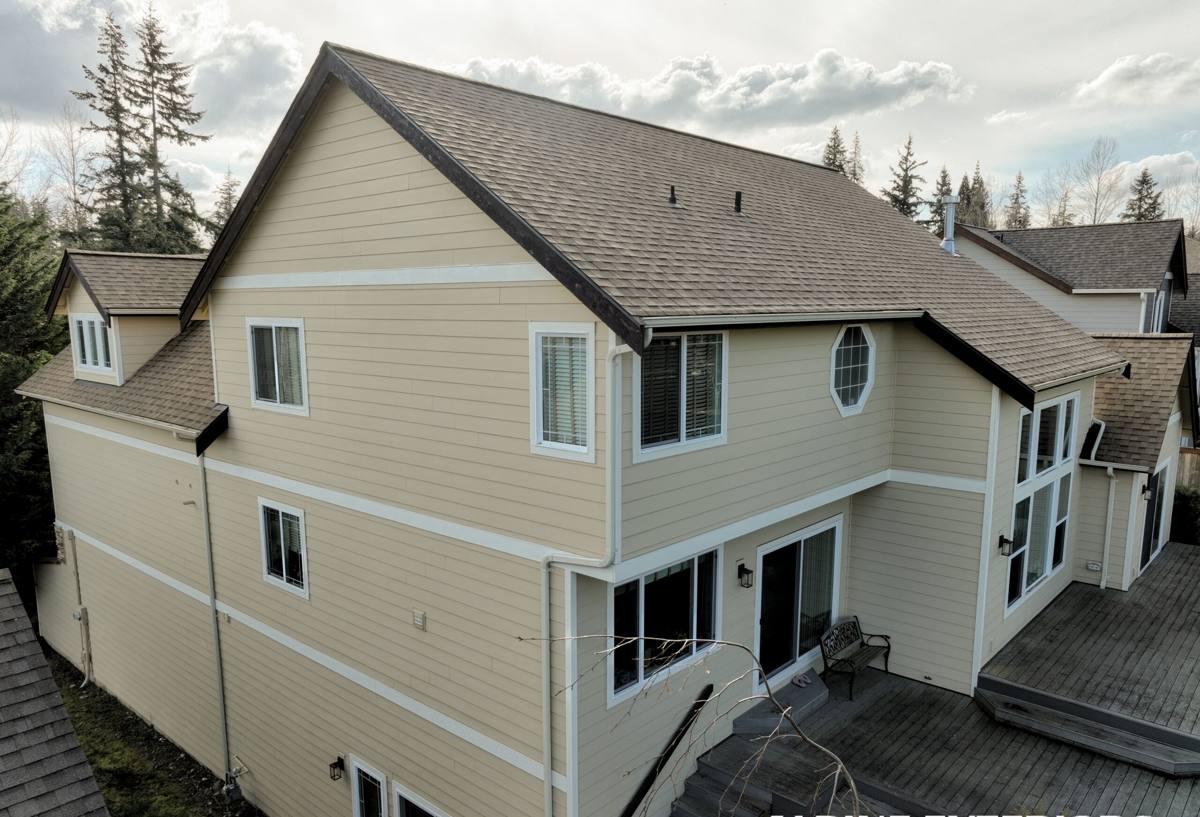
What "Energy-Efficient" Actually Means Here
Whatcom County sits in a marine climate zone — mild temperatures compared to the rest of the state, but persistent dampness and steady wind off the water. That changes what "efficient" should mean for a Semiahmoo home compared to, say, a dry inland climate. Two things matter more here than raw R-value:
Air and Water Sealing, Not Just Glass Rating
A window's energy performance is only as good as its installation. A well-rated unit installed with poor flashing will leak air and water around the frame long before the glass itself becomes the weak point. In a wind-driven rain event off the bay, the perimeter seal does more work than the glass package.
Condensation Control
Marine climates run humid for long stretches, and coastal homes often run into interior condensation on single-pane or poorly sealed older windows during cold, damp mornings. Modern insulated glass units with a proper low-E coating and gas fill keep interior glass surface temperature closer to room temperature, which cuts down on the fogging and moisture buildup that older Semiahmoo homes are used to seeing every winter.
Frame Material Trade-Offs for a Salt-Air Environment
| Frame Material | How It Handles Salt Air & Moisture | Maintenance |
|---|---|---|
| Vinyl | Won't corrode or rust; performs well against salt exposure | Low — occasional cleaning, no painting |
| Fiberglass | Very stable in temperature swings and damp conditions, resists warping | Low — durable finish, minimal upkeep |
| Aluminum | Conducts cold and can corrode faster near salt air unless properly coated | Moderate — coating and hardware need monitoring |
| Wood / wood-clad | Attractive but higher moisture risk in a coastal, high-rain area | Higher — regular sealing and inspection needed |
We don't push one frame material as a blanket answer for every house. A vinyl or fiberglass frame is generally the lower-maintenance, more forgiving choice for a home this close to the water, but the right call also depends on your home's style, existing trim, and budget. We'll walk through the honest trade-offs for your specific house rather than assume one answer fits every Semiahmoo property.
What a Correct Installation Involves
The window unit itself is maybe half the job. The other half is everything around it — and in a high-moisture, salt-exposed area, that half is where most long-term problems start if it's rushed.
- Removing the old unit without tearing out more of the surrounding wall or siding than necessary
- Inspecting the rough opening for hidden rot or moisture damage before anything new goes in
- Installing proper flashing at the sill and head so water is directed out and down, not into the wall cavity
- Using sealants and tapes rated for exterior, weather-exposed use — not general-purpose caulk
- Setting the window level, plumb, and square so weatherstripping and locks seal correctly for years, not just on install day
- Insulating the gap between the frame and rough opening correctly, without over-packing it
- Finishing exterior trim and sealant lines so the whole assembly sheds water the way it's designed to
Skipping or rushing any one of those steps is how a brand-new, energy-rated window still ends up with a soft sill or a moldy corner two winters later. This is especially true in Semiahmoo, where wind-driven rain tests every seam far more often than it would inland.
Moss Season and Why It Matters for Windows
Moss doesn't grow on window glass, but moss season is really shorthand for the long stretch of the year when everything in Whatcom County stays damp — roofs, siding, trim, and window sills included. During that season, any weak point in a window's seal or flashing stays wet longer instead of drying out between rain events. Older single-pane or aluminum-frame windows that might hold up fine in a drier climate tend to show their age faster here: swollen wood trim, foggy glass, sticking sashes, or a persistent musty smell near the frame. Replacing those windows with a properly sealed, moisture-tolerant system before the next wet season starts is usually cheaper than dealing with the wall damage that comes from ignoring it for another year.
Signs Your Semiahmoo Windows Need Attention
- Fogging or moisture trapped between glass panes — the seal has failed and the insulating gas is gone
- Condensation on the inside of the glass during cold, damp mornings
- Drafts you can feel near the frame, even with the window fully latched
- Soft, discolored, or swelling wood trim around the window
- Sashes that stick, drag, or won't latch tightly anymore
- Visible corrosion on aluminum-framed windows or hardware
- Noticeably higher heating bills compared to similar homes nearby
- Salt residue or pitting on glass and hardware that doesn't clean off easily
Any one of these on its own isn't an emergency. Several at once, especially on a home's water-facing side, usually means it's time to look at replacement rather than another round of caulk and weatherstripping.
Cost Factors for a Semiahmoo Window Project
Every window job is different, but the variables that move the price are consistent. We won't quote a number without seeing the house, but here's what actually drives cost up or down:
| Factor | Why It Affects Cost |
|---|---|
| Frame material | Vinyl is typically the most budget-friendly; fiberglass and wood-clad cost more upfront |
| Glass package | Double-pane with low-E coating vs. triple-pane changes both price and performance |
| Number and size of openings | More or larger windows means more material, labor, and disposal |
| Condition of existing framing | Hidden rot or moisture damage found during removal adds repair time |
| Access and exposure | Water-facing walls exposed to driving rain need extra care with flashing and sealant |
| New construction vs. replacement | Full-frame replacement costs more than insert replacement into a sound existing frame |
How Our Process Works
1. On-Site Assessment
We look at each window's condition, the surrounding trim and siding, and how exposed that wall is to wind and rain. We're not measuring for a quote from a photo — we want to see what's actually happening at the sill and frame.
2. Honest Recommendation
We'll tell you which windows genuinely need replacement, which could be repaired or resealed, and what frame and glass options make sense for your home and budget — without steering you toward the most expensive option by default.
3. Scheduling Around the Weather
Window replacement means an open wall for part of a day. We plan around Whatcom County's rain patterns so openings aren't left exposed longer than necessary, and we work efficiently through the wetter months rather than avoiding them entirely.
4. Installation
Removal, rough opening inspection, flashing, setting the unit, insulating, and finishing — done in that order, with attention paid to the details that matter most in a coastal environment.
5. Final Walkthrough
We check operation, seals, and finish work with you before we consider the job done, and we're straightforward about basic care going forward.
Why a Local Blaine Crew Matters
A crew that regularly works in Blaine and around Semiahmoo already knows how this coastline behaves — which walls take the worst of the wind-driven rain, how long moss season actually runs here, and what kind of wear salt air puts on hardware and finishes over time. That's not something you can fully learn from a spec sheet. A crew based here also isn't disappearing after the install; if a question comes up in year two or three, we're still a local business, not a name from an out-of-town crew that moved on to the next region.
We also understand that homes near the water in Whatcom County often deal with permitting and building department expectations that differ slightly from an inland project — knowing that ahead of time keeps a project moving instead of stalling on paperwork surprises.
Basic Upkeep After Installation
Energy-efficient windows still need occasional attention in a salt-air, high-moisture environment. Rinsing frames and glass periodically helps prevent salt buildup, especially on water-facing sides of the house. Keeping weep holes clear of debris and moss lets water drain the way the system is designed to. Checking exterior sealant lines once a year — especially after the wettest months — catches small gaps before they become bigger problems. None of this is heavy maintenance, but skipping it in this climate shortens the life of even a well-installed window.
If your Semiahmoo home has windows showing any of the signs above, or you're just planning ahead before the next wet season, we're glad to take a look and give you a straight answer — no pressure, no upsell. Reach out using the form below to schedule a free estimate.