 Blaine Siding
 Custer's Roofs Work Harder Than Most
Custer sits close enough to the water and open farmland north of Bellingham that its roofs take a different kind of beating than a roof inland. The marine air moving through this part of Whatcom County carries salt that finds its way onto every exposed surface, including your roof. Add driving rain that comes in sideways during winter storms, and a moss season that can run eight or nine months out of the year on shaded, north-facing slopes, and you have a roofing environment that punishes shortcuts. An asphalt shingle roof built for a dry inland climate simply is not built for Custer.
That doesn't mean asphalt shingles are the wrong choice here — they're not. It means the underlayment, ventilation, flashing, and shingle selection all have to be chosen and installed with this specific climate in mind. A roof that looks identical from the curb can perform completely differently depending on what's underneath it and how it was put together.
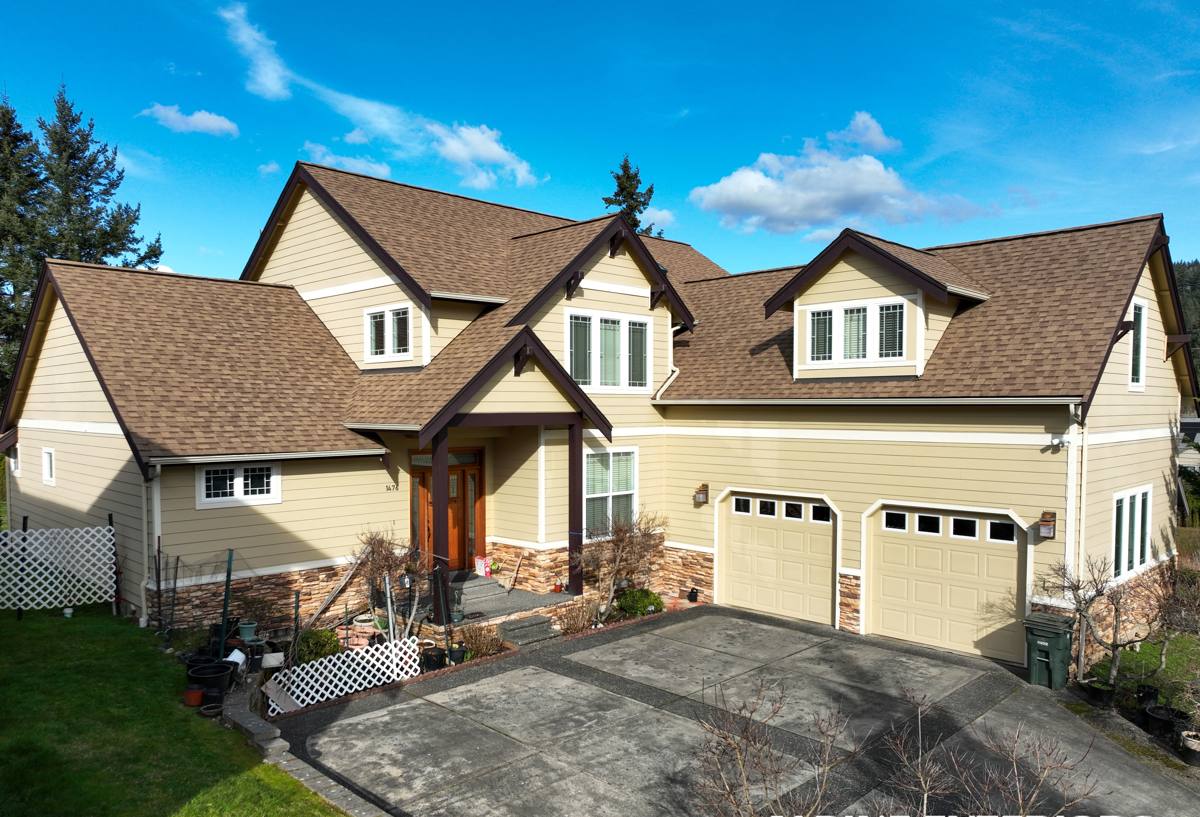
What Blaine-Area Weather Actually Does to a Shingle Roof
Salt Air and Corrosion
Salt-laden air accelerates corrosion on exposed metal — nail heads, flashing edges, drip edge seams, and vent stacks. Once corrosion starts on a fastener or flashing lap, it's rarely visible from the ground until water is already getting underneath the shingle mat. This is why fastener quality and flashing metal choice matter more here than they would forty miles inland.
Driving Rain
Wind-driven rain doesn't just fall straight down — it pushes water uphill under shingle tabs, into valleys, and around any penetration that isn't properly flashed and sealed. A roof that would be fine in calm rain can leak in a Whatcom County windstorm if the underlayment and flashing details were built for average conditions instead of the actual conditions this area sees several times a winter.
The Long Moss Season
Shade, dampness, and mild temperatures for most of the year make this region hospitable to moss for a much longer stretch than drier climates. Moss doesn't just look bad — it holds moisture against the shingle mat, lifts shingle edges as it grows, and traps debris that keeps the surface wet even after the rain stops. Left unaddressed, a mossy roof ages faster than a clean one, regardless of the shingle brand or price point.
What a Correctly Installed Roof Includes
An asphalt shingle roof is a system, not a single product. Every layer has a job, and skipping or downgrading any one of them shows up later as a leak, premature wear, or a warranty claim that gets denied because the installation didn't match manufacturer specifications.
Underlayment and Water Barrier
A synthetic underlayment rated for this climate, with self-adhered ice-and-water membrane at eaves, valleys, and around penetrations, gives the roof a second line of defense when wind-driven rain gets past the shingles themselves. In a driving-rain climate, this layer isn't optional extra protection — it's the layer that actually keeps water out when conditions get bad.
Ventilation
Balanced intake and exhaust ventilation keeps the attic space at a consistent temperature and moisture level. Without it, trapped moisture condenses on the underside of the deck, which rots sheathing from the inside and shortens shingle life from below at the same time salt air and moss are working on it from above.
Flashing and Penetrations
Step flashing at walls, proper valley metal, and correctly sealed boots at every pipe and vent are where most roof leaks actually start. Given the corrosive effect of salt air, we pay close attention to flashing metal quality and how it's fastened, not just whether flashing is present.
Fastening
Correct nail placement, count, and depth — following the manufacturer's pattern rather than a shortcut pattern — is what keeps a roof rated for high wind actually performing at that rating. Overdriven or underdriven nails are a common, invisible cause of early shingle failure.
Choosing a Shingle That Actually Holds Up in Custer
Not every asphalt shingle is built the same way, and the differences matter more in a climate with heavy moss pressure and coastal wind exposure. Two features are worth asking about specifically: algae-resistant granules (usually copper- or zinc-infused) that slow the dark staining and moss growth common on shaded slopes, and a wind rating that matches what this area actually sees, not just a manufacturer's baseline rating.
| Shingle Type | Typical Wind Rating | Algae/Moss Resistance | Best Fit For |
|---|---|---|---|
| Standard 3-tab | Lower end of range | Minimal unless upgraded | Budget-driven projects, low moss exposure |
| Architectural (dimensional) | Mid-to-high range | Available with AR granules | Most Custer homes — good balance of durability and cost |
| Premium/designer laminate | High end of range | Usually includes enhanced AR granules | Homes with heavy shade, high moss pressure, or full water exposure |
For most homes in this area, an architectural shingle with algae-resistant granules and a wind rating suited to coastal exposure is the right balance of cost and performance. We'll walk your specific roof and tell you honestly whether a standard option is enough or whether the shade and exposure on your particular slopes justify stepping up.
Warning Signs a Custer Roof Needs Attention
Because moss and salt-air wear develop gradually, many homeowners don't notice a problem until it's already affecting the deck underneath. Here's what to check for, especially on north-facing or heavily shaded slopes:
- Visible moss mats, even small ones, along shaded roof edges or valleys
- Granules collecting in gutters or at downspout outlets after rain
- Shingle tabs that are curling, cupping, or lifting at the edges
- Dark streaking or staining across the shingle field
- Rust staining or corrosion visible on flashing, vent stacks, or exposed fasteners
- Soft spots underfoot or sagging along the roofline
- Daylight, water stains, or musty smell in the attic
- Staining on soffits or fascia boards near the roof edge
Any one of these on its own might be minor. Several together, especially combined with the age of the roof, usually mean it's worth having someone look before the next big storm.
Our Process, Start to Finish
- On-site inspection and honest assessment of what your roof actually needs — repair, partial replacement, or full replacement
- Written estimate with the reasoning behind the shingle and system recommendation, not just a number
- Tear-off of old roofing and inspection of the deck underneath for rot or damage before anything new goes down
- Installation of underlayment, ice-and-water membrane, and flashing suited to this area's rain and wind exposure
- Shingle installation following manufacturer fastening specifications
- Ventilation check and correction if intake or exhaust airflow is inadequate
- Full site cleanup, including a magnetic sweep for stray nails
- Final walkthrough so you know exactly what was done and what to watch for going forward
Maintenance That Actually Matters Here
A well-built roof still needs upkeep in this climate. Moss and algae treatments, gutter cleaning before the wet season, and trimming back branches that shade a roof and keep it damp all extend the life of an asphalt shingle roof significantly. Zinc or copper control strips near the ridge can help slow moss regrowth between cleanings on slopes that stay shaded most of the year. After any major windstorm, a quick visual check for lifted tabs or displaced flashing is worth the ten minutes it takes, since small damage caught early is a repair — caught late, it's often a much bigger one.
What Affects the Cost of a Custer Re-Roof
Every roof is different, and we won't quote a number without seeing yours, but the same handful of factors drive cost on nearly every asphalt shingle project in this area.
| Factor | Why It Matters | Typical Cost Impact |
|---|---|---|
| Roof size and pitch | More surface area and steeper slopes mean more material and labor | Moderate to high |
| Number of existing layers | Removing multiple old layers takes more time than a single tear-off | Moderate |
| Deck condition | Rotted or damaged sheathing found during tear-off needs replacement before installation continues | Variable, sometimes significant |
| Shingle class chosen | Standard vs. architectural vs. premium laminate options | Low to moderate |
| Ventilation upgrades | Adding or correcting intake/exhaust venting | Low |
| Roof access and site conditions | Steep pitches, limited driveway access, or landscaping obstacles affect labor time | Low to moderate |
We'll walk through each of these with you during the estimate so you understand what's driving the number, rather than just handing you a total.
Why Hiring a Crew That Already Works Custer Matters
A roofing crew that regularly works this specific stretch of Whatcom County already knows what moss pressure looks like on a shaded north slope, what wind-driven rain does to poorly flashed valleys, and roughly how older homes in this area were originally roofed and vented. That local familiarity means fewer surprises during tear-off, more accurate estimates upfront, and recommendations based on what actually holds up here rather than generic advice that ignores the coastal climate. It also means a shorter response time if a storm causes damage and you need someone out quickly, not a crew that has to drive in from well outside the area.
If you're weighing a repair against a full replacement, or just want a straight answer about what your roof actually needs, we're happy to take a look. Fill out the form below for a free, no-pressure estimate — we'll tell you honestly what we find.