 Blaine Siding
 Roofing in Lynden Has Its Own Set of Problems
Lynden sits back from the water compared to Blaine, but it isn't sheltered from the same weather pattern. Moist air moves inland off the Strait of Georgia and Boundary Bay almost every week of the year, and by the time it reaches Lynden's tree-lined streets and surrounding farmland, it's still carrying enough moisture and salt to affect a roof over time. Add in the shade from mature trees common around older Lynden properties and the organic debris that drifts in from nearby fields, and you get a roofing environment that's more demanding than a typical inland town. An asphalt shingle roof installed without that reality in mind will show its age faster than it should.
This page is about one job in one place: asphalt shingle roofing for homes in and around Lynden. Not a general overview of shingle types, not a sales pitch for a product line — just what actually holds up here, what a correct installation looks like, and what to expect if you're getting a quote.
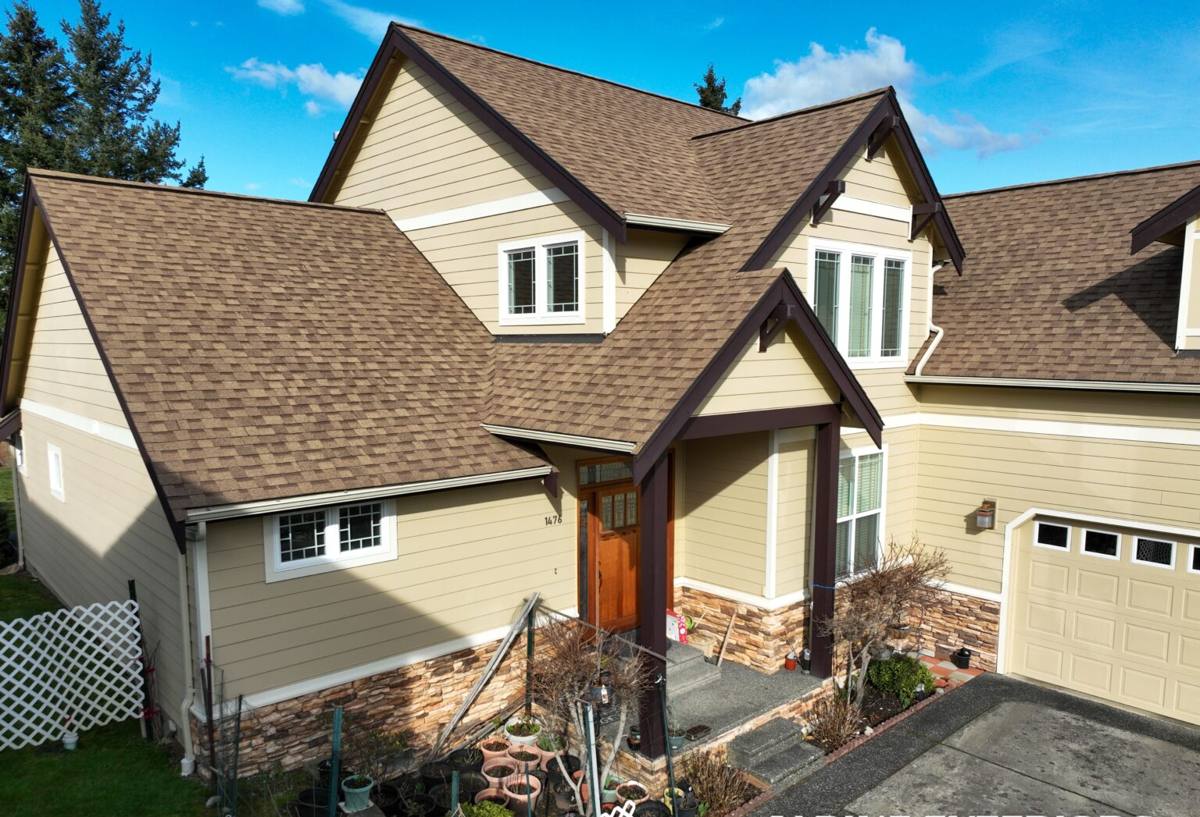
What Whatcom County Weather Does to a Shingle Roof
Moss and Algae
Moss is the single biggest threat to shingle roofs in this part of Whatcom County. It doesn't need direct rain to grow — it just needs shade, moisture, and a place to root, and the granule surface of an asphalt shingle gives it exactly that. Once moss gets established, it lifts shingle edges, holds water against the roof deck, and shortens the life of the roof from underneath, where you can't see it happening.
Wind-Driven Rain
Storms coming off the water don't always fall straight down. Wind-driven rain pushes water sideways and upward under shingle tabs, valleys, and flashing that would stay dry in a calmer climate. A roof that's watertight in a light rain can still leak in a wind event if the underlayment, valleys, and flashing weren't detailed for that kind of weather.
Salt Air and Metal Components
Shingles themselves aren't bothered much by salt in the air, but the metal parts of a roofing system — flashing, drip edge, nails, vents — corrode faster this close to the coast. A roof built with the wrong-grade fasteners or bare metal flashing will show rust streaks and failure points well before the shingles themselves wear out.
Temperature Swings and Granule Loss
Whatcom County doesn't get extreme heat, but the freeze-thaw cycles of a wet winter followed by warm afternoons cause shingles to expand and contract. Over years, that movement wears down the protective granules on the shingle surface, which is usually the first visible sign that a roof is aging.
Signs Your Lynden Roof Needs Attention
Most roof problems don't announce themselves with a leak right away. They show up as smaller signs first — worth checking for a couple of times a year, especially after a windy winter:
- Dark streaking or green-black patches, especially on north-facing slopes or under tree cover
- Granules collecting in gutters or at the base of downspouts
- Shingle edges that look lifted, curled, or cupped
- Soft or spongy spots when walked on (best assessed by a roofer, not a homeowner on a ladder)
- Daylight visible through the attic roof deck
- Rust staining below flashing points, chimneys, or vents
- Missing or cracked shingles after a windstorm
- Sagging along the ridge line or roof edges
What a Correctly Installed Asphalt Shingle Roof Includes
Underlayment and Ice-and-Water Protection
A synthetic underlayment across the whole deck, with self-adhering ice-and-water membrane at eaves, valleys, and around any roof penetration, is the baseline for this climate. It's the layer that keeps a roof dry if wind ever pushes water up under a shingle tab — which, given how often Whatcom County sees driving rain, isn't a rare edge case here.
Flashing Details
Flashing around chimneys, skylights, vent pipes, and roof-to-wall transitions is where most leaks actually start, not in the open field of shingles. Correct flashing means step flashing woven with the shingle courses (not just caulked over), corrosion-resistant metal, and counter-flashing tucked properly at walls — not shortcuts covered up with sealant.
Ventilation
A shingle roof needs balanced intake and exhaust ventilation to let the attic breathe. Without it, moisture builds up under the deck from the inside, which rots sheathing and voids shingle warranties — a problem that has nothing to do with the shingles themselves and everything to do with how the roof system was designed.
Nailing and Fastening
Manufacturer nailing patterns exist for a reason, and in a windy coastal-influenced climate they matter more, not less. Correct nail placement, count, and depth is what keeps shingles from lifting in a gust — and it's one of the easiest things for a rushed crew to get wrong, since it doesn't show up as a problem until the first real storm.
Choosing Shingles for This Climate
Not every asphalt shingle product is built the same way, and in a moss-prone, wet climate the differences matter more than they would somewhere dry.
| Shingle Type | Typical Lifespan | Fit for Lynden's Climate |
|---|---|---|
| 3-tab shingles | 15–20 years | Lower upfront cost, but less wind resistance and shorter service life in wet, windy conditions |
| Architectural (laminated) shingles | 25–30 years | Better wind rating and thicker profile; the standard choice for most Lynden re-roofs |
| Algae-resistant (copper/zinc-granule) shingles | 25–30 years, with better appearance longevity | Worth the modest upcharge on shaded lots or homes with a history of moss and streaking |
| Impact-rated shingles | 30+ years | More resistant to debris and hail impact; a reasonable upgrade on exposed or tree-heavy properties |
For most Lynden homes, an architectural shingle with algae-resistant granules is the practical middle ground — it costs more than a basic 3-tab up front but holds its color and integrity much longer under the moss pressure this area sees.
Our Process
- Inspection and estimate — we walk the roof (or use a ladder assessment when access or safety requires it), check the deck, flashing, and ventilation, and give you a written scope, not just a shingle price.
- Tear-off vs. overlay decision — we'll tell you honestly if the existing roof can be evaluated for an overlay, though full tear-off is usually the right call once moss or moisture damage is involved, since it's the only way to check the deck underneath.
- Material selection — we go through shingle class and color options based on your home, your budget, and how exposed the roof is to shade and moisture.
- Installation — underlayment, ice-and-water shield, flashing, shingles, and ventilation installed to manufacturer spec, not just "close enough."
- Cleanup and magnetic sweep — old material and debris hauled off, yard and driveway swept for nails.
- Final walkthrough — we go over the finished roof and warranty paperwork with you before we consider the job done.
What Drives the Cost of a Lynden Roofing Project
We don't publish fixed prices because every roof is different, but these are the factors that actually move the number on your estimate:
| Factor | Why It Matters |
|---|---|
| Roof size and pitch | Steeper roofs take longer and require more safety equipment and labor |
| Number of existing layers | Tear-off of multiple old layers adds disposal and labor time |
| Deck condition | Rotted or soft sheathing found during tear-off needs replacement before shingles go on |
| Shingle class chosen | 3-tab, architectural, and algae-resistant products carry different material costs |
| Roof complexity | Valleys, dormers, chimneys, and skylights each add flashing work |
| Access and site conditions | Tree cover, tight lots, or long driveways affect equipment staging and cleanup |
We'll walk you through which of these apply to your roof specifically before you commit to anything — no generic per-square number that changes once we're up on the roof.
Why Local Experience in Lynden Matters
A crew that regularly works Lynden and the rest of Whatcom County knows things a roofer passing through doesn't. We know that moss season here runs long, and that scheduling a re-roof or a moss treatment at the wrong time of year wastes money. We know that shaded, tree-heavy lots common around Lynden need algae-resistant materials more than open, sun-exposed ones do. We understand the permitting expectations for the county and how to size ventilation correctly for the humidity this region holds onto for most of the year.
Just as important: we're still local after the job is finished. If a warranty question comes up or a storm causes damage down the road, you're calling a crew that's a short drive away, not chasing down a company that did one job in the area and moved on.
After the Roof Is On: Maintenance That Actually Matters
A correctly installed shingle roof in this climate still needs a little upkeep to hit its full lifespan:
- Clear gutters at least twice a year so water isn't backing up under the eaves
- Trim back overhanging branches to cut down on shade and debris buildup
- Have moss treated with the right method — never pressure-washed, which strips granules and shortens shingle life
- Do a visual check after any major windstorm for lifted or missing shingles
- Schedule a professional inspection every few years, especially as the roof approaches the halfway point of its expected lifespan
If your Lynden home has a roof that's showing granule loss, moss, or its age, we're happy to take a look and give you a straightforward, no-pressure estimate — just fill out the form below.