 Blaine Siding
 Building Decks for Grandview the Way the Climate Actually Demands
Grandview homes sit close enough to Semiahmoo Bay and the Salish Sea that the air itself is part of the building problem. Salt-laden wind, long stretches of driving rain, and a moss season that can run from October well into spring all work against an outdoor structure faster here than they would forty miles inland. A deck built to a generic national standard will often show corrosion, cupping, or slick moss growth within a few seasons. A deck built for this specific stretch of Whatcom County coastline is a different project from the start — different fasteners, different drainage details, different material choices.
This page is about custom decks specifically for the Grandview area of Blaine, not decks in general. Everything below reflects what we've learned building and repairing decks in this exact microclimate, and what a homeowner here should expect from a job done right.
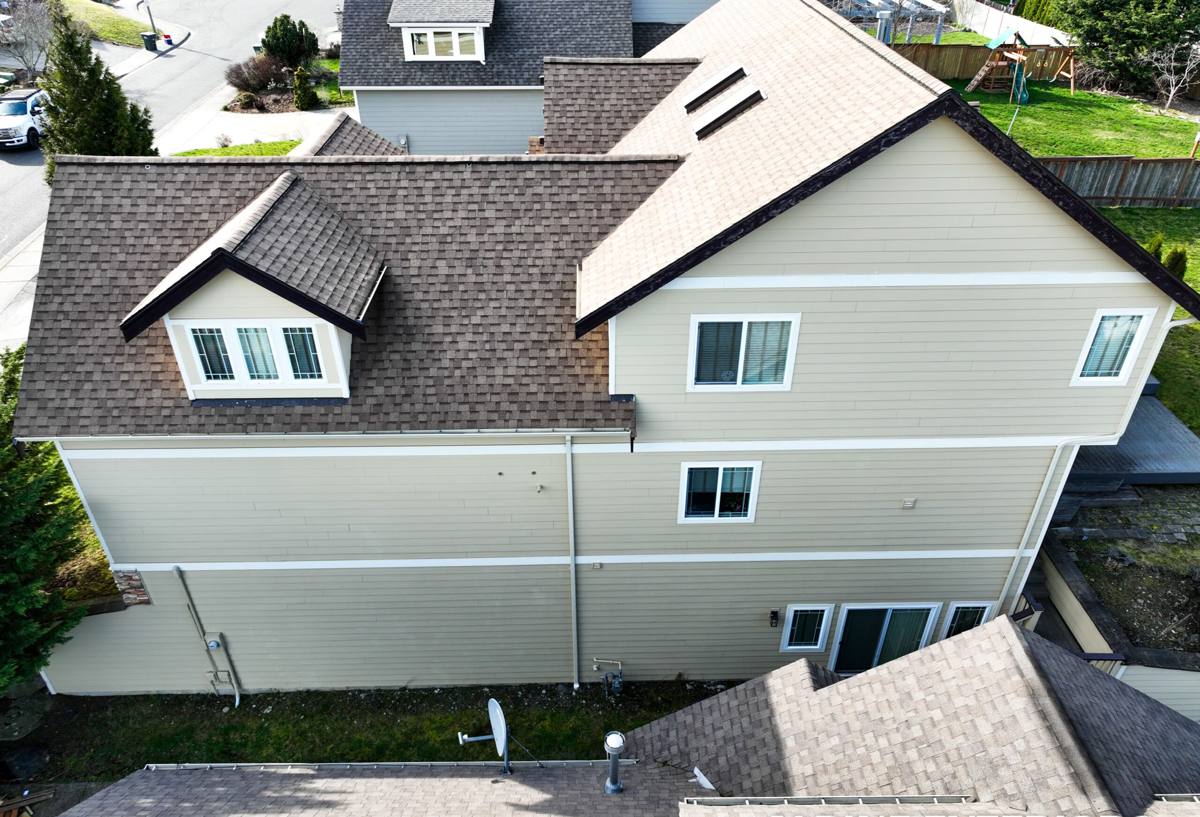
What Salt Air and Moss Season Actually Do to a Deck
It helps to understand the failure modes before talking about the fix. Coastal exposure in Blaine attacks a deck in three distinct ways, and most deck failures we get called out to repair trace back to one of them being ignored at construction time.
Salt Air and Corrosion
Airborne salt accelerates oxidation on any exposed metal — nails, screws, joist hangers, bolts, and railing hardware. Standard electro-galvanized fasteners, which are fine in a dry inland climate, can start rusting within a couple of years this close to the water. Once a fastener corrodes, it loses holding strength long before it looks obviously bad, which is why so many older decks in this area develop wobble or squeak at the railing posts and stair stringers first.
Driving Rain and Water Intrusion
Rain here doesn't just fall straight down — wind-driven rain gets pushed sideways into ledger connections, under poorly flashed rim joists, and into end-grain cuts on framing lumber. Water that gets trapped rather than shed is what rots a deck from the inside, usually invisibly, while the surface boards still look fine.
Moss and Prolonged Dampness
A long wet season means decking surfaces, especially those in shade or under tree cover, stay damp for extended periods. That's exactly what moss and algae need to establish. Beyond the slip hazard, moss holds moisture against the board surface, which speeds up rot in wood decking and can stain composite surfaces if it's not addressed early.
Choosing Decking Material for Grandview's Conditions
There's no single "best" decking material for every Grandview homeowner — it depends on budget, how much upkeep you're willing to do, and how exposed your particular lot is to wind and rain. Here's how the common options actually perform in this climate, based on what we see in the field rather than manufacturer marketing.
| Material | Coastal Performance | Maintenance | Typical Lifespan Here |
|---|---|---|---|
| Pressure-treated fir/hem-fir | Good if properly sealed and detailed; end cuts need field treatment | Re-seal every 1-2 years in this rainfall | 15-20 years |
| Cedar | Naturally rot- and insect-resistant, but softens over time in constant damp | Annual cleaning, periodic oil/sealer | 15-25 years |
| Composite (capped) | Excellent moisture resistance; won't rot or splinter | Periodic washing to prevent surface moss/algae | 25-30+ years |
| PVC/cellular decking | Fully moisture-proof, will not absorb water at all | Low — occasional wash | 30+ years |
We don't push any one product on every job. For a shaded, tree-covered Grandview lot that stays damp most of the year, a capped composite or PVC board earns its higher upfront cost by simply not caring about the moss and moisture that would otherwise need constant attention. For a more open, wind-exposed lot with better sun exposure, a well-detailed cedar or treated wood deck can perform very well and costs less to build, provided the maintenance schedule is actually kept up.
What's Underneath Matters More Than What's On Top
Homeowners naturally focus on the decking boards, but the framing underneath is what determines whether a deck lasts 15 years or 30 in this climate. This is also where most corner-cutting happens, because it's the part that isn't visible after the build.
Ledger and House Connection
Where the deck attaches to the house is the single most common point of hidden water damage. Correct flashing — a proper metal ledger flashing integrated with the house's weather barrier, not just caulk — is non-negotiable given how much wind-driven rain this area gets.
Joist Protection
Untreated or unprotected joist tops absorb water that sits between the decking boards, which is where rot typically starts first on an older deck. Joist tape or a comparable flashing membrane on top of every joist is standard on our builds, not an upsell.
Post Bases and Ground Contact
Post bases that hold wood in direct contact with wet soil or concrete are a slow-motion failure. Elevated, ventilated post base hardware keeps structural posts from wicking up moisture from the ground, which matters even more in a yard that stays saturated for months at a time.
Fasteners and Hardware: The Detail Salt Air Punishes First
Because corrosion is one of the biggest threats to a coastal deck, hardware selection isn't a minor spec — it's one of the decisions that determines whether the structure is still sound in year 20.
| Hardware Type | Standard Grade | Coastal-Rated Option |
|---|---|---|
| Structural fasteners | Electro-galvanized | Hot-dip galvanized or stainless steel |
| Joist hangers/connectors | G90 galvanized | ZMAX or stainless for high-exposure areas |
| Deck screws | Coated carbon steel | 316 stainless or coated composite-rated screws |
| Railing hardware | Standard coated | Stainless or marine-grade finish |
The coastal-rated column costs more per piece, but the difference over the life of the deck is small compared to the cost of pulling apart a railing or stair stringer to replace corroded connectors a decade early. On any Grandview job, we spec hardware to match the exposure of that specific part of the structure, not a single grade across the whole deck.
Our Custom Deck Process
A custom deck build should feel predictable, not like a series of surprises. Here's how we walk a Grandview homeowner through it:
- On-site assessment: We look at your lot's actual exposure — sun, shade, tree cover, prevailing wind direction, and drainage — since that shapes both material and layout recommendations.
- Design and material selection: We go over decking, railing, and structural options honestly, including trade-offs in cost and maintenance, so you're choosing with full information.
- Permitting: We handle the permit application and inspections through Whatcom County or the City of Blaine as applicable, so you're not chasing paperwork.
- Framing and flashing: This is the stage that determines longevity — proper ledger flashing, joist protection, and post base detailing happen before a single decking board goes down.
- Decking, railing, and finish work: Boards, railings, stairs, and any fascia or skirting are installed to the spec agreed on at design stage.
- Final walkthrough: We go over the finished deck together, including what maintenance it needs and when, before we consider the job done.
Railings, Stairs, and Finish Details Built for the Coast
The finish details on a deck are exposed to the same salt air and rain as everything else, and they're often the first thing to show wear because they're thinner and more exposed than the main structure.
Railing systems in this climate hold up best when the hardware matches the coastal-rated standard described above, regardless of whether the railing itself is wood, composite, aluminum, or cable. Stair stringers deserve particular attention since they combine end-grain cuts, ground-level moisture exposure, and constant foot traffic — a combination that punishes any shortcut in flashing or fastener choice. Fascia boards and skirting, meanwhile, are what most visitors actually notice, and a material mismatch here (say, untreated wood trim on a composite deck) tends to show its age faster than the main decking surface.
A Maintenance Checklist for a Grandview Deck
Even the best-built deck needs some upkeep in this climate — the goal of good construction is to minimize that upkeep, not eliminate it entirely. A realistic yearly routine looks like this:
- Sweep and wash the surface at least twice a year, more often on shaded or tree-covered sections, to keep moss from establishing
- Check fastener heads and railing connections annually for early rust staining, especially on wood decks
- Clear leaves and debris from between boards and off drainage paths before the wet season sets in each fall
- Re-seal or re-oil wood decking on the schedule appropriate to that species — don't wait until it looks obviously dry or gray
- Inspect ledger flashing and the house connection point for any staining or soft spots at least once a year
- Confirm gutters and downspouts near the deck are directing water away from the structure, not onto it
Why Hiring a Crew That Already Works in Grandview Matters
A deck built to a spec sheet written for a dry inland climate is the wrong deck for this location, no matter how well it's built to that spec. A crew that already works regularly in Grandview and the broader Blaine area has already seen which fastener grades hold up, which decking materials handle this specific rain and moss pattern, and which flashing details actually stop wind-driven rain from getting into a ledger connection. That's knowledge you don't get from a manufacturer's install guide — it comes from repairing or replacing decks that were built without it.
Local experience also matters for the practical side of the job: knowing the permitting process for Whatcom County and the City of Blaine, understanding typical lot conditions in the area, and being available for warranty or maintenance questions after the build without a long drive. A deck is a long-term structure attached to your house — it's worth having someone local and accountable behind the work.
Getting Started
If you're planning a new deck or replacing one that's showing its age, we're happy to take a look and talk through honest options for your specific lot and budget — no pressure, no obligation. Use the form below to request a free estimate, and we'll go from there.