 Blaine Siding
 Roof Repair in Lynden: Getting It Right the First Time
Lynden sits inland in the Nooksack River valley, away from the immediate waterfront that towns like Blaine sit on, but it's still inside the same marine-influenced weather system that moves in off the water and up through Whatcom County. That means Lynden roofs deal with the same underlying forces as our home base in Blaine: frequent rain that often arrives sideways rather than straight down, air carrying a trace of salt even this far from the coast, and mild, damp conditions that give moss a long growing season on any roof surface that doesn't get much sun. A roof repair done without those specifics in mind tends to fail again within a season or two, which is a big part of why we treat repair work as its own discipline rather than a quick patch job.
Blaine Siding Companies works roofs, siding, windows, and decks across this part of the county, and Lynden is regular territory for our crew, not an occasional drive-out. When we're called for a roof repair here, the goal is a fix that holds up through the next several wet seasons, not just until the visible leak stops.
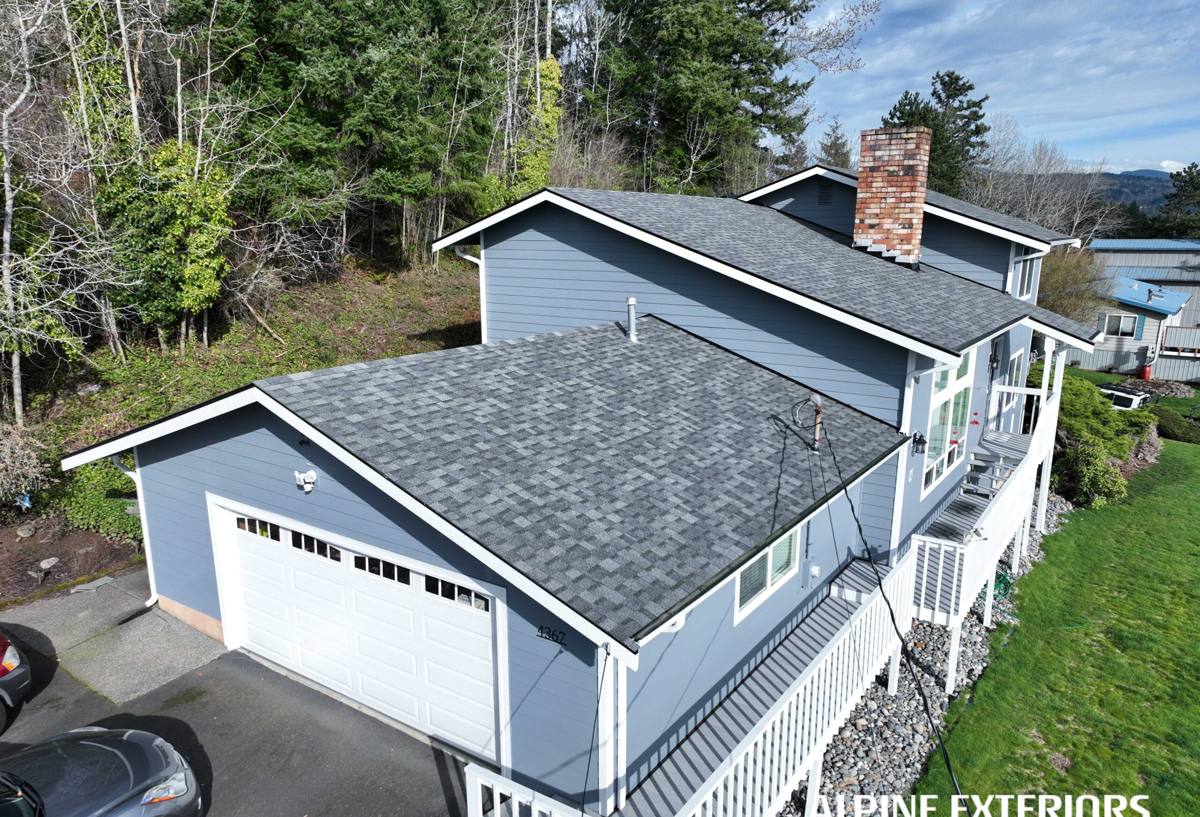
What Lynden's Climate Does to a Roof That Needs Repair
Driving Rain That Finds the Weak Point
Storms moving up the valley don't just drop rain straight down onto a roof — wind pushes it sideways into valleys, around chimneys and vent pipes, and under flashing that's lifted even slightly. A repair that only addresses the spot where water is currently showing up inside the house, without tracing where it actually enters the roof assembly, often leaves the real entry point untouched. That's one of the more common reasons a "fixed" leak comes back after the next windstorm.
Moss and Prolonged Dampness
Shaded roof planes and north-facing slopes around Lynden hold moisture longer than sections that get regular sun, and moss takes hold on that sustained dampness. Moss under a repair patch, or moss left growing right up against new flashing or shingles, keeps the surface wet long after the surrounding roof has dried out. A repair that doesn't clear moss properly from the surrounding area is starting from a compromised base, even if the patch itself is done well.
Temperature Swings and Material Fatigue
Whatcom County doesn't see extreme heat or hard freezes most winters, but the steady back-and-forth between damp, mild days and the occasional cold snap still stresses roofing materials over years. Shingles, sealants, and flashing all expand and contract with that cycle, and a repair using materials that don't move the same way as what's already on the roof can crack or separate at the seam faster than the surrounding roof does.
Common Roof Repair Problems We See Around Lynden
Most repair calls in this area fall into a handful of recurring categories. None of them are unusual or dramatic — they're the ordinary wear a roof takes on in a wet, moss-prone valley climate, and each one has a correct way to fix it and a shortcut version that fails early.
- Flashing failures at chimneys, vent pipes, and skylights — usually the actual source of a leak that shows up somewhere else on the ceiling
- Valley leaks — where two roof planes meet and debris, moss, or worn valley metal lets water track sideways under the shingles
- Moss-lifted or moss-damaged shingles — shingles pushed up or granule-stripped by moss growing underneath their edges
- Wind damage — shingles torn loose, creased, or blown off entirely after a storm off the water
- Deteriorated ridge caps and pipe boots — smaller components that age faster than the field shingles and are easy to overlook
- Ice-and-water shield gaps at eaves — a missing or degraded moisture barrier where water and debris naturally collect
What a Correct Roof Repair Actually Involves
A repair that holds up in this climate takes more steps than just replacing whatever shingle or flashing piece is visibly damaged. Before we call a job done, it includes:
- Tracing the leak back to its actual entry point, not just patching where water shows up inside
- Checking the surrounding underlayment and roof deck for hidden moisture damage before closing the repair back up
- Clearing moss and debris from the repair area and the surfaces that drain onto it, not just the damaged spot itself
- Matching flashing and fastener materials so the repair doesn't corrode or move differently than the roof around it
- Re-lapping flashing and underlayment correctly so water sheds over every seam, not into it
- Confirming attic or roof deck ventilation isn't trapping moisture near the repaired section
Skipping any one of these is usually invisible on the day the work is finished. It shows up a year or two later, when the same spot leaks again and the homeowner reasonably assumes the repair itself was bad rather than incomplete.
How Our Roof Repair Process Works
We keep the process straightforward because a roof repair shouldn't require a lot of back-and-forth to understand:
- Inspection first. We get on the roof, not just in the attic, and look at the full area around the reported leak, not only the exact spot — a leak's visible location and its actual source are often several feet apart on a sloped roof.
- A clear explanation of what we find. Before any work starts, we walk you through what's actually causing the problem, what a proper repair involves, and what it will cost — in plain terms, not a shingle brand name and a number.
- The repair itself. We match materials to what's already on the roof where possible, address the root cause rather than just the symptom, and clean up moss or debris contributing to the problem.
- A final check for related issues. Before we leave, we look at nearby flashing, vents, and valleys that see the same conditions, since a roof old enough to need one repair often has a second weak spot close by.
Roof Repair Cost Factors in Lynden
| Repair Type | What Drives Cost | Local Climate Consideration |
|---|---|---|
| Flashing repair | Number of penetrations, accessibility, extent of surrounding damage | Wind-driven rain finds any gap left by a partial fix |
| Valley repair | Valley length, metal condition, shingle tie-in on both sides | Debris and moss buildup accelerate valley wear |
| Shingle replacement (spot repair) | Number of shingles, roof pitch, matching existing color/style | Sun-faded existing shingles can make new ones stand out |
| Moss remediation with repair | Extent of growth, roof surface material, treatment method | Shaded, north-facing slopes need this addressed most often |
| Deck (sheathing) repair | Size of affected area, accessibility, extent of rot | Only found once shingles and underlayment are pulled back |
These are general cost drivers, not a quote. A repair that looks like a single missing shingle from the ground can turn out to involve rotted decking underneath once we're actually up there, and the reverse is also true — some repairs that sound serious from inside the house are a straightforward flashing fix. We give you a real number after we've looked at the roof directly, not before.
Signs Your Lynden Roof Needs Repair Now — and When It's More Than Repair
- Water staining on ceilings or walls, especially near chimneys, skylights, or exterior wall lines
- Moss buildup in valleys or on shaded slopes that returns quickly after cleaning
- Missing, curled, or cracked shingles, particularly after a windstorm
- Granules collecting in gutters or at the base of downspouts
- Flashing that looks lifted, rusted, or stripped of sealant
- Daylight visible through the roof deck from inside the attic
- Soft spots or noticeable give when the roof surface is walked on
Most of these are legitimate repairs when caught early and limited to one or two areas of the roof. When the damage is spread across multiple slopes, the roof is already near the end of its expected life, or the deck underneath has soft spots from long-term moisture, another round of patchwork usually isn't the honest answer — we'll tell you plainly if that's what we're looking at rather than billing for a repair that won't hold.
Why a Blaine-Based Crew That Already Works Lynden Matters
Roof repair is unforgiving work when it comes to shortcuts — a fix that isn't traced back to its real cause, or that skips proper flashing integration, will fail again, usually within a season. A crew that already works both the coastal exposure in Blaine and the inland valley conditions in Lynden sees the full range of how this county's weather behaves on real roofs, not just one town's version of it. That experience is what tells us which valleys collect the most debris, which flashing details are worth the extra time, and which repairs are genuinely straightforward versus which ones are a sign of a bigger problem waiting underneath. It's also why we're upfront when a repair is the right call and equally upfront when it isn't.
Get a Free, No-Pressure Estimate
If your Lynden home has a roof leak, storm damage, or a spot that's been nagging at you for a while, we're glad to take a direct look and tell you honestly what it needs. Reach out using the form below to schedule a free estimate — no pressure, no upsell script.