 Blaine Siding
 Bellingham's Climate Doesn't Forgive Bad Siding Choices
Homes near Bellingham sit in one of the more demanding siding environments in Washington. You've got salt-laden air drifting in off Bellingham Bay and the Salish Sea, long stretches of driving rain off the Pacific through fall and winter, and a moss season that can run most of the year under the region's tree cover and marine cloud layer. Add the temperature swings between summer sun and winter damp, and you have a climate that will find every weak point in a siding system — every unsealed joint, every spot where paint was applied too thin, every place water was allowed to sit instead of drain.
We're based in Blaine and work this whole corner of Whatcom County regularly, Bellingham included. That matters because siding that performs fine in a dry inland climate can fail early here if it's the wrong material or the installation cuts corners on drainage and sealing. This page covers what Bellingham homes actually need from their siding, what a correct fiber cement installation involves, and how we handle the job from estimate to finish.
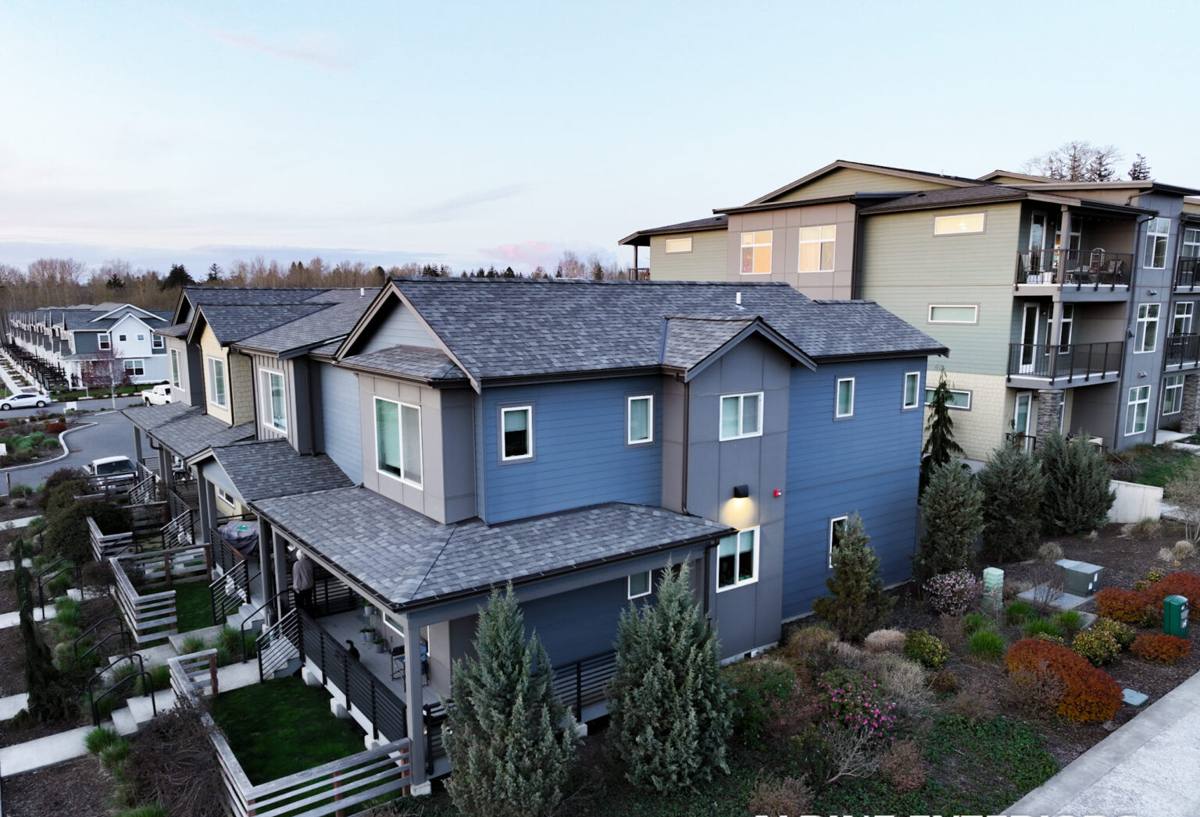
Why James Hardie Is the Only Fiber Cement We Install
We install James Hardie fiber cement siding exclusively. We don't install other fiber cement brands, vinyl, LP SmartSide, or wood siding, and that's a deliberate standard, not a limited product line. Fiber cement as a category is a strong choice for a marine climate — it doesn't rot, it resists moss and mildew far better than wood, and it holds up to wind-driven rain. But performance within that category varies by manufacturer, and we've standardized on Hardie for specific reasons:
- Non-combustible material — fiber cement is inherently fire-resistant, which matters for insurance and code considerations regardless of climate.
- ColorPlus factory finish — baked-on color applied under controlled conditions holds up better against UV and moisture than field-applied paint, and it comes with its own finish warranty.
- Climate-engineered product lines — Hardie builds its HZ5 formulation specifically for wetter, more humid regions like ours, rather than selling one national product everywhere.
- A warranty structure that's transferable — useful if you sell the home before the warranty period ends.
None of this means other products are unusable. It means that after years of installing and repairing siding in this climate, Hardie is what we're willing to put our name behind and what we recommend to Bellingham homeowners asking about fiber cement.
What "Fiber Cement" Actually Means for a Bellingham Home
Hardie fiber cement is a blend of cement, sand, and cellulose fibers, pressed and cured into planks, panels, or shingle-style pieces. It doesn't absorb moisture the way wood does, it won't warp or delaminate from repeated wet-dry cycles, and it's dense enough to resist the kind of surface pitting that salt air and wind-blown grit can cause over time. That combination is exactly what a marine-influenced climate calls for.
What Correct Installation Involves in This Climate
Fiber cement siding is only as good as the installation behind it. In a low-moss, dry climate, sloppy details might not show up for years. In Bellingham's climate, they show up fast — usually as staining, soft trim, or paint failure within a couple of seasons.
Drainage Plane and Rainscreen Gap
Siding isn't the only thing keeping water out of a wall — it's the first layer over a weather-resistant barrier and, ideally, a small drainage gap that lets any moisture that gets behind the siding drain out and air dry instead of sitting against the wall sheathing. This detail matters more here than almost anywhere else in the state given how many wet days the area gets each year.
Flashing and Joint Sealing
Every window, door, and butt joint is a place water can find its way in. Correct flashing above openings and horizontal joints, combined with the right sealant at vertical joints, is what keeps driving rain from working its way behind the panels during a hard westerly storm.
Fastening Schedule
Hardie specifies fastener type, placement, and spacing for a reason — under-fastened siding can rack loose in wind and open small gaps that let water in over time. We follow manufacturer fastening specs, not shortcuts, because that's also what keeps the warranty valid.
Factory Finish vs. Field Paint
Where possible, we use ColorPlus prefinished product rather than field-painting on site. A factory finish cures under controlled conditions and typically outperforms a coat of paint applied outdoors in variable humidity — which is common on the Whatcom County coast even in what's supposed to be the dry season.
Our Bellingham Installation Process
- On-site inspection — we look at your current siding, trim, and the condition of the sheathing and weather barrier underneath, not just the surface.
- Written estimate — scope, product line, color, and price broken out clearly, no vague allowances.
- Tear-off and substrate check — old siding comes off, and we address any rot or moisture damage found underneath before anything new goes up.
- Weather barrier and flashing — repaired or replaced as needed so the drainage system behind the siding is sound, not just the siding itself.
- Hardie installation — installed to manufacturer fastening and clearance specs, including proper gaps at grade, roof lines, and trim.
- Trim, caulking, and final detailing — the small details that determine how well the job holds up through its first few Whatcom County winters.
- Final walkthrough — we go over the finished work with you before calling the job done.
Signs Your Current Siding Is Losing the Fight
If you're weighing whether it's time to replace siding on a Bellingham-area home, these are the signs that matter more than cosmetic wear:
- Moss or dark green-black staining that keeps returning within weeks of cleaning, especially on shaded or north-facing walls
- Soft or spongy spots when you press on the siding, particularly near the bottom courses or below windows
- Paint that's peeling, bubbling, or chalking heavily rather than just fading evenly
- Visible gaps opening up at butt joints, corners, or trim where caulking has failed
- A musty smell or discoloration on interior walls that back up to exterior siding
- Warping, cupping, or separation at panel edges, common with wood or lower-grade composite products in this climate
Cost Factors for a Bellingham Fiber Cement Project
Every home is different, but these are the variables that most affect the price and timeline of a fiber cement siding project in this area:
| Factor | Why It Matters |
|---|---|
| Tear-off vs. install-over | Removing old siding and checking the sheathing takes more labor but is often necessary when there's existing moisture damage — common on older Whatcom County homes |
| Substrate repair | Rot or water damage found during tear-off has to be fixed before new siding goes on; the extent isn't always known until the old siding is off |
| Home size and wall complexity | More corners, gables, and trim details mean more cutting, fitting, and flashing work |
| Siding profile and finish | Lap siding, shingle-style panels, and vertical board-and-batten each have different material and labor costs |
| Color and finish choice | Factory ColorPlus finishes cost more up front than field-painted product but reduce future repainting |
| Access and site conditions | Sloped lots, tight setbacks, or mature landscaping close to the house can add setup time |
Why a Blaine Crew That Already Works Bellingham Matters
We're not a national franchise dispatching a different crew to every job. We're based in Blaine and work this stretch of Whatcom County — from the border down through Bellingham — regularly enough to know how differently the climate behaves from one part of the county to another. A wall facing the water takes more direct salt exposure and rain than a wall tucked under tree cover a mile inland, and the moss and moisture patterns on a shaded lot are different from an open one. That local pattern recognition shapes decisions on drainage detailing, fastening, and where extra flashing attention is worth it — decisions that are harder to get right for a crew that doesn't see this specific coastline and rainfall pattern on a regular basis.
It also means we're not disappearing after the invoice is paid. If a question comes up a year or two after installation, you're calling a local crew, not a call center.
Maintaining Fiber Cement Siding in a Marine Climate
Hardie siding is low-maintenance compared to wood, but "low-maintenance" isn't "no-maintenance," especially with Bellingham's moss season. A simple annual routine keeps it performing the way it's designed to:
- Rinse siding down once or twice a year with a garden hose or low-pressure wash to clear pollen, salt residue, and early moss growth
- Check caulking at trim, windows, and joints annually and have any cracked or missing sealant redone before winter rains
- Keep gutters clear so water isn't overflowing and running down the siding face repeatedly
- Trim back vegetation and tree limbs that keep sections of wall shaded and damp, since that's where moss takes hold fastest
- Avoid high-pressure power washing directly at joints and edges, which can force water behind the siding instead of removing it
- Watch for any paint or finish changes at trim boards and touch up promptly, since trim is usually not fiber cement and ages differently than the siding itself
If your Bellingham-area home is due for new siding, or you're not sure whether what's on the walls now is worth repairing versus replacing, we're happy to take a look. Estimates are free, there's no pressure, and you'll get a straight answer about what your home actually needs — use the form below to get started.