 Blaine Siding
 Why Bellingham Roofs Age Differently Than Roofs Inland
A roof in Bellingham or Blaine works harder than a roof in most parts of the country. You've got salt-laden air coming off Bellingham Bay and the Strait of Georgia, long stretches of driving rain off and on for most of the year, and a moss season that in this part of Whatcom County can run nine or ten months if a roof sits shaded under fir and cedar. None of that means a roof is doomed early — it means the materials, the details, and the timing of the work have to account for it. A roof replacement done the same way you'd do it in a dry inland climate tends to show its age here years before it should.
This page is specifically about full roof replacement for homes in and around Bellingham — not a general roofing overview. If your roof is at the point where patching individual leaks or replacing a few shingles no longer makes sense, this is what a correct, climate-appropriate replacement actually involves.
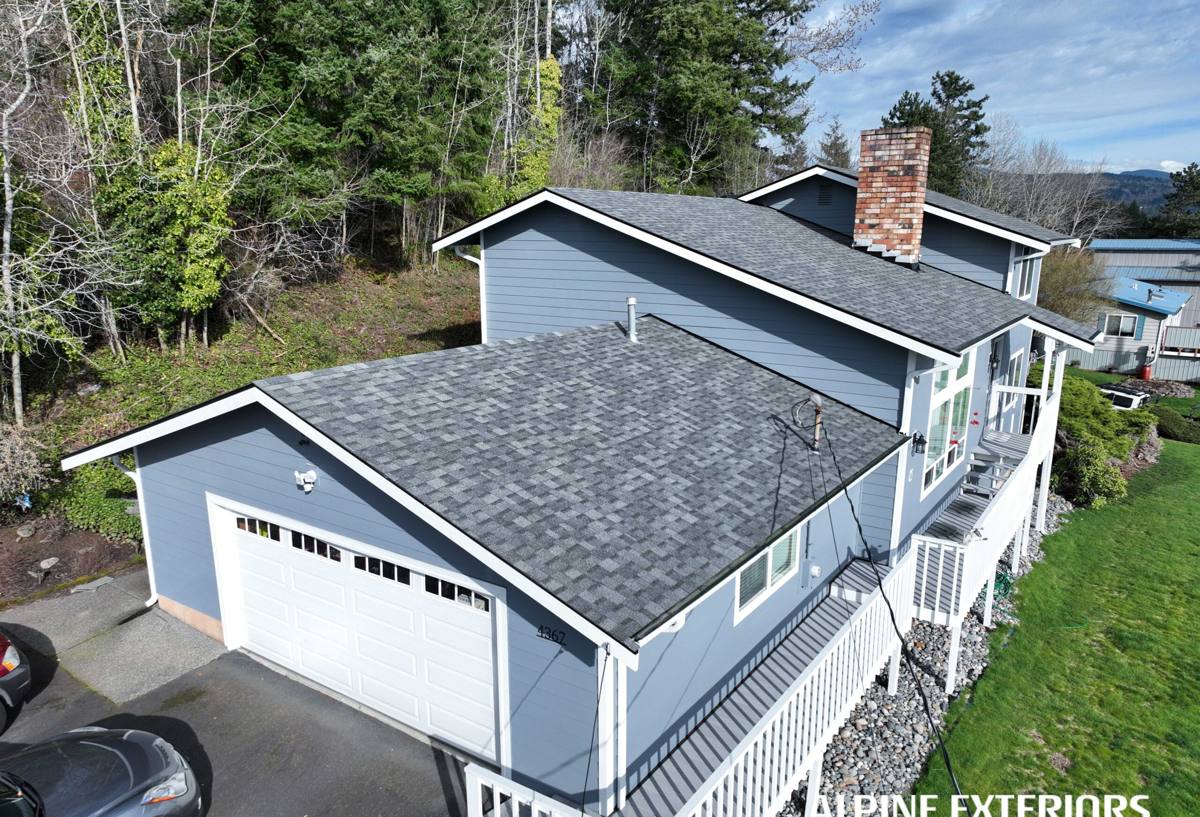
Signs You're Looking at Replacement, Not Repair
Not every roof problem means a full tear-off. But there's a point where repair spending stops making sense and starts just delaying the inevitable while risking water getting into the structure underneath. Common signs we look for on Bellingham homes:
- Granule loss heavy enough that you can see bare asphalt in multiple spots, not just one worn patch
- Shingles that are cupping, curling, or cracking across large sections rather than isolated areas
- Moss that has worked its way under shingle tabs and is lifting them, not just sitting on the surface
- Soft or spongy decking felt underfoot, or daylight visible through the roof deck from the attic
- Repeated leaks in different spots each winter, rather than one recurring failure point
- A roof that's 20+ years old and has never had ventilation or underlayment upgraded
If you're only seeing one or two of these in a localized area, a repair or partial re-roof may still be the right call. We'll tell you that directly rather than push a full replacement you don't need yet.
What a Correct Roof Replacement Actually Involves
A roof replacement is more than stripping old shingles and nailing down new ones. In a climate like Bellingham's, the layers underneath the visible shingle are what determine whether the roof holds up through the next 20-plus winters.
Full Tear-Off and Deck Inspection
We remove the existing roofing down to the deck rather than layering over old material. That's the only way to actually see the condition of the sheathing — and in this climate, it's common to find soft or delaminated plywood or boards around old flashing points, valleys, or areas where moss has held moisture against the deck for years. Any compromised decking gets replaced before anything new goes down. Skipping this step is the single most common reason a "new" roof fails early.
Underlayment and Water Protection
Given how much of Whatcom County's rainfall comes in with wind behind it, we don't treat underlayment as a formality. Self-adhered ice-and-water membrane goes in at eaves, valleys, and around all penetrations — the spots most prone to wind-driven rain forcing its way backward under shingles. A synthetic underlayment covers the rest of the field for a secondary water barrier beneath the shingle layer itself.
Ventilation
Poor attic ventilation is one of the quieter causes of roof failure and moss growth here. A roof deck that can't breathe stays cooler and wetter longer after rain, which is exactly what moss and rot need. Balanced intake and exhaust ventilation isn't an upgrade — it's a functional part of a roof system that's supposed to last in this climate, and we address it as part of the replacement rather than as an afterthought.
Flashing at Every Transition
Chimneys, skylights, sidewalls, and valleys are where most roof leaks actually originate — not the open field of shingles. New flashing, properly step-flashed and counter-flashed where walls meet roof planes, matters more to long-term watertightness than the shingle brand you choose.
Material Options for a Coastal Whatcom County Roof
There's no single "right" material for every Bellingham home — it depends on roof pitch, budget, how shaded the lot is, and how long you plan to stay in the house. Here's how the common options actually compare in this climate.
| Material | Typical Lifespan Here | Moss & Moisture Behavior | Considerations |
|---|---|---|---|
| Architectural asphalt shingle | 20-30 years | Good with proper ventilation; moss-resistant granule options available | Best balance of cost and performance for most homes; widest color selection |
| Standing seam metal | 40-50+ years | Sheds moisture fast; moss struggles to gain a foothold on smooth metal | Higher upfront cost; installation quality matters more than with shingles |
| 3-tab asphalt shingle | 15-20 years | More prone to moss retention in low spots and tab edges | Lower cost but shorter service life in wet, shaded settings |
| Synthetic/composite shingle | 30-40 years | Moisture-resistant, but performance varies significantly by manufacturer | Worth vetting warranty terms carefully before choosing |
We install and stand behind the options that hold up honestly in this climate. Where a material has a real maintenance burden here — trapping moisture, being especially sensitive to installation error, or having a warranty structure that doesn't match how the product actually performs on the coast — we'll say so plainly and explain why, rather than sell it and let you find out later.
Moss: Prevention Beats Removal
Moss is close to unavoidable on a shaded roof in this part of Washington, but a new roof can be set up to fight it instead of feeding it. Zinc or copper strips installed near the ridge let rain carry trace metal down the roof plane, which discourages new moss growth over time. Combined with proper ventilation and periodic gentle cleaning — never pressure washing, which strips granules and shortens shingle life — a new roof can go years longer between moss problems than the one it's replacing.
We also talk with homeowners honestly about tree cover. If large branches overhang the roof and keep sections permanently shaded and damp, trimming them back does more for the roof's lifespan than any product choice.
How Our Replacement Process Works
- On-site inspection and honest assessment of whether replacement or repair is actually the right call
- Written estimate covering material options, scope, and a realistic timeline
- Scheduling around weather windows — we don't tear off a roof ahead of a multi-day rain forecast
- Full tear-off with deck inspection and any necessary sheathing repair, done and documented before new material goes down
- Underlayment, flashing, ventilation, and final shingle or metal installation
- Job-site cleanup, including magnetic sweep for nails and debris removal
- Final walkthrough so you know exactly what was done and why
Why Working With a Crew That Knows Bellingham Matters
Roofing crews that mostly work drier, inland regions sometimes underestimate what constant coastal rain and moss pressure do to a roof over time. A crew that regularly works Bellingham and Blaine knows which details actually matter here — proper valley and eave protection against wind-driven rain, ventilation sized for a consistently damp climate, and moss-conscious material and installation choices — because we see the roofs that skipped those details fail early, and we see the ones that didn't hold up well past their warranty period.
Timing also matters more here than in drier climates. We plan tear-offs around realistic dry windows rather than fixed calendar dates, because an open roof deck exposed to a Whatcom County downpour is a real risk to the structure underneath, not just an inconvenience.
Cost Factors Worth Understanding Upfront
Every roof is different, so we won't publish a number that doesn't apply to your house — but the main factors that move the price are worth knowing before you start getting quotes:
- Roof size and pitch — steeper roofs take longer and require more safety setup
- Number of layers being removed and condition of the decking underneath
- Complexity of the roofline — valleys, dormers, chimneys, and skylights all add labor and flashing work
- Material choice, from standard architectural shingle up through standing seam metal
- Access — tight lots, steep driveways, or limited staging space can affect labor time
A contractor quoting sight-unseen, or quoting well below everyone else without explaining why, is usually cutting corners somewhere in that list — most often the tear-off, the decking repair, or the underlayment.
Get a Straight Answer About Your Roof
If your roof is showing its age or you're just not sure whether you're looking at a repair or a full replacement, we're glad to come take a look. We'll give you a clear, no-pressure assessment and a written estimate — no upsell, no guesswork about what your Bellingham roof actually needs. Use the form below to request your free estimate.