 Blaine Siding
 Bellingham sits close enough to the Salish Sea and the surrounding evergreen cover that its homes take a different kind of beating than siding a few hours inland. Salt-laden marine air, long stretches of wind-driven rain, and a moss season that can run from October through May all work on exterior walls at once. Siding replacement here isn't just a cosmetic upgrade — it's a chance to fix the moisture path a home has been living with for years. This page covers what that job actually requires in Bellingham specifically, and why the material and the installation details matter as much as the estimate.
Bellingham's Climate Puts Real Demands on Siding
Whatcom County's marine climate is milder than most of the country, but "mild" doesn't mean easy on a building envelope. Proximity to open water means airborne salt settles on exterior surfaces year-round, which accelerates corrosion on fasteners and metal trim and slowly degrades paint films that aren't built to handle it. Add driving rain that comes in sideways during winter storms, and any gap, seam, or under-lapped joint in the siding becomes an entry point for water rather than a cosmetic flaw.
Then there's moss. Bellingham's tree cover, shaded lots, and long damp season create ideal conditions for moss and algae to colonize any surface that stays wet for extended periods — north-facing walls, areas under eaves with poor sun exposure, and anywhere siding sits too close to grade or landscaping. Moss doesn't just look bad; it holds moisture against the siding surface, which is exactly the wrong thing for a material that isn't rated to handle sustained dampness.
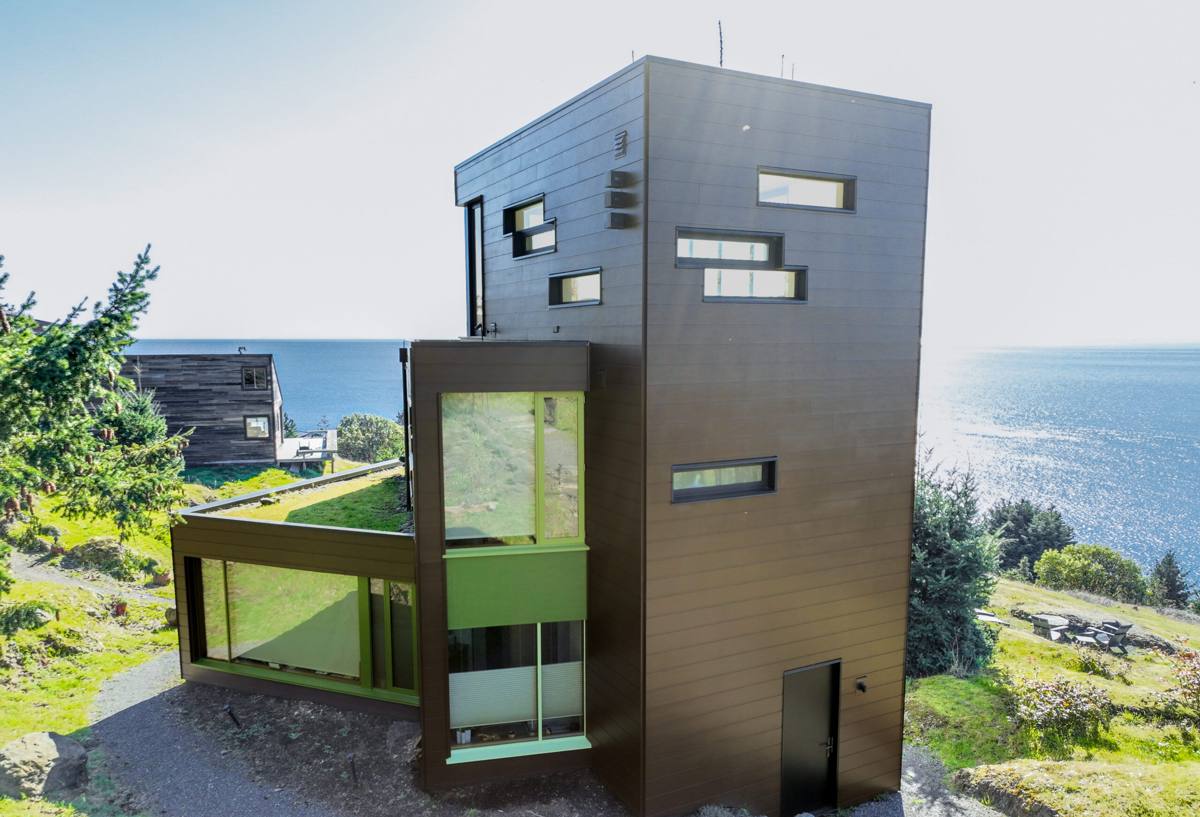
What Correct Siding Replacement Actually Involves
A siding replacement is only as good as what happens before the new boards go up. Skipping the prep work is the single biggest reason siding fails early in a climate like this one.
Tear-Off and Sheathing Inspection
Once the old siding comes off, the sheathing underneath tells the real story. In a wet climate, it's common to find soft spots, old water staining, or rot around windows, corners, and lower wall sections where water has been getting behind the cladding for years without being visible from outside. Any compromised sheathing needs to be cut out and replaced before new siding goes on — covering it up just resets the clock on the same problem.
Weather-Resistive Barrier and Flashing
Behind every well-installed siding job is a drainage plane: a weather-resistive barrier, properly lapped and taped, with flashing at every window, door, and horizontal transition designed to shed water downward and outward rather than trap it against the wall. In a region with as much wind-driven rain as Bellingham gets, flashing details at windows and roof-to-wall intersections are where most leaks originate if they're rushed or skipped.
Fastening and Clearances to Spec
Fiber cement siding has manufacturer-specified nailing patterns, gaps, and clearances from grade, roofing, and decking — and those numbers exist for a reason. Fasten too tight or leave insufficient clearance from grade or a walking surface, and you create the standing moisture and capillary draw that leads to swelling, cracking, or paint failure well before the material's rated lifespan.
Why We Install Only James Hardie Fiber Cement in Bellingham
We install James Hardie fiber cement exclusively — not vinyl, not LP SmartSide, not cedar or primed spruce. Vinyl expands and contracts with temperature swings and doesn't hold up long-term against sustained UV and marine air exposure. Wood-based products, even engineered ones, rely on their outer coating to keep moisture out; in a climate with this much sustained dampness, any breach in that coating is where rot starts. Cedar looks great new but demands a maintenance schedule most homeowners don't keep up with once the humidity and moss pressure of a Whatcom County winter sets in.
Hardie's fiber cement is non-combustible, dimensionally stable, and factory-finished with ColorPlus technology, which holds color and resists the fading and chalking that painted wood and vinyl both experience under years of marine UV exposure. It's engineered to handle moisture cycling without swelling or rotting the way wood-based products can. That combination is why it's the only siding system we put our name behind.
| Factor | Vinyl | Wood / Engineered Wood | James Hardie Fiber Cement |
|---|---|---|---|
| Moisture / rot resistance | Doesn't rot, but seams can trap water behind panels | Vulnerable if coating is breached | Engineered to resist moisture-related swelling and rot |
| Salt air / marine exposure | Can become brittle over time | Coating degrades faster near salt air | Factory finish holds up to coastal exposure |
| Moss and algae growth | Growth sits on the surface, harder to clean without damage | Holds moisture, feeds growth if untreated | Dense surface, washes clean without harming the finish |
| Fire resistance | Combustible | Combustible | Non-combustible |
| Typical repaint cycle | N/A (can fade/chalk) | Every 3-7 years | ColorPlus finish rated well beyond typical repaint cycles |
Signs Your Bellingham Home May Need Siding Replacement Now
Some warning signs are obvious; others take a trained eye because they show up as a byproduct of moisture rather than damage to the siding itself. Worth checking before you assume a wash or a paint job will solve it:
- Persistent moss or algae staining that returns within a season or two of cleaning
- Soft or spongy spots when you press on the siding, especially near the bottom courses or below windows
- Visible warping, buckling, or gaps opening up between boards
- Paint that's peeling, bubbling, or chalking heavily rather than just fading evenly
- Interior signs like peeling paint, musty smells, or discoloration on walls that back up to exterior siding
- Siding that's original to a home built more than 20-25 years ago, especially older wood or early-generation composite products
- Visible daylight or drafts around window and door trim where siding meets the frame
Our Process, From Estimate to Final Walkthrough
The process is straightforward, but the order matters — especially in a climate where weather windows can close quickly.
Inspection and Estimate
We walk the exterior, check for the moisture and moss patterns specific to the home's exposure and shading, and give a written estimate that accounts for what we can see and what's likely once tear-off starts.
Prep and Protection
Landscaping, walkways, and adjacent surfaces get protected before tear-off begins. Old siding comes off in sections rather than all at once where practical, limiting how much sheathing sits exposed to the weather at any given time.
Sheathing Repair, Barrier, and Flashing
Any compromised sheathing gets replaced. The weather-resistive barrier goes on correctly lapped, and flashing is installed at every penetration and transition before a single piece of new siding is hung.
Installation to Manufacturer Spec
James Hardie panels, plank, or shingle siding goes up following Hardie's fastening schedule, clearances, and joint treatment — not a generic approach borrowed from a different material.
Final Walkthrough
We walk the finished job with the homeowner, checking trim lines, caulk joints, and touch-up paint before calling it done.
What Siding Replacement Costs in Bellingham: Factors That Matter
Every home is different, but the same handful of factors drive most of the cost variation we see on Bellingham jobs.
| Factor | Why It Affects Cost |
|---|---|
| Home size and number of stories | More surface area and taller walls mean more material and more time, and multi-story homes require additional staging and safety setup |
| Siding profile chosen | Lap siding, shingle-style, and panel systems each involve different labor and material costs |
| Condition of existing sheathing | Rot or water damage found during tear-off adds repair scope that isn't visible until the old siding is off |
| Trim and architectural detail | Corners, window trim, and detail-heavy elevations take more time than flat, simple wall runs |
| Site access | Tight lots, slopes, or limited equipment access can add labor time |
| Color and finish selection | Factory ColorPlus finishes versus field-painted options affect material pricing |
Why Local Experience in Whatcom County Matters
A crew that works Bellingham regularly already knows which elevations tend to hold moss, which neighborhoods sit in enough tree shade to change the maintenance conversation, and how much wind-driven rain a given exposure typically takes in a normal winter. That's the kind of judgment that shapes flashing details and product selection before problems show up — not something you can fully substitute with a generic installation checklist written for a different climate. It also means we're not guessing at how James Hardie's HZ5 product line performs here; we're installing it in this exact climate on a regular basis.
Caring for Hardie Siding After Installation
Correctly installed fiber cement siding needs far less upkeep than wood or vinyl, but it isn't zero-maintenance in a climate like this one. A periodic gentle wash — garden hose and soft brush, not a pressure washer aimed directly at seams — keeps moss and algae from establishing on shaded walls. Keeping gutters clear and downspouts directed away from the foundation reduces the splash-back moisture that feeds moss growth at the lower courses. It's also worth a visual check every year or two on caulk joints around windows and trim, since caulk is the one component in the whole system that wears out well before the siding does and is cheap to renew before it fails.
If you're seeing moss that keeps coming back, siding that's original to an older Bellingham home, or you just want an honest read on what condition your exterior is really in, we'll come take a look and put together a free, no-pressure estimate — no obligation either way.