 Blaine Siding
 What Birch Bay's Marine Climate Does to a Deck
Birch Bay sits right on the water, and that changes what a deck has to survive. Salt-laden air off the bay works on fasteners, flashing, and any exposed metal year-round, not just during storms. Add in the driving rain that comes through Whatcom County for much of the fall, winter, and spring, and you've got a structure that stays damp far more often than it stays dry. Then there's the moss. Anything shaded, north-facing, or slow to drain in this part of Washington will grow moss and algae if it isn't detailed correctly, and a deck with the wrong drainage or spacing becomes a moss farm within a couple of seasons.
None of that is a reason to avoid building a deck here — it's a reason to build one correctly the first time. The homes that hold up best in Birch Bay are the ones where the contractor planned for salt, rain, and shade from day one, instead of treating this like a dry-climate build.
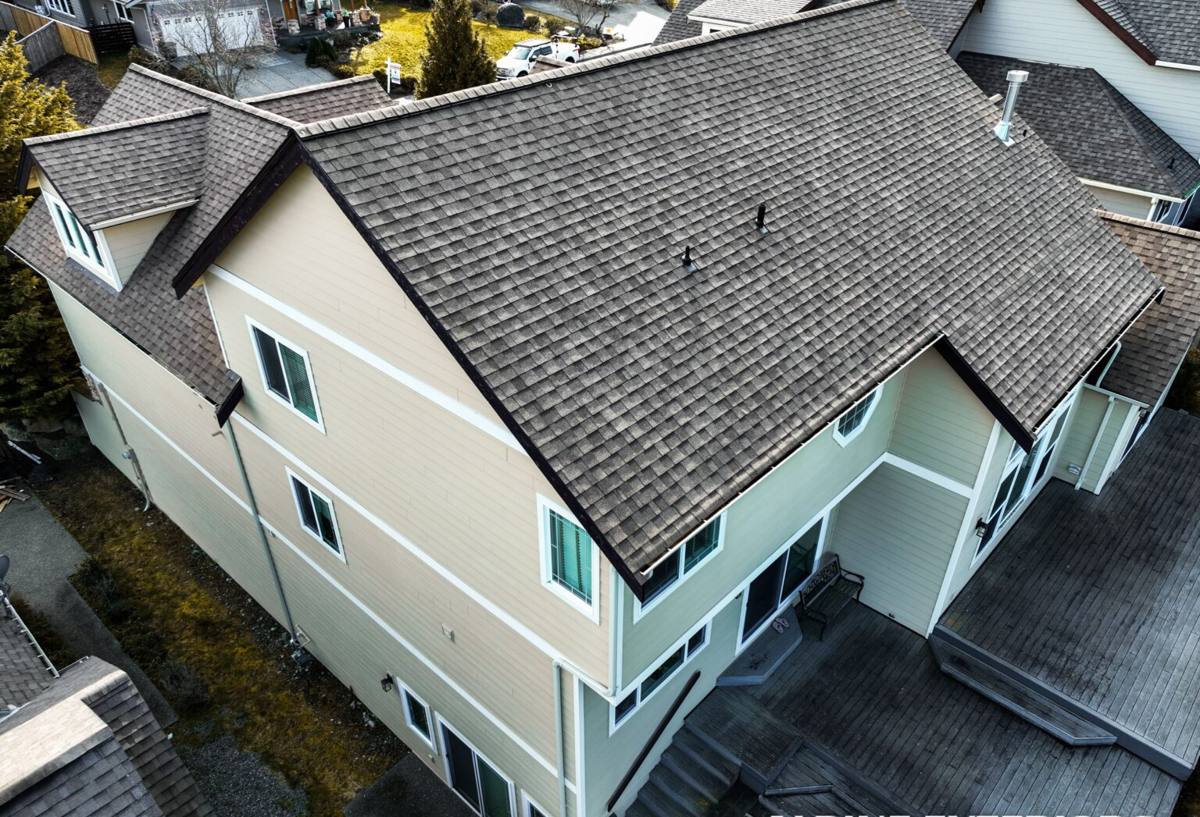
Why Composite Decking Makes Sense for Birch Bay Homes
Composite decking was built to solve exactly the problems this coastline creates: moisture absorption, splintering, rot, and the endless refinishing cycle that wood demands. A quality composite board doesn't take on water the way wood fibers do, so it isn't as prone to cupping, checking, or soft spots after a wet Whatcom County winter. That matters more here than in drier parts of the state, where a homeowner might get away with a lower-maintenance wood deck for longer.
Composite vs. Wood: The Honest Trade-offs
We're not going to tell you wood decking is a bad product — plenty of homeowners like the look and are willing to keep up with it. But here's the honest comparison for a salt-air, high-moisture site like Birch Bay:
- Maintenance: Wood needs regular sanding, staining, or sealing to keep moisture out. Composite needs periodic cleaning, not refinishing.
- Moisture behavior: Wood swells and shrinks with humidity, which loosens fasteners over time. Composite is far more dimensionally stable.
- Rot and insect risk: Wood is vulnerable if the finish fails or water sits in a joint. Composite doesn't rot, though the substructure underneath still can if it's wood.
- Upfront cost: Wood is usually cheaper per square foot going in. Composite costs more upfront but spreads that cost out over a much longer, lower-maintenance life.
For a lot of Birch Bay properties — especially ones with direct salt exposure or heavy shade — composite is simply the lower-hassle, longer-life choice.
What a Correct Composite Deck Installation Involves
Composite decking is only as good as what's underneath it and how it's fastened. This is where a lot of decking problems actually start, and it's rarely the board itself.
Substructure and Drainage
The framing has to be built to shed water, not hold it. That means proper joist spacing for the specific composite product being used (composite typically needs tighter spacing than wood decking does), joist tape or flashing to protect the framing lumber from standing moisture, and a slope or gap plan that lets water get out from under the deck instead of pooling against the house. On a shaded or low-airflow site — common in parts of Birch Bay with mature trees or tight side yards — ventilation under the deck matters just as much as the decking on top.
Fasteners and Hardware
In a salt-air environment, hardware choice isn't optional detail work — it's the difference between a deck that lasts and one with rust streaks and failing connections in a few years. That means stainless steel or coated fasteners rated for coastal/marine exposure, corrosion-resistant joist hangers and structural connectors, and hidden fastener systems installed correctly so boards aren't over-tightened or under-supported.
Composite Board Types: What We Look At
Not all composite decking is built the same way, and the differences actually matter in a climate like this one.
| Board Type | How It Handles Moisture | Maintenance | Best Fit |
|---|---|---|---|
| Uncapped composite | Wood-plastic blend; can absorb some moisture at the surface over time | Occasional cleaning; more prone to surface staining | Budget-conscious projects, covered or less-exposed areas |
| Capped composite | Protective polymer shell resists moisture and staining better | Low; periodic washing keeps it looking new | Most Birch Bay decks, including uncovered and salt-exposed areas |
| PVC / cellular decking | Fully synthetic, essentially impervious to moisture | Very low | High-exposure waterfront sites, docks-adjacent decks |
For most homes near the water in Birch Bay, we lean toward capped composite as the practical middle ground — strong moisture resistance without the premium price of full PVC. But the right call depends on how exposed the deck is, how much shade it gets, and what you're trying to spend. We'll walk through that with you rather than push one product line.
Our Process, Start to Finish
We keep the process straightforward because a deck project shouldn't feel complicated:
- On-site assessment: We look at drainage, sun/shade exposure, existing structure (if there's a deck to replace), and how close you are to salt exposure.
- Material walkthrough: We go over board options, colors, and hardware with real trade-offs explained, not just a sample board handed to you.
- Structural build: Framing, flashing, and ledger attachment are done to code, with attention to drainage and airflow underneath.
- Decking installation: Boards are laid with correct spacing and fastening for the specific product and our local climate conditions.
- Final walkthrough: We check the finished deck with you before we consider the job done — fastener lines, edges, railing attachment, and drainage all get a final look.
Moss, Mildew, and Salt Residue: Living With a Long Wet Season
Whatcom County's wet season runs long, and Birch Bay's moss and algae growth is a fact of life for any outdoor surface here, composite included. Composite decking resists staining and growth far better than bare wood, but it isn't moss-proof. Shaded areas, spots under trees, and sections with poor airflow will still need occasional attention.
The good news: keeping a composite deck clean in this climate is simple, not a major project. Periodic rinsing to clear pollen, salt film, and organic debris, an occasional wash with a soft brush and mild cleaner in shaded or slow-drying spots, and keeping gutters and nearby vegetation trimmed back so the deck gets airflow and light will keep most decks looking clean with minimal effort. This is a fraction of the upkeep a wood deck demands in the same conditions.
What a Birch Bay Composite Deck Costs
Every deck is different, but these are the main factors that move the price up or down on a typical project in this area:
| Cost Factor | Why It Matters |
|---|---|
| Deck size and shape | Square footage and complexity (angles, multiple levels) drive material and labor time |
| Board tier (uncapped vs. capped vs. PVC) | Higher moisture resistance generally costs more per square foot upfront |
| Substructure condition | Replacing rotted or undersized framing adds cost but is not optional if it's compromised |
| Height and railing requirements | Elevated decks need more structural work and code-compliant railing |
| Site access and exposure | Waterfront or hard-to-access lots can affect material handling and hardware specs |
Rather than quoting a number that doesn't reflect your actual site, we walk the property and give you a real estimate based on what's there — not a generic per-square-foot guess.
Why Hire a Crew That Already Works in Birch Bay
A contractor who mostly builds decks inland doesn't always plan for what a bay-front or near-shore property needs. Fastener grade, joist spacing for wet-climate movement, and where moss is going to show up first aren't things you learn from a manual — they're things you learn by building and maintaining decks in this specific stretch of Whatcom County. Working around Blaine and Birch Bay regularly means we've seen how different orientations, shade patterns, and exposure levels play out over a few years, not just at the ribbon-cutting.
That local track record also shapes small decisions that matter: where we leave extra drainage gap, which hardware we won't cut corners on, and which spots on a given lot are going to need a little more airflow planning before the first board goes down.
Checklist: Before You Sign a Decking Contract
- Ask what fastener and hardware grade will be used — it should be rated for coastal/marine exposure, not standard interior-grade hardware.
- Confirm joist spacing matches the composite manufacturer's spec for your chosen board, not generic wood-deck spacing.
- Ask how drainage and under-deck airflow will be handled, especially in shaded areas.
- Get the board type (uncapped, capped, or PVC) specified in writing, not just "composite decking."
- Check that flashing and ledger attachment details are included, not just the visible decking work.
- Ask for a written warranty on both materials and labor, and understand what voids it.
If you're weighing composite decking for a home in Birch Bay, we're happy to walk the site, talk through honest options for your specific exposure and budget, and give you a straightforward estimate — no pressure, no upsell. The form below is a quick way to get that conversation started.