 Blaine Siding
 Why Point Roberts Windows Wear Out Faster Than Most
Point Roberts sits on its own peninsula, bordered by Boundary Bay on one side and the Strait of Georgia on the other, with no landmass nearby to break the wind coming off open water. That geography is part of what makes the community special, but it's hard on a house. Homes here take a steadier, harder hit of salt-laden wind and driving rain than most properties elsewhere in Whatcom County, and it shows up first at the windows.
Salt air corrodes metal hardware, fasteners, and weatherstripping components faster than an inland climate ever would. Combine that with the long, wet Pacific Northwest stretch from fall through spring, and you get near-constant moisture pressure on every seam, sill, and joint in a window assembly. Add the moss and algae that build up on shaded, north-facing frames where things never fully dry out, and you have a recipe for wood rot, failed seals, and hardware that seizes up years before it should.
None of this means windows in Point Roberts are doomed — it means the installation has to account for the exposure from day one. A window that would perform fine on a sheltered inland lot in Bellingham needs extra attention here: better flashing, better material choice, and a tighter, more deliberate install.
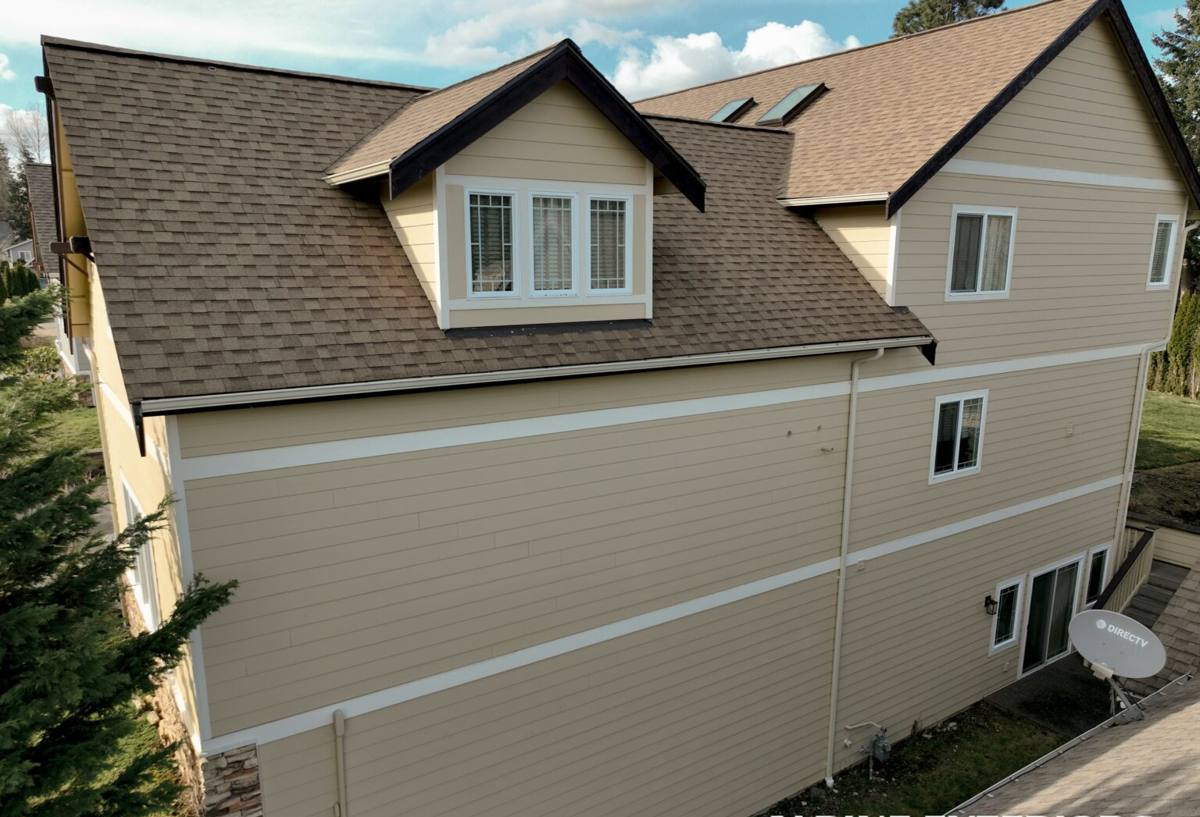
What a Correct Window Installation Actually Involves
Most window failures we see in this area aren't caused by a bad window — they're caused by a rushed or incomplete installation. The window itself is only part of the system; how it's tied into the wall is what determines whether water gets in over the next fifteen years.
Flashing and Moisture Management
Every opening needs a sill pan and flashing sequence that assumes some water will eventually reach the rough opening — because in a climate like this, it will. The job is to give that water a way out, not to seal it in. Flashing tape and building wrap need to be layered correctly, shingle-style, so water sheds down and out rather than pooling behind the trim.
Sealing and Insulation
Caulk and sealant are the last line of defense, not the first. We use low-expansion foam or backer rod and sealant around the frame to control air leakage and insulation performance, but we don't rely on caulk to do the job that flashing should already be doing. A window that depends on a bead of sealant to stay dry will eventually fail — usually quietly, behind the trim, where you won't see it until the wood is already soft.
Fit and Structural Integrity
Shimming and leveling matter more than people think. A window that's slightly racked in the opening puts uneven stress on the frame, which opens tiny gaps at the corners over time — exactly where wind-driven rain finds its way in first. Getting this right the first time is a lot cheaper than fixing rot damage five years later.
Choosing Materials That Hold Up to Salt Air and Constant Rain
Frame material choice matters more here than it does twenty miles inland. Here's how the common options compare for this specific climate:
| Frame Material | Moisture & Salt Air Resistance | Maintenance | General Cost Tier |
|---|---|---|---|
| Vinyl | Good — won't rot or corrode, minimal upkeep | Low — occasional rinse to clear salt film | Lower |
| Fiberglass | Excellent — very stable in moisture and temperature swings | Low | Mid to higher |
| Wood-clad / Aluminum-clad | Good on the exterior cladding, but exposed wood interior needs protection from any leaks | Moderate — interior finish needs occasional attention | Higher |
| Bare wood | Weakest choice for this exposure without diligent upkeep | High — repainting and sealing on a regular cycle | Varies |
We're not going to tell you one material is the only right answer — budget and the look you want for the house both factor in. But for a home taking the full brunt of Point Roberts weather, we steer people away from bare wood frames on the most exposed elevations unless they're committed to a real maintenance schedule, simply because the moisture cycle here is unforgiving of gaps in upkeep.
Signs Your Current Windows Are Already Losing the Battle
Because the damage here tends to happen slowly and out of sight, a lot of homeowners don't realize how far along the problem is until they start looking closely. Walk your windows and check for:
- Fogging or a milky haze between panes of a double-pane window — the seal has failed and the gas fill is gone
- Soft or spongy trim and sills when pressed with a thumb
- Visible gaps between the frame and siding, or caulk that's cracked and pulling away
- Windows that stick, won't latch fully, or take real effort to open and close
- A persistent draft near the frame even with the window fully latched
- Green or black growth building up in the corners of the frame, especially on shaded sides of the house
- Paint or finish that's peeling specifically around the window opening rather than the wall generally
Any one of these on its own might just mean a repair. Several together, especially on the windward or shaded sides of the house, usually mean the assembly behind the trim is compromised and full replacement is the more honest answer.
How We Approach a Point Roberts Job
Point Roberts is part of Whatcom County, but it's cut off from the rest of the U.S. mainland — the only way to drive in is through Canada. That's a fact of life for anyone who lives there, and it changes how a contractor needs to plan a job. A crew that doesn't work this area regularly tends to treat that trip as an afterthought: they forget a part, don't have backup material on hand, and end up making a second crossing mid-job or leaving work half-finished.
We plan differently because we already know what that trip requires. Materials, tools, and any likely contingency items are confirmed and loaded before we leave Blaine, not discovered mid-install. We schedule around border wait times and weather rather than treating them as surprises. And because a forgotten dumpster run isn't a quick errand out here, we handle old window removal and disposal as part of the same trip, not a follow-up visit.
We also know that a lot of homes in Point Roberts are seasonal or part-time residences, with owners who aren't always on-site during the work. We coordinate scheduling, access, and updates in a way that respects that — clear communication before we start, and a finished job that doesn't need the homeowner standing over our shoulder.
Cost Factors for a Point Roberts Window Project
Every job is different, but the same handful of factors drive the price on most window projects in this area:
| Factor | Why It Affects Cost |
|---|---|
| Number and size of windows | More openings and larger units mean more material and labor time |
| Frame material | Vinyl, fiberglass, and clad options sit at different price points, as shown above |
| Retrofit vs. full-frame replacement | Full-frame work involves removing trim and siding around the opening, which adds labor |
| Existing rot or moisture damage | Soft framing or sheathing found once the old window is out needs to be repaired before the new one goes in |
| Access and logistics | Site access and the border crossing factor into scheduling and trip planning |
We won't quote a number without seeing the openings — window pricing varies too much by size, glass package, and what we find once the old unit comes out to do it any other way honestly. What we can tell you up front is that we price the job the same whether it's in Blaine or Point Roberts; we don't add a surprise "hard to reach" charge after the fact.
Why Local Experience with Point Roberts Specifically Matters
Plenty of contractors will say they "service the whole area." Fewer of them have actually built a workflow around what Point Roberts requires — the border logistics, the exposure to salt air and driving rain on three sides, the mix of full-time and seasonal homes, and the permitting process through Whatcom County. That experience shows up in small ways that add up: knowing which elevations on a typical Point Roberts home take the worst weather, knowing how local building department requirements apply to a straight window swap versus a full-frame replacement, and knowing how to keep a job on schedule despite a border crossing in the middle of it.
None of that is complicated once you've done it a few dozen times. It's just easy to get wrong if you haven't.
Caring for New Windows After Installation
A correctly installed window in this climate still benefits from a little seasonal attention. A quick rinse of the frames and glass a couple of times a year clears accumulated salt film before it has a chance to work on hardware and finishes. Keep an eye on weep holes along the bottom of the frame — these small drainage openings let water that gets into the track escape, and they can clog with debris, moss spores, or paint over time. On shaded sides of the house, a light annual wash keeps moss and algae from getting a foothold on the frame and sill in the first place. None of this is heavy maintenance — it's the kind of thing that takes twenty minutes and adds years to the life of the install.
Get a Straight Answer on Your Windows
If you're dealing with drafts, fogged glass, or trim that's starting to feel soft in Point Roberts, we're glad to come take a look. We'll give you an honest read on whether you're looking at repair or replacement, walk through material options that make sense for your home's exposure, and put together a straightforward estimate — no pressure, no upsell. Use the form below to get started.