 Blaine Siding
 Roofs Near California Creek Take a Different Kind of Beating
California Creek sits close enough to the water that homes here deal with a combination most inland roofs never see: salt-laden air off Semiahmoo Bay and Drayton Harbor, wind-driven rain that comes in sideways off Georgia Strait storms, and a moss season that can run eight or nine months out of the year in Whatcom County's marine climate. None of these problems are dramatic on their own. Together, over several winters, they're what turns a roof that looked fine last fall into one with soft decking, stained ceilings, or a full-blown leak by spring.
Roof repair in this part of Blaine isn't just patching a hole. It's understanding how the local climate attacks a roof from three directions at once, and knowing which repairs actually hold up out here versus which ones are just a temporary fix that fails again in a year or two.
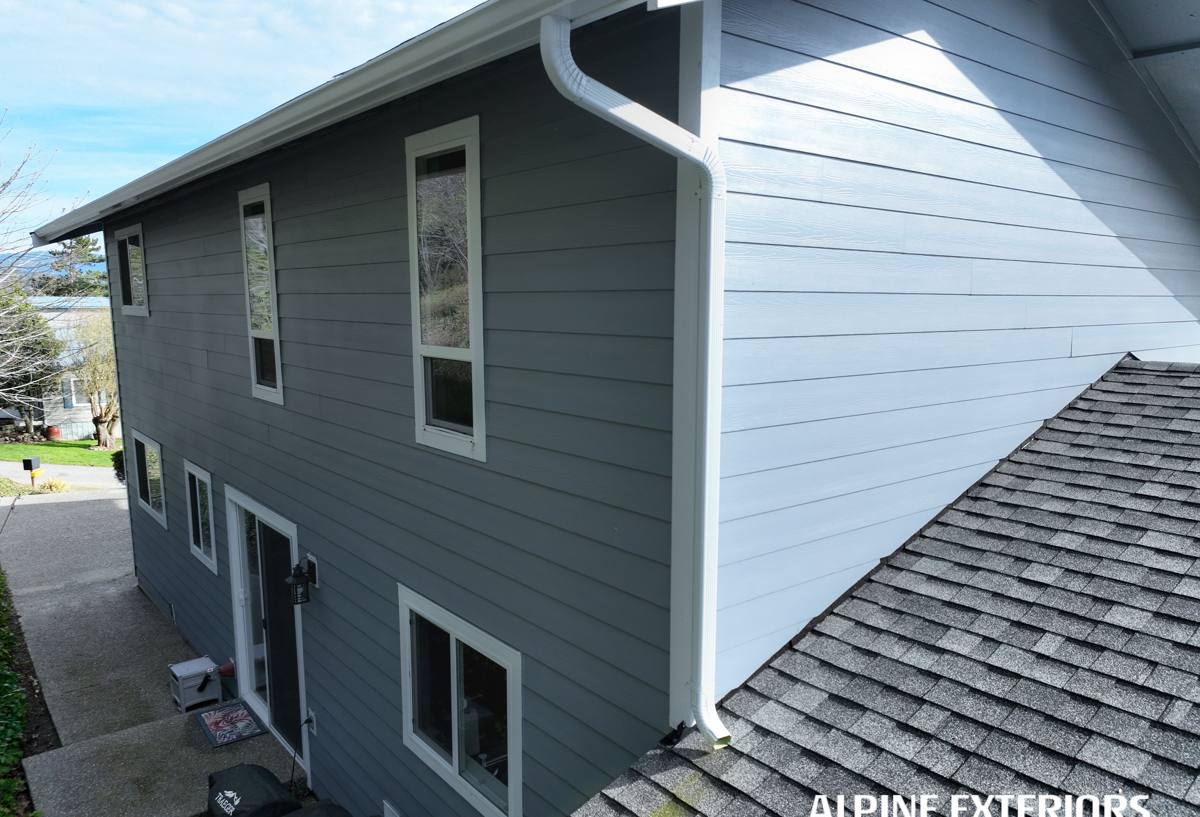
How Local Conditions Wear Down a Roof
Moss and Organic Growth
Shaded, north-facing slopes near California Creek's tree cover rarely get enough sun to dry out between rain events. That constant dampness is exactly what moss and algae need to take hold. Once moss establishes itself on a shingle roof, it works its way under shingle tabs, lifts edges, and holds moisture against the roofing material year-round. On a wood or composite shake roof, that trapped moisture accelerates rot. Left unchecked long enough, moss growth alone can shorten a roof's usable life by years.
Salt Air and Metal Fatigue
Homes closer to the water deal with airborne salt that settles on every exposed surface, including roofing. Salt accelerates corrosion on exposed fasteners, flashing, gutters, and any unprotected metal roofing components. A roofing nail or flashing piece that would last decades inland can start rusting and losing its grip years sooner this close to the bay. This is one of the biggest reasons repair materials and fastener choices matter more here than they would on a roof twenty miles inland.
Wind-Driven Rain
Blaine's winter storms don't just drop rain straight down — they push it sideways, driving water up under shingle laps, through poorly sealed flashing, and into any gap around vents, chimneys, or skylights that would stay dry in a calmer climate. Roofs built or repaired without accounting for wind-driven rain often look fine in summer and then leak the first time a real Pacific storm rolls through.
Common Roof Repair Needs We See in California Creek
- Moss-damaged or lifted shingles, especially on shaded north- and east-facing slopes
- Corroded or failing flashing around chimneys, skylights, and roof-to-wall transitions
- Soft or spongy decking from long-term moisture intrusion, often discovered during a repair
- Clogged or undersized gutters causing water to back up under the roof edge
- Missing, cracked, or wind-lifted shingles after a winter storm
- Stained or damp ceilings and attic insulation, a sign of a slow leak rather than a sudden failure
- Deteriorated pipe boots and vent seals, a common weak point on older roofs
Most of these don't show up as an obvious leak right away. Moisture tends to travel before it drips, so the stain on a ceiling is often several feet from where the water actually got in. That's part of why a proper inspection matters more than a quick patch — fixing the visible symptom without finding the actual entry point means the same repair call again next winter.
What a Correct Roof Repair Actually Involves
A repair that's done right accounts for what's underneath the surface damage, not just what's visible from the ground. Before any shingles or flashing go back on, a thorough repair includes:
- A close inspection of the decking under the damaged area for soft spots or rot, not just the shingles themselves
- Identifying the actual water entry point, which is often uphill from where the damage or stain shows up
- Removing moss and organic debris properly rather than just patching over it
- Replacing corroded flashing and fasteners with materials rated for coastal exposure
- Matching shingle or roofing material as closely as possible so the repair doesn't stand out or create a mismatched seam
- Checking that surrounding areas — vents, gutters, adjacent flashing — aren't the next failure point
- Confirming proper attic ventilation, since poor airflow speeds up moss growth and can cause condensation that mimics a roof leak
Repair or Replace? What Actually Drives the Decision
Not every roof issue near California Creek needs a full replacement, and not every leak can be solved with a patch. The honest answer depends on the roof's age, how widespread the damage is, and what's happening underneath the surface layer.
| Factor | Leans Toward Repair | Leans Toward Replacement |
|---|---|---|
| Roof age | Under 15 years, or newer material still under warranty | Original roof nearing or past its expected lifespan |
| Damage scope | Isolated to one section or slope | Moss, wear, or leaks showing up across multiple slopes |
| Decking condition | Solid, dry decking under the damaged area | Soft, delaminated, or rotted decking found during inspection |
| Flashing condition | Flashing intact, isolated corrosion | Widespread rust or failure at multiple penetrations |
| History of repairs | First repair call in several years | Repeated patch jobs on the same areas |
Cost for a straightforward repair is typically a fraction of a full re-roof, but the range depends heavily on what's found once we're actually up there — a simple flashing fix is a different job than replacing rotted decking. We give you the real number after inspection, not a guess from the ground.
Our Repair Process
- Inspection. We get on the roof, not just look at it from the driveway, and check decking, flashing, ventilation, and gutters along with the obvious damage.
- Honest assessment. We tell you what's actually needed — repair, and what kind, or if replacement genuinely makes more sense — along with what it'll cost and why.
- The repair. Damaged material comes out, decking is addressed if needed, and new material and flashing go in matched to your existing roof where possible.
- Cleanup and moss treatment. We clear moss and debris from the repaired area and surrounding roof surfaces so the fix isn't undone by the same growth that caused the problem.
- Follow-up. We check our work holds up, especially through the first real storm after the repair.
Materials and Fasteners: Why Coastal Exposure Changes the Choice
Not every roofing material or fastener performs the same way this close to salt air. Standard fasteners and some flashing metals can corrode faster here than they would on a comparable inland roof, which is why we lean toward corrosion-resistant flashing and fastener options for repairs in California Creek rather than defaulting to whatever's cheapest. It's a professional standard we hold ourselves to, not a sales pitch — a repair that fails again in three years because of a fastener choice isn't a repair worth doing. The same logic applies to shingle selection: algae-resistant shingle lines exist specifically because of the moss and organic growth pattern common in Western Washington, and matching that to a shaded, damp roof section makes a real difference in how long the repair lasts.
Why Local Experience in California Creek Actually Matters
A roofing crew that mostly works drier, inland areas doesn't necessarily think about wind-driven rain, salt exposure, or moss the same way a crew working Whatcom County's coastal neighborhoods does every week. Knowing which slopes in this area tend to hold moisture, how local storms tend to drive rain into flashing, and which materials actually hold up near the water isn't something you learn from a manual — it's something you learn from doing the work here repeatedly. That local pattern recognition is often the difference between a repair that solves the problem and one that just delays it.
We also know that homes in this area range from older coastal properties to newer builds, and the right repair approach for a forty-year-old roof isn't the same as for one installed in the last decade. We adjust our recommendations accordingly instead of applying a one-size-fits-all fix.
Get a Straight Answer on Your Roof
If you're dealing with a leak, moss buildup, storm damage, or just want a roof that's been showing its age looked at before it becomes a bigger problem, we're glad to come take a look. The estimate is free, there's no pressure to move forward, and you'll get a clear, honest read on what your roof actually needs — use the form below to get started.