 Blaine Siding
 Birch Point Sits Right in the Weather
Birch Point is one of the more exposed pockets of the Blaine area — a waterfront community where homes take the brunt of Georgia Strait weather with very little buffer. That means salt-laden air moving in off the water, wind-driven rain that hits siding at an angle instead of falling straight down, and a moss season that runs long and wet through most of the fall, winter, and spring. Siding here doesn't get a break. It's working year-round, and the products that hold up fine a few miles inland sometimes don't hold up nearly as well right on the point.
We install James Hardie fiber cement siding, and only James Hardie. On a property like Birch Point, that's not a marketing angle — it's a practical decision based on what actually survives this specific stretch of Whatcom County coastline.
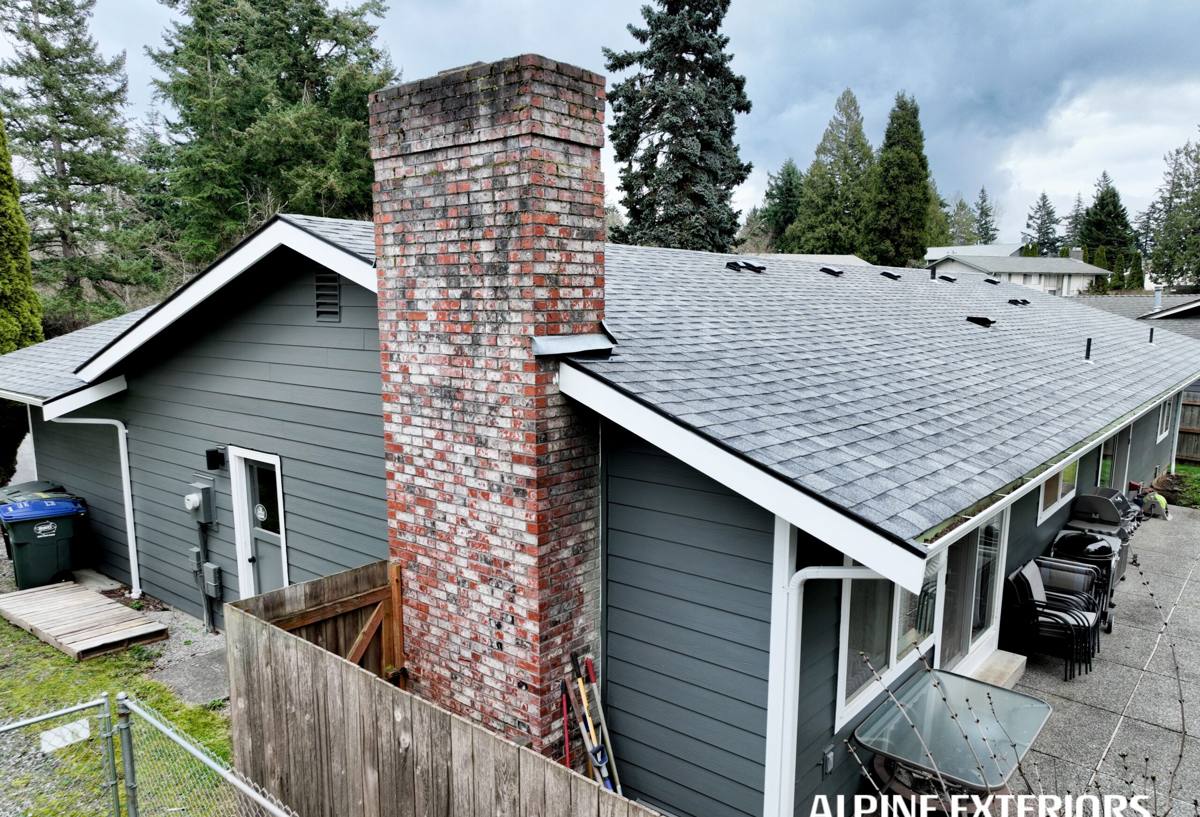
What Salt Air, Rain, and Moss Actually Do to Siding
Salt Air
Salt in the air settles on every exterior surface, including siding. On wood-based products, that salt film holds moisture against the surface longer than it would on drier inland sites, which accelerates rot at seams, corners, and butt joints. On fasteners and trim accessories, salt exposure speeds up corrosion if the wrong hardware was used. It's a slow, steady process — you don't see damage in year one, you see it in year eight or ten when nobody's been paying attention.
Wind-Driven Rain
Waterfront exposure means rain doesn't just fall on siding, it gets pushed into it — into laps, seams, and anywhere the water-resistive barrier or flashing detail is even slightly off. This is where installation quality matters as much as the product itself. A siding system with generous manufacturer-specified overlaps and proper flashing at windows, doors, and penetrations sheds wind-driven rain. One installed to minimum spec, or with shortcuts at the trim details, lets water find its way behind the cladding.
Moss and Sustained Moisture
Blaine's moss season isn't a two-week nuisance — it's most of the year. Moss and algae growth thrive anywhere siding stays damp longer than it should, which is common on north-facing walls, under eaves with poor airflow, and in shaded side yards near mature trees. Beyond the cosmetic green tint, sustained moisture retention is the real issue: it's what breaks down organic siding materials over time and what makes paint and caulking fail early.
Why James Hardie Is the Product We Install on Birch Point Homes
James Hardie fiber cement is cement, sand, and cellulose fiber — not wood. It doesn't rot, it isn't a food source for moss the way wood fiber can be, and it doesn't swell and contract with moisture the way wood-based composite sidings do. For a waterfront property fighting salt air and constant damp, that's the baseline requirement, not a bonus feature.
Hardie also builds region-specific product engineering into its HZ5 line, which is formulated for wetter, harsher climates like the Pacific Northwest coast — including areas exposed to salt air like Birch Point and the greater Blaine shoreline. The factory-applied ColorPlus finish is baked on under controlled conditions, which holds up better against UV and moisture cycling than field-applied paint, and it comes with its own finish warranty separate from the substrate warranty.
We don't install LP SmartSide, vinyl, Cemplank, Allura, or bare cedar or spruce siding. Each of those has legitimate uses in the right setting, but none of them is what we'd choose to put on a home sitting directly in Birch Point's salt and wind exposure, and we'd rather tell a homeowner that plainly than sell a product we don't fully stand behind.
What a Correct Installation Looks Like Here
The product is only half the equation. On an exposed site like Birch Point, installation detail is what determines whether siding performs for thirty-plus years or starts showing problems in year five. A correct James Hardie install in this environment includes:
- A properly lapped water-resistive barrier behind the siding, installed shingle-style so water sheds downward and outward
- Correctly flashed windows, doors, and any wall penetrations — the most common failure point on wind-driven-rain sites
- Manufacturer-specified fastener type and placement, using corrosion-resistant fasteners appropriate for coastal/salt-air exposure
- Minimum clearance between the bottom of the siding and grade, decks, or roof lines to avoid wicking moisture
- Proper caulking and sealant at joints and trim, using products rated for the exposure — not general-purpose caulk
- Adequate gap and sealed joints at butt seams so water doesn't track behind the panel
Every one of those items is spelled out in James Hardie's installation instructions. The warranty depends on following them. Skipping or rushing any of them is how a good product ends up with a bad reputation.
How Our Process Works on a Birch Point Home
1. On-Site Assessment
We walk the property and look specifically at exposure direction — which walls take the worst of the wind and rain, where moss and algae are already forming, where the current siding is showing wear first. That tells us where extra attention to flashing and detailing matters most.
2. Product and Line Selection
We talk through Hardie's plank, shingle, and panel options and help you land on the profile and color that fits the home, factoring in the coastal exposure this specific property faces.
3. Tear-Off and Substrate Check
Old siding comes off and we inspect the sheathing underneath for existing moisture damage before anything new goes on. On a waterfront property, this step catches problems that have been hiding for years.
4. Water Management Installation
Water-resistive barrier, flashing, and trim go in first, done to spec, before a single piece of Hardie siding is installed. This is the step that actually keeps water out — the siding itself is the visible layer on top of it.
5. Siding Installation to Manufacturer Spec
Fastening, spacing, and sealant are done to James Hardie's published requirements for this climate zone, which is also what keeps the manufacturer's warranty intact.
6. Final Walkthrough
We go over the finished work with you, including basic homeowner maintenance guidance specific to a salt-air, high-moss environment.
Cost Factors Specific to a Waterfront Property Like Birch Point
| Factor | Why It Affects Cost Here |
|---|---|
| Existing moisture damage | Waterfront homes more often have hidden sheathing rot that needs repair before new siding goes on |
| Flashing and trim detail | Wind-driven rain sites need more careful (and more time-intensive) flashing at every window, door, and penetration |
| Home height and access | Multi-story waterfront homes with limited staging area can add scaffolding or lift costs |
| Siding profile choice | Lap, shingle, and panel styles carry different material and labor costs |
| Removal of existing material | Tear-off complexity varies with what's currently on the home and how it was fastened |
We give straightforward, honest estimates after seeing the property in person — broad ranges without an on-site look aren't useful to you and we won't pretend otherwise.
Why Hiring a Crew That Already Works Birch Point Matters
A contractor who's worked this stretch of Whatcom County coastline knows which walls on a Birch Point-style property take the worst exposure before they even walk the site, understands how moss behaves on the shaded, north-facing sides common in this area, and doesn't need to relearn coastal flashing details on your home for the first time. That familiarity shows up in fewer surprises during tear-off and a finished job that's detailed correctly the first time, rather than one where site-specific lessons get learned at your expense.
It also matters for follow-up. A crew that works this area regularly is easy to reach if a question comes up two or five years down the road — not a company that did one job in the neighborhood and moved on.
Maintenance Realities for Birch Point Homeowners
Even with James Hardie siding correctly installed, a waterfront property in this climate benefits from occasional attention:
- Rinse siding periodically to remove salt film buildup, especially on walls facing the water
- Keep gutters and downspouts clear so water isn't overflowing onto siding below
- Trim back vegetation that's shading walls and keeping them damp longer than necessary
- Check caulking at trim and window edges every couple of years and have any gaps resealed
- Address any moss growth early with a gentle wash rather than letting it establish
None of this is heavy maintenance — it's the kind of upkeep that keeps a correctly installed Hardie system performing at its best for decades in a demanding coastal spot like this one.
Get a Straightforward Estimate
If you own a home in Birch Point and you're weighing your siding options, we're glad to come take a look, walk the exposure with you, and give you a clear, no-pressure estimate for a James Hardie install built for this exact stretch of coastline. Use the form below to get started.