 Blaine Siding
 New Roof Installation for Birch Point Homes
Birch Point sits right up against the water, and that location is exactly why roofs out here wear differently than roofs a few miles inland in Blaine or elsewhere in Whatcom County. Salt-laden wind, near-constant winter rain, and heavy tree cover that keeps roof surfaces damp for days at a time all add up to faster wear on shingles, flashing, and fasteners. A new roof installed for a Birch Point property needs to account for all of that from the start, not as an afterthought.
This page covers what actually goes into a correct new roof installation for a home in this specific area: what the local conditions do to roofing materials, what a proper installation looks like step by step, what it typically costs and why, and what to look for in a contractor who knows this stretch of coastline rather than one working from a generic playbook.
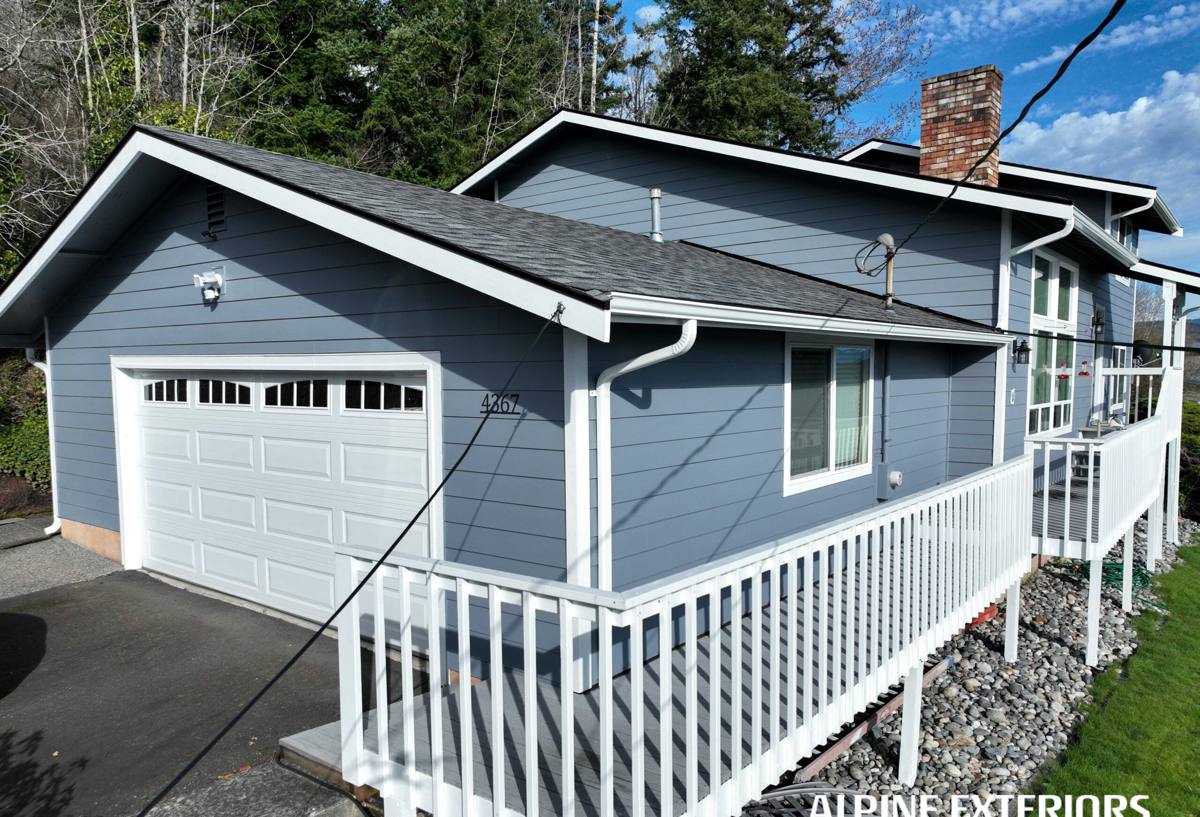
What Birch Point's Location Does to a Roof
Three things drive most of the roofing problems we see on homes near the water in this part of Whatcom County:
Salt Air
Airborne salt from the bay accelerates corrosion on any exposed metal — nail heads, flashing, gutter fasteners, and vent caps. Standard galvanized fasteners can start showing rust streaks years before they would inland. This is a material selection issue as much as an installation issue: what goes on a Birch Point roof needs a higher corrosion tolerance than what gets used on a house in downtown Blaine.
Driving Rain
Wind off the water pushes rain sideways, not just straight down. That matters because it drives water up under shingle edges, into vent flashing, and along ridge lines in ways that vertical rain never would. A roof detailed for calm-weather rain will leak here even if every shingle is nailed correctly, because the vulnerable points are different.
Moss Season
Between the marine moisture and the shade from mature trees common in this neighborhood, moss has a long growing season on north-facing and shaded roof slopes. Moss holds moisture against the roof surface, works into shingle laps, and shortens the life of the material underneath it. A roof designed with moss in mind — through material choice, slope detailing, and a bit of homeowner maintenance — lasts noticeably longer than one that isn't.
Signs a Birch Point Roof Needs Replacement, Not a Patch
Not every roof problem out here calls for a full tear-off. But there's a point where repairs stop being cost-effective and a new roof becomes the honest recommendation. Signs worth taking seriously include:
- Granules collecting in gutters or at downspout outlets, especially on a roof more than 15-18 years old
- Persistent moss growth that comes back within a season or two of cleaning
- Soft spots or slight sagging when walking the roof deck
- Daylight visible through the roof deck from inside the attic
- Curling, cracking, or cupping shingles, particularly on the sides facing prevailing wind and rain
- Rust staining around flashing, vents, or metal valleys
- Repeated leaks in different spots after previous patch repairs
If a roof is showing two or more of these at once, a patch is usually a short-term fix on a roof that's already past its useful life for this environment.
What a Correct Installation Involves Here
A new roof is more than shingles nailed to a deck. In a salt-air, high-moisture environment, the details underneath the visible surface matter as much as the finish material.
Deck Inspection and Repair
Before anything new goes down, the existing deck gets checked for soft or delaminated sheathing, usually most common near eaves and valleys where water sits longest. Any compromised sheathing gets replaced — installing new roofing over a soft deck just hides the problem.
Underlayment and Ice-and-Water Barrier
Given how much wind-driven rain this area sees, self-adhering ice-and-water shield membrane at eaves, valleys, and around every penetration is not optional — it's the backup layer that keeps water out when wind pushes rain past the shingle laps. The rest of the deck gets a synthetic underlayment rated for the region's moisture exposure.
Flashing and Fasteners
Given the corrosion issue from salt air, flashing and fasteners should be a corrosion-resistant grade rather than standard galvanized where budget allows — particularly on chimneys, skylights, and any metal valleys. This is one of the areas where cutting cost up front costs more in the following decade.
Ventilation
Proper intake and exhaust ventilation keeps the attic dry and temperature-balanced, which reduces condensation on the underside of the deck — a real factor in a climate this damp — and helps prevent premature moss and mildew growth from the inside out.
Material Comparison for This Climate
| Material | Moss/Moisture Resistance | Salt Air Durability | Typical Lifespan Here | Maintenance |
|---|---|---|---|---|
| Standard asphalt composition shingle | Fair — needs periodic cleaning | Good with corrosion-resistant fasteners | 18-25 years | Moderate |
| Algae/moss-resistant shingle (copper or zinc granules) | Good — actively resists growth | Good | 20-28 years | Low to moderate |
| Standing seam metal | Excellent — sheds moisture, nothing for moss to grip | Very good with coated/marine-grade fasteners | 40-plus years | Low |
| Cedar shake | Poor without diligent upkeep — holds moisture | Fair — hardware needs regular attention | 15-25 years, highly upkeep-dependent | High |
We'll walk through these options honestly for your specific roof — slope, shade exposure, and budget all affect which material makes sense. We're not going to push the most expensive option if a well-installed asphalt roof with the right underlayment will serve the home just fine.
Our Installation Process
- On-site assessment — we walk the roof and attic, check the deck, note shade/moss exposure and wind orientation specific to the property.
- Written estimate — material options, scope of work, and price laid out clearly before anything is scheduled.
- Tear-off — old roofing removed down to the deck so it can be inspected properly, not roofed over.
- Deck repair — any soft or damaged sheathing replaced.
- Underlayment and flashing installation — ice-and-water membrane at vulnerable areas, synthetic underlayment across the field, corrosion-resistant flashing at all penetrations and valleys.
- Roofing material installation — installed to manufacturer spec, with attention to wind-driven rain exposure at edges and ridges.
- Ventilation check — intake and exhaust confirmed balanced for the attic size.
- Cleanup and final walkthrough — site cleared of debris and nails, roof reviewed with the homeowner.
What Affects the Cost of a New Roof in This Area
| Factor | Why It Moves the Price |
|---|---|
| Roof size and pitch | Steeper roofs take longer and require more safety setup |
| Deck condition | Rot or soft sheathing found during tear-off adds repair cost |
| Material choice | Standing seam metal and moss-resistant shingles cost more upfront than standard asphalt |
| Number of penetrations | Chimneys, skylights, and vents each need individual flashing work |
| Access | Waterfront and hillside lots can complicate equipment and material staging |
| Tear-off layers | Removing multiple old roofing layers takes more labor than a single-layer tear-off |
We give a broad range at the estimate stage and a firm number once the deck is inspected — no surprise change orders for things we could have caught up front.
Why Local Installation Experience Matters in Birch Point
A roof installed by a crew that hasn't worked this specific stretch of coastline will often make reasonable, generic decisions — standard fasteners, standard underlayment placement, standard ventilation ratios — that don't hold up against this area's combination of salt air, wind-driven rain, and long moss season. Knowing which slopes on a Birch Point property tend to hold moss, how wind typically hits a given lot, and which fastener and flashing grades actually last near the water is the difference between a roof that needs attention again in eight years and one that goes two decades without a callback.
We work throughout Blaine and the surrounding Whatcom County waterfront communities, and the detailing choices we make on a Birch Point roof reflect what we've seen actually fail — and actually hold up — on homes in this exact kind of exposure.
After Installation: Keeping a New Roof Performing
A correctly installed roof still benefits from basic upkeep, especially here:
- Clear gutters and downspouts each fall before the wet season peaks
- Trim back overhanging branches to reduce shade and debris buildup on moss-prone slopes
- Have moss treated or gently removed before it establishes rather than after
- Check attic ventilation isn't blocked by insulation after any attic work
- Have flashing and fastener condition checked every few years, particularly after a hard storm season
None of this is complicated, but skipping it is how an otherwise well-installed roof loses years off its lifespan in a climate like this one.
If your roof in Birch Point is showing its age or you're planning ahead rather than waiting for a leak, we're glad to take a look and give you a straight, no-pressure estimate. Use the form below to get started.