 Blaine Siding
 Birch Point's Siding Problem Is Different From Inland Blaine
Birch Point sits close enough to the water that its homes take a version of weather most of Whatcom County doesn't deal with. Salt-laden air moves off the water and settles on exterior surfaces year-round, driving rain comes in sideways during winter storms instead of falling straight down, and the long stretch of damp, low-sun months from fall through spring gives moss and algae months at a time to establish themselves on siding, trim, and fascia. Any one of those on its own is manageable. Together, they accelerate the kind of damage that shows up as soft trim boards, cracked caulk lines, and paint that fails years ahead of schedule.
That combination is why siding repair in Birch Point isn't just "the same repair job, but near the beach." Salt residue reacts differently with different siding materials, driving rain finds gaps that would stay dry on a more sheltered inland lot, and moss holds moisture against the wall assembly long after a storm passes. A repair that doesn't account for all three usually fails again within a season or two.
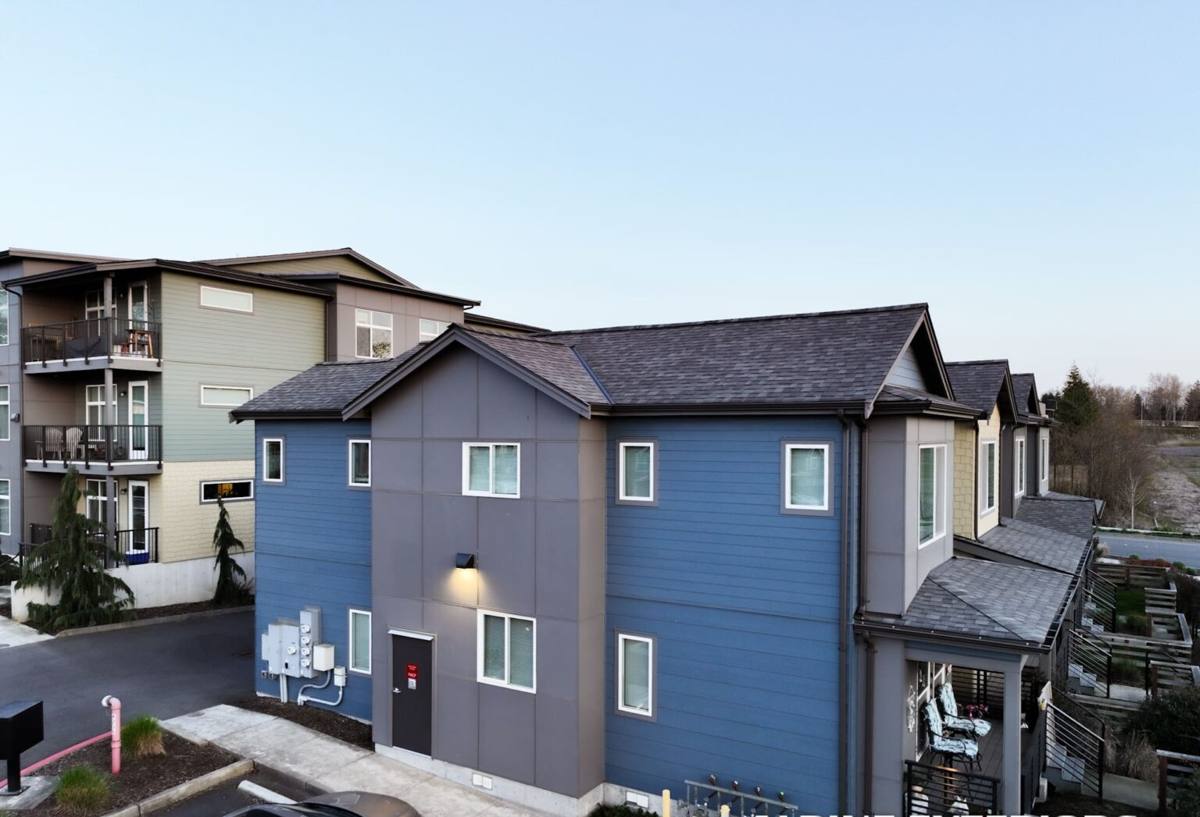
What Salt Air, Driving Rain, and Moss Actually Do to Siding
Salt Air
Airborne salt is corrosive to exposed fasteners, flashing, and any metal trim components. On painted wood and some engineered products, it also accelerates the breakdown of the finish, leaving surfaces chalky or faded well before they should be. Salt residue also holds moisture against a surface longer than plain rainwater does, which compounds the next two problems.
Driving Rain
Wind off the water pushes rain into laps, seams, and butt joints that a still-air rainstorm would never reach. Homes on more exposed Birch Point lots need siding, flashing, and caulking installed with tighter tolerances than a sheltered lot a mile inland, because water is being forced into gaps rather than running off them.
Moss and Algae
Blaine's wet season runs long, and shaded or north-facing walls in Birch Point can stay damp for weeks at a stretch. Moss and algae don't just look bad — they hold moisture directly against the siding surface, which is exactly the condition that rots wood trim, delaminates weak composite products, and traps water behind caulk that looks intact from the ground.
Signs Your Siding Needs Repair Now, Not Later
Most siding failure in this area starts small and stays hidden until it isn't. Homeowners who catch these signs early save real money over homeowners who wait for a visibly bad wall.
- Soft or spongy spots when you press on trim boards, corner posts, or the bottom courses of siding
- Paint that's peeling, bubbling, or chalking in patches rather than evenly across the wall
- Visible cracking along butt joints, especially on walls that face the prevailing wind
- Dark staining or streaking below window sills, which usually means water is tracking behind the siding, not just running down the surface
- Persistent moss or algae growth that comes right back within weeks of cleaning
- Caulk lines that have shrunk, cracked, or separated from the siding edge
- Any bulging, warping, or visible gaps where panels meet trim or corners
Repair vs. Replacement: How We Decide
| Condition Found | Usually Repair | Usually Replace |
|---|---|---|
| Isolated soft spot, one or two boards | Yes | No |
| Moisture found behind siding on multiple walls | No | Yes |
| Cracking limited to a few joints | Yes | No |
| Siding material discontinued or unmatched color across large area | No | Yes |
| Original material is wood, vinyl, or a lower-grade composite showing widespread wear | Sometimes, short term | Yes, for a lasting fix |
| Damage tied to a single failed flashing or trim detail | Yes | No |
What a Correct Repair Actually Involves
A siding repair that holds up on a Birch Point lot has to do more than patch what's visible. Here's what we check and do on every repair call:
- Moisture check first. Before touching anything, we check for trapped moisture behind the affected area, not just the surface damage. Repairing a board without confirming what's underneath is how the same repair ends up needed again in two years.
- Trace the water path. Damage rarely originates where it shows up. A stain below a window is often coming from a failed seal above it. We follow the path back to the actual entry point rather than just patching the visible symptom.
- Check flashing and trim details. Corner posts, window and door trim, and butt joints are the most common failure points under driving rain. These get inspected and corrected as part of the repair, not left as-is around the new material.
- Match or upgrade the material. If the surrounding siding is sound James Hardie fiber cement, we repair with matching Hardie product and ColorPlus finish so the patch blends in and performs the same as the rest of the wall. If the existing material is something we don't install — vinyl, LP SmartSide, cedar, or a lower-grade composite — we'll say so plainly and explain the options rather than patching a product we don't stand behind long-term.
- Re-seal correctly. Caulk and sealant get replaced with the wall assembly in mind, not just cosmetically at the surface, so the repair sheds wind-driven rain rather than trapping it.
- Clean up growth at the source. Where moss or algae contributed to the damage, we address the conditions causing it, not just the stain, so the same spot doesn't fail again next wet season.
Why We Only Install James Hardie Fiber Cement
We get asked often why we won't repair a damaged section with whatever material is already on the house, or install something cheaper for a patch job. The honest answer is that in an environment like Birch Point's, the material matters as much as the workmanship.
James Hardie fiber cement is non-combustible, doesn't absorb water the way wood or lower-grade composites do, and holds its factory-applied ColorPlus finish far longer under salt air and UV exposure than field-painted materials. Hardie's HZ product lines are engineered specifically for moisture-heavy climates like ours, which matters directly for a location dealing with salt air, driving rain, and a long moss season all at once. That's also why Hardie backs it with a strong transferable warranty — the company is confident in how the product performs when installed correctly.
We don't install vinyl, LP SmartSide, Cemplank, Allura, primed spruce, or cedar. Each of those has real strengths, but each also comes with a trade-off — moisture sensitivity, finish maintenance, or installation tolerances — that we're not willing to build our repair and replacement work around. When a repair calls for new material, it's Hardie. When the existing siding is something else and the damage is beyond a clean patch, we'll walk you through what replacing it with Hardie would look like, with no pressure either way.
Our Process for a Birch Point Repair Call
- On-site inspection. We walk the exterior, check the areas you've flagged, and look at every wall facing the prevailing weather, since damage often shows up in more than one spot once we're looking closely.
- Honest diagnosis. You get a clear explanation of what's actually wrong, what caused it, and whether repair or replacement makes sense — including if the answer is "this is a smaller job than you think."
- Written scope and estimate. No vague verbal quotes. You know what's being done and why before any work starts.
- Weather-aware scheduling. Repair work involving open siding needs a dry window. We plan around Blaine's weather rather than rushing a repair into a rain system, which is how repairs fail early.
- Cleanup and a final check. We confirm the repaired area sheds water correctly and matches the surrounding siding before we call the job done.
Living With Moss and Salt Between Repairs
Even a correctly repaired wall benefits from some basic upkeep in this environment. Homeowners in Birch Point get more life out of their siding by rinsing accumulated salt residue off exterior walls periodically, keeping gutters clear so overflow doesn't run down the siding face, and addressing moss on roofs and shaded walls before it spreads onto siding surfaces. None of this replaces a proper repair when damage is already present, but it slows how fast the next issue develops.
Cost Factors for Siding Repair
| Factor | Why It Affects Cost |
|---|---|
| Extent of hidden moisture damage | Determines whether sheathing or framing behind the siding also needs attention |
| Number of affected areas | Isolated spot repairs cost less than damage spread across multiple walls |
| Material match | Matching existing Hardie product and color is more straightforward than transitioning from a different material |
| Access and wall exposure | Higher walls or areas near the water with more wind exposure can affect labor and scheduling |
| Trim and flashing condition | Repairs that also require new trim or flashing add scope beyond the siding panels themselves |
Why It Matters That We Already Work in Birch Point
A crew that regularly works this stretch of Whatcom County knows what driving rain off the water does to a butt joint versus what the same joint sees on a sheltered inland street. That experience shows up in where we look first during an inspection, how we schedule around weather instead of fighting it, and which repair details we don't skip because we've seen what happens when they're skipped on a similar home nearby. It's the difference between a repair that's built for Birch Point's actual conditions and one that's built for average conditions and hopes for the best.
If you're seeing early signs of siding trouble, or you just want an honest opinion on whether a spot needs repair or full replacement, we're glad to take a look. Reach out for a free, no-pressure estimate using the form below.