 Blaine Siding
 Birch Point Roofs Take a Different Kind of Beating
Birch Point sits close enough to the water that its roofs deal with a combination most inland Whatcom County homes don't: wind-driven rain coming off the water, salt-laden air that accelerates corrosion on fasteners and flashing, and long stretches of shade and dampness that keep moss active for most of the year. Any one of those on its own is manageable. Together, they mean storm damage here often shows up faster and in different places than it would on a roof a few miles inland.
When a windstorm rolls through Blaine, the damage on a Birch Point roof is rarely limited to a few obvious missing shingles. Salt air has usually already softened up fasteners and sealant, moss has likely been holding moisture against the deck in shaded valleys, and the storm just finishes the job. Repairing that roof correctly means treating it as a system that was already under stress, not just patching what blew off.
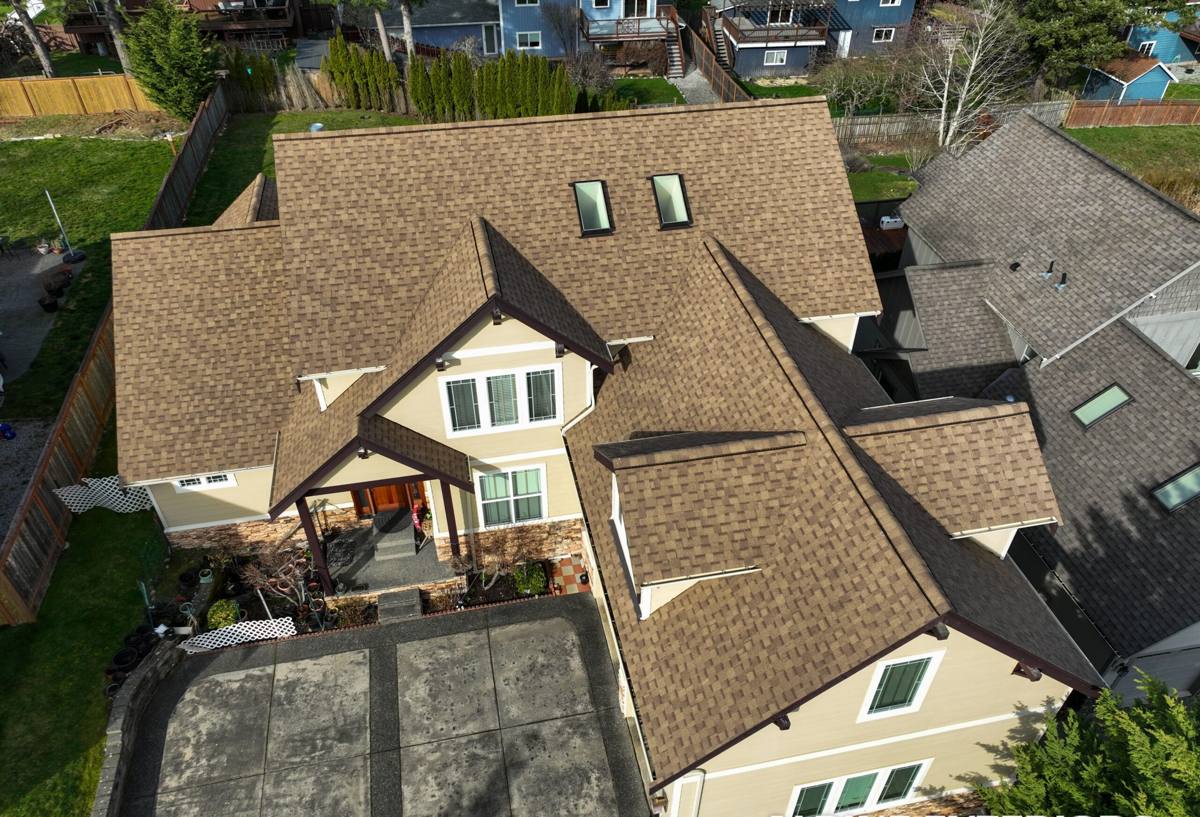
What Storm Damage Actually Looks Like Here
Not all storm damage is a hole you can see from the driveway. On waterfront and near-waterfront roofs, some of the most serious damage is the kind homeowners miss until it's caused a leak.
Wind Damage
Sustained wind and gusts off the water can lift shingle tabs without tearing them off completely. The shingle looks intact but the seal is broken, which means the next rain gets underneath it. Ridge caps and hip shingles, which take the brunt of wind uplift, are especially prone to this.
Flashing and Fastener Failure
Salt air corrodes exposed metal faster than it does further inland. Nail heads, step flashing, and valley metal that were fine a few years ago can be pitted or loosened by the time a storm puts real force on them. A storm doesn't have to be severe to pop flashing that was already compromised.
Moss-Related Weak Points
Moss holds moisture against shingles and deck sheathing long after a storm has passed. Over a season or two, that moisture softens the decking underneath, so what looks like simple wind damage in a moss-heavy area can actually be a soft spot that was years in the making. Storm force is often just what finally pushes it through.
Granule Loss and Surface Wear
Driving rain and hail-adjacent wind can strip protective granules off shingles. This doesn't always leak right away, but it shortens the life of the roof significantly and is one of the most commonly missed forms of storm damage because it doesn't look dramatic.
Why Waiting Costs More Here Than Elsewhere
In a drier climate, a small gap in a roof might sit for weeks without consequence. That's not the case at Birch Point. Between the rain frequency and the ambient moisture from being near the water, a compromised seal or lifted shingle turns into a wet deck, then a soft deck, much faster than it would inland. Moss compounds this by keeping the area around any damage consistently damp instead of letting it dry out between rains.
We've found that the homeowners who come out ahead are the ones who get a roof looked at within a week or two of a storm, even if nothing looks obviously wrong from the ground. A fifteen-minute inspection that finds a lifted tab is a small repair. The same lifted tab found six weeks later, after several more rain events, can mean replacing a section of decking.
What a Correct Storm Damage Repair Involves
A proper repair isn't just replacing what's visibly missing. It should address the cause of the damage and the conditions that let it happen.
- Full slope-by-slope inspection, not just a look at the area the homeowner reported
- Check of ridge, hip, and valley flashing for lifted or corroded fasteners
- Inspection of the decking underneath any removed shingles for soft spots or existing moisture damage
- Moss and debris clearing in valleys and shaded slopes, since leaving it in place undermines the repair
- Matching shingle repair to the existing roof's age and exposure, not just the color
- Re-sealing and re-nailing per manufacturer spec, not just tucking shingles back down
- Photo documentation of damage found, useful for insurance and for the homeowner's own records
Skipping the decking check is the most common shortcut in storm repair work, and it's the one that causes call-backs. A shingle can be replaced perfectly and still leak within a season if the wood underneath was already soft from prior moisture.
Our Process for Birch Point Storm Calls
We keep the process straightforward because homeowners dealing with storm damage usually want clear answers, not a sales pitch.
1. Inspection
We walk the roof (weather permitting) or use a ladder and binoculars for a close visual assessment when conditions don't allow foot traffic. We check every slope, not just the side facing the storm, since wind off the water can drive damage into areas that aren't obviously exposed.
2. Documentation
We photograph and note what we find, including anything that looks storm-related versus anything that was a pre-existing condition, since insurance adjusters will want that distinction.
3. Written Scope and Options
We explain what needs to happen, why, and what happens if it's left alone. If the damage is limited, we say so. If it points to a bigger issue, we explain what we're seeing and why.
4. Repair
Work is done to manufacturer installation standards, not just "close enough." That includes proper nail placement, correct flashing overlap, and sealing that accounts for the wind exposure specific to the site.
5. Follow-Up
For larger repairs, we check back after the next significant rain to confirm the fix is holding, particularly on older roofs where one repair sometimes reveals a second issue nearby.
Repair Approach by Damage Type
| Damage Type | Typical Repair Approach | Urgency |
|---|---|---|
| Lifted or missing shingle tabs | Replace affected shingles, re-seal surrounding tabs | High if exposed to next rain |
| Corroded or loose flashing | Remove and replace flashing section, check underlying deck | High |
| Granule loss / surface wear | Assess remaining shingle life, patch or plan replacement | Moderate |
| Moss-related soft decking | Remove moss, replace affected decking and shingles, treat area | High |
| Minor debris impact (branches, small limbs) | Spot repair, inspect for hidden fastener damage | Moderate |
This table is a general guide. The right approach for any specific roof depends on its age, the underlying materials, and how much prior moss or moisture exposure it's had.
Insurance and Storm Claims
Many storm repairs in this area involve a homeowner's insurance policy. We're not a substitute for your adjuster, but clear documentation helps. Photographing the damage before repair, noting the date of the storm, and having a written scope of work from a contractor familiar with local storm patterns all make the claims process smoother. If a soft spot in the decking turns out to be older than the storm itself, it's better for everyone if that's identified honestly upfront rather than discovered later.
Why Local Experience Matters at Birch Point
A roofing crew that regularly works this stretch of coastline knows which details matter here: how far salt air travels inland before it stops being a real factor, which slopes hold moss longest given the tree cover and shade patterns common near the water, and how wind off the Strait tends to hit roofs from angles that inland crews don't usually plan for. That experience shows up in small decisions, like where to double-check flashing or which valleys to prioritize for moss removal, that add up to a repair that actually lasts through the next storm season.
It also means faster response. After a significant storm moves through Blaine, waterfront and near-waterfront properties tend to need attention first, and a crew already familiar with the area can prioritize and get to those roofs without a long lead time.
What to Check After a Storm
- Look for shingle granules collecting in gutters or downspouts
- Check ceilings for new discoloration or damp spots, especially in rooms below valleys
- Note any shingles visible on the ground or lawn
- Look at ridge and hip lines from the ground for anything that looks lifted or misaligned
- Check attic spaces (if accessible) for daylight, dampness, or musty smell after the storm
- Don't climb onto a wet or storm-damaged roof yourself to inspect it further
If you notice any of these, it's worth having it looked at before the next rain rather than waiting to see if it gets worse.
If your Birch Point roof took a hit in a recent storm, or you just want a professional set of eyes on it before the next one, we're happy to take a look. Use the form below to request a free, no-pressure estimate.