 Blaine Siding
 Siding in the Nooksack Area Works Harder Than Siding Inland
Homes around Nooksack and the rest of our Blaine service area sit under a climate that's tougher on exterior materials than most homeowners realize. Marine-influenced air moving in off the Salish Sea carries salt that settles on exterior surfaces, accelerating corrosion at fasteners, trim edges, and any exposed metal flashing. Add in driving, wind-pushed rain that hits siding at an angle instead of falling straight down, and water gets forced into seams, laps, and butt joints that would stay dry in a calmer climate.
Then there's the moss and algae season, which in this part of Whatcom County runs long. Shaded north and west-facing walls, areas under trees, and anything close to grade stay damp for weeks at a stretch. That constant moisture doesn't just look bad as green or black staining — it holds water against the siding surface far longer than the material was ever designed to tolerate, which is exactly the condition that turns small problems into rot, delamination, and fastener failure.
None of this means siding is doomed here. It means repairs have to account for the real conditions the wall is exposed to, not just patch what's visible and hope for the best.
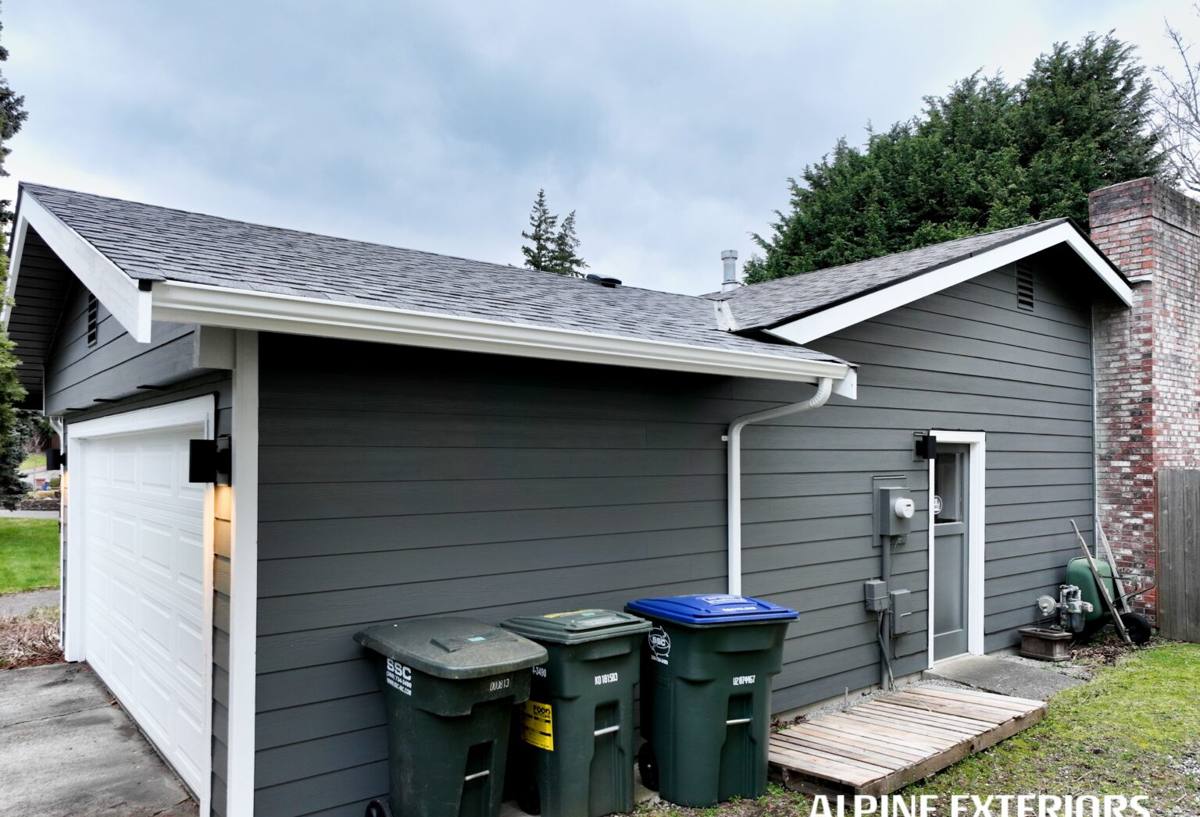
How to Tell a Nooksack-Area Home Needs Siding Repair, Not Just Paint
A fresh coat of paint can hide a lot of problems temporarily, which is part of why siding damage in this area often gets missed until it's more expensive to fix. Watch for these signs before scheduling any exterior paint or touch-up work:
- Soft, spongy, or slightly bowed sections when pressed by hand
- Persistent staining or streaking that returns within weeks of cleaning
- Visible gaps opening up at trim boards, corners, or butt joints
- Moss or algae colonies that keep coming back in the same spots
- Cracked, missing, or crumbling caulk at joints and penetrations
- Nail heads popping through the surface or streaking with rust
- Cracking, chipping, or visible splitting in the siding material itself
- A musty smell or noticeably higher heating bills, which can point to moisture reaching the wall assembly behind the siding
Cosmetic Damage vs. Structural Damage
Surface staining and minor caulk failure are cosmetic problems — annoying, but not urgent. Soft spots, delamination, or gaps that let water track behind the cladding are structural concerns, because once moisture reaches the sheathing or framing, the repair scope grows fast. The honest answer for most homeowners is that you can't always tell the difference from the ground, which is why a proper inspection checks both what you can see and what's happening underneath.
What a Proper Siding Repair Actually Involves
A repair that only addresses what's visible from the driveway is a repair that's likely to fail again. Done correctly, siding repair in a climate like this one means confirming there isn't hidden moisture damage before anything gets patched or replaced, and making sure the repair doesn't create a new path for water to get in.
Steps in a Correct Repair
- Inspect the damaged area and the surrounding siding, not just the single board that looks bad
- Check for soft sheathing, staining, or rot behind the affected section
- Confirm flashing and the water-resistive barrier are intact where the repair will tie in
- Remove only the compromised material, preserving sound siding around it
- Replace with matching material, properly fastened and gapped per manufacturer spec
- Reseal joints and penetrations with an appropriate sealant, not just caulk over old caulk
- Confirm the repaired section sheds water the same way the surrounding wall does
Skipping the inspection step is the single most common shortcut that leads to a repair failing again within a year or two — the new material looks fine, but the moisture source underneath was never addressed.
Why the Material You Repair With Changes the Outcome
Not every siding material responds to this climate — or to repair work — the same way. This matters whether you're patching an existing product or deciding what to use for a section that's being replaced.
| Material | Moisture Behavior | Patch/Color Matching | Typical Repair Pattern |
|---|---|---|---|
| James Hardie fiber cement | Non-combustible, engineered to resist moisture-related swelling and doesn't feed rot the way wood-based products can | ColorPlus factory finish holds color consistently, making touch-ups and board replacement blend cleanly | Repairs are typically isolated and don't tend to spread once the moisture source is corrected |
| Engineered wood (LP-type) siding | Wood-strand core can absorb moisture at cut edges and compromised spots, leading to swelling | Field-applied finishes can be harder to match exactly over time | Repairs sometimes recur nearby if edge sealing wasn't maintained |
| Vinyl siding | Doesn't rot, but can warp, crack, or become brittle with age and temperature swings; doesn't stop moisture reaching the wall behind it | Discontinued colors and UV fading make matching old panels difficult | Cracked or warped panels are usually replaced whole rather than patched |
| Cedar or primed wood | Naturally moisture-sensitive; requires consistent maintenance to resist rot in a wet climate | Repainting can match well, but underlying wood condition varies board to board | Repair frequency tends to be higher without diligent upkeep |
This is a large part of why our company installs and repairs only James Hardie fiber cement siding. We've made that our professional standard because, when it's installed and repaired to spec, it holds up to this climate's combination of salt air, wind-driven rain, and prolonged dampness with fewer recurring callbacks than the alternatives — not because other products are without merit, but because the maintenance burden and moisture sensitivity of the alternatives are trade-offs we don't want to put our name behind.
Our Repair Process for Nooksack and Blaine Homes
We keep the repair process straightforward and honest about scope:
- Free on-site assessment — we look at the damaged area and the surrounding siding, checking for hidden moisture, not just surface symptoms
- Clear scope and estimate — you get a plain explanation of what's damaged, what's causing it, and what it will take to fix correctly
- Material matching — for Hardie siding, we match profile, reveal, and color as closely as the existing product allows
- Repair execution — proper removal, flashing checks, correct fastening, and sealing, not just a cosmetic swap
- Cleanup and walkthrough — we leave the site clean and show you exactly what was done and why
If an assessment turns up damage beyond what a repair can reasonably solve, we'll tell you that directly instead of patching over a bigger problem.
Why Hiring a Crew That Already Works This Area Matters
Siding repair done by a crew unfamiliar with Whatcom County's coastal climate often misses the details that matter most here. Knowing how long moss season actually runs in this area, which wall orientations stay damp longest, and how salt-laden air affects fasteners and flashing over time isn't something you learn from a general repair checklist — it comes from working on homes in Blaine, Nooksack, and the surrounding communities season after season.
That local experience also affects timing. Caulking and sealant work needs the right weather window to cure properly, and scheduling a repair around this region's wet stretches — rather than rushing it into a rain-soaked week — is the difference between a repair that lasts and one that needs revisiting.
Keeping Moss and Moisture From Coming Back After a Repair
A good repair buys you time, but this climate doesn't let up. A few habits go a long way toward protecting the work:
- Keep gutters clear so overflow doesn't run down the wall face
- Maintain a gap between siding and soil, mulch, or dense plantings
- Trim back vegetation that shades siding and keeps it damp
- Rinse moss and algae growth off before it builds a thick colony
- Check caulk at joints and trim once a year, especially after winter
- Address small staining or gaps early, before they become bigger repairs
When Repair Isn't Enough: Recognizing Replacement Territory
Repair makes sense when damage is localized and the rest of the siding is sound. It stops making sense when the same areas keep failing, when moisture damage shows up in multiple, unrelated spots, or when the siding is old enough that matching material is no longer realistic. In those cases, we'll say so plainly rather than stacking repair after repair on a wall system that's past the point of patching.
If you're not sure which situation you're in, that's exactly what an assessment is for. We're happy to take a look, tell you honestly what we find, and put together a no-pressure estimate — whether that turns out to be a small repair or something bigger. Reach out using the form below to get started.