 Blaine Siding
 Why Decks Near California Creek Wear Out Faster
Homes in the California Creek area sit close enough to the water that salt-laden air is a constant, quiet factor in how a deck ages. Combine that with the driving rain that blows in off the Strait during fall and winter storms, and a long, damp moss season that can stretch from late fall well into spring, and you have a set of conditions that punishes decks built to a generic standard. A deck that would hold up fine in a drier inland climate can start failing years early here if it wasn't built with this specific exposure in mind.
This isn't about scare tactics — it's just what the wood, fasteners, and framing underneath a deck are up against in this part of Whatcom County. Salt air accelerates corrosion in metal hardware. Standing moisture from driving rain finds any gap in flashing or fastening. And moss doesn't just look bad on decking boards — it holds moisture against the surface and, over time, against the framing underneath it. A deck replacement done right in California Creek accounts for all three of these from the ground up, not as an afterthought.
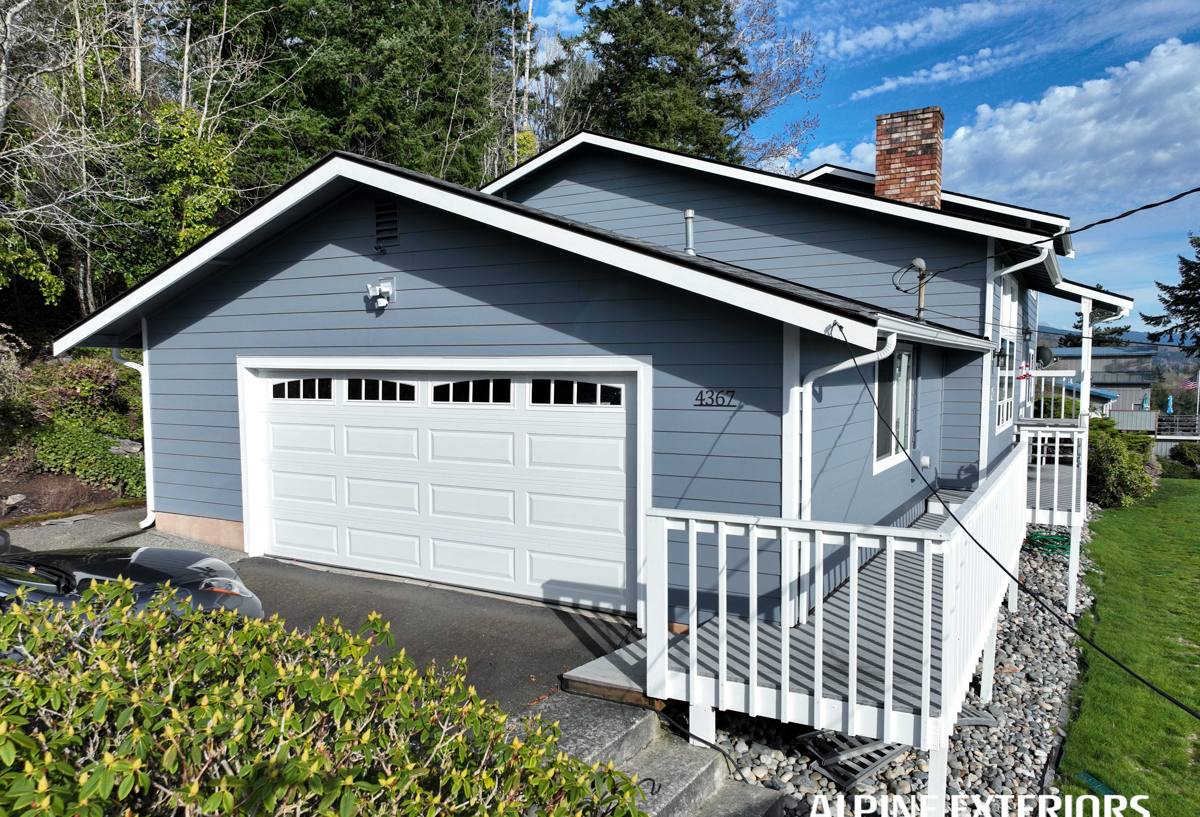
Signs Your Deck Needs Replacement, Not Just Repair
Not every deck problem calls for a full rebuild. But there's a point where patching boards or swapping out a post is just delaying a bigger failure — and often costing more in the long run than starting fresh. Here's what tells us a deck has crossed that line:
- Boards that feel soft, spongy, or flex noticeably underfoot, especially near the house
- Rust streaks bleeding from fasteners or connectors into the wood
- Visible gap or separation where the deck's ledger board meets the house siding
- Posts or footings that have shifted, sunk, or feel loose when pushed
- Railings that wobble or don't feel solid when leaned on
- Rot at the base of posts or where joists sit on beams — usually found by probing with a screwdriver
- A deck that's simply reached the end of its expected service life and hasn't been rebuilt to current framing and connection standards
If you're seeing two or more of these, especially rot at structural connections, it's worth getting an honest assessment before it becomes a safety issue rather than just a cosmetic one.
Choosing the Right Decking Material for This Climate
There's no single "best" decking material — there's a best fit for your budget, your maintenance appetite, and how much moisture and moss exposure your particular lot gets. Here's how the common options compare for a property in a coastal, moss-prone area like California Creek:
| Material | Moss / moisture resistance | Maintenance | Typical lifespan here |
|---|---|---|---|
| Pressure-treated wood | Moderate — needs sealing to perform well | Annual cleaning and periodic re-sealing | 10–15 years with upkeep |
| Cedar | Naturally moisture-resistant, but surface still needs care | Regular cleaning, occasional finish renewal | 15–20 years with upkeep |
| Composite decking | Good — doesn't rot, but moss can still grow on the surface if shaded and damp | Periodic washing, no sealing needed | 25+ years |
| PVC / capped composite | Best moisture and moss resistance of the common options | Occasional washing only | 25+ years |
Wood decking isn't a bad choice — plenty of homeowners prefer the look and the lower upfront cost — but it's the option most sensitive to the maintenance schedule actually being kept. If a deck sits in shade for part of the day or backs up to trees or landscaping, as many California Creek lots do, composite or capped composite earns its higher upfront cost back in avoided maintenance and moss buildup over the years.
What a Correct Deck Replacement Actually Involves
A deck replacement is more than pulling up old boards and nailing down new ones. The parts you don't see are what determine whether the new deck lasts.
Ledger Board and Flashing
Where the deck attaches to the house is the single most common point of water intrusion on any deck, and it's especially unforgiving in a climate with this much driving rain. Proper flashing — installed correctly, in the right layered order with the house's water-resistive barrier — is non-negotiable. This is also the connection point that carries a large share of the deck's structural load, so it has to be both watertight and mechanically sound.
Framing and Fasteners
Joists, beams, and posts need to be sized correctly for the deck's span and intended use, and every fastener and structural connector should be rated for the exposure — that means corrosion-resistant hardware suited to a salt-air environment, not standard interior-grade fasteners that will streak and weaken over time.
Footings and Posts
Footings need to sit below frost depth and bear on undisturbed, stable soil. On some California Creek lots that means accounting for drainage patterns and soil conditions specific to that property rather than assuming a one-size-fits-all footing spec.
Decking Surface and Fastening
Board spacing, fastening pattern, and orientation all affect how well water sheds off the surface and how much debris and moisture can collect between boards — which directly affects moss growth.
Railings and Guards
Railings need to meet current code height and load requirements, not just look sturdy. This is one of the areas most often done wrong on older decks, and it's a straightforward safety issue to correct during a full replacement.
Our Deck Replacement Process
We keep the process straightforward and communicate at each step, since a deck replacement affects the usability of your outdoor space for a period of time and homeowners deserve to know what's happening and when.
1. On-Site Assessment
We look at the existing deck's condition, the framing underneath where accessible, drainage around the footings, and how the site's exposure — sun, shade, wind, proximity to the water — should factor into material and design choices.
2. Permitting
Depending on the deck's height and size, permitting through the local jurisdiction is typically required. We handle that process so you don't have to navigate it yourself.
3. Tear-Out and Disposal
The old deck is removed down to the framing, or entirely, depending on what the assessment shows. We haul away debris — you're not left with a pile of old lumber.
4. Build and Inspection
New framing, flashing, footings, decking, and railings go in to code, with inspections scheduled where required by the permit.
5. Final Walkthrough
We walk the finished deck with you, point out any maintenance recommendations specific to the material you chose, and make sure you're satisfied before we call the job done.
Moss, Drainage, and Keeping a New Deck Looking Good
A well-built deck still needs some cooperation from the homeowner to stay ahead of moss and moisture in this climate. A few things make a real difference:
- Keep gutters and downspouts near the deck clear so runoff isn't draining directly onto or under it
- Trim back overhanging branches or landscaping that keep the deck surface shaded and damp longer than necessary
- Sweep debris out of board gaps regularly — trapped organic matter is what moss needs to take hold
- Wash the deck surface at least once a year, more often on the shadier or north-facing side of the house
- Reseal wood decking on the schedule recommended for the product — skipping years is when problems start
None of this is complicated, but it's the difference between a deck that still looks good in ten years and one that's showing moss and staining within two or three.
Permits and Local Code Considerations
Deck work in Blaine and unincorporated Whatcom County generally requires a permit once the structure exceeds certain height or size thresholds, and inspections are typically part of that process. This isn't red tape for its own sake — it's what ensures the framing, footings, and railings actually meet the load and safety standards they're supposed to. We manage the permitting and inspection process as part of the job, so it's handled correctly rather than skipped, which can create problems later at resale or with insurance.
Why Hire a Crew That Already Works in California Creek
A contractor who's worked decks throughout this specific stretch of Whatcom County has already seen how the salt air, rain patterns, and moss cycle play out on real properties nearby — not in a textbook, but in what actually fails first and what holds up. That translates into practical decisions: which hardware is worth the upgrade, where extra flashing attention pays off, and which material tradeoffs actually matter for a given lot's sun and shade exposure. It also means straightforward logistics — permitting familiarity with the local jurisdiction, and a crew that isn't learning the area's conditions on your project.
If your deck is showing its age, or you're planning ahead before a small problem becomes a structural one, we're happy to take a look and give you an honest read on repair versus replacement. Reach out for a free, no-pressure estimate using the form below — we'll walk the deck with you and lay out your options plainly.