 Blaine Siding
 Siding Built for California Creek's Specific Climate
California Creek sits close enough to Semiahmoo Bay and the Strait of Georgia that homes here deal with a different kind of weather load than siding sold in a national catalog was designed for. Salt-laden air moves inland on a regular basis, wind-driven rain comes in sideways off the water for days at a stretch during the fall and winter, and the shaded, damp pockets around mature trees and north-facing walls stay wet long enough to grow moss for most of the year. Any siding product installed here has to hold up to all three of those things at once, not just one of them in isolation.
This page is about one service in one place: fiber cement siding installation for homes in and around California Creek, in Whatcom County. We install James Hardie fiber cement exclusively, and the reasons for that come down almost entirely to how this specific stretch of coastline behaves.
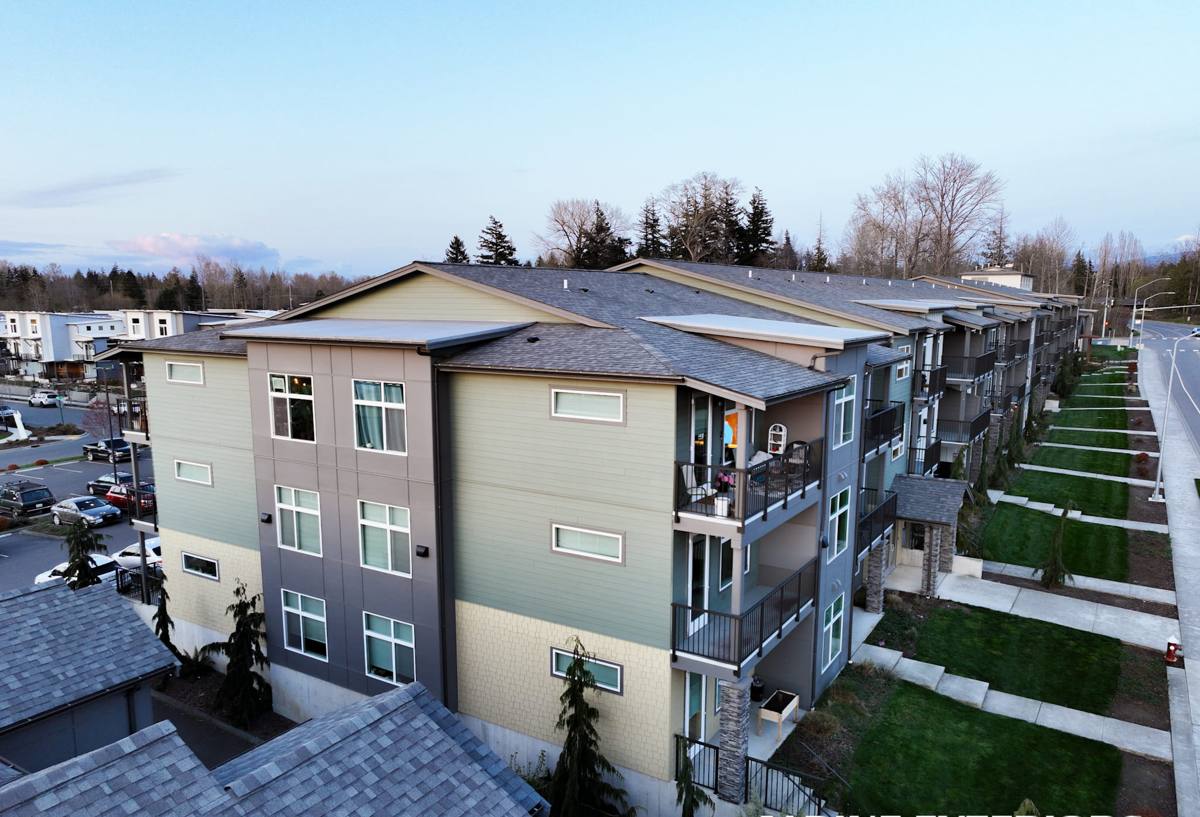
What Salt Air, Driving Rain, and Moss Actually Do to Siding
Salt Air
Airborne salt is corrosive to exposed metal fasteners, trim flashing, and any hardware that isn't rated for coastal exposure. It also accelerates the breakdown of lower-grade paint finishes, which is why siding painted on-site or finished with a thin factory coat tends to chalk and fade faster this close to the water than it would twenty or thirty miles inland.
Driving Rain
Wind-driven rain doesn't just wet the surface of a wall — it pushes water sideways and upward into laps, seams, and butt joints that would stay dry in a calmer climate. Siding systems that rely on face-sealing (caulk and paint alone) to keep water out tend to fail here faster than systems designed to shed and drain water even when wind pressure is pushing against the wall.
Moss and Sustained Moisture
Whatcom County's moss season isn't a few weeks — on shaded or north-facing walls near tree cover, conditions stay damp enough to support moss growth for much of the year. Moss and algae hold moisture directly against the siding surface, which is a problem for any product that can absorb water or swell, and it's a cosmetic problem for anything with a finish that can't be pressure-washed without damage.
Why We Install James Hardie Fiber Cement Here
Fiber cement is a mix of cement, sand, and cellulose fibers, engineered to be dimensionally stable — it doesn't expand and contract with moisture the way wood-based products do, and it doesn't warp, rot, or become a food source for pests. For a property near California Creek, that stability matters more than it would in a dry inland climate, because the siding is under near-constant moisture pressure for a large part of the year.
We specifically use James Hardie's HZ5 product line, which is engineered for the Pacific Northwest's wet, marine-influenced climate rather than a generic national spec. Combined with the factory-applied ColorPlus finish — baked on and cured under controlled conditions rather than painted on-site — you get a finish that resists fading, chipping, and the chalky breakdown that salt air causes on lower-grade paint jobs. It's also non-combustible, which is worth mentioning even in a wet climate — Whatcom County still sees dry summer stretches and wildfire smoke seasons, and non-combustible siding is one less thing to worry about.
What a Correct Installation Involves
Fiber cement siding is only as good as the installation behind it. A rushed or spec-cutting install can undermine even the best product, especially in a climate that punishes shortcuts. On every California Creek project, our installation covers:
- A weather-resistive barrier installed correctly behind the siding, with proper overlaps and no gaps at penetrations
- Rain-screen or drainage gap detailing where the wall assembly calls for it, so incidental moisture has somewhere to go
- Correct flashing at windows, doors, and every horizontal trim transition — this is where driving rain finds its way in if it's skipped
- Manufacturer-specified fastener spacing, penetration depth, and clearance from panel edges
- Stainless or coated fasteners appropriate for a coastal, salt-exposed environment
- Minimum clearance from grade, decks, and roof lines to keep siding out of standing water and splash-back zones
- Properly caulked and sealed joints only where the manufacturer's system calls for sealant — not as a substitute for correct flashing
Every one of those details is inspectable after the fact, and every one of them is a place where a crew unfamiliar with coastal Whatcom County conditions is more likely to cut a corner without realizing the consequence won't show up for a year or two.
How Fiber Cement Compares to Other Siding Materials in This Climate
Homeowners in California Creek often ask how fiber cement stacks up against the other materials they've seen used locally. Here's an honest comparison focused specifically on this climate's demands — salt exposure, driving rain, and sustained damp/moss conditions.
| Material | Moisture Behavior | Salt Air Durability | Moss/Algae Resistance | Finish Longevity |
|---|---|---|---|---|
| James Hardie Fiber Cement | Dimensionally stable, does not swell or rot | Strong; not organically vulnerable to salt | Hard, cleanable surface | Factory ColorPlus finish, long warranty |
| Vinyl | Can warp or crack in temperature swings; seams can allow water intrusion | Can become brittle over time | Textured seams can trap grime | Color is molded-in but can fade and chalk |
| Wood/Cedar (unpainted or primed) | Absorbs moisture; prone to swelling, checking, rot | Salt accelerates weathering | Organic material, moss-prone | Requires repainting/staining on a regular cycle |
| Engineered Wood (e.g., LP-type products) | Wood-based core is moisture-sensitive if edges/seals fail | Moderate; depends on coating integrity | Vulnerable if surface coating degrades | Coating can wear faster under coastal exposure |
This isn't a claim that other materials can't be installed well or don't work anywhere — it's specific to this environment. Given the salt exposure and rain load around California Creek, we found fiber cement to be the product we're comfortable standing behind long-term, which is why it's the only siding we install.
Our Process for California Creek Projects
Because we work this area regularly, we already know the general exposure patterns for California Creek properties — which walls face prevailing wind-driven rain, which sides stay shaded and damp longest, and where moss buildup tends to be worst. That shapes a few practical decisions before installation even starts:
- Site walkthrough — we look at wall orientation, tree cover, drainage, and existing moisture or moss patterns on the current siding
- Assessment of the wall assembly — checking what's underneath the existing siding, including sheathing condition and whether a drainage plane needs to be added or corrected
- Product and color selection — HZ5 panels and trim in a ColorPlus finish suited to the home and its exposure
- Installation to manufacturer spec — flashing, fastening, and clearances handled as described above, not shortcut for speed
- Final walkthrough — checking seams, trim, and caulked transitions before we consider the job finished
Maintenance: What Actually Keeps Fiber Cement Siding Looking Right Here
Fiber cement is low-maintenance, not no-maintenance, and coastal Whatcom County conditions mean a little seasonal attention pays off. A simple annual routine covers most of it:
- Rinse the siding down once or twice a year, focusing on shaded and north-facing walls where moss and algae build up fastest
- Keep gutters clear so overflow doesn't run down the wall face and stay wet against the siding
- Trim back tree branches and shrubs that keep a wall section shaded and damp longer than the rest of the house
- Check caulked joints periodically — caulk has a shorter service life than the siding itself and is the first thing to recheck if you notice a damp spot
- Address any impact damage promptly rather than leaving an exposed edge open to moisture
Why Hiring a Crew That Already Works California Creek Matters
Fiber cement siding is a forgiving, long-lived product when it's installed correctly — and unforgiving when it isn't, because the mistakes tend to hide behind the siding until moisture damage shows up years later. A crew that already works this specific stretch of Whatcom County coastline has seen how these houses actually weather: where driving rain hits hardest, which walls hold onto moss longest, and how salt air treats trim and fasteners over time. That local pattern recognition is what keeps an installation from being generic — it's what makes it correct for this address, not just correct on paper.
If you're planning a siding replacement or new install in California Creek, we're happy to walk your property, look at your current siding's condition, and talk through what a James Hardie fiber cement system would look like on your home. Reach out for a free, no-pressure estimate using the form below.