 Blaine Siding
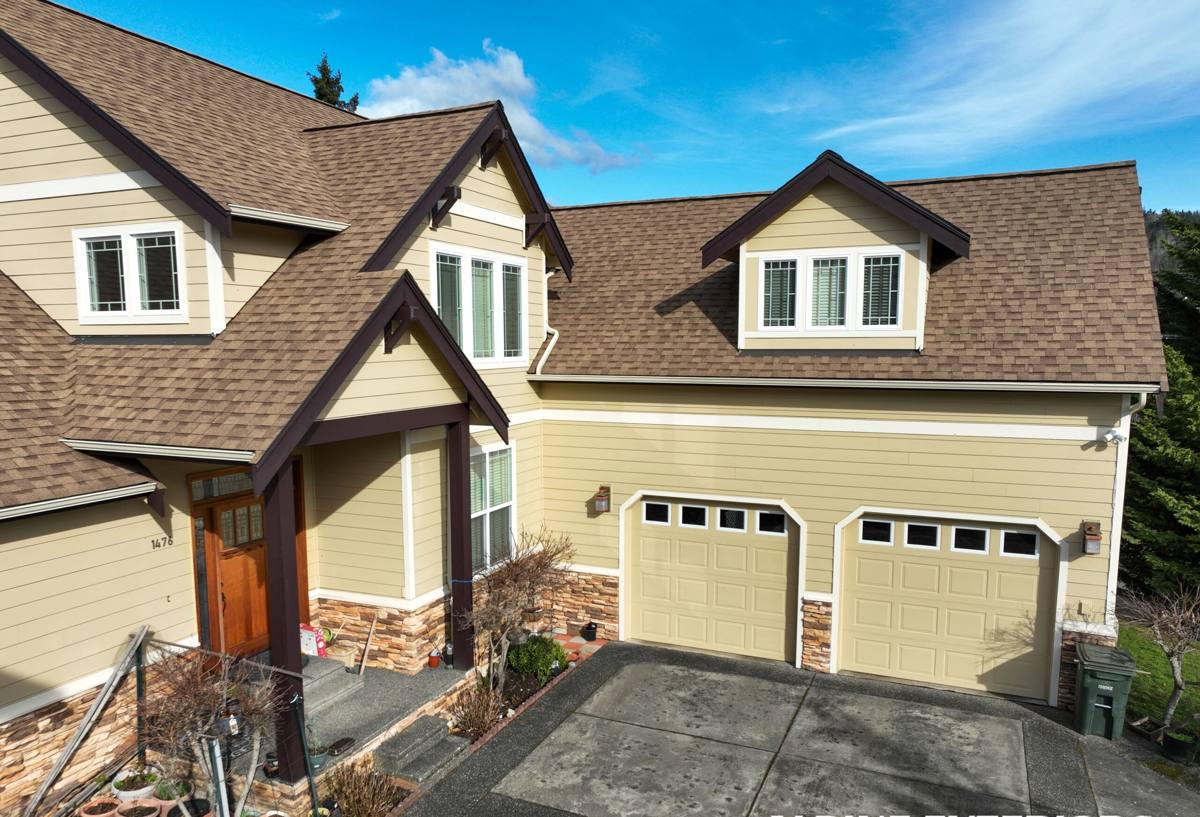
 New Roof Installation in California Creek
California Creek sits close enough to the water that homes here take a different kind of beating than roofs ten miles inland. Salt-laden air off the Strait, wind-driven rain that comes in sideways more often than straight down, and a moss season that can run eight or nine months out of the year all add up. When it's time for a new roof, the details that matter most in California Creek are not the same details that matter on a dry-side installation, and a roof designed without that in mind tends to show its age early — curling shingles, streaked algae growth, soft decking at the eaves, and ice-dam damage in the years we get a hard freeze.
This page covers what a correctly installed roof needs to hold up in this specific pocket of Whatcom County, what our process looks like from tear-off to final walkthrough, and why working with a crew that already knows California Creek's exposure and drainage patterns matters more here than in most parts of the country.
What Makes This Location Different
Blaine sits right at the US-Canada border on Semiahmoo Bay, and California Creek's proximity to tidal water and open exposure means homes take on a steady drip of salt air even on dry days. Salt accelerates corrosion on any exposed metal — fasteners, flashing, vent caps — long before it would fail on a roof twenty miles inland. Combine that with Whatcom County's marine-layer humidity and the north Puget Sound's long wet season, and you get conditions that favor moss, moisture retention, and slow material breakdown over dramatic storm damage.
Salt Air and Corrosion
Standard galvanized fasteners and unprotected steel flashing corrode faster this close to the water. It's not usually the shingle field that fails first on a coastal-adjacent roof — it's the small metal components: nail heads working loose as they rust, drip edge losing its coating, valley metal pitting at the seams. A roof built for California Creek needs corrosion-resistant fasteners and flashing from day one, not as an upgrade.
Driving Rain and Wind-Driven Water
Open exposure near the bay means rain doesn't always fall straight down. Wind pushes it sideways and up under laps that would shed water fine in a calmer setting. That changes how underlayment, starter courses, and flashing details need to be handled — every lap and seal has to assume water will hit it from an angle, not just from above.
Moss and Shade
Between the marine humidity and the tree cover common around California Creek, moss finds a foothold fast on north-facing slopes and anywhere shade lingers into the afternoon. Moss isn't just cosmetic — it holds moisture against the roofing material, works into laps and fastener lines, and can lift shingle edges over time. A new roof here needs both the right materials and a maintenance mindset from the start.
Signs a California Creek Roof Needs Replacing
Most homeowners in this area come to us after noticing one or two symptoms, not because they've been tracking their roof's age on a calendar. Common signs we see locally include:
- Dark streaking or thick moss growth, especially on north- and shade-facing slopes
- Granule buildup in gutters, a sign the shingle surface is wearing down
- Soft or spongy decking near eaves and valleys, often from long-term moisture intrusion
- Rusted or lifting nail heads visible on the shingle surface
- Curling, cupping, or cracked shingles, especially on the roof's most wind- and sun-exposed side
- Daylight visible through the attic or staining on interior ceilings after heavy rain
Any one of these on its own might just mean a repair. Several at once, or a roof that's already past 20-25 years old, usually means it's more cost-effective to replace than to keep patching.
What a Correct Installation Involves
A new roof is really a system of layers, and in a location like California Creek, every layer earns its place. Skipping or downgrading any one of them is where coastal-adjacent roofs tend to fail early.
Tear-Off and Deck Inspection
We remove the old roofing down to the deck rather than layering over it. That's the only way to actually see what's underneath — soft spots, rot around old vent penetrations, or delaminating plywood that a re-roof over the top would just hide for a few more years. Any damaged decking gets replaced before anything new goes down.
Ice-and-Water Protection at Vulnerable Areas
Eaves, valleys, and roof-to-wall transitions get a self-adhering waterproof membrane underneath the field underlayment. This is the backup layer that keeps water out if wind-driven rain or a rare freeze-thaw cycle pushes moisture past the primary roofing surface — exactly the scenario California Creek's exposure sets up.
Synthetic Underlayment Across the Field
We use synthetic underlayment rather than older felt products across the rest of the roof. It holds up better to the extended wet season here, resists tearing during install on a windy day, and doesn't absorb moisture the way felt can if the job spans a weather delay.
Corrosion-Resistant Metal and Fasteners
Drip edge, valley metal, step flashing, and fasteners are specified for the coastal exposure this location gets — not the minimum spec that would pass inland. This is the detail that most often gets skipped on a budget install and is the first thing that fails when it does.
Ventilation Balanced for Moisture, Not Just Heat
Roof ventilation in western Washington is as much about pushing moist air out of the attic as it is about summer heat. Balanced intake at the eaves and exhaust at the ridge keeps condensation from forming on the underside of the deck during our long wet stretches, which protects both the new roof and the framing underneath it.
Final Details
Pipe boots, vent flashing, and any roof penetrations get sealed with materials rated to hold up in a marine climate. We check that gutters and downspouts tie into a drainage path that actually moves water away from the foundation, since a new roof doesn't help much if water pools right back against the house.
Choosing the Right Roofing Material
There's no single "best" roofing material for every home — the right choice depends on your roof's pitch, sun and shade exposure, budget, and how much upkeep you want to take on. Here's how the common options compare for a California Creek installation specifically:
| Material | Moss/Moisture Behavior | Coastal Durability | Typical Lifespan | Maintenance |
|---|---|---|---|---|
| Architectural asphalt shingle | Moderate moss risk on shaded slopes; algae-resistant granules help | Good with corrosion-resistant flashing and fasteners | 25-30 years | Periodic moss treatment on shaded areas |
| Standing seam metal | Sheds moss well due to smooth, steep-shedding surface | Excellent with a marine-grade coating and fastener spec | 40-50+ years | Low; occasional fastener and seam check |
| Composite/synthetic shake | Low moisture absorption, good moss resistance | Good; check manufacturer coastal warranty terms | 30-50 years | Low to moderate |
| Cedar shake (natural wood) | Higher moisture retention; needs consistent upkeep | Requires diligent maintenance in marine humidity | 20-30 years with upkeep | High; regular treatment and inspection |
We're honest about trade-offs rather than pushing one product. Cedar shake has real curb appeal and a long history in this region, but it asks for more consistent maintenance in a climate this wet — moisture that isn't managed will shorten its life faster than the same product would last on a drier site. Architectural asphalt remains the most common choice locally because it balances cost, appearance, and performance well when the flashing and ventilation details are done right. Metal carries a higher upfront cost but the least long-term maintenance, which some homeowners here prefer given how often moss and moisture come up as recurring issues.
Our Process, Start to Finish
- On-site assessment — we look at the existing roof, decking condition, ventilation, and any drainage issues specific to your property before quoting anything.
- Written estimate — a clear scope of work and material spec, so you know exactly what's being installed and why, with no vague allowances.
- Material selection — we walk through the trade-offs above based on your roof's exposure and your priorities, not a one-size-fits-all recommendation.
- Scheduling around the weather — we watch the forecast and stage the job so decking isn't left exposed longer than necessary during our wetter months.
- Tear-off and deck repair — full removal of old material, with any compromised decking replaced before new roofing goes down.
- Installation — underlayment, flashing, ventilation, and the roofing material itself, installed to the specs described above.
- Cleanup and walkthrough — magnetic sweep for stray fasteners, debris haul-off, and a walkthrough so you understand what was done and what maintenance to expect.
Typical Cost Factors
Every roof is priced on its own specifics, but the factors that most often move the number for a California Creek project are:
- Roof size and number of facets, valleys, and penetrations
- Pitch and accessibility — steeper or harder-to-access roofs take more labor
- Decking condition once the old roof comes off
- Material choice, from standard architectural shingle up through metal or composite
- Ventilation upgrades if the current attic airflow is inadequate
As a rough guide, straightforward asphalt shingle replacements on typical single-family homes in this area often land in the moderate five-figure range, with metal or composite systems running higher due to material and installation cost. We won't put a firm number on your roof without seeing it — too many of those cost factors are specific to your property.
Living With a New Roof in a Wet, Salty Climate
A well-installed roof still benefits from a little upkeep in this environment. Keeping gutters clear so water isn't backing up under the eaves, having moss treated before it gets thick rather than after, and doing a quick visual check after any major windstorm are the habits that get a roof to the end of its expected lifespan instead of falling short of it. None of this is heavy maintenance — it's the difference between a roof that ages evenly over 25-30 years and one that develops preventable problems at year twelve.
Why a Local Crew Matters Here
A roofing crew that works Whatcom County's coastal-adjacent neighborhoods on a regular basis already knows which slopes on a California Creek home tend to hold moss, how far wind-driven rain typically pushes water under a lap, and which fastener and flashing specs actually hold up here versus what a generic inland spec sheet calls for. That's not something you get from a crew passing through the area for one job. It also means someone is local if a warranty question or a post-storm check comes up years down the road, rather than you tracking down an out-of-town company for a callback.
If your roof is showing wear, or you just want an honest read on how much life is left in it, we're happy to take a look. Reach out for a free, no-pressure estimate using the form below — we'll walk the roof, explain what we find, and give you a straight answer on what it needs.