 Blaine Siding
 Siding Built for California Creek's Coastal Exposure
California Creek sits close enough to Semiahmoo Bay and Drayton Harbor that homes here take on a different kind of weather load than siding a few miles inland. Salt-laden air off the water, wind-driven rain that gets pushed sideways into wall assemblies, and long stretches of damp, shaded weather all combine to shorten the life of siding that isn't built for the exposure. If your siding is chalking, delaminating, or growing moss faster than you can clean it off, that's not bad luck — it's the local climate doing exactly what it does to the wrong product.
We install James Hardie fiber cement siding exclusively, and California Creek is one of the neighborhoods where that decision matters most. This page walks through what a correct siding replacement looks like for homes in this specific area, not a generic overview of siding in general.
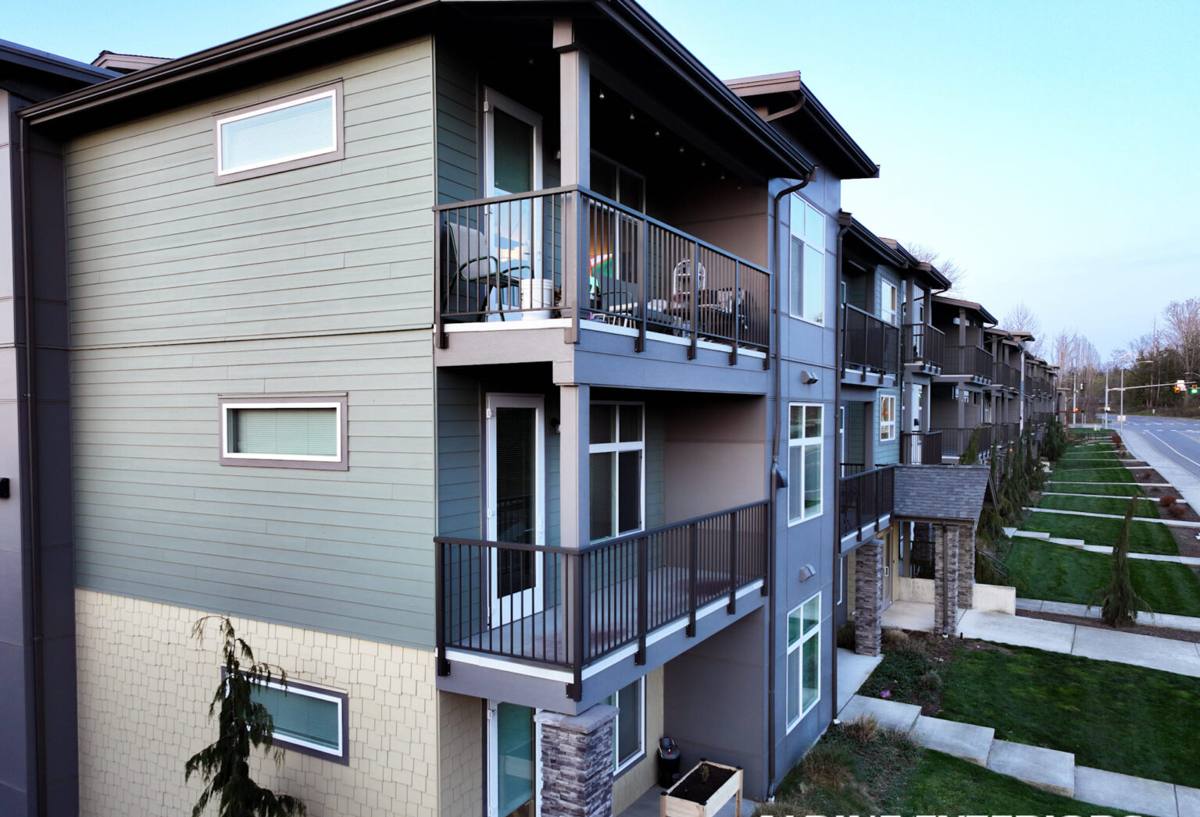
Why California Creek Is a Tougher Environment Than It Looks
Salt Air and Metal Fatigue
Proximity to Semiahmoo Bay means airborne salt settles on exterior surfaces over time. Salt is hygroscopic — it pulls moisture out of the air and holds it against whatever surface it lands on. On siding, that means longer wet-dry cycles than a home twenty miles inland would ever see. Fasteners, trim, and any exposed metal flashing take the brunt of this, but the siding material itself has to tolerate the constant film of moisture without swelling, softening, or losing its finish.
Driving Rain Off the Water
Storms coming off the Strait of Georgia and Boundary Bay don't just fall straight down — wind pushes rain sideways into exterior walls, especially on west- and northwest-facing elevations. That means water is being forced up under laps, into seams, and against caulked joints far more aggressively than on a still, dry day. Siding and flashing details that work fine in mild weather can fail here if they weren't installed with driving rain specifically in mind.
A Long, Real Moss Season
Whatcom County's wet season stretches long, and California Creek's tree cover and marine humidity keep siding surfaces damp for extended periods. Moss and algae don't just look bad — they hold moisture against the siding surface, which accelerates whatever degradation process is already underway, whether that's paint failure, wood rot, or panel swelling.
What This Means for Different Siding Materials
Not every siding product handles this combination of salt, wind-driven rain, and moss pressure the same way. Here's a straightforward comparison of how common materials hold up under California Creek's specific conditions.
| Material | Salt Air Exposure | Driving Rain Tolerance | Moss/Algae Resistance |
|---|---|---|---|
| Vinyl siding | Can become brittle and fade faster near salt spray | Prone to gaps at laps; not a water barrier itself | Traps moisture behind panels if ventilation is poor |
| Primed wood/spruce panel | Absorbs moisture readily; finish breaks down faster | Swells and checks under repeated wetting | High — organic material, prime moss habitat |
| Cedar | Handles salt reasonably but needs frequent refinishing | Good if maintained; fails if coatings lapse | Moderate to high without regular treatment |
| James Hardie fiber cement | Non-combustible, engineered to resist moisture damage | Factory-engineered lap profiles designed for wind-driven rain | Dense, stable surface resists moss anchoring better than wood-based products |
This is the reasoning behind why we standardized on James Hardie for every job we take, including here in California Creek. It's not that other products can't be installed — it's that we've seen how they age in exactly this climate, and we'd rather stand behind one product we trust completely than offer several and hope the wrong one doesn't come back to bite the homeowner in five years.
What a Correct Siding Replacement Involves
It Starts Underneath the Siding, Not With It
The single biggest factor in how long new siding lasts in a coastal, high-moisture area like California Creek is what's happening behind the panels, not the panels themselves. A proper replacement includes:
- Full removal of old siding and inspection of the sheathing for rot, soft spots, or prior water intrusion
- Repair or replacement of any damaged sheathing before new material goes up
- Installation of a weather-resistive barrier (house wrap) with correctly lapped and taped seams
- Proper flashing at every window, door, and roofline intersection — the places where driving rain actually finds its way in
- A rainscreen or drainage gap where the assembly calls for it, so incidental moisture can drain and dry instead of sitting against the wall
- Correct fastener spacing and type per the James Hardie installation instructions, not a generic nailing pattern
Then the Siding Itself
Once the assembly behind the wall is sound, the James Hardie panels go up to manufacturer spec — correct lap exposure, proper caulking at butt joints, and factory-finished ColorPlus panels where possible, since factory-cured finish holds up better to salt air and UV than field-applied paint.
Choosing the Right James Hardie Line for This Setting
James Hardie's HZ5 product line is engineered for cold, wet climates like ours, and it's what we default to in Whatcom County. Beyond the core panel, a few choices matter more in a coastal setting like California Creek:
- Lap siding profile: a tighter, well-flashed lap reduces the number of horizontal ledges where wind-driven rain can collect
- ColorPlus factory finish: reduces the maintenance burden of repainting in a climate where exterior paint jobs don't last as long as they would inland
- Trim and soffit details: matching Hardie trim at corners and window returns keeps the whole envelope consistent, rather than mixing materials with different expansion and moisture behavior
Signs Your California Creek Home May Need Replacement Soon
- Visible moss or algae growth that returns quickly after cleaning
- Soft or spongy spots when you press on siding, especially near the bottom courses or window sills
- Paint that's peeling, bubbling, or chalking heavily on wall sections facing the water or prevailing wind
- Warping, cupping, or visible gaps opening up between panels or at seams
- A musty smell near exterior walls, which can indicate moisture getting behind the siding
- Rising heating bills that may point to a compromised weather barrier, not just an aging furnace
Any one of these on its own isn't necessarily an emergency, but a combination of two or three is usually a sign the siding assembly is past the point where patching makes sense.
Our Process for a California Creek Siding Replacement
1. On-Site Assessment
We walk the home, note exposure direction relative to the water and prevailing wind, and check for existing moisture damage before quoting anything. Homes closer to the shoreline or with heavy tree cover often need different flashing or drainage details than a home set further back.
2. Scope and Estimate
You get a clear, written scope — what's being removed, what's being repaired underneath, and exactly which James Hardie products are going up. No vague allowances for "surprises" once the walls are open; we flag likely issues during the assessment.
3. Removal and Sheathing Repair
Old siding comes off, sheathing gets inspected and repaired as needed, and any rot found gets addressed before anything new is installed — never covered over.
4. Weather Barrier and Flashing
This is the step that determines whether the new siding lasts fifteen years or fifty in a climate like this. We don't rush it.
5. James Hardie Installation
Panels, trim, and any accent details go up to manufacturer spec, with attention to the details that matter most in wind-driven rain — lap exposure, caulking, and fastener placement.
6. Final Walkthrough
We review the finished work with you and make sure every question about care and maintenance going forward is answered before we leave.
Why Local Experience in This Specific Area Matters
A crew that mostly works drier, inland projects can install siding correctly on paper and still miss the details that matter on a lot exposed to Semiahmoo Bay's salt air and wind. Knowing which elevations in California Creek take the worst of the driving rain, how much moss pressure to expect under mature tree cover, and how salt exposure affects fastener and flashing choices isn't something you learn from a manual — it's something you learn by doing this work in Whatcom County, on homes like yours, season after season.
If your California Creek home is due for new siding, or you're just not sure whether what you're seeing is normal wear or something that needs attention, we're happy to take a look. Reach out for a free, no-pressure estimate using the form below.