 Blaine Siding
 Decks Built for Cherry Point's Coastal Conditions
Cherry Point sits along the Strait of Georgia in unincorporated Whatcom County, just south of Blaine, and it takes weather most inland neighborhoods never have to think about. Salt-laden air moves off the water and settles on everything nearby, driving rain comes in sideways during fall and winter storms, and the region's mild, damp climate keeps shaded surfaces wet — and growing moss — for months at a time. A deck built without those three factors in mind will show it within a few seasons: corroded fasteners, cupped or splitting boards, slick green growth on the walking surface, and a substructure that's rotting quietly underneath a deck that still looks fine from the top.
A deck that's actually built for Cherry Point starts with material choices, fastener specs, and framing details that account for this environment from day one — not repairs bolted on after the fact.
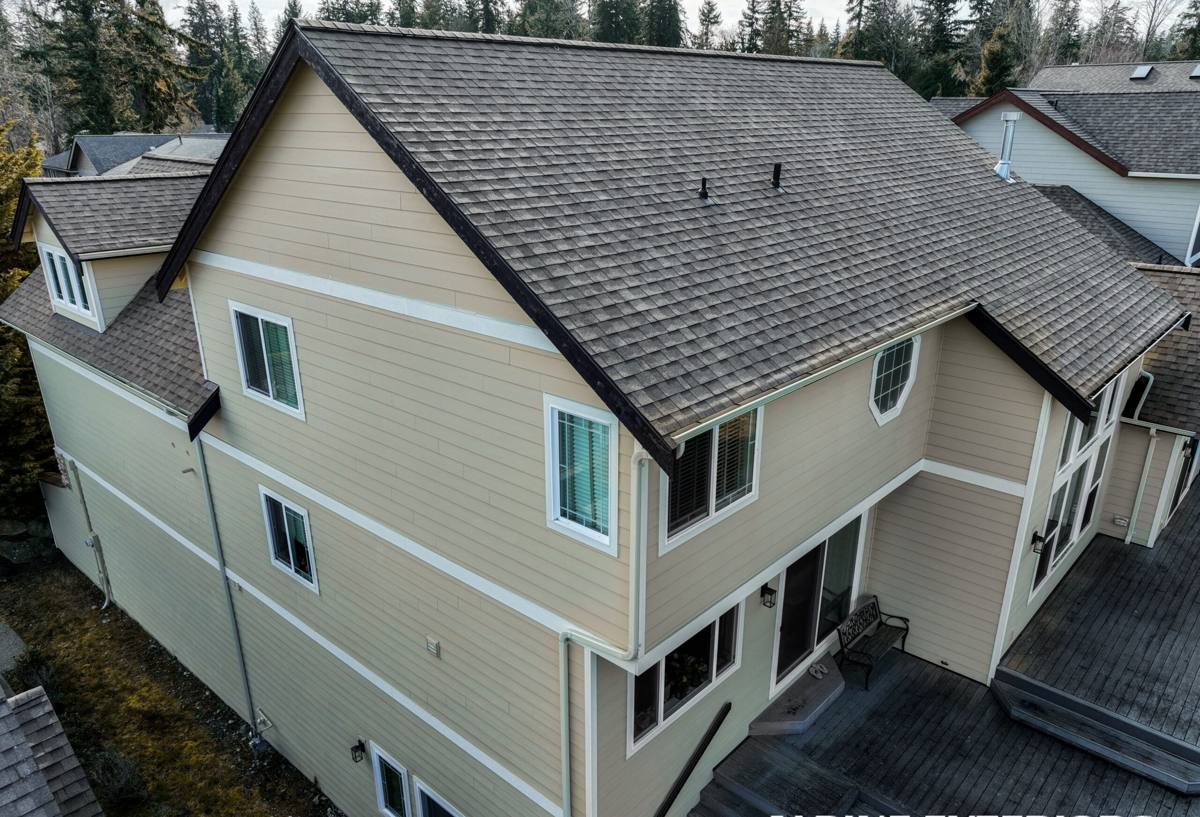
What Local Homes Need From a Deck
Salt Air and Metal Fasteners
Standard hot-dipped galvanized fasteners hold up fine in most of the country, but in a shoreline environment like Cherry Point, salt in the air accelerates corrosion on anything less than fully rated hardware. Screws, joist hangers, post bases, and structural connectors all need to be stainless steel or a coating specifically rated for coastal or high-corrosion exposure. This isn't optional upgrading — it's the difference between hardware that's still sound in fifteen years and hardware that's staining the decking and weakening connections within five.
Moss, Shade, and Drainage
Many Cherry Point properties are wooded, rural, or partially shaded by mature trees and coastal vegetation, which keeps deck surfaces damp longer after rain than a deck in full sun would stay. Combined with Whatcom County's long wet season, that shade turns into a moss and algae problem if the deck doesn't shed water quickly. Board spacing, surface texture, and slope all factor into how fast a deck dries out between storms — and how much scrubbing an owner ends up doing every spring.
Wind and Open Exposure
Properties closer to the water or on open, unobstructed lots also see more direct wind-driven rain than a deck tucked into a sheltered yard. That affects everything from how ledger boards are flashed against the house to how much gap is left between boards for drainage and airflow underneath.
Decking Material Options for This Microclimate
There's no single "best" decking material for every Cherry Point property — it depends on sun exposure, budget, and how much maintenance an owner actually wants to do. Here's how the common options compare in a salt-air, high-moisture climate:
| Material | Moisture & Salt Air Behavior | Maintenance | Typical Lifespan |
|---|---|---|---|
| Pressure-treated wood | Prone to cupping, splitting, and fastener staining if not sealed regularly | Annual cleaning and re-sealing recommended | 10-15 years with upkeep |
| Cedar | Naturally moisture- and insect-resistant, but greys and needs finish to hold color | Periodic cleaning, refinishing every 2-3 years | 15-20 years with upkeep |
| Capped composite | Doesn't rot or absorb moisture; surface film resists staining and mildew | Occasional washing, no sealing or staining | 25-30 years, manufacturer-warrantied |
| PVC decking | Fully synthetic, highest resistance to moisture and salt exposure | Lowest maintenance of the group; wash as needed | 25-30+ years, manufacturer-warrantied |
Wood is still a reasonable choice for owners who like the natural look and don't mind the upkeep, but on shaded, salt-exposed Cherry Point lots, we're honest with clients up front: it will need more attention than a composite or PVC deck to look and perform the same at year ten. Composite and PVC cost more up front but trade ongoing maintenance for material stability — worth discussing against your budget and how the deck will be used.
Framing and Structure Done Right
The part of a deck nobody sees is the part that fails first if it's built wrong. In a wet coastal climate, framing decisions matter more than they do in a drier region:
- Ledger boards flashed properly against the house siding, with a water-diverting membrane behind the flashing — not just caulk
- Footings set below frost depth and sized for the actual soil conditions on the lot, which can vary quite a bit across Cherry Point's mix of coastal and rural terrain
- Joist tape or a protective barrier on top of framing lumber to keep standing moisture out of end grain and fastener holes
- Stainless or coastal-rated hardware throughout, not just at points that are easy to see
- Adequate gap between the decking surface and any grade or hardscape below, so air can actually move and dry the underside
None of this is visible once the deck is finished, which is exactly why it matters to have it done right the first time. Correcting rotted framing under a finished deck later is a far bigger job — and a far bigger bill — than building it correctly from the start.
Our Process, From Estimate to Finished Deck
1. On-Site Assessment
We look at sun exposure, drainage, existing structure (if it's a rebuild), and how the deck will actually be used before recommending a material or layout.
2. Honest, Written Estimate
You get a clear breakdown of material and labor costs, with options at different price points if you're weighing wood against composite or PVC.
3. Permitting
Most new decks and many rebuilds in Whatcom County require a building permit, particularly where structural framing, footings, or height above grade are involved. We handle that process rather than leaving it to the homeowner.
4. Construction
Framing first, inspected before the decking goes down where required, then surface installation, railing, and any stairs or finishing details.
5. Final Walkthrough
We walk the finished deck with you, cover basic care for whatever material you chose, and make sure everything is solid before we consider the job done.
Permits and Practical Considerations for the Area
Whatcom County building requirements apply to most deck construction, and properties closer to the shoreline can carry additional review depending on setback and critical area rules. We don't guess on this — we confirm what's required for your specific parcel before work starts rather than assuming a permit isn't needed. Rural and larger-lot properties around Cherry Point also sometimes mean longer driveways, well and septic layouts to work around, or septic setbacks and existing site conditions to consider, and it's worth having those documented on your property before we finalize a plan.
Maintenance Through a Long Moss Season
Whatever material you choose, a little seasonal attention keeps a Cherry Point deck performing the way it should:
- Sweep debris and standing leaves off the surface regularly in fall — trapped organic matter holds moisture and feeds moss growth
- Clean the deck surface at least once a year with a wood- or composite-safe cleaner, more often in heavily shaded areas
- Check and clear drainage gaps between boards so water isn't pooling
- Inspect fasteners and connectors annually for early corrosion, especially on wood decks closer to the water
- Re-seal or refinish wood decking on the manufacturer's recommended schedule — don't wait until it's visibly grey and dry
- Trim back overhanging vegetation where possible to let more sun and airflow reach the surface
Composite and PVC decking cut most of this list down to occasional washing, which is a big part of why they've become popular in shaded, high-moisture spots throughout the region.
Why a Crew That Already Works Cherry Point Matters
Building a deck that holds up here isn't about following a generic national spec sheet — it's about knowing how this particular stretch of coastline behaves. A crew that regularly works Cherry Point and the surrounding Blaine area already knows which hardware grade actually holds up against the salt air here, how local drainage and soil conditions tend to run on rural lots, and what Whatcom County inspectors expect to see on framing and flashing. That local familiarity shows up in fewer surprises during construction and a deck that's actually built for where it sits, not for an average climate somewhere else.
It also matters for the ordinary logistics of the job — showing up on schedule, understanding rural driveway and access conditions, and being reachable afterward if a question comes up. A deck is a long-term investment in a demanding climate, and it deserves a crew that's going to be around and familiar with the area for the life of it.
If you're weighing a new deck or a rebuild for a Cherry Point property, we're happy to take a look and put together a straightforward, no-pressure estimate — just fill out the form below to get started.