 Blaine Siding
 Why Cherry Point Homes Need Siding That Can Handle the Shoreline
Cherry Point sits along the Whatcom County shoreline between Blaine and Ferndale, close enough to the Strait of Georgia that salt-laden air is part of daily life, not an occasional event. Add the region's long, wet winters and the shaded, moisture-trapping conditions that let moss and algae take hold on north-facing walls, and you've got a climate that is genuinely hard on exterior siding. Homes here don't fail because owners neglected them — they fail because the siding product wasn't built for this specific combination of salt, rain, and shade in the first place.
We've worked on homes throughout this stretch of the county long enough to see the pattern clearly: siding that performs fine forty miles inland can start showing problems within a few years out here. That's not a knock on any one homeowner's maintenance habits. It's a materials problem, and it's solvable with the right product installed correctly.
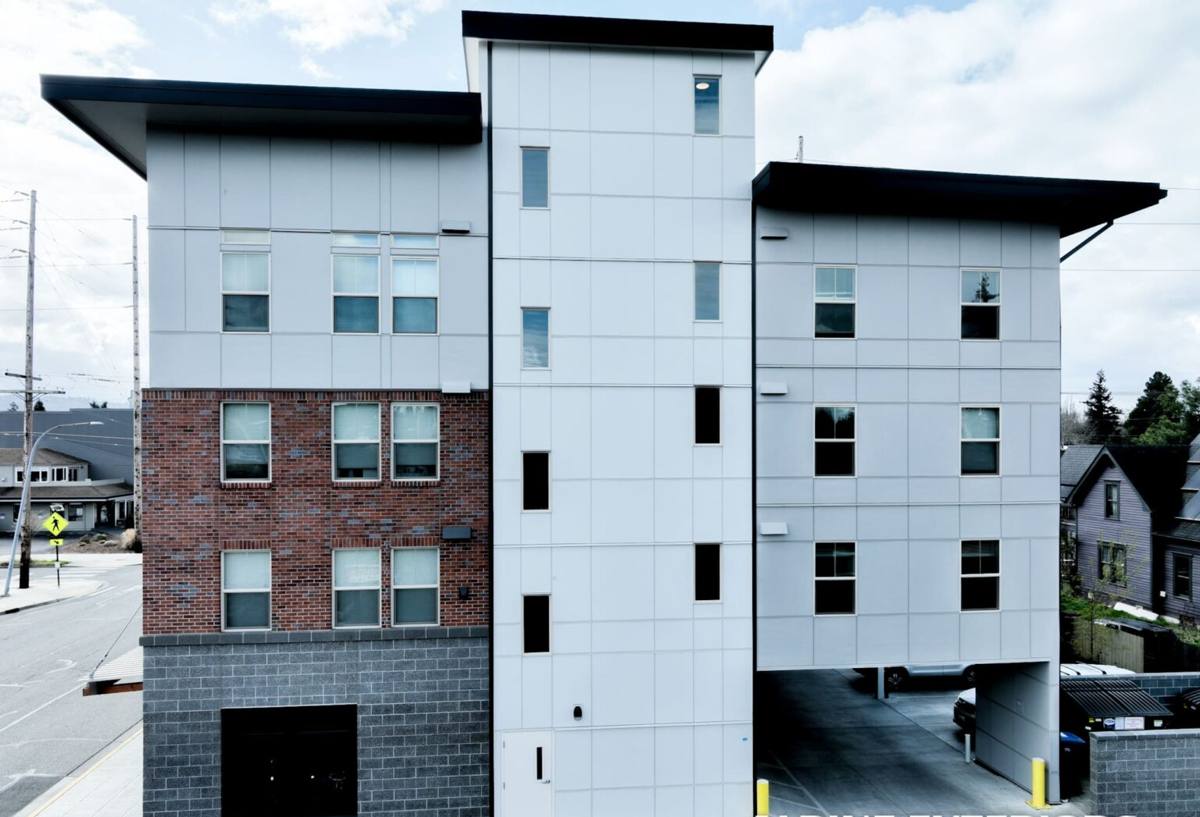
What Salt Air, Driving Rain, and Moss Actually Do to Siding
Each of these three stressors attacks siding differently, and Cherry Point homes deal with all three at once.
Salt Air
Airborne salt is corrosive to exposed metal fasteners and trim, and it accelerates the breakdown of lower-grade paint films. Siding that relies on a thin factory coating — or worse, gets painted on-site under less-controlled conditions — tends to chalk, fade, and lose adhesion faster near open water.
Driving Rain
Wind-driven rain off the Strait doesn't fall straight down — it gets pushed sideways into wall assemblies, working its way behind poorly lapped siding, undersized flashing, or gaps where trim meets field material. Once moisture gets behind the cladding, it doesn't matter how good the surface looks; the wall assembly underneath is what actually determines whether you get rot.
Moss and Algae
Shaded walls, roof overhangs that drip onto siding, and the persistent damp of a Whatcom County winter create ideal conditions for moss and algae growth. On absorbent or poorly sealed materials, this isn't just cosmetic — trapped organic growth holds moisture against the wall and can accelerate deterioration underneath it.
Why We Only Install James Hardie Fiber Cement Here
We made a decision early on to standardize on James Hardie fiber cement siding for every home we side, and we don't install vinyl, LP SmartSide, or other composite or engineered wood products. That's not a marketing position — it's a practical one, built around what actually holds up in a Whatcom County shoreline environment.
Fiber cement is made from cement, sand, and cellulose fibers, which makes it non-combustible and dimensionally stable — it doesn't swell, warp, or delaminate the way wood-based products can when they take on repeated moisture exposure. James Hardie's ColorPlus finish is baked on at the factory under controlled conditions, which gives it far better UV and salt-air resistance than field-applied paint, and it comes with its own finish warranty separate from the substrate warranty.
We're not going to tell you every alternative product is bad — plenty of manufacturers make a reasonable product for the right application. But for a Cherry Point exterior facing salt air, sideways rain, and heavy moss pressure, we've found fiber cement gives homeowners the best combination of moisture tolerance, finish durability, and long-term low maintenance, and that's what we're willing to put our name behind.
Climate-Engineered Product Lines
James Hardie makes region-specific formulations under its HZ5 and HZ10 designations, engineered for different moisture and freeze-thaw exposures across the country. For Pacific Northwest coastal conditions like Cherry Point's, we specify the product line matched to this climate zone rather than a generic national spec — it's a small distinction on paper but a meaningful one over a 20- or 30-year service life.
What a Correct Fiber Cement Installation Actually Involves
The material is only half the equation. Fiber cement siding installed without attention to detail can still let water into a wall — and in a high-rain, salt-exposed area like Cherry Point, those installation details matter more than they would somewhere drier.
Flashing and Moisture Management
Every window, door, and horizontal transition needs proper flashing and a drainage plane behind the siding — typically a weather-resistant barrier with furring or a rain screen gap that lets any incidental moisture drain and dry out rather than sitting against the wall sheathing. This is the single most important thing separating a siding job that lasts from one that doesn't.
Fasteners and Hardware
In a salt-air environment, fastener choice matters. We use corrosion-resistant fasteners rated for the exposure, placed according to manufacturer specification for edge distance and spacing — under-fastened or improperly placed nails are a common cause of siding that loosens or cracks over time.
Clearances and Caulking
Fiber cement needs proper clearance from grade, roofing, and decking — typically several inches minimum — so water and debris don't wick moisture into the bottom edge of the boards. Sealant is used at penetrations and select trim joints, not as a substitute for proper flashing, which is a shortcut that tends to fail first.
Painting and Field-Cut Edges
Factory-primed cut edges need to be sealed and field-painted to match, since raw cut edges are the most vulnerable point on an otherwise factory-finished board. This is a small step that's easy to skip and one of the most common causes of early edge deterioration we see on other contractors' work.
How We Approach a Cherry Point Siding Project
- On-site assessment — we walk the exterior, check current siding condition, note moisture-prone areas (shaded walls, low clearance points, roof-to-wall transitions) specific to your home's exposure.
- Product and color selection — we help you choose the right Hardie board profile and ColorPlus color for your home's style and this climate.
- Tear-off and inspection — once old siding comes off, we inspect the sheathing and framing underneath for any hidden moisture damage before closing the wall back up.
- Weather barrier and drainage plane installation — this is the layer that actually keeps water out long-term, and we don't shortcut it.
- Fiber cement installation to manufacturer spec — correct fastening, clearances, and flashing at every penetration.
- Trim, caulking, and touch-up painting — sealing cut edges and finishing details.
- Final walkthrough — we go over the finished job with you before we consider it done.
Cost Factors for Fiber Cement Siding in This Area
Every home is different, but these are the main variables that move a Cherry Point fiber cement siding quote up or down:
| Factor | Why It Matters |
|---|---|
| Home size and wall complexity | More corners, gables, and dormers mean more cutting, flashing, and labor time |
| Current siding removal | Tear-off of old material and any needed sheathing repair adds time and cost |
| Board profile and trim style | Lap width, shake-style panels, and trim detail level affect material cost |
| Color selection | ColorPlus factory colors vs. field-primed-for-paint boards affects both cost and long-term finish life |
| Site access and exposure | Shoreline wind exposure and site access can affect scaffolding, staging, and scheduling |
| Moisture or rot repair | Any hidden sheathing or framing damage found during tear-off needs to be addressed before new siding goes on |
We give straightforward, itemized estimates so you can see exactly what's driving the number — no vague lump-sum guesswork.
Living With Fiber Cement Siding in a Salt Air, Moss-Prone Climate
One of the real advantages of correctly installed James Hardie siding here is how little ongoing maintenance it needs compared to wood-based or poorly finished alternatives. That said, "low maintenance" isn't "no maintenance," especially this close to the water. A basic seasonal routine goes a long way:
- Rinse siding periodically with a garden hose to clear salt residue and airborne grime, especially on walls facing open water
- Gently remove moss or algae buildup on shaded walls before it spreads, using a soft brush rather than a pressure washer aimed directly at seams
- Keep gutters clean and downspouts directed away from the wall base so runoff doesn't concentrate against the siding
- Trim back vegetation that keeps a wall section shaded and damp longer than the rest of the house
- Inspect caulking at trim joints and penetrations every couple of years and have any cracked sealant redone
- Watch for any soft spots, staining, or paint failure near the bottom edge of the siding, which can signal a clearance or drainage issue worth catching early
Why Hiring a Crew That Already Works This Area Matters
Siding crews that mostly work inland don't always account for shoreline wind-driven rain, salt exposure, or the moss patterns specific to a shaded, damp property near open water. We've installed and repaired siding across this stretch of Whatcom County, so the flashing details, fastener choices, and drainage planning we use for a Cherry Point home reflect what we've actually seen fail — and what holds up — in this exact environment, not a generic national installation guide.
Working locally also means straightforward scheduling, faster response if you ever have a question after the job is done, and a crew that's accountable to the same community it works in.
Ready for an Honest Look at Your Siding?
If your Cherry Point home's siding is showing its age, or you're planning ahead before problems start, we're happy to take a look and give you a straightforward, no-pressure estimate for James Hardie fiber cement siding built for this exact climate. Use the form below to request your free estimate.