 Blaine Siding
 Decks in Dakota Creek Face a Different Kind of Weather
Dakota Creek sits in the part of Blaine where the marine air off the nearby saltwater meets thick tree cover and low-lying, often damp ground. That combination is hard on outdoor structures in a way that inland decking projects rarely have to deal with. A deck built with generic, catalog-standard methods might look fine for a season or two, then start showing rust streaks at the fasteners, soft spots at the ledger board, or a slick green film across the boards by the second winter. None of that is inevitable. It's a sign the deck wasn't built for this specific climate.
We build and repair decks throughout Blaine and the surrounding Whatcom County neighborhoods, and Dakota Creek comes with its own short list of things we plan around before a single post goes in the ground: salt-laden air, long stretches of driving rain, and a moss season that can run from fall through spring. This page covers what that actually means for material choice, construction detail, and upkeep — not generic deck-building advice, but what we've learned working this specific corner of the county.
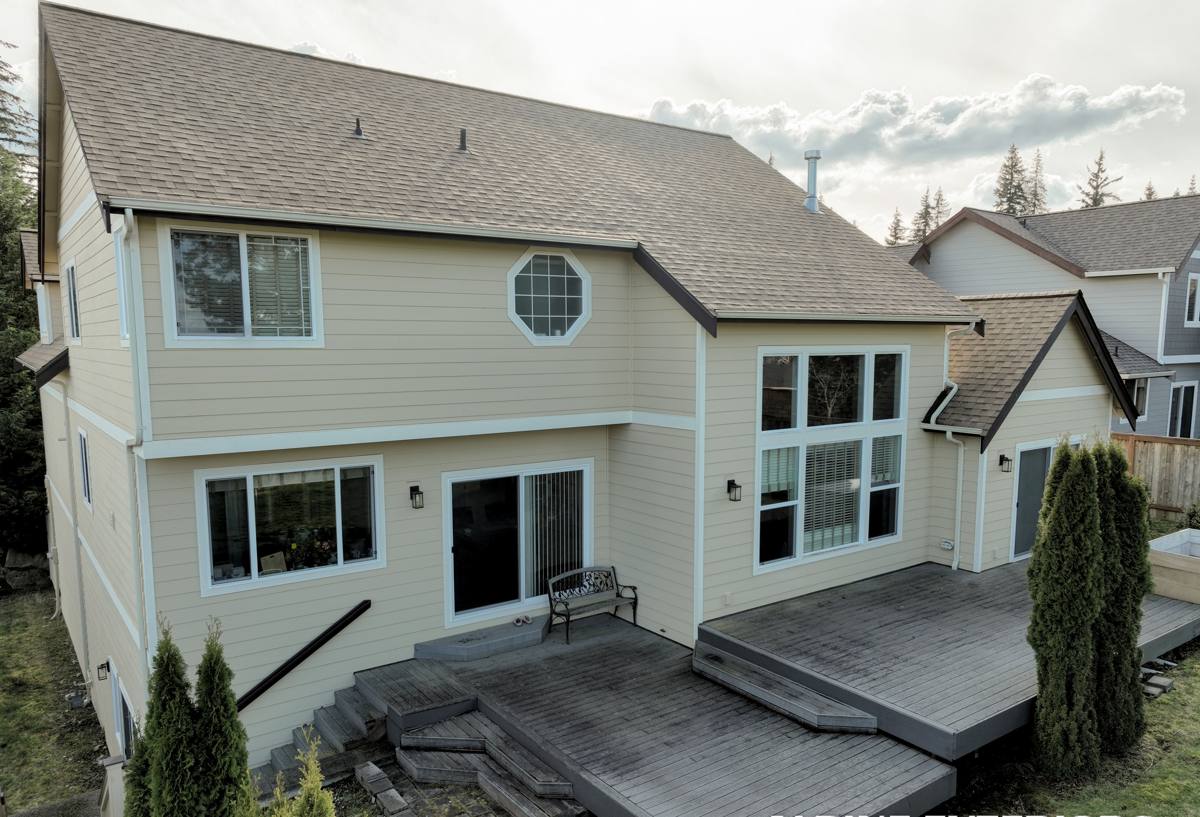
What Salt Air, Rain, and Moss Actually Do to a Deck
Salt Air and Metal Fasteners
Properties near the water pick up airborne salt even when they're not directly on the shoreline — wind carries it inland and it settles on anything metal. Standard galvanized screws and nails will corrode faster here than the same hardware would in a dry inland town. Once a fastener starts rusting, it weakens, stains the wood around it, and eventually needs to be dug out and replaced — a repair that's far more disruptive than getting the hardware right the first time.
Driving Rain and Water Intrusion
Blaine doesn't just get a lot of rain — a good share of it comes in sideways off storms moving through the Strait. That matters for a deck because wind-driven rain finds its way into gaps that vertical rain would never reach: behind ledger boards, under poorly lapped flashing, into end-grain cuts that weren't sealed. Water that gets trapped behind a ledger or inside a post base doesn't dry out quickly in this climate, and that's where rot starts — usually out of sight, until the damage is already structural.
Moss and Prolonged Dampness
Shaded lots near the creek corridor, combined with our wet fall-through-spring stretch, give moss and algae exactly what they need: consistent moisture and limited direct sun. Beyond looking bad, a mossy deck surface holds moisture against the wood or composite cap longer than a clean surface would, and it turns stairs and low spots genuinely slippery. Board spacing, surface drainage, and how much a deck is shaded by trees all affect how fast moss takes hold — and that's something we account for at the design stage, not just something we tell you to scrub off later.
Choosing the Right Decking Material for This Climate
There's no single "best" decking material — there's the right material for your budget, your sun exposure, and how much maintenance you actually want to keep up with. Here's how the common options hold up specifically in a damp, shaded, salt-air environment like Dakota Creek:
| Material | Upfront Cost | Moss & Moisture Resistance | Maintenance | Realistic Lifespan Here |
|---|---|---|---|---|
| Pressure-treated wood | Lowest | Fair — needs sealing to perform well | Annual cleaning and re-sealing | 10-15 years with upkeep |
| Cedar | Moderate | Good natural resistance, but softens in shade/damp | Regular cleaning, periodic oil or stain | 15-20 years with upkeep |
| Composite decking | Higher | Very good — won't rot, still needs surface cleaning | Occasional wash, no sealing/staining | 25+ years |
| Capped PVC decking | Highest | Best — fully sealed surface, minimal moisture uptake | Lowest — occasional rinse | 25-30+ years |
Wood costs less to install but asks more of you every year — and in a shaded, damp spot, skipping a season of maintenance shows up fast. Composite and capped PVC cost more up front but are a much better fit for lots that don't get a lot of direct sun, since they don't feed moss and mildew the way bare wood does. We'll walk you through actual pricing for your lot and sun exposure rather than a one-size answer, since a wide-open, south-facing deck and a shaded one tucked under trees near the creek can reasonably lead to different recommendations.
What a Correctly Built Deck Includes Here
Framing and Fasteners
We use stainless steel or coated fasteners rated for coastal/marine exposure, not the cheapest galvanized option on the shelf. Structural connectors — joist hangers, post bases, hurricane ties — get the same treatment. It costs more per box, but it's the difference between hardware that's still sound in fifteen years and hardware that's staining and weakening the wood around it in five.
Ledger Attachment and Flashing
The ledger board — where the deck attaches to the house — is the single most common failure point on decks in wet climates, because it's the hardest spot to keep water out of. We flash it properly with a code-compliant water-resistive barrier and metal or membrane flashing that sheds water away from the house rather than behind the ledger. This is not an area to cut corners in a climate that gets sideways rain for months at a stretch.
Footings and Drainage
Ground that stays damp for long stretches near the creek corridor needs footings sized and set to local frost and soil conditions, not guessed at. We also grade and, where needed, add drainage under and around the deck so water moves away from posts and footings instead of sitting against them. A deck that looks solid above the boards can still be sitting on footings that are slowly heaving or settling — that's a problem you want caught in the design phase, not discovered five years in.
Our Process for Dakota Creek Deck Projects
- On-site consultation. We look at your lot's sun exposure, tree cover, drainage, and how the deck will tie into the house before recommending materials.
- Design and material selection. You get real options with honest trade-offs — not a push toward whatever's most profitable for us.
- Permitting. Whatcom County and the City of Blaine have specific requirements depending on deck height, size, and attachment method — we handle that paperwork.
- Construction. Proper flashing, coastal-rated fasteners, correctly set footings, and drainage planning, built to the design we agreed on.
- Final walkthrough. We go over the finished deck with you, including what maintenance it actually needs — and what it doesn't.
Keeping a Deck Healthy Through Blaine's Moss Season
Whatever material you choose, a little seasonal attention goes a long way in this climate. Here's what actually matters:
- Sweep debris and standing leaves off the deck regularly through fall — trapped organic matter is what moss and algae feed on.
- Clean the surface at least once before winter and once in spring with a deck-safe cleaner, not just a pressure washer on high, which can gouge wood or strip composite caps.
- Check that gaps between boards are clear so water actually drains instead of pooling.
- Inspect fasteners and connectors yearly for rust streaks or loosening, especially near the ledger.
- Trim back overhanging branches where possible to get a little more sun and airflow onto shaded sections.
- Reseal wood decking on the schedule your specific product calls for — don't wait until it's visibly gray and dry.
Why Hire a Crew That Already Works in Dakota Creek
A deck built by someone unfamiliar with this specific stretch of Whatcom County can still pass a basic inspection and still fail early — because the failure points here (fastener corrosion, ledger water intrusion, moss buildup in shaded spots) aren't things every contractor is thinking about by default. We work this area regularly, so we're not guessing at how a lot near Dakota Creek drains, how much shade a given tree line throws across a deck through the seasons, or which detailing actually holds up against driving coastal rain year after year. That local familiarity shows up in the small decisions — flashing details, fastener grade, footing depth — that determine whether a deck is still solid in fifteen years or needs major repair in five.
We're also familiar with the permitting process specific to Blaine and Whatcom County, which saves you time and avoids the headache of a deck built out of compliance with local code.
Ready to Talk About Your Deck?
If you're planning a new custom deck or need to know whether an existing one near Dakota Creek is holding up the way it should, we're happy to take a look and talk through honest options for your lot, sun exposure, and budget. Fill out the form below for a free, no-pressure estimate.