 Blaine Siding
 Why Windows Near Blaine Harbor Take More Punishment
Homes close to the water in Blaine face a different set of conditions than houses ten miles inland. Salt-laden air off the harbor settles into window hardware, screen frames, and exposed fasteners. Wind-driven rain doesn't just hit the glass — it gets pushed sideways into any gap around the frame, testing seals that a calmer climate would never stress. And Whatcom County's long, damp shoulder seasons mean moss and algae get a real foothold on sills, tracks, and anything that stays wet for days at a time.
None of that is exotic. It's just the normal cost of living near the water in the Pacific Northwest. But it means windows on a Blaine Harbor home age differently than the same product would in a drier, more sheltered part of the state. Hardware corrodes faster. Wood trim that isn't properly sealed holds moisture longer. Weatherstripping compresses and loses its seal sooner under constant damp-dry cycling. A window that's a perfectly good choice in Spokane can be the wrong choice two blocks from Drayton Harbor.
What "Custom" Actually Means Here
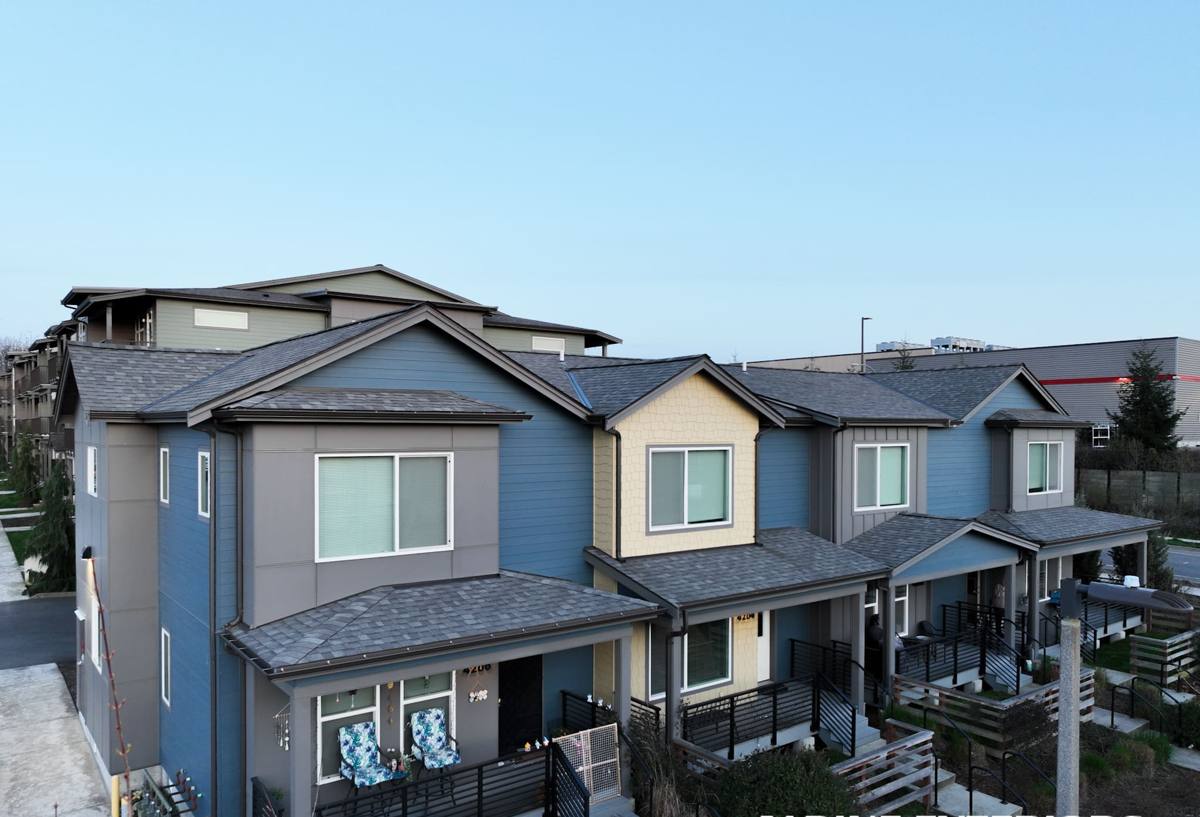
"Custom" doesn't mean upgraded trim or a fancier grille pattern. On a harbor-adjacent home, it usually means the window is built to fit an opening, orientation, and exposure that a stock size doesn't handle well. That can include:
- Non-standard openings in older homes where framing has settled or shifted over the decades
- Larger view windows facing the water that need to resist higher wind loads and driving rain without leaking
- Matching sightlines and sash proportions across additions or mismatched window generations
- Upgraded glass packages and hardware finishes specifically chosen for salt-air exposure
- Corner or bay configurations that need site-built flashing rather than an off-the-shelf kit
In practice, most Blaine Harbor projects are a mix of true custom sizing and a smart, exposure-appropriate product choice — not exotic architecture. The goal is a window that fits the opening correctly and is specified for the conditions it will actually face, not a generic size and package pulled from a builder-grade catalog.
When Custom Sizing Is Worth It vs. When It Isn't
Not every window on a house needs a custom order. If an opening is a standard size and in good structural condition, a quality stock window in the right material can perform just as well and cost less. Custom sizing earns its keep when the opening is genuinely non-standard, when you're changing the window's shape or size, or when matching an existing architectural line matters more than saving on the unit price. Part of an honest estimate is telling you which of your openings actually need custom work and which don't.
Materials That Hold Up — and Ones That Struggle
Frame material matters more near the harbor than almost anywhere else in the county. Here's how the common options tend to perform under salt air, driving rain, and a long moss season:
| Material | Salt-air performance | Moisture handling | Maintenance load |
|---|---|---|---|
| Vinyl | Good — won't corrode or rust | Good with proper drainage; can't be refinished if it fades | Low |
| Fiberglass | Very good — dimensionally stable, resists pitting | Very good; holds paint and seals well over time | Low to moderate |
| Aluminum-clad wood | Moderate — cladding protects the exterior, but any breach exposes wood beneath | Good if flashed correctly; risk is hidden moisture behind the cladding | Moderate |
| Bare wood | Poor without diligent upkeep — finish breaks down faster in salt spray | Requires consistent refinishing to stay sealed | High |
| Uncoated aluminum | Poor — prone to pitting and corrosion near salt water | Conducts moisture and cold; condensation-prone | Moderate to high |
We don't rule out wood or wood-clad windows on principle — some homes call for that look and their owners are willing to keep up with the maintenance. But we're upfront that on a harbor-exposed elevation, bare wood and uncoated aluminum both carry a real maintenance burden that vinyl or fiberglass simply don't. That's a trade-off we'll walk through honestly rather than push whatever's easiest to sell.
Hardware, Screens, and the Details People Forget
Glass and frame get all the attention, but hardware failure is one of the most common complaints on older harbor-area windows. Cheaper zinc or basic steel hardware corrodes within a few seasons of salt exposure — locks stiffen, cranks seize, hinges pit and stain the sill below them. For Blaine Harbor installs we spec corrosion-resistant hardware finishes and stainless fasteners on exterior-exposed components. It costs a little more up front and saves you from replacing hardware twice as often.
Screen frames matter too. Standard aluminum screen frames can pit and discolor faster in salt air; fiberglass mesh in a coated or vinyl-composite frame holds up better and won't streak rust down your siding.
Signs Your Current Windows Are Losing the Fight
Homeowners near the water usually notice a handful of consistent warning signs before a window fully fails:
- Fogging or a permanent haze between panes — the seal on the insulated glass unit has broken
- Soft or spongy wood at the sill or lower corners of the frame
- Hardware that's stiff, corroded, or won't latch fully
- Visible moss or green growth building up in the track or on the sill that keeps coming back after cleaning
- A draft you can feel with your hand along the frame edge during a windy, wet day
- Paint or finish that's bubbling or peeling specifically on the window side facing the water
Any one of these on its own might just mean a repair or a reseal. Several at once, especially on a window over ten or fifteen years old, usually means replacement is the more cost-effective path.
Our Installation Process
Correct installation matters as much as the product itself — a great window installed with sloppy flashing will leak regardless of price tag. Our process on Blaine Harbor homes follows the same sequence every time:
- On-site assessment of each opening, including checking framing condition and existing moisture damage before quoting
- Precise measurement and, where needed, custom sizing to match the actual opening rather than forcing a stock size
- Removal of the old unit with care to expose and inspect the sheathing and framing underneath
- Repair of any rotted or compromised framing before the new window goes in — never installed over a hidden problem
- Installation of a proper drainage plane and flashing sequence, lapped correctly so water sheds outward, not into the wall
- Setting the window level, plumb, and square, with shimming and fastening per manufacturer spec
- Sealing with an appropriate sealant for exterior exposure — not a generic caulk that will fail in a season or two
- Interior and exterior trim finish, with a final water test on harbor-facing elevations where practical
Flashing and Sealing: Where Most Failures Actually Start
Most window leaks near the water aren't glass failures — they're flashing and sealant failures. Driving rain finds the smallest gap in a window's integration with the wall, and once it's behind the cladding it can travel and cause rot far from where the leak first showed up. A correctly flashed window sheds water in layers, like shingles, so that even if the outer sealant eventually ages, water still has a path out rather than a path in.
This is also where corners get cut on lower-cost jobs. It's faster to caulk around a window and call it done than to properly integrate flashing tape, sill pans, and head flashing. It doesn't show up as a problem on day one — it shows up two or three winters later as soft trim or a stain on the interior wall. On a harbor-exposed home, we treat flashing detail as non-negotiable, not an upsell.
Cost Factors on a Custom Window Project
Every project is different, but the same handful of factors drive most of the cost variation we see on Blaine Harbor jobs:
| Factor | Why it affects cost |
|---|---|
| Frame material | Fiberglass and premium vinyl cost more upfront than basic vinyl but need less upkeep near salt air |
| Glass package | Double vs. triple pane, Low-E coatings, and gas fills affect both price and energy performance |
| Opening condition | Rotted framing or old, non-standard openings add repair and custom-fit labor |
| Window style | Casements and larger fixed picture units generally cost more than standard double-hung sliders |
| Hardware and screen upgrades | Corrosion-resistant hardware and coated screens cost more but last longer in this climate |
| Flashing and trim detail | Full flashing integration and trim rebuild take more labor than a simple insert replacement |
We'd rather walk your specific openings and give you real numbers than quote a broad range that doesn't mean much for your house.
Why a Crew That Already Works Blaine Harbor Matters
A contractor who works this stretch of Whatcom County regularly already knows which materials hold up here and which ones cause callbacks. That's not a marketing line — it changes real decisions on your job: which hardware finish to spec, how much flashing detail an exposed elevation actually needs, and which openings are worth the cost of custom sizing versus a quality stock unit. It also means we're not learning on your house how salt air and driving rain behave against a given product.
Local experience also means realistic scheduling around the weather this area actually gets, and a crew that's still reachable next year if a seal needs attention — not a traveling install team that's moved on to the next region.
Living With Windows in a Moss-Season Climate
Even a correctly installed, well-chosen window needs a little seasonal attention near the water. A few habits go a long way:
- Rinse tracks and sills periodically to keep moss and algae from establishing, especially on north-facing or shaded windows
- Wipe down hardware occasionally to keep salt residue from building up on locks and cranks
- Check exterior sealant lines once a year for cracking or separation, particularly after a hard winter
- Keep gutters and downspouts clear so runoff isn't sheeting directly across window heads
- Address any soft trim or bubbling paint promptly — it's cheaper to catch early than after it spreads
None of this is heavy maintenance, but skipping it is how a good window starts to look and perform like a bad one after a few years.
Get a Straight Answer for Your Home
If you're dealing with drafty, fogged, or hard-to-operate windows on a Blaine Harbor home, we're happy to take a look and give you an honest read on what's actually needed — repair, targeted replacement, or a full custom fit. There's no pressure and no obligation. Use the form below to request a free estimate and we'll walk your openings with you.