 Blaine Siding
 Windows Built for Everson's Weather, Not Just the Showroom
Everson sits inland from the Salish Sea but still catches the same weather pattern that defines this corner of Whatcom County: wet, wind-driven storms rolling off the water, salt-laden air working its way up the valley, and long gray stretches where moisture just sits on every north-facing surface. Windows here don't fail because the glass breaks. They fail slowly, at the seams — seals that give up, frames that trap water, and hardware that seizes from corrosion nobody notices until the window won't latch anymore.
A custom window job in Everson has to account for that from the start. That means picking frame materials that tolerate damp cycling, sealing details that assume wind-driven rain rather than just vertical rain, and flashing that directs water away from the wall assembly instead of into it. This page walks through what that actually looks like, house by house, decision by decision.
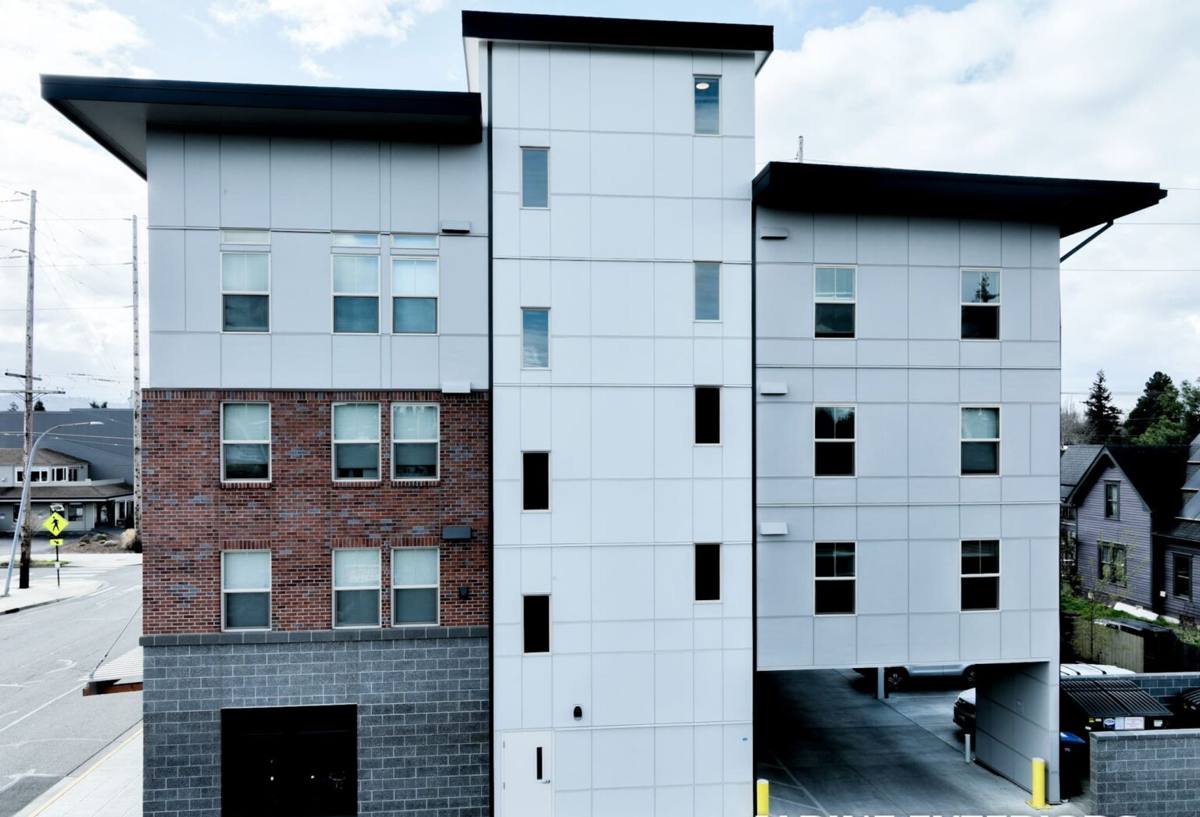
What Makes Everson Different from a Generic Window Job
Everson isn't a coastal town, but it's close enough to Blaine and the Strait that salt-bearing moisture reaches homes here on a regular basis, especially during winter storm systems. Combine that with Whatcom County's long, low-sun season — where a window can stay damp for days without direct sunlight to dry it out — and you get a specific failure pattern: black mold streaking on sills, soft spots in wood frames near the bottom corners, and condensation building up between panes on older double-glazed units whose seals have broken down.
Moss adds another layer most homeowners don't think about until it's a problem. Moss and algae growth on window trim and adjacent siding holds moisture against the wall longer than bare wood or vinyl would on its own, which accelerates rot at exactly the joints where a window meets the building envelope. Any correct window replacement in this area has to treat that moss-holding moisture as a design problem, not just a cleaning chore.
Common Symptoms We See on Everson Homes
- Fogging or haze between panes — a sign the seal has failed and the argon or air gap is compromised
- Soft, spongy wood at the bottom corners of the frame or sill
- Drafts you can feel with a hand near the frame on a windy day, even with the window latched
- Paint or finish that bubbles or peels specifically on the window trim, not the surrounding wall
- Difficulty opening, closing, or locking — often corrosion in the hardware rather than a broken mechanism
- Moss or dark streaking building up on the sill or the trim just below it
What a Correct Custom Window Installation Involves
"Custom" doesn't just mean a non-standard size. It means the window and the installation are matched to the specific opening, the specific wall assembly, and the specific exposure that opening faces. A window on the weather side of an Everson home dealing with driving rain off open fields needs different flashing and sealant detailing than one tucked under an eave on the leeward side.
The Details That Actually Matter
- Rough opening prep: checking the opening is square, dry, and free of rot before anything new goes in — installing a new window into a wet or rotted opening just relocates the problem
- Flashing sequence: sill pan flashing that sheds water outward, side flashing lapped correctly, and head flashing integrated with the water-resistive barrier so water is always directed down and out, never trapped behind the frame
- Sealant, not caulk alone: a proper backer rod and sealant joint sized for the gap, not a bead of caulk smeared over a mismatch
- Insulation at the gap: low-expansion foam or batt insulation around the frame so the perimeter isn't a thermal and moisture bridge
- Interior and exterior trim sealed separately: both sides need attention — a beautiful exterior detail doesn't help if interior humidity is condensing on a cold frame
Skipping any one of these is usually invisible for a year or two. Then a soft spot shows up in the drywall below the sill, or the exterior trim starts to discolor, and what would have been a straightforward window swap turns into a wall repair.
Choosing the Right Frame Material for This Climate
There's no single "best" window material — there's a best fit for the exposure, the home's style, and the homeowner's maintenance appetite. Here's how the common options actually perform under Everson's conditions.
| Frame Material | Moisture & Salt-Air Performance | Maintenance | Best Fit |
|---|---|---|---|
| Vinyl | Won't rot or corrode; handles damp cycling well | Low — occasional cleaning | Most Everson homes, especially budget-conscious full-house replacements |
| Fiberglass | Excellent — dimensionally stable, resists swelling and salt exposure | Low | Homes with heavy weather exposure or larger openings |
| Wood (clad exterior) | Good if the exterior cladding is intact; interior wood still needs protection from condensation | Moderate to high | Homes prioritizing a traditional wood interior look |
| Solid wood (no clad) | Poor in this climate without diligent upkeep — most exposed to rot and moss-driven moisture | High | We generally steer homeowners away from this for exterior-exposed openings here |
| Aluminum | Prone to condensation and corrosion in salt-influenced air unless thermally broken | Moderate | Only with a thermal break and protected exposure |
We're not against wood windows on principle — plenty of Everson and Blaine-area homes have real character built around them. But we tell homeowners plainly: a solid wood frame on a weather-facing wall in this climate is a bigger maintenance commitment than most people expect, and we'd rather set that expectation up front than have someone surprised by it in year three.
Glass Packages Worth Considering
Glass matters as much as frame material for a house dealing with long damp stretches and temperature swings between a cold, wet exterior and a heated interior.
- Double-pane, low-E glass is the practical baseline for this area — it cuts heat loss and reduces the interior condensation that shows up on cold glass during winter.
- Argon or krypton gas fill improves insulating performance modestly; worth it on most full replacements, less critical on a single accent window.
- Triple-pane makes sense on north-facing or weather-side openings where condensation and heat loss are worst, but adds cost and weight — we'll tell you honestly if a given opening doesn't justify it.
- Warm-edge spacers (as opposed to older aluminum spacers) reduce the cold-edge effect that drives condensation right at the glass perimeter — a small detail that matters a lot in a persistently damp climate.
Our Process for an Everson Window Project
- On-site assessment: we look at each opening individually — exposure direction, current frame condition, any existing rot or moisture signs — rather than quoting off a floor plan alone.
- Honest scoping: if we find soft framing or water damage during the walk-through, we tell you before work starts, not after demo when you have no real choice.
- Material and glass selection: matched to each opening's exposure, not a single spec applied to the whole house.
- Removal and opening prep: old units removed carefully, framing checked and dried out or repaired as needed.
- Flashing and sealing: installed to shed water outward at every layer, sill to head.
- Window set and shim: leveled, plumbed, and secured per manufacturer specification — not just "close enough."
- Insulation and trim: perimeter insulated, interior and exterior trim finished and sealed.
- Final check: operation, locking, and weather-seal check with the homeowner before we call it done.
What Drives Cost on a Custom Window Job
We don't like quoting a flat per-window number because it hides the variables that actually matter. Here's what tends to move the price up or down on a real Everson job.
| Factor | Effect on Cost |
|---|---|
| Frame material chosen | Vinyl is typically most affordable; fiberglass and clad-wood run higher |
| Number of windows replaced at once | Full-house replacement usually lowers the per-window cost versus one-off swaps |
| Existing rot or framing damage found at demo | Adds cost and time, but skipping the repair guarantees a repeat problem |
| Custom or non-standard sizes and shapes | Increases cost over stock sizes |
| Glass package (double vs. triple pane, coatings) | Higher-performance glass adds cost but can be targeted to the worst-exposed openings only |
| Access and site conditions | Second-story or hard-to-reach openings take more labor time |
We'd rather walk a homeowner through these trade-offs during the estimate than hand over a number with no explanation behind it.
A Quick Checklist Before You Call Anyone
- Note which windows fog, stick, or feel drafty — and on which side of the house
- Look for soft or discolored trim, especially at the bottom corners
- Check for moss or dark staining building up on sills or nearby siding
- Have a rough idea whether you want to replace one problem window or address the whole house at once
- Ask any contractor directly how they handle flashing and sealing, not just what brand of window they sell
Why Local Experience in Everson Actually Matters
Window installation isn't the same job everywhere. A crew used to installing in a dry inland climate will default to details that are fine there and inadequate here. Working regularly in and around Everson and Blaine means we've seen how moss season actually plays out against real siding and trim, how driving rain off open country hits certain wall orientations harder than others, and which frame and flashing choices hold up through a full Whatcom County winter rather than just looking good on install day. That's not a marketing point — it's the difference between a window that's still tight in five years and one that's showing soft trim again.
Maintenance That Keeps a New Window Performing
Even a correctly installed window benefits from a little seasonal attention in this climate:
- Clear moss and debris from sills and adjacent trim before it holds moisture through winter
- Check exterior caulk lines annually for cracking or separation, especially after a hard freeze
- Keep gutters and downspouts clear so runoff isn't sheeting directly across window heads
- Operate hardware a few times through the off-season so latches and locks don't seize from disuse and damp
None of this is complicated, but skipping it for a few years is exactly how a well-installed window starts showing the same symptoms as the one it replaced.
If you're dealing with drafts, fogged glass, or soft trim on your Everson home, we're glad to take a look and give you a straightforward, no-pressure estimate — no obligation, just an honest read on what your windows actually need. Use the form below to get started.