 Blaine Siding
 Why Semiahmoo Windows Face a Different Job Than Most
Semiahmoo sits out on the spit, with water on multiple sides and very little standing between your windows and whatever the bay decides to send that day. That's a different exposure than a home tucked into a subdivision a few miles inland. Wind carries salt spray onto glass and frames, driving rain hits at angles that ordinary window design doesn't account for, and the marine air stays damp for long stretches of the year. Add in Whatcom County's long moss season, and you've got a set of conditions that will find every weak point in a window system — the seal that's slightly off, the flashing that was rushed, the frame material that wasn't meant for this much moisture exposure.
We've replaced and repaired windows on enough Semiahmoo homes to know this isn't a one-size-fits-all job. What works on a sheltered lot works differently on a waterfront-facing wall. A correct window job here starts with understanding which direction a home faces, how much direct salt exposure it gets, and how water actually moves across that wall during a real Pacific storm — not just picking a window out of a catalog.
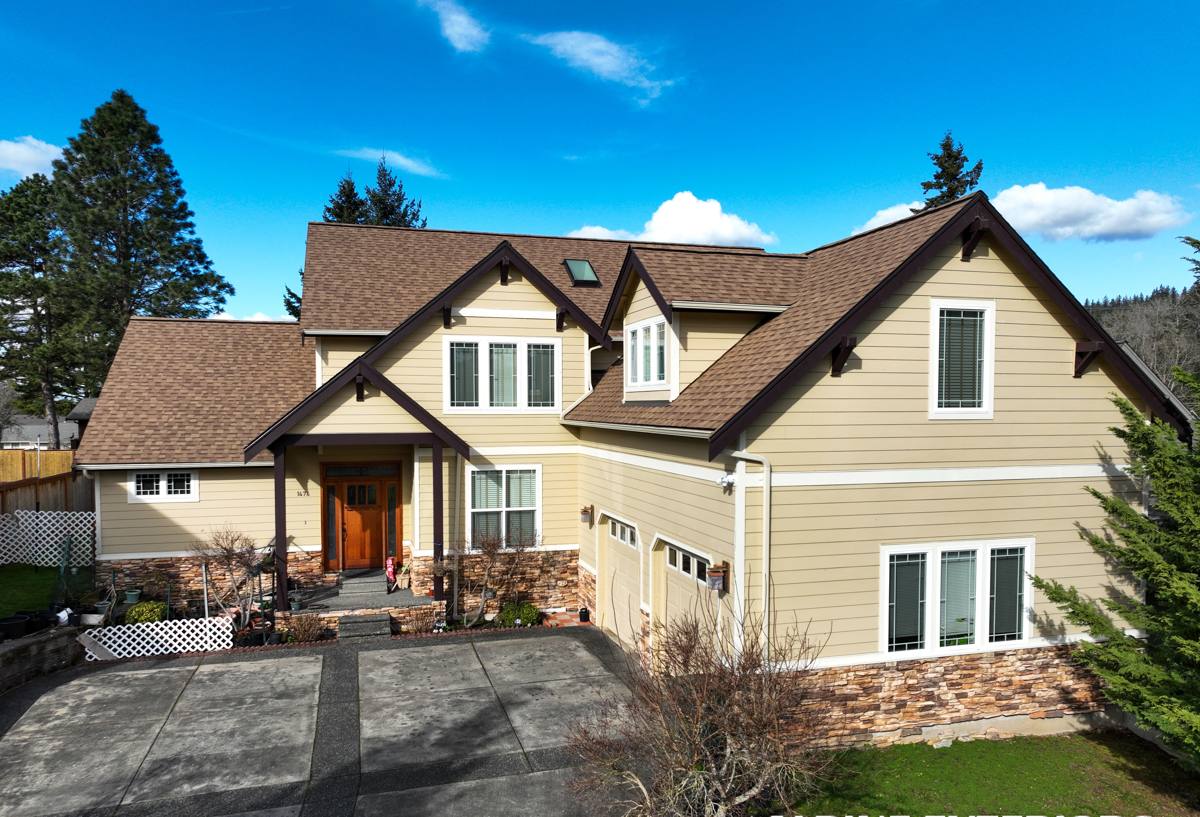
What Salt Air and Driving Rain Actually Do to a Window Over Time
None of this damage happens overnight, which is part of the problem — it's slow enough that homeowners often don't notice until a window is already failing.
- Salt air corrodes hardware. Latches, hinges, and balance mechanisms made from lower-grade metal will pit and seize up years before they should, especially on windows facing the water directly.
- Driving rain finds gaps at the frame edge. Wind-driven rain doesn't just fall — it pushes sideways into any joint that isn't properly flashed and sealed, which is where most "mystery" leaks actually start.
- Moss and mildew hold moisture against wood and trim. A long damp season means anything organic near your windows stays wet longer, which accelerates rot in untreated wood components.
- UV and salt together break down seals faster. The combination of coastal sun exposure and salt residue is harder on sealants and weatherstripping than either factor alone.
The end result, if a window wasn't built or installed for this exposure, is usually the same story: fogged glass, soft trim, sticking sashes, and a heating bill that creeps up as seals give out.
What "Custom" Should Actually Mean for This Job
"Custom" gets used loosely in this industry. For a Semiahmoo home, it should mean the window is matched to the specific opening, the specific wall assembly, and the specific exposure — not just cut to a nonstandard size. That includes frame material, glass package, and how the unit is designed to shed water once it's installed.
Frame Material Options
| Frame Material | Salt Air Resistance | Maintenance | Typical Cost Tier |
|---|---|---|---|
| Vinyl | Good — won't corrode or rot | Low; occasional cleaning | Lower |
| Fiberglass | Very good — dimensionally stable in temperature swings | Low | Mid to upper |
| Wood-clad | Depends heavily on cladding quality and detailing | Higher — interior wood needs upkeep | Upper |
| Aluminum | Poor in direct salt exposure without special coatings | Moderate | Varies |
We don't push wood-clad frames on homes with heavy direct salt exposure unless the cladding and detailing are genuinely built for it — the interior wood core is the weak point once moisture gets past a compromised seal, and repairs are far more invasive than with vinyl or fiberglass. That's a maintenance and moisture-behavior tradeoff we'll walk through honestly, not a knock on any particular product line.
Glass Packages Worth Considering Here
For a waterfront-facing home, the glass package matters as much as the frame:
- Dual-pane with Low-E coating is the practical baseline for most Semiahmoo homes — it cuts heat loss and reduces UV fading on interior finishes.
- Argon or krypton gas fill adds a modest efficiency bump, worth it on larger picture windows that take the brunt of west or water-facing exposure.
- Laminated glass options can add a layer of durability on homes that see the strongest wind-driven rain and debris, though they're not necessary on every elevation.
- Triple-pane is worth discussing on rooms where noise from wind and water traffic is a factor, in addition to the thermal benefit.
Not every window on a home needs the same package. A sheltered window on the lee side of the house doesn't need the same spec as a picture window facing open water — matching the right glass to each elevation keeps the project honest instead of over-selling.
Installation Is Where Most Window Failures Actually Start
A well-built window installed carelessly will fail faster than a mid-grade window installed correctly. This is the part of the job that doesn't show up in a brochure, but it's what determines whether you get twenty-plus years out of the investment or a callback in three.
On a Semiahmoo home, we pay particular attention to:
- Flashing sequence — installed so water is directed out and down, layered correctly with the house wrap or building paper, not just caulked over gaps.
- Sill pan drainage — so any water that does get past the exterior has somewhere to go besides your wall cavity.
- Sealant selection — using products rated for the temperature range and UV exposure they'll actually see here, not a generic caulk that hardens and cracks within a couple of seasons.
- Shimming and squaring — a window that isn't perfectly square will bind, won't seal evenly, and will wear its hardware unevenly over time.
- Interior and exterior trim detailing — finished in a way that sheds water away from the frame rather than trapping it against wood trim.
This is also where corners get cut on rushed jobs, and it's the single biggest reason a homeowner ends up with a leak two or three years after a "window replacement" that looked fine on move-out day.
Our Process, Start to Finish
- On-site assessment. We look at each window's exposure, current condition, and the wall assembly behind it — not just the glass itself.
- Honest scope and estimate. You'll get a clear breakdown of what's recommended per window or elevation, and why, along with straightforward pricing.
- Material selection. We walk through frame and glass options based on your budget and each window's actual exposure, not a single package for the whole house.
- Careful removal and prep. Old units come out without unnecessary damage to surrounding siding or trim, and we check the opening for hidden moisture damage before anything new goes in.
- Installation with proper flashing and sealing. This is the step we don't rush, for the reasons above.
- Final walkthrough. We test operation, check seals, and make sure everything is finished cleanly before we consider the job done.
Signs Your Current Windows Are Already Losing the Fight
If you're not sure whether it's time to replace or just repair, these are the signs worth taking seriously on a Semiahmoo property:
- Fog or moisture trapped between panes of double-pane glass — the seal has failed and it can't be fixed, only replaced
- Persistent condensation on the inside of the glass, especially in cooler months
- Windows that stick, won't latch fully, or are hard to open — often hardware corrosion or a warped frame
- Visible staining, soft spots, or moss growth on wood sills and trim
- Noticeable drafts or a cold spot near the window even when it's fully closed
- A jump in heating costs without another clear explanation
- Peeling paint or damaged drywall on the interior wall around the frame — often a sign water has already gotten past the seal
Why Local Experience Matters More Than It Sounds Like It Should
Window manufacturers publish general performance ratings, but they don't know your particular lot, your exposure, or how wind behaves around your specific stretch of the spit. That knowledge comes from working this area directly — seeing which elevations take the worst of a winter storm, which installation details hold up after a few wet seasons and which don't, and which products are worth the extra cost here versus which ones are marketing more than substance.
A crew that mostly works inland neighborhoods isn't wrong about windows in general — they just haven't had to solve for this specific combination of salt, wind-driven rain, and sustained dampness the way a Whatcom County coastal job demands. That's the difference between a window installation that looks right on completion day and one that's still performing correctly five winters later.
Living With Coastal Windows: Realistic Maintenance
Even a correctly installed, well-built window benefits from a little seasonal attention out here:
- Rinse salt residue off exterior glass and frames periodically, especially after storm events with heavy spray
- Clear moss and debris from window sills and tracks before it holds moisture against the frame
- Check weatherstripping annually for cracking or compression, particularly on the most exposed elevations
- Keep gutters and drainage clear nearby so water isn't sheeting directly across window openings
- Lubricate hardware on operable windows periodically to keep salt-related stiffness from setting in
None of this is heavy maintenance — it's the kind of upkeep that takes an hour or two a couple of times a year and meaningfully extends the life of the investment.
Get a Straight Answer on What Your Home Needs
If you're dealing with drafty, foggy, or sticking windows on a Semiahmoo property, or you're planning ahead before the next storm season, we're happy to take a look and give you an honest read on what's actually going on — no pressure, no upsell on materials your home doesn't need. Use the form below to request a free estimate.