 Blaine Siding
 Building a Deck That Can Actually Handle Dakota Creek
Dakota Creek sits close enough to saltwater and tidal influence that homes here take on a different kind of weather load than a deck built twenty miles inland. Salt-laden air moves through the trees on the west wind, driving rain comes in sideways more often than straight down, and the shoulder seasons stay damp long enough for moss and algae to get established on any surface that doesn't dry out fast. A deck built to a generic national spec will survive here for a while. A deck built for this specific stretch of Whatcom County — with the right fasteners, the right drainage details, and the right material choices — will still be solid and safe well past the point where a corner-cut deck has started to sag, stain, or rot underneath.
This page is about deck building specifically for Dakota Creek properties: what the local conditions actually do to a deck over time, what a correctly built one involves from the framing up, and how we approach the job differently because we've built and repaired decks in this exact microclimate.
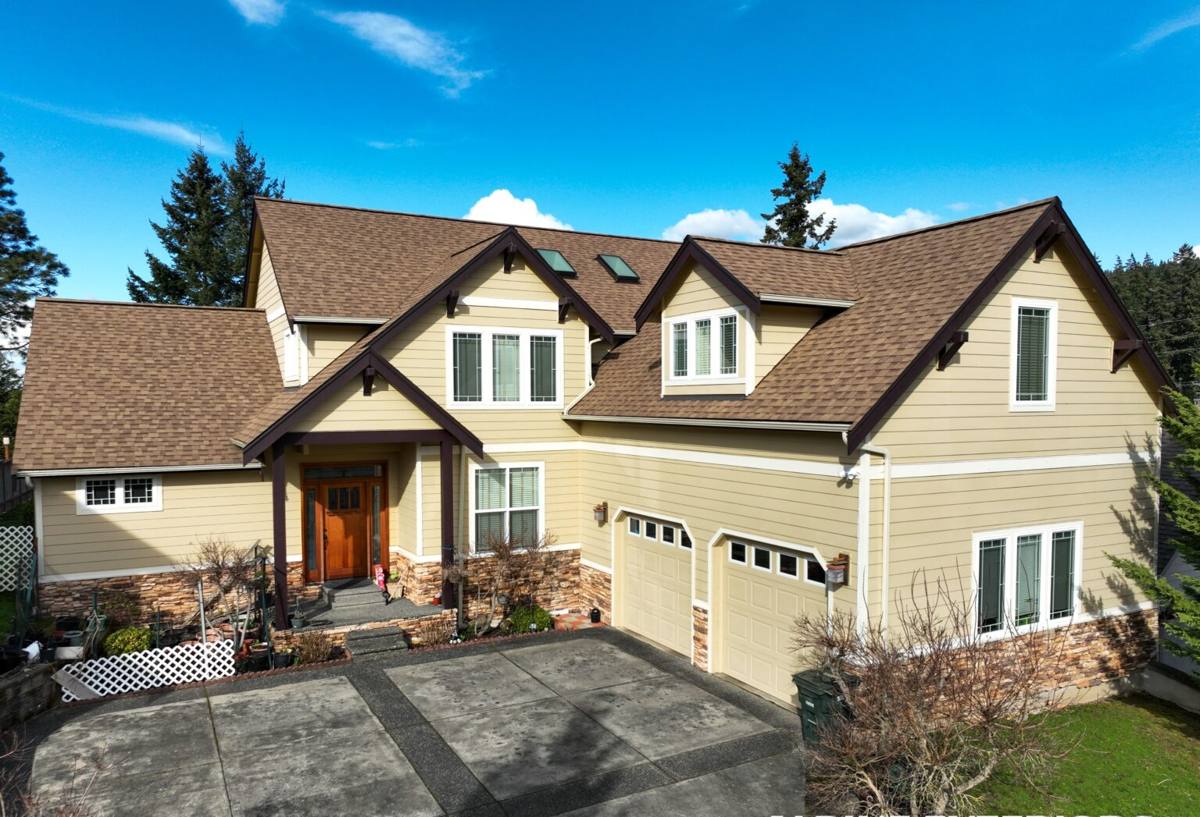
What Salt Air, Rain, and Moss Actually Do to a Deck
Salt Air and Metal Hardware
Salt-carrying air accelerates corrosion on anything metal — nails, screws, joist hangers, post bases, and railing brackets. Standard electro-galvanized fasteners that would be fine in a drier inland town can start rusting within a few years this close to the water. Once a fastener corrodes, it loses holding strength long before it looks obviously bad, which is part of why deck hardware failures often show up as a surprise rather than a slow, visible warning.
Driving Rain and Water Intrusion
Rain that comes in at an angle gets pushed into joints, under ledger boards, and behind railing posts in ways that straight-down rain doesn't. If flashing, gaps, and drainage paths aren't detailed correctly, water finds its way into end grain and fastener holes — the two places wood rot starts fastest. Once moisture is trapped against a house band board or inside a post base, it can do damage for months before it's visible from the surface.
Moss, Algae, and Slick Surfaces
Long damp seasons with limited direct sun — especially on north-facing or tree-shaded decks common around Dakota Creek — give moss and algae time to establish. Beyond looking bad, a mossy deck surface holds moisture against the boards longer and gets genuinely slippery, which is a real safety issue on stairs and near door thresholds.
What a Correctly Built Deck Needs to Include
None of this is exotic — it's standard good practice applied consistently, without skipping the parts that don't show up in a quick visual inspection.
- Footings sized and set to local frost depth and soil conditions, not just the minimum a permit will pass
- Proper ledger board flashing where the deck attaches to the house, so water sheds away from the band board instead of into it
- Joist tape or flashing on top of every joist to protect the wood under the decking fasteners
- Corrosion-resistant structural hardware rated for the actual exposure, not just standard exterior-grade
- Consistent gapping between deck boards for drainage and airflow underneath
- Stair and railing connections built to current code, not legacy spacing or attachment methods
- A ventilated space under the deck so the framing can dry out between rain events
Framing and Structure: The Part You Won't See Later
Once the decking and railings go on, the framing disappears from view for years — which is exactly why it has to be right the first time. We size footings for the soil conditions on the lot rather than assuming a one-size answer, and we pay particular attention to ledger attachment, since a poorly flashed ledger is one of the most common sources of hidden rot on decks throughout this region. Joist hangers, post bases, and structural screws are chosen for the exposure level of the specific deck, factoring in how close it sits to open water and prevailing wind.
We also build in drainage from the ground up: crowned or sloped framing where it matters, gapped decking, and enough clearance underneath for air to move. A deck that can't dry out between storms is a deck that's aging faster than it needs to, no matter how good the materials on top are.
Decking Material Options for This Climate
There's no single "best" decking material for every Dakota Creek home — it depends on budget, how much upkeep you want to do, and how exposed the deck is to sun, wind, and salt. Here's how the common options actually compare in this environment.
| Material | Moisture Behavior | Maintenance | Typical Lifespan Here |
|---|---|---|---|
| Pressure-treated wood | Resists rot with proper sealing; end grain and fastener holes are the weak points | Needs re-sealing or staining every 1-2 years in this rainfall | 15-20 years with upkeep |
| Cedar | Naturally rot-resistant, but softer and more prone to surface checking in driving rain | Regular cleaning and periodic sealing to hold color and grain | 15-25 years with upkeep |
| Composite decking | Doesn't absorb water into the board itself; performance depends on core type and cap quality | Periodic washing to keep moss and algae from taking hold | 25-30+ years |
| PVC/capped decking | Fully sealed surface, best resistance to moisture intrusion | Lowest upkeep; occasional washing | 25-30+ years |
Composite and PVC boards cost more upfront but spend less time absorbing the rain this area gets, and they don't need the recurring sealing schedule that wood does. Wood costs less to install but only performs as well as the maintenance behind it — skip a couple of sealing cycles in a wet stretch and you're behind on protecting it.
A Note on Product Selection
We're selective about which composite and wood products we install, based on how they've actually held up in coastal Pacific Northwest conditions over time — moisture behavior at the cut edges, how the cap or sealer performs under sustained damp, and what the warranty actually covers versus what it excludes. We'll walk you through the real trade-offs for your budget rather than steering you toward whatever has the best margin.
Railings, Fasteners, and Hardware
Hardware is where a lot of decks quietly fail years before the decking itself gives out. For anything within reach of salt air, we favor stainless steel or heavy-duty coated fasteners over standard galvanized options, and we use hidden fastener systems on composite decking where it makes sense — fewer exposed screw heads means fewer points where water and corrosion can start working on the connection. Railing posts get attached with hardware rated for the actual load and exposure, not the bare code minimum, because a railing failure is a safety issue, not just a cosmetic one.
Our Deck Building Process
- On-site assessment — we look at sun exposure, prevailing wind and rain direction, drainage, soil, and how close the deck sits to open water or tree cover, since all of that shapes material and framing decisions.
- Design and material selection — we walk through decking, railing, and fastener options against your budget and how much maintenance you actually want to do long-term.
- Permitting — we handle the permit application and inspections through the local building department so the project is fully compliant, not just "close enough."
- Demolition and site prep, if replacing an existing deck, including checking the ledger area and band board for hidden rot before framing begins.
- Framing — footings, ledger flashing, joists, and hardware installed to the exposure level of your specific lot.
- Decking, railings, and stairs — installed with consistent gapping, correct fastening, and code-compliant railing and stair geometry.
- Final walkthrough and inspection — we go over the finished deck with you and make sure any required final inspection is scheduled and passed.
Permits and Local Considerations Around Dakota Creek
Most new decks and significant deck rebuilds in and around Blaine require a building permit, and depending on the property's proximity to the water, there can be additional setback or shoreline-related considerations that need to be checked before design work locks in. Footing depth requirements also account for local frost conditions. We handle the permit process as part of the job rather than leaving it to the homeowner to sort out, and we won't start framing work on a project that should be permitted but isn't — it's not worth the risk to your home's resale value or your insurance coverage down the road.
Living With the Deck: Maintenance in a Moss-Prone Climate
Whatever material you choose, a little seasonal attention goes a long way in this climate. A short annual routine keeps moss from establishing and catches small issues before they become expensive ones.
- Sweep leaves and debris off the deck surface and out from between boards regularly through fall
- Wash the deck surface at least once a year to knock back algae and moss before it takes hold
- Check and clear the gaps between boards so water keeps draining instead of pooling
- Inspect railing posts and stair connections annually for movement or loosening hardware
- Re-seal or re-stain wood decking on the schedule the product actually needs in this rainfall, not just when it starts looking dry
- Look underneath the deck once a year for standing water, staining, or soft framing near the ledger
Why Hire a Crew That Already Works in Dakota Creek
A deck builder who mostly works drier inland areas can still build a structurally sound deck on paper, but they may not default to the corrosion-resistant hardware, the flashing detail, or the drainage planning that this specific coastal stretch of Whatcom County actually calls for — because most of the country doesn't need it. Working decks in and around Dakota Creek regularly means we've seen firsthand which fastener choices hold up to the salt air here and which ones start showing rust in a couple of years, which decking products actually resist moss versus which ones just claim to, and how local soil and drainage patterns affect footing performance over time. That's the kind of judgment that doesn't show up in a spec sheet — it comes from building and repairing decks in this exact environment.
If you're planning a new deck or replacing one that's showing its age, we're happy to take a look and talk through what it would take to build it right for your property. Reach out below for a free, no-pressure estimate.