 Blaine Siding
 Why Decks Near Dakota Creek Wear Out Faster Than the Manufacturer Says
Every deck board and fastener sold in the Pacific Northwest carries a warranty that assumes "normal" exposure. Homes in the Dakota Creek area, close to Drayton Harbor and the Blaine waterfront, don't get normal exposure. They get salt-laden air moving off the harbor, long stretches of driving rain off the Strait of Georgia, and a wet season that can run eight or nine months of the year. Add Whatcom County's mild, damp winters and you get a near-perfect environment for moss, algae, and slow wood decay to set up shop on any horizontal surface that isn't detailed correctly.
None of this means a deck here can't last. It means the framing, fasteners, flashing, and decking material all have to be chosen and installed with that exposure in mind, not with a generic build sheet meant for a dry-side climate. A deck built to code minimums in Eastern Washington will not perform the same way twenty feet from tidal air in Blaine.
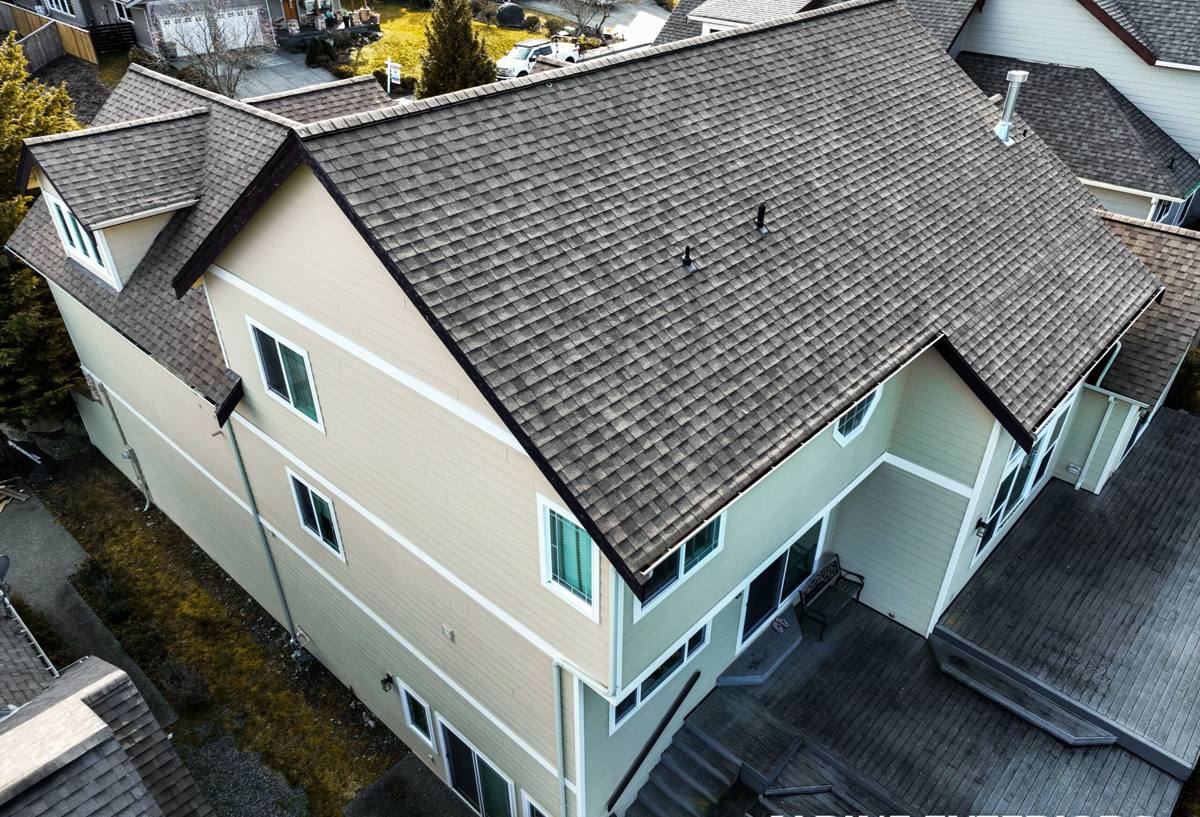
Signs a Deck Needs Replacement, Not Just Repair
Homeowners often call for a repair and end up needing a full rebuild once we get underneath the boards. A few signs tell us which conversation we're actually having:
- Soft, spongy decking that flexes underfoot, especially near the house or along the rim joist
- Persistent moss or black-green staining that returns within weeks of cleaning
- Rust streaking below fastener heads, which usually means the wrong hardware was used originally
- Gaps opening up between boards, or boards cupping and pulling away from joists
- Soft or discolored framing visible from underneath the deck, particularly around the ledger board
- Railing posts that wiggle at the base — often a sign the post-to-frame connection has been compromised by rot
A deck that fails in one or two of these ways might just need board replacement or a ledger repair. A deck showing several of them, especially soft framing, is usually past the point where patching makes financial sense.
What a Correct Deck Replacement Involves
Starting at the House Connection
The ledger board — where the deck attaches to the house — is the single most important detail on any deck, and it's the part most often built wrong on older Blaine-area homes. It needs proper flashing that sheds water away from the house sheathing, not caulk alone trying to do the job. In a climate with this much driving rain, a poorly flashed ledger is where rot starts, and it's usually hidden until the damage has already spread into the house framing.
Framing and Footings
We check footing depth and condition, joist spacing, and whether the existing frame can be reused or needs to come out. Ground-level moisture and freeze-thaw cycles here can shift undersized or shallow footings over time. If the frame is sound, we reuse it to keep costs down. If it's not, replacing decking on top of a compromised frame just delays a bigger problem.
Fasteners and Hardware
Salt air corrodes standard fasteners faster than most homeowners expect. We use stainless steel or high-grade coated fasteners and structural hardware rated for coastal exposure, not the basic galvanized hardware that's fine sixty miles inland but starts rusting within a season or two out here.
Choosing a Decking Material for This Climate
There's no single "best" decking material — there's a best material for how you use the deck and how much upkeep you're willing to do. Here's how the common options actually perform near Dakota Creek's salt air and moss pressure:
| Material | Moss/Algae Resistance | Maintenance | Typical Lifespan |
|---|---|---|---|
| Pressure-treated wood | Low — needs regular cleaning and sealing | Annual cleaning, resealing every 1-2 years | 10-15 years with upkeep |
| Cedar | Moderate — naturally rot-resistant but still needs care | Cleaning and oiling every 1-2 years | 15-20 years with upkeep |
| Capped composite (Trex, TimberTech, Fiberon) | High — solid cap sheds moisture, resists staining | Periodic washing, no sealing | 25-30+ years |
| PVC decking | High — non-porous surface | Periodic washing, no sealing | 25-30+ years |
We install wood, cedar, and composite/PVC decking depending on what the homeowner wants. Our standard is capped composite or PVC in wet, algae-prone spots close to the water, simply because a solid cap sheds moisture instead of absorbing it, which cuts down dramatically on the moss and mildew that plague open-grain wood in this climate. Wood is still a good choice for homeowners who want that look and are willing to keep up with cleaning and sealing.
Our Deck Replacement Process
- On-site assessment — we inspect the existing deck, ledger connection, footings, and framing, and tell you honestly what can be reused versus what needs to go.
- Material selection — we walk through decking, railing, and fastener options based on your budget and how exposed the deck is to weather and salt air.
- Permitting — most full deck replacements in Whatcom County and the City of Blaine require a permit, especially when framing, footings, or height changes are involved. We handle that process.
- Demo and framing — old decking and any compromised framing come out, footings are checked or replaced, and new framing goes in with proper ledger flashing.
- Decking and railing installation — boards and railing are installed per manufacturer spec, using fasteners rated for coastal exposure.
- Final walkthrough — we go over the finished deck with you, including what maintenance (if any) it needs going forward.
Railings and Hardware Built for Marine Exposure
Railings take a beating near Drayton Harbor — wind-driven rain hits them directly, and salt air accelerates corrosion on anything less than marine-grade hardware. We pay particular attention to post connections, since a loose or rotted post base is a safety issue, not just a cosmetic one. Aluminum and composite railing systems tend to hold up better than painted wood in this environment, since they don't need repainting to keep water out of end grain.
What Affects the Cost of a Deck Replacement
| Factor | Why It Matters |
|---|---|
| Deck size and shape | More square footage and cut angles mean more material and labor |
| Decking material | Composite and PVC cost more upfront than wood but need far less long-term maintenance |
| Framing and footing condition | Rotted framing or undersized footings add demo and rebuild cost beyond the surface decking |
| Height and railing requirements | Elevated decks need code-compliant railings and sometimes stairs, adding material and labor |
| Permitting | Permit fees and inspection timing vary by scope and jurisdiction |
We give straightforward, itemized estimates so you can see exactly what you're paying for — framing, decking, railing, and labor — rather than a single lump number.
Maintenance That Actually Extends Deck Life Here
Even the best-built deck needs some seasonal attention in a climate with this much moisture. A short annual routine goes a long way:
- Sweep debris and standing leaves off the deck regularly, especially in fall when moss growth accelerates
- Wash the surface once or twice a year to remove algae and salt residue before it stains or etches the surface
- Check railing post bases and stair stringers for movement or soft spots each spring
- For wood decks, reseal on the schedule recommended for the specific wood species — don't wait until it's visibly gray and dry
- Keep gutters and downspouts clear so runoff isn't dumping extra water directly onto or under the deck
- Confirm the ledger flashing and any deck-to-house seals are intact after major storms
Why It Matters to Hire a Crew That Already Works Dakota Creek and Blaine
A contractor who only occasionally works this close to the water tends to build to the same spec they'd use inland — standard fasteners, standard flashing details, whatever decking is easiest to source. A crew that regularly works the Dakota Creek and Drayton Harbor area already knows which fastener grades hold up, which flashing details actually stop water at the ledger, and which decking products handle a long moss season without turning into a slip hazard. That local pattern recognition is the difference between a deck that needs attention again in five years and one that's still solid in twenty-five.
We also know the permitting expectations for decks in Blaine and unincorporated Whatcom County, so there are no surprises mid-project.
If your deck is showing wear, or you're planning ahead before it fails, we're happy to take a look and give you a straightforward, no-pressure estimate. Fill out the form below and we'll get in touch to schedule a time to walk the property with you.