 Blaine Siding
 Energy-Efficient Windows Built for the Dakota Creek Area
Homes around Dakota Creek sit in one of the more weather-exposed corners of Whatcom County — close enough to the water for salt-laden air to reach siding and window hardware, open enough for winter storms to drive rain sideways into wall assemblies, and damp enough, most months of the year, to keep moss and mildew active on shaded trim and sills. That combination makes window performance a bigger factor here than it is in a drier, more sheltered inland setting. A window that's rated efficient on paper but installed or specified without this climate in mind can still leak, fog, or bleed heat within a few wet seasons.
This page is specifically about energy-efficient window replacement for homes in and around Dakota Creek — not a general window overview. We cover what the local climate actually demands from a window, what "energy-efficient" means beyond a sticker on the glass, how we handle the installation details that determine whether that efficiency holds up, and what the process and cost look like for a home in this area.
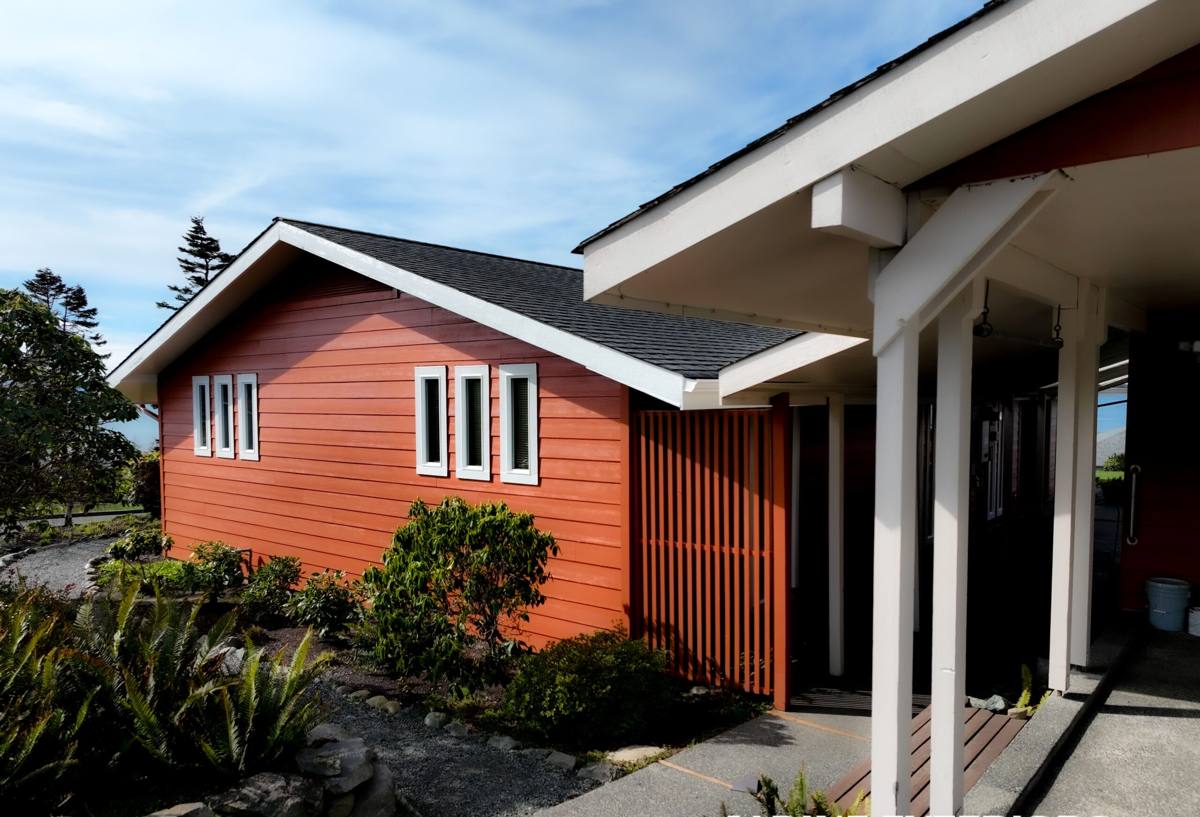
What This Climate Asks of a Window
Wind-Driven Rain
Storms moving in off the water near Blaine rarely drop rain straight down. Wind pushes it sideways into window openings, which puts real pressure on the seams between a window unit and the surrounding wall — not just the glass and frame themselves. A window can carry a strong energy rating and still let water in if the flashing and sealing around it weren't done to handle wind-driven rain specifically.
Salt Air and Hardware Wear
Marine air carries salt inland to varying degrees depending on how exposed a property is, and salt accelerates corrosion on lower-grade window hardware, fasteners, and frame components. Locks, hinges, and balance mechanisms that would hold up fine in a dry inland climate can start sticking, pitting, or failing years earlier in a coastal setting like this one.
A Long Moss and Condensation Season
Mild temperatures paired with near-constant moisture through fall, winter, and spring give moss and mildew a long growth window across Whatcom County, and window sills and frame trim are common places it takes hold — especially on shaded or north-facing elevations. The same damp, cool climate also creates steady condensation pressure on window glass, since interior heat and cold, wet exterior air meet right at the pane. Older or poorly sealed windows show this constantly as fogging or moisture pooling on the sill.
What "Energy-Efficient" Actually Means
Window efficiency comes down to a small handful of measurable properties, not a marketing label. Understanding them helps a homeowner evaluate options on their own merits instead of taking a sales pitch at face value.
- U-factor: Measures how much heat the window loses. Lower is better — this is the number that matters most for a heating-dominated, mild-winter climate like ours.
- Solar Heat Gain Coefficient (SHGC): Measures how much solar heat passes through the glass. In a mostly overcast climate like Whatcom County's, unwanted solar heat gain is a smaller concern than it would be in a sun-heavy region, so this number matters less here than U-factor does.
- Air leakage rating: Measures how much air passes through the assembly itself. A tight rating only holds up if the installation around the frame is equally tight — the best-rated window in the world still leaks air through a gapped rough opening.
- Condensation resistance: Not always advertised as prominently as the others, but directly relevant here given how much condensation pressure this climate puts on glass through the wet months.
Double-Pane vs. Triple-Pane Glass
Most homes in this area do well with a quality double-pane, low-E, argon-filled unit — it's a proven balance of performance and cost for a marine climate with mild winters rather than deep-freeze cold snaps. Triple-pane glass pushes U-factor even lower and adds a modest sound-dampening benefit, which some homeowners value given how much wind and rain this area gets, but it adds cost and weight without always paying back the difference in a climate that doesn't see extreme cold. We walk through both options against a homeowner's actual priorities rather than defaulting to the more expensive package.
| Glazing Option | Where It Fits | Trade-off |
|---|---|---|
| Double-pane, low-E, argon fill | Most homes in the Dakota Creek area | Strong efficiency-to-cost balance for a mild marine climate |
| Triple-pane, low-E, argon or krypton fill | Rooms facing prevailing wind, or homeowners prioritizing sound reduction | Higher upfront cost and added frame weight for a smaller efficiency gain here than in a colder climate |
| Single-pane (existing older windows) | Not something we install new | Minimal insulation value and no meaningful condensation resistance in this climate |
Frame Material Matters as Much as the Glass
An efficient glass package loses much of its value if the frame around it doesn't perform. Frame material affects insulation, how well the unit holds up to salt air and moisture, and how much long-term maintenance it demands.
| Frame Material | Performance in This Climate |
|---|---|
| Vinyl | Good insulating properties, resists rot, generally the most cost-effective option for this climate; a solid default for most Dakota Creek homes |
| Fiberglass | More dimensionally stable across temperature and moisture swings than vinyl, and can be painted if a homeowner wants frame color flexibility |
| Aluminum | Conducts heat and cold readily unless thermally broken, and is more prone to condensation on the frame itself in a damp climate — not something we specify for energy-focused replacement work here |
| Uncladded wood | Strong insulator but requires ongoing maintenance to resist rot and moisture damage in a climate this wet — a real commitment for a homeowner to take on |
We install vinyl and fiberglass window systems for energy-efficient replacement work in this area. Both resist the rot that uncladded wood is vulnerable to, and both hold up to marine air better than standard aluminum framing without a thermal break.
Installation Is Where Efficiency Is Won or Lost
Flashing and Sill Pans
A correctly flashed rough opening, with a sill pan that directs any water that does get past the window back out rather than into the wall, is what actually stops wind-driven rain from becoming a moisture problem behind the siding. This is the detail that determines whether an efficient window stays efficient — a gap in the flashing lets in both water and air, undoing the insulating value of the unit itself.
Air Sealing Around the Frame
Foam or fiberglass insulation packed correctly around the window frame, without gaps or over-compression, closes the air pathway between the window and the rough opening. This step doesn't show up on any spec sheet, but it has a direct effect on how drafty a room feels and how hard the heating system has to work.
Exterior Trim and Sealant Detail
The exterior sealant joint where trim meets siding has to be done with a product rated for sustained wet exposure, not a general-purpose caulk that dries out and cracks within a couple of winters. Given how much moss and mildew pressure this area sees on trim and sills, we also pay attention to drainage — anywhere water can pool against wood trim is a spot that will show growth given enough time.
Our Process for a Dakota Creek Window Replacement
- On-site assessment: We look at each window individually — frame condition, current seal performance, hardware function, and how the existing flashing ties into the siding around it.
- Product and glazing selection: We walk through frame material and glazing package options against the home's specific exposure and the homeowner's budget and priorities, rather than defaulting to one package for every job.
- Written scope: A clear scope before work begins, with the manufacturer's product warranty and our installation warranty spelled out separately.
- Removal and rough opening prep: Old units come out, and we check the rough opening and sheathing underneath for hidden moisture damage before anything new goes in.
- Flashing, sill pan, and air-sealing installation: Handled as standard practice on every window, not offered as an optional upgrade.
- Exterior trim and final seal: Trim is reset and sealed with materials rated for sustained wet exposure.
- Walkthrough: We confirm operation, seal, and finish on every window with the homeowner before calling the job complete.
Signs Your Current Windows Are Costing You Money
- Fogging or visible moisture trapped between panes of a double-pane window
- Noticeable drafts or cold spots near the frame even with the window fully latched
- Interior condensation or water pooling on the sill during cold, wet stretches
- Windows that are difficult to open, close, or lock compared to how they used to operate
- Visible daylight or gaps where the frame meets the trim or siding
- Moss, staining, or soft wood on sills and trim that returns quickly after cleaning
- Rooms that feel noticeably colder or draftier than the rest of the house
What Affects the Cost of a Window Project
Costs vary by home, and we'd rather give an honest range of the factors involved than a number that doesn't hold up once we're actually on site. In general, a straightforward single-window replacement runs in the low thousands, while a full-house replacement scales with the number and size of openings.
| Factor | How It Affects Cost |
|---|---|
| Number of windows | The biggest single driver — whole-house jobs benefit from some efficiency of scale over one-off replacements |
| Frame material | Vinyl is typically the most cost-effective; fiberglass runs higher |
| Glazing package | Triple-pane and upgraded low-E coatings add cost over a standard double-pane package |
| Window size and configuration | Larger openings, custom shapes, or operable styles like casements cost more than standard sliders or single-hungs |
| Condition of the rough opening | Hidden rot or moisture damage found during removal adds repair scope beyond the window itself |
| Lead time | Custom-sized units are built to order and can take several weeks to arrive — not a cost factor, but worth planning around |
Why a Crew That Already Works Dakota Creek Matters
A contractor who works this stretch of Whatcom County regularly already knows how wind-driven rain behaves against a Dakota Creek property, how far salt air reaches inland from the water, and how much drainage detail a window sill needs to keep moss and mildew from taking hold. Those aren't things a spec sheet or a general contractor unfamiliar with this specific climate reliably gets right on the first try. It shows up in the details that don't appear on an invoice — how much lap a flashing detail gets, whether the sill pan actually directs water out instead of trapping it, which hardware grade gets specified for a salt-air environment.
If your windows in the Dakota Creek area are drafty, fogged, hard to operate, or just old enough that you're wondering whether replacement makes sense, we're happy to take a look and walk through the options honestly. Reach out below for a free, no-pressure estimate.